


More news on this day
Flights across the U.S. Northeast were snarled on Monday, September 21, 2026, after a construction-related fiber cut compounded a separate communications failure at a key Federal Aviation Administration facility, triggering ground stops and cascading delays at some of the nation’s busiest airports.
Get the latest news straight to your inbox!
What happened and why it mattered so quickly
Published coverage indicates the disruption began with the failure of a primary communications circuit serving the FAA’s Philadelphia-area air traffic facility responsible for sequencing traffic into multiple major airports. When systems attempted to shift to a backup, the secondary fiber route was found to be unusable because it had been inadvertently severed during nearby construction work.
That combination left controllers with reduced ability to manage normal arrival and departure flows, prompting the FAA to deploy traffic management initiatives, including ground stops, to prevent aircraft from departing for airports that could not safely accept them at normal rates.
For travelers, the practical impact was immediate: even flights departing from far outside the Northeast experienced long gate holds, missed connections, and rolling schedule changes as airlines tried to rebalance crews and aircraft.
Airports hit hardest: New York area, Philadelphia, and ripple effects
Reports describe the most visible impacts concentrating around the New York City airspace and Philadelphia, where air traffic volume is dense and tightly coordinated. Newark Liberty International Airport saw extensive cancellations and delays, while John F. Kennedy International and LaGuardia also experienced significant disruption as the afternoon peak approached.
Teterboro Airport, a major reliever for business and charter traffic, was also affected, with published coverage pointing to some of the longest reported delays there during the incident. Philadelphia International Airport, meanwhile, experienced extended delays that lasted even after some restrictions began to ease, reflecting how quickly backlogs build in the region.
Boston Logan International Airport was drawn into the disruption as well, with flight management restrictions used to control inbound volume and prevent overcrowding in the air and on the ground. Once the underlying communications issues were addressed, published coverage indicates the FAA began lifting stops and allowing traffic to resume, but delays continued as schedules reset.
Who cut the fiber and where the damage occurred
Multiple outlets described the backup fiber line being severed in New Jersey during construction activity in the corridor between Newark and New Brunswick. Transportation Secretary Sean Duffy attributed the cut to an Amtrak-related construction crew in public posts, while other reporting pointed to a New Jersey Transit construction crew working in the same area, underscoring that early accounts differed on the specific organization involved.
Telecommunications infrastructure in that corridor supports a wide range of services, including critical connectivity for aviation communications. In this case, publicly available reporting indicates the damaged fiber was part of the communications resiliency intended to keep air traffic operations running if a primary circuit fails.
Verizon was referenced in published coverage regarding the damaged cable, with coverage indicating the company was not described as the cause of the cut. The broader takeaway for travelers is that aviation operations can hinge on communications redundancy, and when both primary and backup paths are compromised, the system has limited options besides slowing or stopping traffic.
What “ground stop” means for travelers and how delays spread
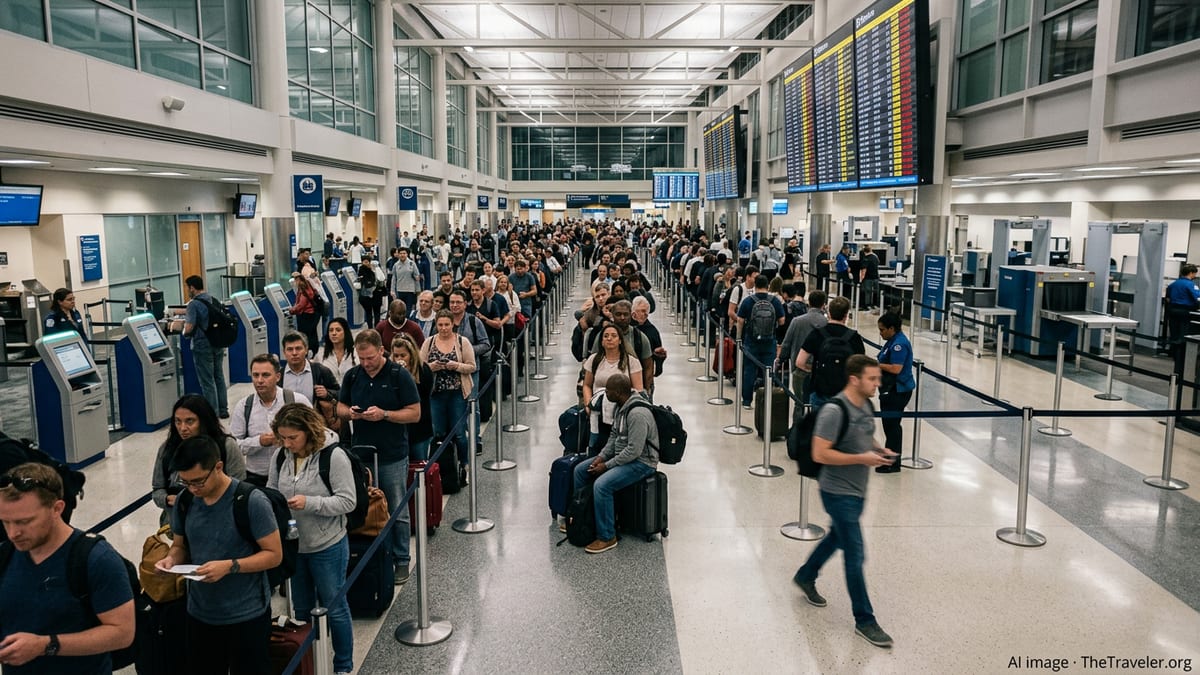
A ground stop is one of the most restrictive traffic management tools: aircraft are held at their departure airports rather than launched into airspace that cannot accommodate them. This can prevent airborne holding and reduce complexity for controllers, but it shifts the disruption to terminals, where passengers face prolonged waits, gate changes, and rebooking lines.
Even when a ground stop ends, the recovery is uneven. Aircraft and crews are often out of position, arrival banks are compressed, and airports can take hours to work through the backlog. That helps explain why travelers may see delays persist well beyond the moment operations “resume,” especially at hubs with tightly timed international and domestic connections.
For passengers traveling through the Northeast corridor, the incident also highlighted how quickly constraints in one segment of airspace can ripple to others. Flights destined for the region may be held at origin airports nationwide, and downstream legs later in the day can be delayed by inbound aircraft arriving late.
What travelers should do next if their flight is affected
With disruptions of this type, published coverage commonly notes that airlines adjust schedules rapidly as they regain capacity. Travelers with flights to or from affected airports can reduce surprises by checking flight status frequently before leaving for the airport, watching for aircraft swaps and gate changes, and confirming whether a delayed inbound aircraft is the one scheduled for their departure.
Rebooking outcomes can differ significantly based on routing flexibility. For trips involving the New York metro area, comparing options across Newark, JFK, LaGuardia, and Philadelphia can sometimes shorten recovery time, depending on airline networks and seat availability. In the Boston and Washington corridors, alternate departure times or connecting itineraries may open up as airlines add recovery flights or consolidate underfilled departures.
Finally, passengers should expect knock-on effects into the next operating day when a large hub experiences widespread cancellations. Even after communications are repaired, aircraft rotations and crew legality rules can keep schedules unstable, so planning for longer connection times and keeping essentials in a carry-on can help manage the uncertainty.