


More news on this day
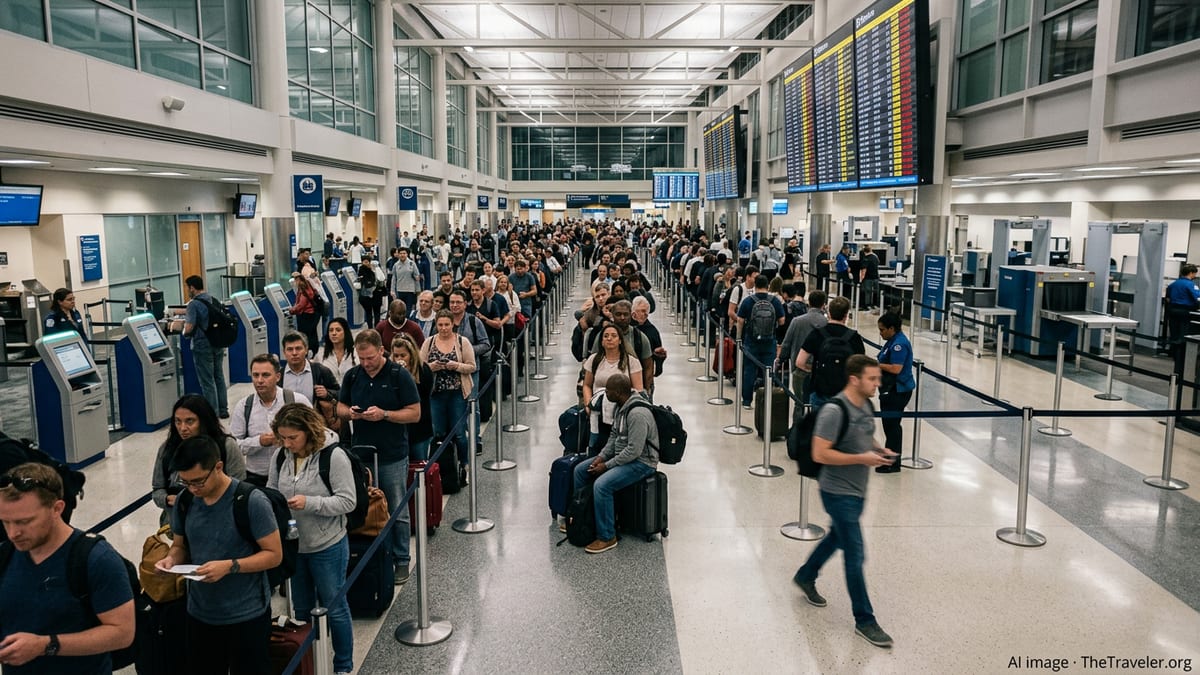
Air travel across the U.S. Northeast was thrown into chaos on September 21, 2026, after a telecommunications failure linked to a construction-related fiber cut and a separate equipment problem disrupted air traffic control communications, prompting FAA ground stops and cascading delays at several major airports.
Get the latest news straight to your inbox!
What happened and why the Northeast felt it first
Published coverage indicates the disruption centered on communications used by the Philadelphia TRACON, a key FAA air traffic facility that sequences arrivals and departures for multiple busy airports in the region. Reports describe an initial failure involving a primary communications circuit, followed by complications when systems attempted to rely on backup connectivity.
Multiple outlets reported that a backup fiber-optic line was discovered to be severed, with the damage tied to construction activity in New Jersey. The breakdown reduced the ability to reliably use certain controller frequencies, which in turn forced the FAA to slow the flow of aircraft and pause inbound traffic at selected airports to maintain safe separation.
The outage arrived during one of the most operationally sensitive periods for the region: a weekday travel day when the New York-area airports, Newark, and Philadelphia are handling dense banks of arrivals and departures and extensive connecting itineraries. Even relatively short ground stops in this corridor can ripple nationwide, as aircraft and crews are displaced from their scheduled rotations.
Airports affected: ground stops, ground delays, and spillover impacts
Travel disruptions were reported at Newark Liberty International, Philadelphia International, and Teterboro early in the day, with New York’s John F. Kennedy and LaGuardia later experiencing constraints as the situation evolved. Boston Logan also saw impacts tied to spillover volume, with published reporting noting that restrictions there were lifted as operations stabilized.
Flight-tracking and media reports described Newark as one of the hardest-hit airports, with a prolonged period where normal arrival flows were sharply curtailed. Philadelphia also posted widespread delays and cancellations, a major issue for travelers because it functions as a key hub for domestic connections as well as international departures.
While the most visible effects were concentrated in the Northeast, the disruption extended well beyond the region. When inbound aircraft cannot land on schedule at high-volume hubs, airlines must hold flights at their origin airports, delay boarding, swap aircraft, or cancel segments outright, creating missed connections and knock-on delays across the national network.
Construction activity and the fiber cut: what’s known so far
Reporting about the fiber cut pointed to construction work in New Jersey as the proximate cause of the backup line damage, though published accounts differed on which organization’s crew was responsible. Some coverage attributed the cut to rail-related construction activity and referenced work occurring between Newark and New Brunswick.
Separately, reporting described the original trigger as a failure of a primary circuit serving the Philadelphia-area air traffic communications setup. In combination, those two problems left controllers with reduced redundancy, highlighting how a single point of failure can become a systemwide disruption when backups are unavailable or compromised.
Public coverage also highlighted how the incident reignited scrutiny of the resilience of the nation’s air traffic control telecommunications infrastructure. Congressional action in recent years has focused on modernization funding and controller staffing, and the Northeast corridor is often cited as a stress test because of its dense airspace and tightly choreographed schedules.
What travelers should do now: rebooking, connections, and timing
For travelers flying to, from, or through airports in the New York-Philadelphia corridor, the practical challenge is that delays and cancellations can persist after the immediate technical problem is addressed. Aircraft and crews may be out of position, and airlines may need additional time to restore normal departure banks, especially for late-day and evening flights.
Passengers with connections through Newark or Philadelphia should review same-day alternatives via other hubs where available, because missed connections can compound quickly when regional disruption coincides with peak loads. Travelers heading to the New York area may also find that flights into nearby airports can diverge dramatically in performance depending on airline network priorities and gate availability.
Given how quickly ground stops can change to ground delays and vice versa, travelers are best served by monitoring their flight status directly through airline channels and by checking for revised departure times before leaving for the airport. When widespread disruption hits, arriving early can help with rebooking lines, but it does not necessarily reduce time spent waiting for delayed departures.
Operational aftershocks for airlines and the broader system
Airline operations in the corridor are particularly sensitive because Newark and Philadelphia support large connecting complexes, and New York’s airports handle a high mix of domestic and international traffic with limited flexibility for gate and runway changes. When arrivals are paused, carriers can be forced into difficult choices such as canceling shorter segments to protect long-haul aircraft utilization.
The incident also underscores the role of telecommunications redundancy in air traffic operations. Published accounts described a scenario where a primary communications failure led systems to rely on backup fiber that was already damaged, amplifying disruption and extending recovery time.
Even after repairs restore communications, the system’s recovery often depends on whether airlines can rebuild their schedules with available crews, compliant duty times, and aircraft positioned at the right airports. For passengers, that can translate into irregular operations that last into the following day, especially for flights that depend on inbound aircraft from the disrupted region.