


More news on this day
A widespread disruption to air traffic control systems on Monday, September 21, caused a ground stop at several major airports across the U.S. Northeast, triggering cascading delays, cancellations and missed connections for thousands of travelers at the start of a busy fall travel week.
Get the latest news straight to your inbox!
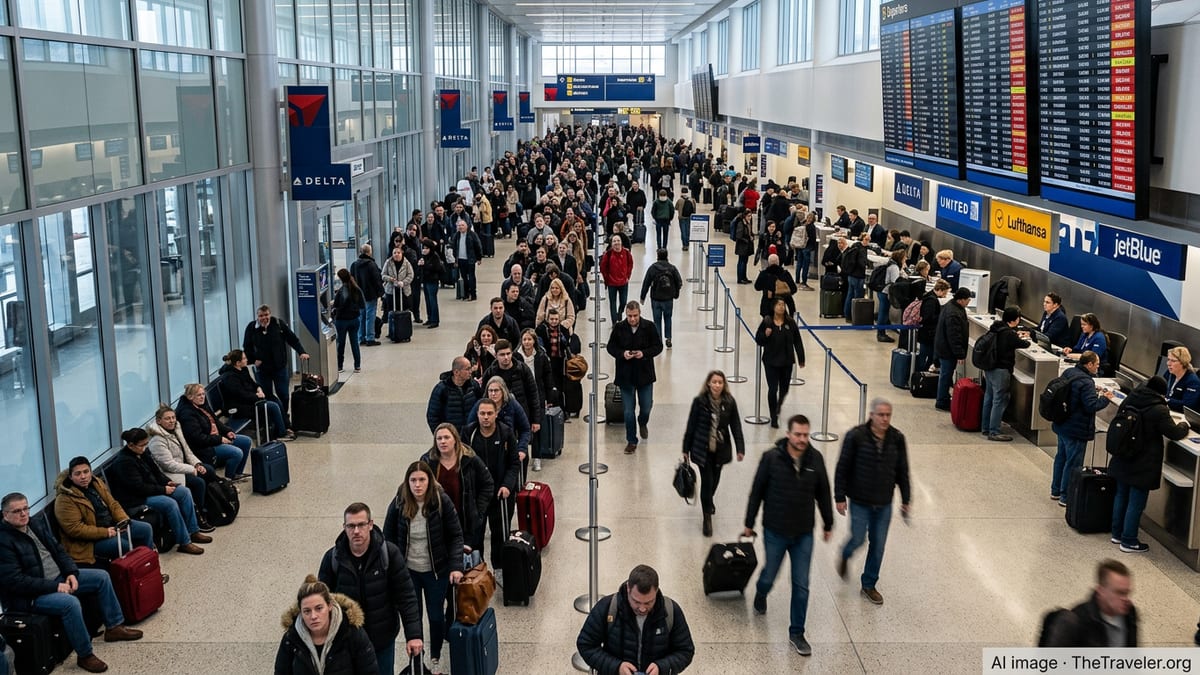
Equipment failure linked to damaged fiber cable
Publicly available information indicates the disruption began late Monday morning when an equipment outage affected a key Federal Aviation Administration facility that manages traffic for the New York and Philadelphia regions. Coverage from multiple outlets attributes the problem to construction crews in New Jersey accidentally cutting a Verizon fiber-optic cable, interrupting critical data and communications used to sequence aircraft in crowded Northeast airspace.
The outage led to immediate restrictions on departures and arrivals at some of the country’s most congested airports, including Newark Liberty International, John F. Kennedy International, LaGuardia, Philadelphia International and Teterboro. Flight-tracking data and FAA advisories show that what started as targeted slowdowns quickly escalated into formal ground stop orders as controllers lost access to normal traffic management tools.
Reports indicate this is the second significant disruption in less than two years linked to the same regional control architecture. The affected facility, based in the Philadelphia area, was also cited in connection with a wave of delays at Newark Liberty in spring 2025, underscoring ongoing vulnerabilities in the network that underpins operations at some of the nation’s busiest hubs.
By midafternoon Monday, the effects of the outage had rippled well beyond the core airports, with regional and long-haul flights across the Northeast forced into holding patterns on the ground and in the air as available routing capacity shrank.
Ground stops freeze operations at key Northeast airports
According to FAA status advisories and airline alerts, ground stops were put in place at Newark, JFK, LaGuardia, Philadelphia and Teterboro for several hours on September 21. At times, flights bound for these airports were held at their origin, while aircraft already in the air were metered into the region at reduced rates, dramatically slowing arrivals.
Data compiled from flight-tracking services shows that Newark Liberty was among the hardest hit, with more than 600 flights into and out of the airport canceled or significantly delayed by Monday evening. In New York City, operations at JFK and LaGuardia were also heavily disrupted as every major commercial airport serving the metropolitan area temporarily halted most movements.
Philadelphia International, which sits at the center of the affected control region, continued to report average departure delays of more than three hours well after the ground stop was formally lifted. Regional reports from Boston and other New England airports noted knock-on delays as aircraft and crews scheduled to feed those markets became trapped in the New York–Philadelphia bottleneck.
In parallel, congestion spread south along the busy Northeast Corridor as Washington-area airports dealt with additional traffic and rerouting. While not all facilities were placed under full ground stop orders, the sharp reduction in capacity at the core Northeast hubs forced adjustments across the network.
Repairs completed but disruption lingers into Tuesday
By Monday evening, transportation officials used public channels to announce that the damaged telecom lines had been repaired and that operations at affected airports were resuming. The FAA’s online status dashboard showed ground stops at the five core airports gradually lifted, allowing departures to restart and arrivals to increase toward more typical levels.
Even after the immediate technical problem was resolved, publicly available data showed delays persisting deep into the night. Airlines faced the challenge of repositioning aircraft and crews that had been stranded by the outage, while passengers remained stuck in terminals waiting for new departure times or scrambling to secure overnight accommodation.
On Tuesday, September 22, schedules across the Northeast continued to bear the scars of the disruption. Early-morning operations featured a mix of repositioning flights and heavily booked departures as carriers sought to clear backlogs. Some long-haul and international services timed around the annual United Nations General Assembly in New York appeared particularly affected, reflecting the concentration of high-value traffic in the region this week.
While most airports reported improving conditions by midmorning Tuesday, residual delays and occasional cancellations remained, particularly on shorter domestic sectors that depend on tight aircraft rotations through New York and Philadelphia.
Strain on already congested Northeast airspace
The incident has drawn renewed attention to the structural pressures on Northeast airspace, where busy commercial hubs are packed into a relatively small geographic area. Federal regulatory notices issued earlier in 2026 already highlighted chronic congestion and staffing challenges in the New York terminal area, prompting temporary relief on airline scheduling requirements at JFK, LaGuardia and Newark through at least October 2027.
Those documents describe how the New York Terminal Radar Approach Control facility and related centers manage exceptionally complex traffic flows, with overlapping arrival and departure paths for multiple major airports. The decision in 2024 to shift responsibility for Newark’s approach control to the Philadelphia facility was intended to ease some of that burden but has also concentrated risk when technical issues arise.
Industry filings from major carriers have warned that air traffic control staffing constraints and infrastructure limitations in the Northeast could continue to cause delays and cancellations even as demand for travel returns to, and in some cases exceeds, pre-pandemic levels. Monday’s outage, triggered by a single damaged fiber line, illustrated how quickly those underlying vulnerabilities can cascade into widespread network disruption.
Travel advocates observing the situation note that while the outage was not related to weather or security events, its impact on travelers was similar to what might be seen during a major storm, with multi-hour waits, missed connections and aircraft out of position across the country.
What travelers need to know if flying through the region
For passengers with flights scheduled through the affected airports over the next 24 to 48 hours, airline and airport advisories urge close monitoring of booking details and departure status. Many carriers have issued limited-fee or no-fee rebooking options for trips touching Newark, JFK, LaGuardia, Philadelphia and nearby regional airports on September 21 and 22, although the precise terms vary by airline and fare type.
Travelers connecting through the Northeast on international itineraries may face the longest recovery times, as widebody aircraft and crews often operate on multi-day rotations. Publicly available schedules show that some overnight transatlantic flights were canceled or significantly delayed on Monday, leaving fewer available seats for rebooked customers on Tuesday and Wednesday.
Those departing from smaller regional airports that rely heavily on feed into New York and Philadelphia are also being advised, through carrier communications and airport social channels, to arrive early and be prepared for additional screening and boarding queues as congested banks of flights are reassembled. In several cases, passengers on online forums reported waiting multiple hours for updated departure times as airlines worked through the backlog.
For now, there is no published indication of extended ground stops beyond the immediate response to Monday’s outage, but the event is likely to feed into ongoing federal discussions about infrastructure resilience and the balance between construction activity and protection of critical telecom links near major air traffic facilities.