


More news on this day
Passengers at Lexington’s Blue Grass Airport faced hourslong disruptions on September 21 after an equipment outage affecting Newark Liberty International Airport in New Jersey triggered cascading delays across the Northeast air network.
Get the latest news straight to your inbox!
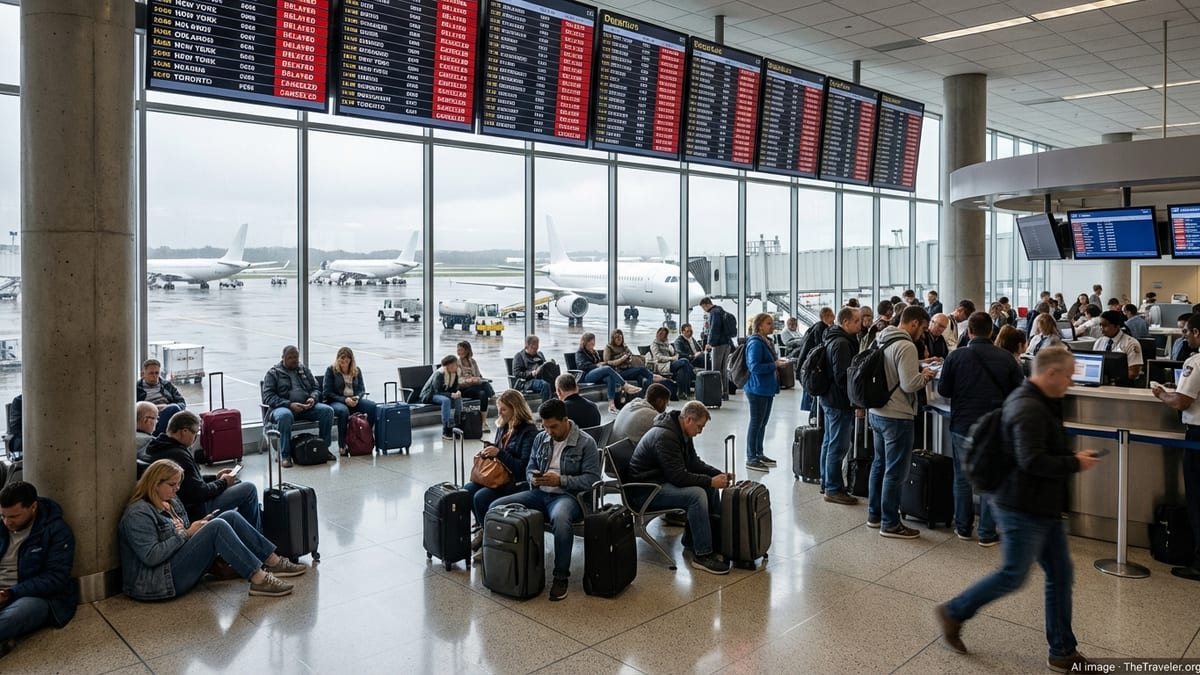
Outage at Newark Sends Disruptions Deep Into the Network
Publicly available information indicates that the Federal Aviation Administration ordered a ground stop at Newark Liberty International Airport on Monday morning, September 21, following an equipment outage that affected radar and communications used to manage air traffic in the busy Northeast corridor. National Airspace System status updates show that Newark, along with other major airports including Philadelphia, JFK and LaGuardia, experienced significant restrictions on arrivals and departures for several hours.
Coverage from multiple outlets describes the outage as linked to a damaged fiber connection serving the regional air traffic control facility, with both a primary system and backup line affected. The disruption forced air traffic controllers to sharply reduce the number of aircraft moving into and out of the New York and Philadelphia metropolitan areas, resulting in widespread delays and cancellations that stretched well into the evening.
While ground stops were lifted by late afternoon or evening at most affected airports, the highly interconnected nature of airline schedules meant that disruption continued as carriers worked to reposition aircraft and crews. Flight-tracking data compiled by national media show Newark among the hardest-hit airports, with hundreds of cancellations and delays nationwide tied to the outage.
Delays Hit Lexington’s Blue Grass Airport
According to a local television report carried by a national news aggregator, the Newark-centered outage directly impacted operations at Lexington’s Blue Grass Airport. The coverage notes that one flight from Lexington to Philadelphia experienced a delay of about four and a half hours, illustrating how quickly a technical problem hundreds of miles away can upend travel plans in a regional market.
Departure boards at smaller airports like Lexington often rely on tight connections to major hubs in the Northeast for both domestic and international itineraries. When those hubs are subject to ground stops or flow restrictions, outbound flights from feeder airports can be held at the gate, rescheduled, or in some cases canceled entirely as airlines attempt to manage reduced arrival slots and constrained airspace.
Published accounts of Monday’s disruptions point to a mix of extended gate holds and rolling departure time changes at Blue Grass Airport, rather than a complete halt to operations. However, even a single multi-hour delay on a key route such as Lexington to Philadelphia can cause missed onward connections to destinations including New York, Boston, and international gateways in Europe, forcing travelers into same-day rebooking or overnight stays.
Cause Traced to Damaged Fiber Lines and Aging Systems
National transportation coverage indicates that the root of Monday’s outage lies in a failure of telecommunications lines serving the regional air traffic control center responsible for Newark and several other Northeast airports. Reports describe an initial circuit problem followed by the discovery that backup fiber infrastructure had also been severed in New Jersey, reportedly in the vicinity of rail construction activity.
Statements summarized in press reports from federal transportation officials and the FAA describe the incident as an equipment outage compounded by the simultaneous failure of primary and backup systems. Analysts quoted in previous coverage of similar events have highlighted the vulnerability of aging radar, communications and fiber networks that underpin air traffic control, particularly in congested regions such as the New York–Philadelphia corridor.
Documents and prior public briefings on Newark’s operational challenges have also referenced longstanding concerns about congestion, staffing and infrastructure limitations. The latest outage reinforces those concerns, as even a relatively localized technical fault was able to trigger knock-on effects at airports scattered across multiple states, including smaller facilities like Lexington that depend on reliable access to large hubs.
What Travelers in Lexington Experienced
While comprehensive, real-time data specific to Blue Grass Airport on September 21 are limited, the available local television coverage and national flight-tracking information provide a snapshot of the traveler experience. Passengers expecting a routine afternoon or evening departure instead saw their flights slip backward in increments, with some departures pushed several hours beyond the original schedule.
The Lexington-to-Philadelphia service highlighted in local reports, delayed by approximately four and a half hours, is representative of how disruption at a hub reverberates through the network. Travelers bound for Newark, New York or other Northeast cities on connecting itineraries through Philadelphia likely faced missed onward flights and the need to rebook for later that night or the following day.
Airlines operating from Lexington typically instruct passengers to monitor mobile apps, text alerts and airport displays when irregular operations occur. In this case, publicly available social media posts and airline statements collected by national outlets advise customers across the Northeast to check directly with carriers for the latest departure and arrival information, noting that it would take time to clear the backlog even after the outage was resolved.
Ongoing Recovery and Lessons for Future Trips
By Monday night, transportation officials reported that the damaged fiber lines had been repaired and that operations at affected Northeast airports, including Newark, were resuming. Despite that progress, published coverage emphasizes that residual delays and scattered cancellations were expected into Tuesday as airlines repositioned aircraft and crews, with connections through the New York and Philadelphia areas remaining vulnerable to further schedule adjustments.
For travelers departing from secondary airports like Lexington, the episode underscores the importance of building additional time into itineraries that rely on congested hubs, particularly when connecting to international flights or time-sensitive events. Publicly available guidance from airlines and travel experts often recommends longer layovers when connecting through the Northeast, where weather, traffic volume and infrastructure issues can combine to produce sudden, large-scale disruptions.
The Newark equipment outage also adds to a recent series of air traffic control and telecommunications issues in the region that have attracted scrutiny from federal lawmakers and industry groups. As investigations proceed and more technical details become public, travelers in Lexington and other regional markets will be watching closely for signs that infrastructure upgrades and redundancy improvements are being prioritized to reduce the risk of similar widespread disruptions in the future.