


More news on this day
Travelers passing through Bordeaux–Mérignac Airport on July 21 faced severe disruption after a violent fire in a nearby commercial area killed two firefighters and forced temporary flight delays at the key gateway to southwest France.
Get the latest news straight to your inbox!
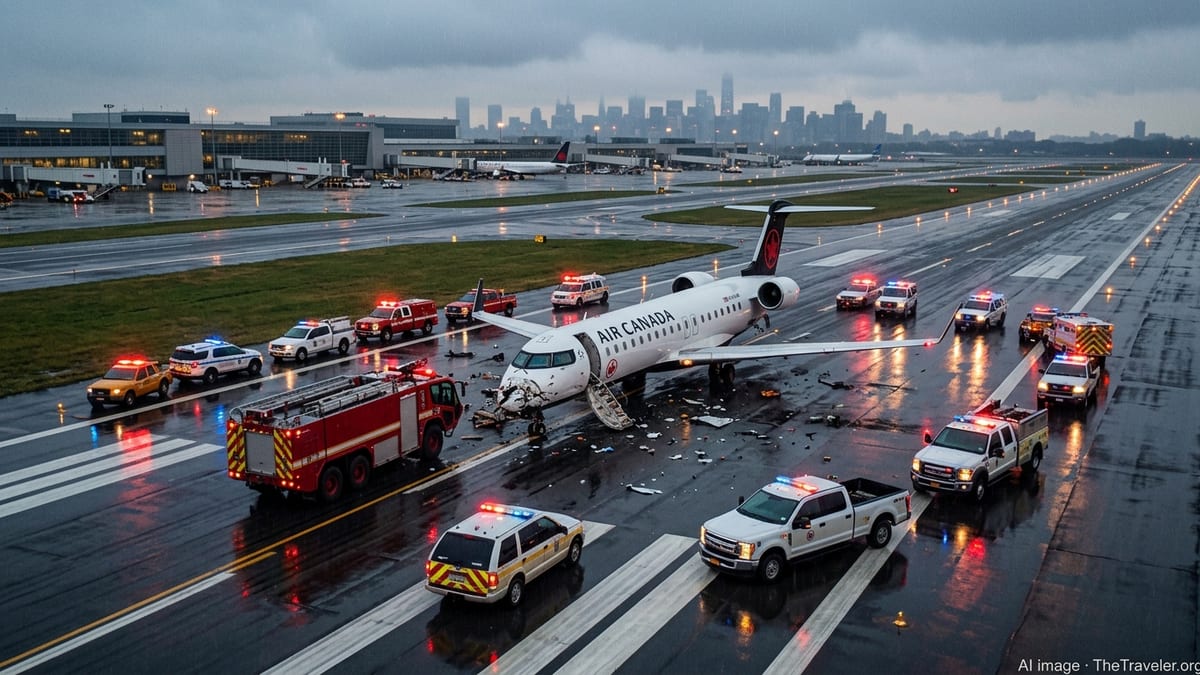
Deadly Blaze Erupts Near Bordeaux–Mérignac Airport
Reports indicate that the fire broke out on Tuesday afternoon in a commercial or industrial building in Mérignac, a suburb bordering Bordeaux–Mérignac Airport. Initial coverage describes a fast-moving blaze that generated dense smoke columns visible from the airport precinct and surrounding highways.
According to publicly available information, local fire services deployed numerous engines and personnel as the blaze intensified inside the structure. At some point during the intervention, part of the building is reported to have become unstable, and two firefighters lost their lives while engaged in the operation.
Coverage in French and international outlets notes that the fire did not originate on airport grounds, and passenger terminals and runways were not directly affected by flames. However, the proximity of the incident to the airport perimeter and the intensity of the smoke led to operational knock-on effects.
Early images and video shared by local media showed a thick black plume rising close to approach paths used by aircraft landing or taking off from Bordeaux–Mérignac, underlining the sensitivity of air operations to nearby industrial incidents.
Flight Delays and Operational Impact on Travelers
Published coverage indicates that air traffic controllers and airport operations teams temporarily adjusted movements as the fire developed, leading to delays and several diversions. Some inbound aircraft reportedly entered holding patterns while visibility and safety conditions were assessed near the affected area.
Short-haul European services appear to have been most affected, with delays reported on flights arriving from and departing to major hubs such as Paris and other regional cities. For a period on Tuesday afternoon, schedules were disrupted as ground crews coordinated with emergency responders working near airport access roads.
Travel industry observers note that even off-airport incidents can quickly ripple through aviation operations, especially when they occur so close to runways and navigation corridors. Any significant smoke plume, shifting wind direction or movement of emergency vehicles near approach paths can trigger temporary traffic management restrictions.
By early evening, reports suggested that most flight operations were gradually returning to normal, although residual delays remained possible as airlines and ground handlers worked through the backlog of late-arriving and departing aircraft.
Response From Local and National Authorities
French national media report that the deaths of the two firefighters prompted expressions of solidarity at both local and national levels. Publicly available information from parliamentary proceedings in Paris described how the incident was acknowledged during a session of the National Assembly, underscoring its national resonance.
Regional officials in Nouvelle-Aquitaine and local representatives in the Bordeaux metropolitan area are expected to coordinate support for the families of the firefighters and for colleagues who took part in the high-risk intervention. In France, deaths in the line of duty typically trigger formal procedures to recognize the service of responders.
Emergency management analysts note that the incident comes during a period of heightened vigilance across France, with fire services frequently mobilized for both structural fires and seasonal wildfires. The loss of two firefighters in a single urban operation is being viewed as a stark reminder of the dangers they face, even far from large-scale forest blazes.
Early reports also suggest that technical investigations will focus on how the fire started, the condition of the building and any hazardous materials that may have contributed to the intensity of the blaze. Findings from such inquiries often feed into updated safety and zoning rules for industrial and commercial premises near major transport corridors.
Concerns Over Industrial Risks Around Airports
The tragedy near Bordeaux–Mérignac Airport has renewed attention on land-use planning in the immediate vicinity of major air gateways. While airports are typically surrounded by mixed commercial and light industrial zones, risk assessments increasingly consider the potential impact of non-aviation incidents on air traffic and passenger safety.
Aviation risk specialists point out that dense smoke, airborne debris or explosions in nearby warehouses, factories or retail complexes can present hazards that are difficult to manage in real time. When such events occur under busy flight paths, even a localized fire can have disproportionate operational consequences.
In the Bordeaux area, the airport acts as a key gateway for tourism to the Atlantic coast, the wine regions and business traffic throughout southwest France. Disruptions linked to external industrial incidents therefore have both safety and economic dimensions, affecting airlines, inbound tour operators and local hospitality providers.
Observers suggest that the Mérignac fire may prompt a review of how fire loads, chemical storage and building standards are managed around the airport perimeter. Enhanced coordination protocols between airport operations centers and municipal fire services may also come under scrutiny, particularly in relation to early alerts and information sharing when off-site incidents could affect flight paths.
What Travelers Need to Know in the Coming Days
For travelers planning to pass through Bordeaux–Mérignac in the short term, airlines and online booking platforms are advising close monitoring of flight status information. While the immediate emergency phase of the incident has passed, some residual knock-on delays and minor schedule adjustments may continue as carriers reposition aircraft and crews.
Passenger advocacy groups emphasize the importance of allowing extra time when traveling to and from the airport in the days following such an event. Access roads may still be partially closed or affected by ongoing investigations, debris removal and safety inspections around the fire site in Mérignac.
Travel experts also note that the incident highlights the value of flexible booking options, comprehensive travel insurance and real-time travel alerts, particularly during high season when alternative flights and accommodations can be harder to secure at short notice.
As more details emerge about the origins of the fire and the sequence of events that led to the loss of two firefighters, the focus for the travel sector will center on ensuring that flight operations remain safe and predictable, while honoring the sacrifice of emergency responders who intervened so close to one of southwestern France’s busiest transport hubs.