


The first 30 days in Mexico are critical for putting in place the basic systems that make day-to-day life workable. This briefing outlines the operational tasks new arrivals should prioritize in their first month, focusing on communications, payments, essential services, and key identification numbers. It is designed for people assessing whether a move to Mexico is practically manageable, not for short-term visitors.
Planning Your First 30 Days: Sequencing and Priorities
The initial month in Mexico is best approached as a structured rollout of core enablers: local connectivity, identity numbers, payments, and service accounts. Many processes depend on each other, so sequencing matters. For example, opening a mainstream bank account typically requires a Mexican proof of address and often a tax ID, while signing long-term service contracts often requires both a local phone number and payment method. Treat the first 30 days as a staged project rather than a series of ad hoc errands.
In practice, the first week is usually focused on communications (SIM or eSIM), temporary payment solutions, and collecting address documentation from a landlord or utility bill. Weeks two and three are used to obtain or regularize Mexican identity numbers if eligible, set up domestic banking if appropriate, and begin transferring household services into the occupant’s name. By the end of the first month, most long-term residents aim to have a stable local number registered, at least one reliable payment channel that works domestically, and clear routines for paying utilities and everyday expenses.
Timeframes vary significantly by city and by individual immigration status, but most of the tasks listed in this article can be completed in under 30 days if documentation is in order and appointments are booked early. For those arriving without residency status, the first 30 days are often used to understand which processes can be completed as a visitor and which should be deferred until temporary or permanent residence is obtained.
Approaching the first month with a checklist and realistic expectations helps test the practical feasibility of a longer stay. The complexity of telecom registration, banking access, and identity management in Mexico has increased in recent years, so forward planning is essential.
Communications Setup: SIM, Registration and Internet Access
Local mobile connectivity is usually the first operational requirement. Mexico now requires that all mobile phone lines with Mexican numbers, including prepaid and postpaid SIMs and eSIMs, be linked to a verified individual or legal entity using official identification. Regulations implemented from January 2026 make registration mandatory for both new and existing lines and set a national deadline in mid 2026 for full compliance. This applies equally to foreign residents, Mexican nationals and tourists who acquire local numbers.
In the first 30 days, the basic communications checklist typically includes: obtaining a Mexican SIM or eSIM if a local number is needed, registering that line with a valid passport (and CURP for residents, where applicable), and confirming that the number remains active after registration. Major providers such as Telcel, AT&T Mexico and Movistar usually allow registration in-store using a passport, and some support online registration platforms, although foreign passports can sometimes require in-person verification. Because non-registered numbers risk suspension once grace periods expire, new arrivals should treat registration as a same-day task when purchasing a SIM.
Short-stay or scouting movers may also consider keeping their home-country SIM active with roaming for redundancy, particularly during the registration transition period. For residents setting up a long-term base, the next step in the first month is often arranging home internet service where housing is already secured. Fixed broadband contracts commonly require a local ID number, a Mexican address, and a local phone contact; some providers will install services for tenants with only a passport and proof of address, while others may ask for a tax ID or bank account for recurring payments. Where formal contracts are not yet feasible, pocket Wi-Fi, hotspotting from a registered prepaid SIM, or coworking spaces can bridge the first 30 days.
Given the increasing formality around telecom registration, anyone evaluating relocation to Mexico should account for the need to appear in person at a carrier outlet, present a valid passport, and comply with identity-linking rules soon after arrival. This is no longer an environment where anonymous prepaid SIMs can be reliably used long-term.
Identity Numbers and Core Documentation
Several Mexican identity numbers and documents are used repeatedly in daily administration. The most relevant in the first 30 days are the CURP (population registry code), RFC (taxpayer identification number) and a recognized proof of address known as comprobante de domicilio. Access to these varies depending on immigration status. Mexican nationals and foreign residents with valid temporary or permanent cards can typically obtain CURP and RFC more easily than visitors, and these identifiers are increasingly requested for tasks ranging from bank account opening to service contracts.
The CURP is a unique alphanumeric code assigned to individuals registered in Mexico’s civil population records. In practice, it is often required to interact with multiple public and private systems, including some banks, utilities and telecom operators. In many cases, foreign residents receive a CURP automatically linked to their residency documentation, while Mexican citizens already have it tied to their birth registration or national ID. For visitors or new residents, confirming how and when a CURP will be issued is an important early-month task, since not having one can complicate downstream processes.
The RFC functions as the Mexican tax identification code. Mexican law expects residents and many long-term foreign taxpayers to obtain an RFC when they carry out taxable economic activities in Mexico. Banks, larger employers and some landlords may request an RFC as part of their due diligence or anti-money-laundering procedures, and official guidance indicates that the RFC is generally required for opening standard bank accounts and for many formal contracts. Some consulates allow RFC applications to be initiated from abroad, while residents in Mexico usually apply through the tax authority once their residency and CURP are in place.
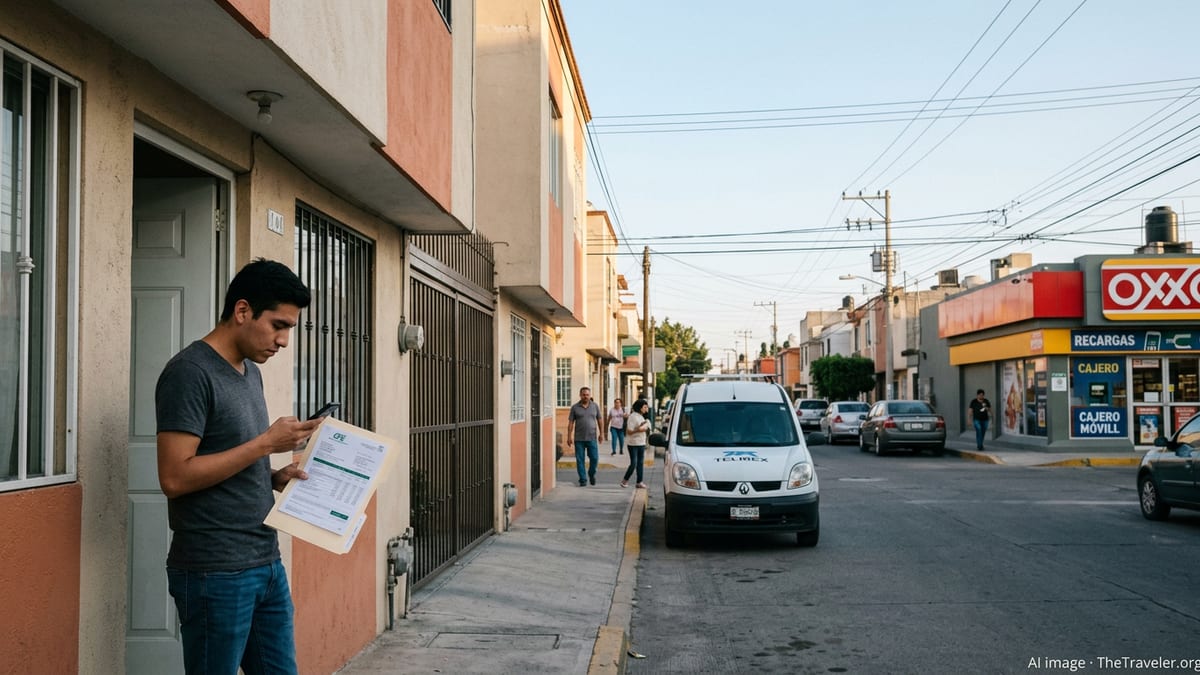
Proof of address is another critical element for the first 30 days. Banks, telecom operators, and many service providers normally require a recent comprobante de domicilio such as an electricity (CFE) bill, water bill, property tax statement, or formal bank statement showing a Mexican address. These documents are typically expected to be no more than a few months old. New arrivals often rely initially on the landlord’s utility bill showing the property address, even if it is not yet in the tenant’s name, while working toward transferring services or generating their own address-bearing documentation.
Banking and Payments Access in the First Month
Reliable payment methods are essential for operating in Mexico day to day. While many supermarkets, national chains and online platforms accept foreign credit and debit cards, significant parts of the economy remain cash oriented, particularly for small merchants, local markets and some service providers. The first 30 days should therefore focus on ensuring access to cash in Mexican pesos, validating that home-country cards function consistently, and assessing whether a local bank account or digital wallet is necessary for the intended lifestyle.
Opening a full-featured Mexican bank account has become more formalized. Recent guidance and practical experience suggest that many mainstream banks now prefer or require foreign applicants to hold temporary or permanent resident status, present a valid residence card, provide a recent Mexican comprobante de domicilio, and in some cases provide a CURP or RFC. A subset of institutions and fintechs may still open accounts for visitors using only a passport and local proof of address, but this is no longer guaranteed and is subject to each institution’s risk policies. Prospective relocators should not assume that a tourist arrival automatically qualifies for standard checking accounts.
During the first 30 days, many newcomers rely on a combination of foreign bank cards and ATM withdrawals. It is advisable to verify daily withdrawal limits, foreign transaction fees and network compatibility before arrival. Mexico has a dense ATM network in urban areas, but availability and fees can vary in smaller towns. Card-blocking due to fraud controls is a recurring operational risk, so maintaining at least two separate cards from different institutions is prudent.
For those with residency or planning long stays, the early weeks can also be used to research banks or fintech institutions that align with their needs, verify current documentation requirements, and schedule in-branch visits once address and ID documentation are solid. Some providers may accept utility bills or rental contracts as proof of address even if they are not yet in the applicant’s name, though this is not universal. In the first 30 days, careful documentation gathering is often more productive than attempting repeated account applications without the expected paperwork.
Utilities, Essential Services and Proof of Address
Utilities set-up intersects closely with proof-of-address requirements. Electricity is usually provided by the national utility CFE, while water, gas and other services vary by locality. In many rental arrangements, utilities remain in the landlord’s name, at least initially. For operational purposes, what matters in the first 30 days is understanding how bills are generated and paid, where and when they can be settled, and whether the tenant will eventually need the bills in their own name to satisfy bank or administrative requirements.
Newcomers who arrive to an already-equipped dwelling should request recent copies of all major bills within the first week, confirming the service account numbers, billing cycle, and usual payment methods. Paper bills often serve as formal proof of address, even when the tenant’s name does not appear, as long as they show the property’s full address. Electronic billing is increasingly common and can also function as proof, provided the document can be downloaded and printed or presented in PDF format when required.
Where housing is secured only after arrival, there can be a lag of several weeks before the first utility bills are issued at the new address. This delay can affect the timeline for bank account opening or tax registration that require recent comprobantes. Prospective residents should factor this into their expectations and, where possible, request that landlords provide existing utility bills covering the same property as interim address proof.
Beyond core utilities, other essential services often set up in the first month include domestic internet, gas delivery where pipelines are absent, and basic home maintenance contracts. These may require a local phone number and sometimes a local bank card for recurring payments. Coordinating these steps with the communications and banking tasks described earlier makes the overall process more efficient and ensures that each new account also contributes useful documentation for subsequent procedures.
Digital Accounts, Everyday Logistics and Local Integration
In parallel with formal systems, the first 30 days are typically used to configure digital tools that make everyday life in Mexico more manageable. Many national grocery, pharmacy, and delivery platforms support foreign cards and accounts but work more smoothly with local phone numbers for two-factor authentication and order confirmation. Obtaining and stabilizing a Mexican number early in the stay thus has benefits that go beyond simple voice or data usage.
Ride-hailing, food delivery and e-commerce services in Mexico often require SMS verification for sign-up and changes to account details. If a mobile number is later suspended for lack of registration, access to these services can be disrupted. Ensuring that the chosen number is correctly linked to identity records and kept active is therefore a small but important operational safeguard for daily logistics.
The first month is also a good period to understand common local payment flows: how rent is typically paid, whether landlords expect bank transfers, cash deposits at convenience stores, or online payments; how utility bills are commonly settled at banks, convenience stores or online portals; and whether recurring expenses such as mobile service or internet are better handled as prepaid top-ups or automatic debits. These patterns differ by region and landlord profile, so direct clarification in the initial weeks prevents later misunderstandings.
From an operational perspective, the first 30 days should result in a simple, repeatable routine for paying bills, topping up phone and data balances, moving money between accounts, and resolving service issues. This often involves saving key account numbers, recognizing official billing formats to avoid scams, and knowing where to go locally to resolve connectivity or payment problems in person when digital channels fail.
The Takeaway
The first 30 days in Mexico are not simply an acclimatization period; they are a critical implementation window for the systems that will support everyday life. Modern regulatory trends in telecoms, banking and identity management mean that casual, undocumented approaches that might have worked in the past are now less reliable. New arrivals should expect to present official identification for mobile service, accumulate credible proof of address, and potentially secure Mexican identity codes such as CURP and RFC if they plan to integrate into formal financial and service systems.
For people evaluating whether relocation to Mexico is practical, the key question is not only whether they wish to live in the country, but whether they are comfortable navigating these administrative requirements. Those prepared to follow structured checklists, retain documentation, and attend in-person appointments are more likely to achieve a stable setup within the first month. Those seeking a fully informal arrangement should recognize that regulatory tightening around telecom and banking may limit long-term flexibility.
By the end of a well-managed first 30 days, most residents will have a registered local phone number, access to cash and digital payments, a clear set of utility and service accounts, and a growing portfolio of Mexican documents that facilitate future procedures. This initial investment of time and attention significantly reduces friction in subsequent months and provides a realistic view of the practicalities involved in longer-term relocation.
FAQ
Q1. Can I rely only on my foreign SIM card during the first 30 days in Mexico?
It is technically possible in many urban areas, especially if the home-country plan includes roaming in Mexico, but this approach can be more expensive and may limit access to local services that require a Mexican number for verification. For anyone seriously testing relocation feasibility, obtaining and properly registering a local SIM within the first days is usually more practical.
Q2. How quickly do I need to register my Mexican SIM card after purchase?
Current rules require Mexican numbers to be associated with verified identity information, and new lines are generally expected to be registered at or close to activation. In practical terms, this means registration should be treated as an immediate step when acquiring a SIM or eSIM, not something to postpone for weeks.
Q3. Do I need a CURP in the first 30 days if I am only exploring Mexico as a potential place to live?
Short-term visitors typically manage basic tasks like prepaid mobile service and everyday purchases with just a passport. However, anyone considering longer-term residence or formal services such as local banking, postpaid contracts or tax registration should understand when and how they can obtain a CURP, as it becomes increasingly important for deeper integration.
Q4. Is it realistic to open a Mexican bank account during the first month as a newcomer?
This depends on immigration status and the specific bank. Many mainstream banks now expect foreign clients to have temporary or permanent residency, local proof of address and sometimes tax identifiers. Some institutions or fintechs may accept visitors with only a passport and address proof, but this is not guaranteed, so it is safer to assume that the first 30 days will be focused on establishing documentation rather than relying on immediate bank account approval.
Q5. What counts as acceptable proof of address for early administrative processes?
Commonly accepted documents include recent electricity, water or property tax bills, and sometimes bank statements showing a Mexican address. In many cases these documents do not need to be in the applicant’s name during the very first weeks, as long as they clearly show the address that corresponds to the housing arrangement.
Q6. How much cash should I plan to use in my first month in Mexico?
Cash usage varies by city and lifestyle, but new arrivals should assume that some expenses, particularly in small businesses and informal settings, will be cash only. It is prudent to ensure that daily ATM withdrawal limits and card fees from home-country banks support regular access to pesos, and to carry backup cards in case of fraud-related blocks.
Q7. Can I set up home internet and utilities before having a Mexican bank account?
In many cases yes, particularly when working through a landlord who already holds the service contracts. Some providers will accept cash payments or in-person payments at banks and convenience stores, allowing services to function before a local bank account is opened. However, automatic debits and some promotional packages may require a Mexican account or card.
Q8. Are there digital wallets or fintech apps that replace the need for a Mexican bank account in the first 30 days?
Several payment apps and digital wallets operate in Mexico, and some accept foreign cards for top-ups or direct charges. These can be helpful for bill payments or online purchases, but availability and features change frequently. They should be viewed as supplements rather than guaranteed replacements for a local bank account in a long-term relocation scenario.
Q9. How important is it to transfer utility bills into my name during the first month?
For many renters, utilities remain in the landlord’s name for some time without practical problems, provided there is a clear agreement on bill payment. Transferring bills into the tenant’s name can be advantageous later for proving address and stability, but it is not always essential in the initial 30 days unless a specific process, such as a bank application, requires it.
Q10. What are the main indicators that my first 30 days in Mexico have been operationally successful?
Key indicators include having a registered, functioning Mexican phone number; reliable access to cash and payment methods; clear routines and locations for paying utilities and services; at least one recent document proving your Mexican address; and an understanding of which additional identity numbers or accounts will be needed as you move from a trial period toward longer-term residence.