


More news on this day
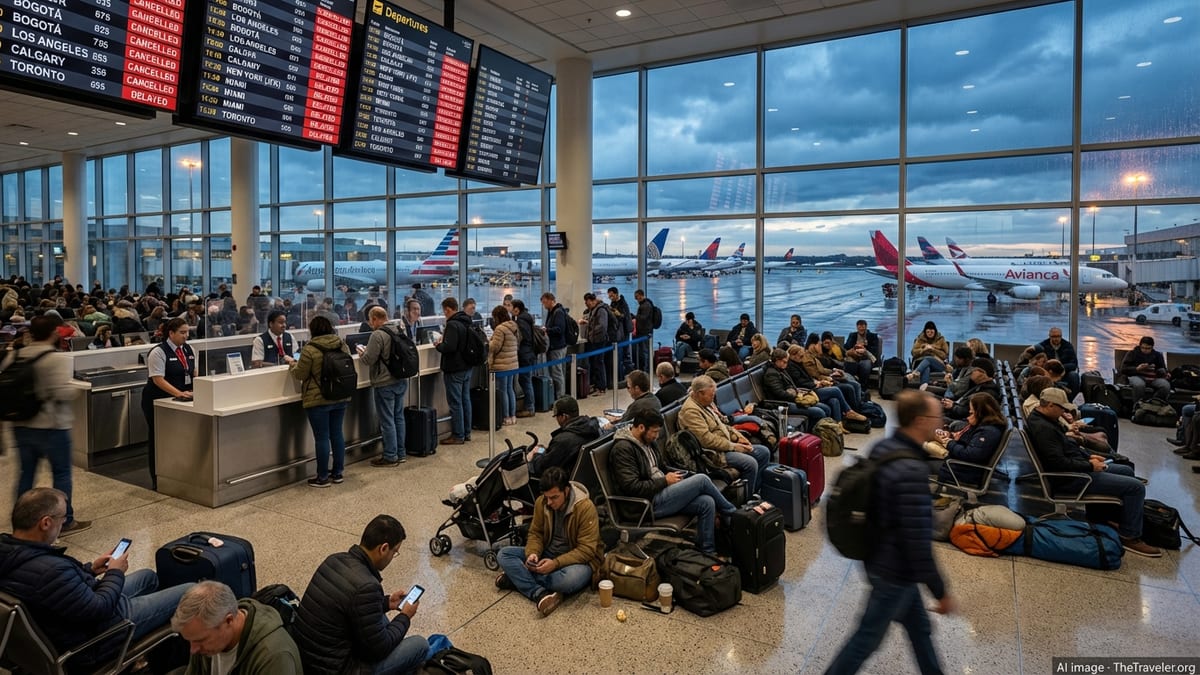
Travelers moving through Baltimore/Washington International Thurgood Marshall Airport faced major disruption in recent days as Southwest, Delta, and United flights were hit by a volatile mix of East Coast thunderstorms, traffic management actions, and lingering operational strains, creating widespread delays and cancellations across some of the airport’s busiest domestic routes.
Get the latest news straight to your inbox!
Storm Systems and Ground Stops Snarl Operations
Weather systems tracking across the Northeast and mid-Atlantic prompted significant schedule changes at Baltimore/Washington International, where large carriers rely heavily on tightly timed turnarounds. Publicly available advisory information shows that thunderstorms affecting the corridor from Baltimore to Boston and New York triggered traffic flow restrictions and rolling delays, adding pressure to already congested schedules.
Federal traffic management documents from March detailed how a prior ground stop affecting Baltimore, Washington National, Washington Dulles, and Richmond demonstrated the vulnerability of the region’s airspace to equipment issues and severe weather. Those earlier disruptions, which paused departures and forced diversions, offered a preview of the kind of cascading impact now being seen again as summer storm patterns intensify.
At BWI, these constraints translated into longer-than-usual taxi times, compressed departure slots, and aircraft waiting for release into the national airspace system. With multiple large carriers operating dense schedules from the airport, relatively short weather holds have been enough to compound into multi-hour knock-on delays, creating bottlenecks that can take the rest of the day to unwind.
Travel waivers issued for East Coast thunderstorms in June underscore how quickly conditions can deteriorate. Flexible rebooking options for flights touching Baltimore, Washington, and New York hubs have sought to disperse demand, but have also signaled that airlines expected extended disruption rather than isolated storms.
Southwest’s BWI Hub Under Strain
Southwest Airlines, which operates a major base at Baltimore/Washington International, has been particularly exposed to the recent turbulence. Historical airport data has long shown Southwest capturing the largest share of BWI passengers, a position that magnifies the effects when its operations are constrained.
Flight-tracking and schedule tools indicate that multiple Southwest departures from BWI have faced extended delays, sometimes exceeding an hour, as aircraft and crews became misaligned with their planned rotations. When early-morning or mid-day flights slip, aircraft intended for later legs are left out of position, creating a chain reaction through the carrier’s point-to-point network.
Travel discussion forums referencing a “Southwest chaos” weekend at BWI describe crowded concourses, gate changes, and rolling rebookings as storms and operational limitations converged. While such accounts are anecdotal, they closely match the pattern observed in schedule data, with clusters of delayed or cancelled departures appearing in waves rather than in isolated single flights.
Southwest’s decision to concentrate more of its Washington-area flying at BWI following the wind-down of service at Dulles has further raised the stakes. With more regional passengers funneled through a single hub during a period of unsettled weather and infrastructure strain, even localized disruptions have the potential to ripple far beyond Maryland.
Delta and United Face Cascading Delays
Delta Air Lines and United Airlines, though smaller at BWI than Southwest, have not been immune. Delta’s regional operations between Baltimore and key Northeast cities, including Boston, have seen schedule adjustments as aircraft are subject to the same airspace constraints and thunderstorm activity affecting the entire corridor.
Recent flight histories for certain Delta services touching Baltimore show diversions and timing shifts when storms or congestion made planned routings untenable. In some instances, flights have been forced to hold or reroute, while others have arrived late enough that crews reached their duty limits, prompting cancellations or lengthy re-crewing efforts.
United’s network has also been affected, particularly on routes connecting BWI with major hubs such as Denver and other inland markets. Real-time tracking for key United departures from Baltimore shows that on storm-impacted days, even flights scheduled to operate far from the East Coast weather bands experienced pushback delays, ground holds, or extended turnaround times as ramp operations slowed.
The combination of Delta and United schedule changes with the already substantial Southwest disruptions has amplified the effect for travelers. Passengers trying to rebook often find that alternate flights on other major carriers are already heavily subscribed or similarly delayed, limiting options and lengthening total journey times.
Passenger Experience: Long Lines and Limited Options
Travelers’ accounts shared through public forums and social media paint a picture of crowded terminals, filled-up standby lists, and uncertainty around departure times. At BWI, where Southwest controls a large swath of gates and carries a dominant share of passengers, check-in lines and security queues grew longer as multiple departure banks were compressed into narrower operating windows.
Many passengers attempting to switch from Southwest to other carriers, or between Delta and United, have reported limited availability and fare spikes on same-day options. When irregular operations rise across several competing airlines at the same time, the usual pressure-release valve of moving to a different carrier becomes far less effective.
Reports of diversions into BWI from flights originally bound for other East Coast airports add another layer of complexity. Diversion traffic increases the number of aircraft jostling for gates, fueling congestion on the ramp and inside terminals, and often leaving passengers in temporary limbo while crews assess fuel, weather, and crew duty constraints for any onward journey.
For some, overnight stays have become unavoidable when later flights cancel or misconnect following earlier delays. Hotels near the airport have reportedly seen elevated demand on impacted days, with walk-up rates rising as multiple large carriers simultaneously work to accommodate stranded passengers.
Looking Ahead: Summer Peak Meets Structural Pressure
The recent disruptions at Baltimore/Washington International arrive just as the busy summer travel period accelerates, raising concerns about the system’s resilience in the weeks ahead. BWI is preparing for runway rehabilitation work later in the summer, and federal analyses have already flagged the potential for operational impacts once that project begins.
At the same time, national consumer data for air travel indicates that delays and cancellations remain an elevated concern for passengers, with on-time performance lagging pre-pandemic benchmarks at many carriers. Baltimore, as a major base for Southwest and an important station for Delta and United, sits at the crossroads of these broader trends.
Travel guidance circulating among frequent flyers increasingly emphasizes building extra connection time into itineraries through BWI, especially on days with forecast thunderstorms along the East Coast. Advisories from airlines about potential weather and air-traffic delays in the Baltimore and Washington region suggest that carriers themselves are bracing for continued volatility as summer progresses.
For now, the situation at Baltimore/Washington International reflects a convergence of localized storms, infrastructure constraints, and structural pressures across airline networks. As Southwest, Delta, and United work to restore normal operations after each disruption cycle, the experience of recent days highlights how quickly travel at one key airport can tip into chaos when multiple major carriers are hit at once.