


More news on this day
Severe thunderstorms sweeping across the Washington region have triggered major disruptions at Washington Dulles International Airport, causing cascading delays and cancellations for United, Delta and a wide range of international carriers as summer travel demand surges.
Get the latest news straight to your inbox!
Ground Stops and Long Delays Grip a Major East Coast Hub
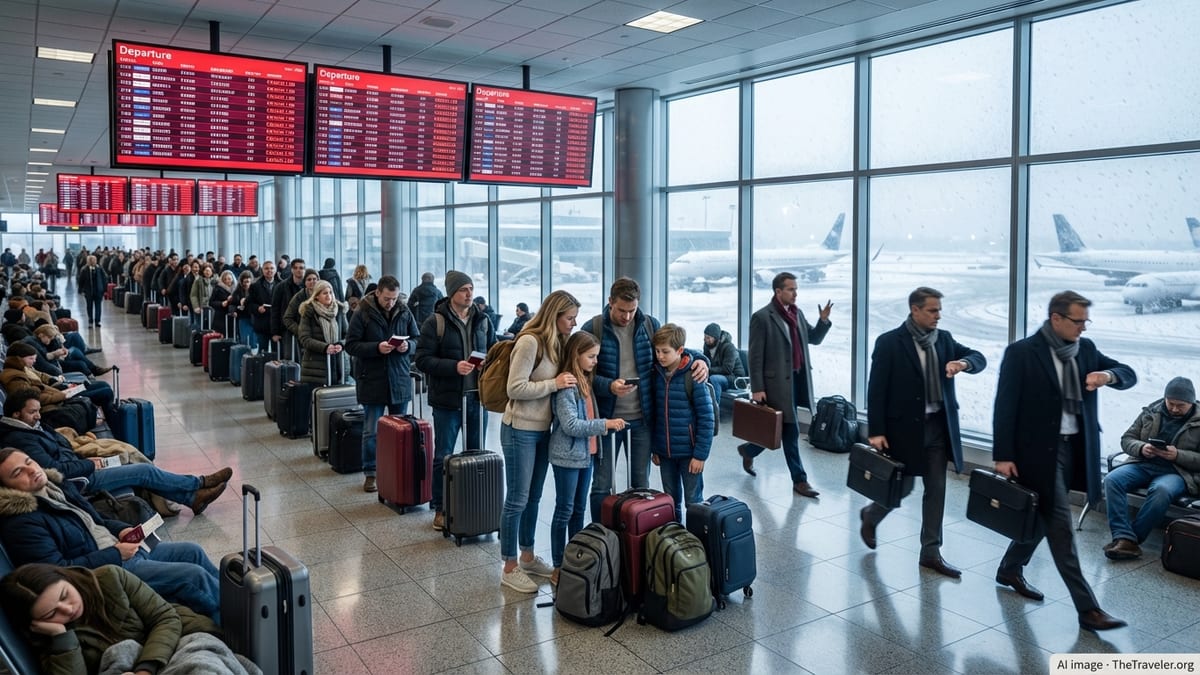
Publicly available data from federal aviation systems and flight-tracking platforms on June 13 indicate that thunderstorms and a highly unstable air mass have repeatedly forced traffic management initiatives at Washington Dulles International Airport, including ground stops and extended departure holds. These measures have pushed average departure delays well beyond an hour for many flights, with some travelers reporting waits approaching or exceeding two hours as the storm cells passed over the region.
Regional weather coverage shows that storms erupted after a day of intense heat and humidity around the capital area, with the National Weather Service issuing severe thunderstorm watches for parts of Northern Virginia and the wider Washington corridor. As lightning, low clouds and heavy rain moved directly over key flight paths, air-traffic managers temporarily halted or sharply slowed departures and arrivals at Dulles, a standard safety response that nonetheless quickly backed up operations on the ground.
These weather-related controls arrived at a time when Dulles has been handling record volumes of passengers following strong growth in 2025 and expanded long-haul services in 2026. With many flights already operating at or near capacity, relatively short interruptions in takeoff and landing rates translated rapidly into longer queues of aircraft waiting for gates, tugs and crews.
Travelers posting on public forums described crowded concourses and lengthy waits for updated departure times on Friday and into Saturday, as airlines struggled to re-time operations in step with the shifting storm line. Some passengers opted to rebook through other East Coast hubs when connections through Dulles became uncertain late in the day.
United and Delta Face Heavy Operational Strain
United Airlines, which operates its primary East Coast international hub at Dulles, appears to be among the carriers most exposed to the latest round of severe weather. Schedules show dense banks of United and United Express departures from midafternoon into the evening, a pattern that can amplify disruption when storms hit during peak periods and force multiple banks to compress or be rescheduled.
Reports from airline-focused tracking communities indicate that United has activated weather waivers covering East Coast thunderstorms this week, allowing some passengers to change travel dates within a limited window without additional fees. These waivers are intended to ease pressure on heavily affected hubs such as Dulles by encouraging flexible travelers to move their trips away from the worst of the storms.
Delta Air Lines, while not as dominant at Dulles as United, has also issued broad advisories tied to severe weather across the Northeast and Mid-Atlantic, listing Washington-area airports among the locations where passengers could face delays or cancellations. Publicly accessible advisory pages for Delta emphasize that customers heading to or from Dulles and other regional airports should monitor their flight status closely and consider rebooking options if their plans are flexible.
A combination of weather, crew duty limits and ongoing airfield construction projects highlighted in recent Federal Aviation Administration documentation has added complexity to recovery efforts. Once storm cells move away, airlines must secure available aircraft, reposition crews and work within regulated working-hour limits, making it difficult to immediately return operations to normal even when the skies begin to clear.
Ripple Effects for Global and Domestic Networks
Travel disruption at Dulles is having outsized effects on both domestic and international networks, given the airport’s role as a major connecting point. United’s long-haul flights to Europe, the Middle East and Asia, as well as services from Star Alliance and other foreign partners, depend heavily on tight inbound connections from across the United States. When thunderstorms force prolonged ground holds, arriving passengers can miss those onward departures, creating a surge of misconnected travelers who must be rebooked onto later flights.
Data from flight-tracking services over the past several days show clusters of delayed departures from Dulles to key domestic hubs such as Chicago and Atlanta, which in turn affects passengers connecting beyond those cities. Industry coverage of this week’s storms notes that severe weather across the broader Midwest and Northeast has already led to hundreds of cancellations, meaning that spare seats for disrupted travelers are limited on some routes.
International carriers using Dulles as their U.S. gateway are also feeling the strain. When late-arriving feeder flights from smaller U.S. cities cannot reach Dulles on time, airlines face difficult choices about holding widebody aircraft and risking duty-time limits for crews, or departing close to schedule with empty seats and then arranging alternative journeys for passengers left behind. Either scenario raises costs and complicates regular scheduling for subsequent rotations.
Analysts tracking on-time performance note that summer afternoon thunderstorms in the Mid-Atlantic are a recurring challenge, but this particular pattern of extreme heat followed by strong, fast-moving storms has produced repeated multi-airport ground stops in the Washington region in recent days. With peak summer travel still ahead, airlines are watching closely for signs of ongoing instability in regional weather patterns.
Travelers Confront Crowded Hubs and Limited Alternatives
For passengers, the latest round of storms has translated into long lines at check-in counters and customer service desks at Dulles, as well as increasingly crowded gate areas when rolling delays are posted for multiple departures in the same concourse. Some travelers have reported using alternative airports such as Reagan National or Baltimore/Washington International, although those facilities have also experienced weather-related slowdowns during the same storm system.
Consumer-focused travel advisories suggest that passengers scheduled to depart from Dulles during periods of elevated storm risk should arrive early, keep mobile notifications active and be prepared for gate or time changes even after boarding begins. Travelers with tightly timed international connections are being encouraged to consider earlier feeder flights or, where possible, to reroute through hubs that are not directly under the storm track.
In some cases, passengers have chosen to abandon same-day travel altogether when it became clear that missed connections would lead to overnight stays. Hotel demand near the airport has risen during the most intense disruption windows, and ride-hailing data indicates surges in trips between Dulles and downtown Washington as travelers search for alternative options by rail or road.
Although many flights are ultimately departing, the cumulative effect of late-day storms has been to stretch what might otherwise be short delays into multi-hour disruptions for some itineraries, especially those involving tight domestic-to-international connections.
What the Disruptions Signal for the Summer Travel Season
The recent turbulence at Washington Dulles offers an early snapshot of how fragile the summer air travel system can be when severe weather intersects with near-record demand. Industry analyses emphasize that major hubs such as Dulles, which rely on carefully timed banks of arrivals and departures, are particularly vulnerable when thunderstorms reduce available takeoff and landing capacity for even a few hours.
FAA planning documents show that Dulles is already operating amid a multi-year program of airfield and terminal construction that can restrict certain taxiways and gate areas at various times. While these projects are aimed at expanding capacity, including new concourse space tied to United’s future growth, they can temporarily reduce operational flexibility during irregular operations like those triggered by fast-building storms.
Travel watchers note that airlines serving Dulles are adjusting their playbooks after recent high-profile disruption events at other hubs across the country. Carriers have increasingly relied on preemptive schedule thinning, advance waivers and dynamic rebooking tools to get ahead of severe weather systems, but the latest storms highlight how quickly conditions in the Washington area can deteriorate during heat-driven thunderstorm outbreaks.
With climatologists pointing to a trend of more frequent extreme weather events and higher summer temperatures across parts of the United States, observers expect storms of this type to remain a recurring threat to operations at Dulles and other East Coast hubs. For passengers planning trips through the capital region in the coming weeks, the current episode underscores the value of building extra time into itineraries and staying alert to rapidly evolving forecasts and airline advisories.