


Few winter experiences feel as otherworldly yet accessible as sailing through thick sea ice on the Icebreaker Sampo in Finnish Lapland, then stepping down onto the frozen Gulf of Bothnia and floating among ice blocks in a bright red survival suit. With cruises selling out months ahead for peak dates and logistics that hinge on winter schedules in remote northern Finland, planning your Sampo experience properly is just as important as the cruise itself. Here is how to go from first idea to stepping on board, with practical, real-world details at every stage.
Get the latest updates straight to your inbox!
Understanding the Icebreaker Sampo Experience
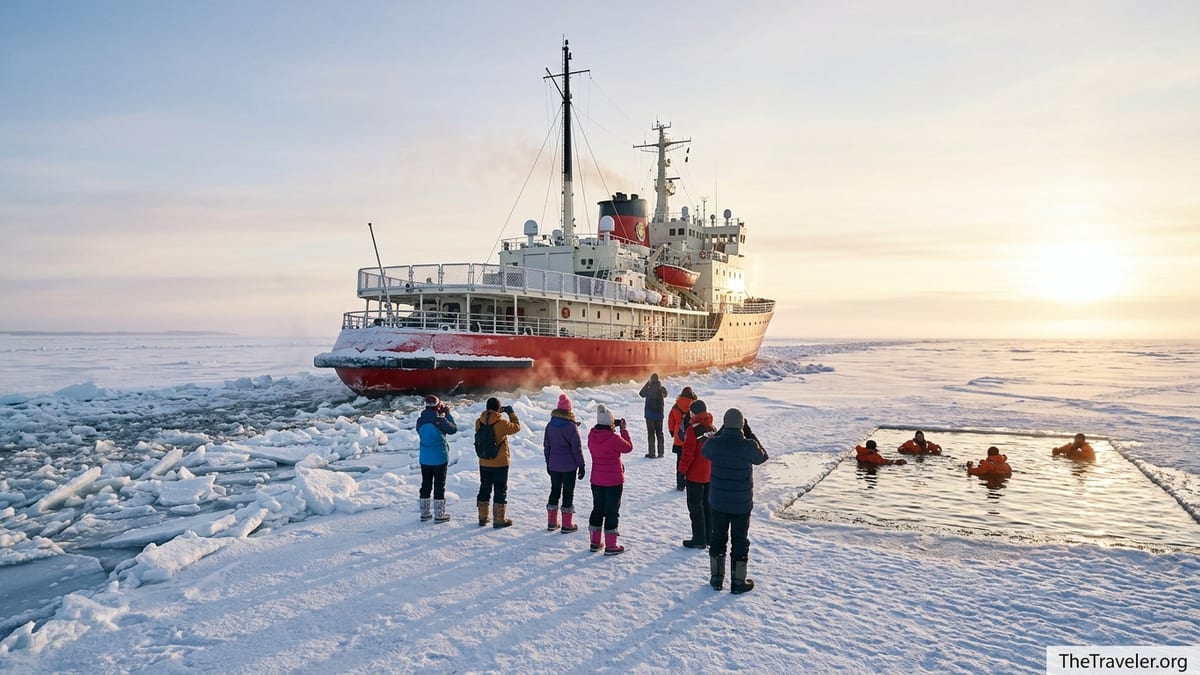
Icebreaker Sampo is a historic Finnish icebreaker built in 1960 and now stationed in Kemi, a small port city in southern Lapland on the Gulf of Bothnia. Instead of escorting cargo ships through winter ice, Sampo now spends roughly December to early April breaking sea ice for visitors, operating half-day cruises that combine time on deck, a guided ship tour, and the famous ice-floating session in insulated suits. The ship usually cruises a few hours out from the Port of Kemi into the frozen sea, ploughs channels through the ice, then stops and lets passengers disembark onto the ice itself, conditions permitting.
The experience is immersive but compact. A standard Sampo cruise is about 3.5 hours on the ship, plus transfer time between Kemi and the harbor and check-in at the SnowCastle of Kemi area. On many sample itineraries, guests check in at the SnowCastle complex on the waterfront, ride a shuttle bus about 15–20 minutes to the harbor at Ajos, then board Sampo for the main event before returning to the SnowCastle for lunch or a warm drink. In practice, you should plan at least half a day, and realistically most of a day, for the experience.
Most departures include several core elements: free time to explore the decks while the icebreaker is moving, a guided tour of the engine room and bridge in rotating groups, and a supervised floating session in the icy water in bright orange or red survival suits. Even in March, air temperatures on deck can drop well below freezing with wind chill, so the cruise feels very different from a typical sightseeing boat tour. That is part of the appeal, but it also makes thoughtful preparation crucial.
While Sampo remains the headline attraction, Kemi is now served by two icebreakers for tourism, Sampo and the newer Arktis, which allows more departure times across the winter season. However, Sampo continues to sell out early for Christmas through mid-March, so understanding the calendar and booking window is the first real planning step.
When to Go and How Far Ahead to Book
Icebreaker Sampo operates only in winter, when the Gulf of Bothnia freezes strongly enough to support icebreaking and walking on the ice. In recent seasons, public schedules have typically run from around the week before Christmas until early April. For example, a winter program may list Sampo cruises from about 20 December to the first week of April, with daily or near-daily departures at the height of the season and a reduced timetable at the beginning and end. Specific dates vary year by year, so always check the current winter schedule as soon as it is published.
For peak periods, especially the Christmas–New Year holidays, February school holidays in Europe, and long weekends around late February and early March, it is wise to treat Sampo more like a bucket-list concert ticket than a casual excursion. Families visiting Santa Claus Village in Rovaniemi often build a day trip to Kemi into their Lapland itinerary, and group tours block-book seats well in advance. As a rule of thumb, if you are targeting dates between late December and early March, start checking schedules as soon as the winter season is announced and aim to book at least 3–6 months ahead for best choice of departure times.
Outside peak dates, it is sometimes possible to find seats 4–8 weeks out, particularly in January and late March. However, the overall capacity per day is limited by ship size and safety rules, so relying on last-minute availability is risky if your trip dates are fixed. Travelers who book a multi-night Lapland package through tour operators in Helsinki, Rovaniemi, or Kemi often find the Sampo cruise bundled into a broader package with train tickets and hotel nights; this can be more expensive than building the trip yourself but provides some protection if weather or schedules change.
One more timing consideration is daylight. In Kemi, the darkest polar period is in December and early January, when days are short and twilight dominates. A morning cruise may start or end in low light; by March, you can expect much brighter conditions and often stronger sun reflecting off snow and ice. There is no bad month, but your photos and the overall mood will be very different if you sail in the blue light of January compared with the high-contrast white of late March.
Booking Your Cruise Step by Step
Most travelers book Sampo through the Icebreaking Company, which manages Sampo and Arktis cruises and centralizes ticketing. The typical booking flow is straightforward: select your cruise date, choose a morning or afternoon departure if there are multiple options, confirm whether you want transfers from Kemi or nearby cities such as Rovaniemi, fill in passenger details (including ages for children), and pay online with a major credit or debit card. Prices fluctuate by season and departure, but as of recent winters, adults often pay several hundred euros per person, with slightly reduced rates for children.
During booking, you will usually see two main product types. The first is the pure icebreaker cruise, which includes the ship experience, the ice-floating session, guiding, rescue suit use, and sometimes entry to exhibitions in the SnowCastle of Kemi area. The second is a cruise plus transfers package, which adds bus transfers from specific pick-up points in Kemi or Rovaniemi. For instance, a morning cruise may list pick-ups from central Kemi hotels, the Kemi railway station, and possibly Rovaniemi hotels or a central meeting point, with exact times such as 07:10 from a Kemi hotel and approximately 1.5 hours earlier if coming from Rovaniemi.
After you complete payment, you should receive a confirmation email with your cruise date, departure time, check-in deadline at the SnowCastle of Kemi, and any transfer information. It is worth saving this confirmation offline on your phone and printing a paper copy in case of connectivity issues. Pay close attention to the check-in time: recent guidelines state that all individual passengers and groups must check in at the SnowCastle of Kemi before the cruise, typically around an hour before the shuttle bus departs for the harbor. Missing this window can jeopardize your spot, as the ship cannot hold departure for late guests.
Travelers booking through third-party agencies in their home countries should verify that their voucher is properly linked to the Icebreaking Company’s system. In practice, this means double-checking the cruise time, the name of the ship (Sampo or Arktis), and whether transfers are included. Some guests have arrived in Kemi assuming hotel pick-up was included because they bought a “Lapland winter package,” only to discover that they need to arrange a taxi or walk to SnowCastle on their own. Clarify these details before final payment to avoid surprises in minus-20-degree temperatures.
Getting to Kemi and Reaching the Departure Point
Kemi is in southern Lapland, roughly 7–8 hours by train north of Helsinki and about 1.5 hours south of Rovaniemi by rail or road. Many international visitors fly into Helsinki, then take a domestic Finnair or other carrier flight to Kemi-Tornio Airport, which sits a short drive from the town, or continue north by VR long-distance train. The night train from Helsinki to Lapland is a popular option, with couchette cabins that allow you to sleep while moving and arrive in Kemi or Rovaniemi early in the morning. From Kemi railway station, the SnowCastle of Kemi is only a few kilometers away, reachable by taxi, a short pre-booked transfer, or, in milder conditions, a brisk walk.
Road links are also straightforward. National road 4 and European routes E8 and E75 pass near Kemi, and the drive from Rovaniemi usually takes around 90 minutes in good winter conditions. Rental cars are widely available in both cities, often fitted with winter tires by default. Visitors who are comfortable driving in snow often choose to base themselves in Rovaniemi or even in a resort area such as Ylläs or Levi, then drive to Kemi for the day. If you choose this route, factor in the possibility of slower traffic, reduced visibility, and icy stretches; allow extra time and keep your fuel tank healthy in very cold weather.
On the day of your cruise, your first destination is rarely the icebreaker itself. Instead, you normally check in at the SnowCastle of Kemi area, a waterfront complex that hosts the SnowCastle, snow and ice art, and related winter attractions. Recent official guidance emphasizes that all passengers must check in here, not directly at the harbor. From SnowCastle, shuttle buses operate to the Port of Kemi at Ajos, which lies several kilometers away along a port access road. Independent access to the port by private car is strictly controlled; many visitors find it easiest to rely on the official shuttles rather than drive into the industrial harbor area.
If you purchase the cruise only and travel independently, plan to arrive at SnowCastle well before your stated check-in time. For a 9:00 ship departure, for example, you might be asked to check in at the SnowCastle around 7:30 or 8:00, allowing time for document checks, optional breakfast in the on-site restaurant by prior reservation, and the shuttle transfer that typically departs around 30–40 minutes before boarding. In practical terms, this means leaving Rovaniemi by about 6:00 if you are driving yourself, or boarding an earlier transfer bus if you have prebooked that service.
What to Wear and Pack for a Subzero Sea Adventure
Succeeding on an Icebreaker Sampo day is as much about clothing as it is about tickets. Even in March, you are standing on an open deck while the ship breaks thick sea ice, with wind that can make minus 10 degrees Celsius feel far colder. During deep winter cold snaps, air temperatures can drop toward minus 20 or minus 30, and conditions on the ice and at sea can be harsh. While you will have access to indoor lounges and cafeteria-style food, much of the magic happens outside, so dressing properly keeps the experience enjoyable instead of uncomfortable.
Think in layers. Start with a thermal base layer on your legs and torso, ideally merino wool or a technical synthetic fabric labeled for winter sports. Add an insulating mid-layer such as a fleece or light down jacket, and top it with a windproof, waterproof outer shell or a serious winter parka. On the lower half, many guests wear lined ski pants or snow pants over their base layer. Sturdy winter boots with thick soles and good grip are preferable to standard city shoes; ice on deck and the frozen sea surface can be slick.
Accessories matter as much as the big items. A warm hat that covers your ears, a neck gaiter or balaclava, and insulated gloves or mittens are essential. Many travelers from milder climates underestimate how quickly fingers and cheeks can go numb in Arctic wind. Thin touchscreen glove liners under bulkier mittens let you operate a camera or smartphone without removing all insulation. For eye comfort, consider sunglasses or goggles; when the sun comes out over white ice, the glare can be intense, particularly in late winter.
For the ice-floating portion, the crew provides specialized arctic rescue dry suits that go on top of your clothing. You will follow instructions to step into a thick, fully sealed suit that keeps you warm and dry, then climb down a ladder or gangway to float in the opened ice channel. Under the dry suit, you should keep your base and mid layers but remove bulky outer jackets if instructed. Do not worry about your regular boots getting wet; you will typically remove them before donning the suit. Bringing a small backpack with a spare pair of socks, a compact camera, hand warmers, and a thermos flask is a good idea, although for safety reasons some items must stay on deck while you are in the water.
On Board: From First Step to Ice Floating
The rhythm of a Sampo cruise is deliberately structured to give every passenger time to experience the ship, the ice, and the water without feeling rushed. After the shuttle bus arrives at the harbor and you board, there is a short safety briefing and orientation. Passengers usually have some time to explore the main deck immediately, taking in the view as the ship starts to push and crack its way through the ice field. You will hear and feel the hull shudder as it rides up onto the ice before it fractures below, a sensation that is far more dramatic than a standard cruise ship glide.
Once under way, staff divide passengers into smaller groups for the guided ship tour and the ice-floating session. While one group visits the engine room, listening to the roar of the machinery and learning about the icebreaking technique, another prepares for ice floating, while others remain on deck or in the lounge with hot drinks. This rotation avoids crowding and allows better photos and more interaction with guides. Expect announcements in English and usually in several other languages depending on the day’s guest mix.
When conditions permit, the captain stops the ship in thick ice and opens a pool of water alongside the hull. Crew members help passengers down onto the ice itself, where you can walk a short distance away from the ship to feel the vast frozen expanse beneath your boots and take photos of Sampo surrounded by cracked white plates of ice. Then it is time for the floating session. Suited up, you will enter the cold black water in small groups, supervised at all times by trained staff. While the water temperature is near freezing, the dry suit and layers keep you surprisingly comfortable for the 10–15 minutes you are in the pool.
Back on board, you can warm up with hot drinks or lunch in the cafeteria, depending on the ticket type and the day’s schedule. Many visitors choose a simple Finnish-style meal such as salmon soup or meatballs, often available at the SnowCastle restaurant either before or after the cruise. During the return leg to the harbor, there is usually more free time on deck for final photos, plus a chance to visit the small souvenir shop on board and collect a certificate of participation that notes the date and air temperature during your cruise. Once back at the harbor, the shuttle transfers everyone to SnowCastle again, where transfers onward to Kemi hotels or the railway station depart.
Practical Tips to Avoid Common Pitfalls
Because Sampo operates in a remote, cold-weather environment with limited daily capacity, small oversights can have outsized consequences. One recurring issue is tight same-day transport. For example, some travelers plan to arrive on a midday flight into Kemi-Tornio Airport and go straight to an afternoon cruise. This can work when schedules line up perfectly, but any delay in baggage delivery, road conditions, or the flight itself can cause a missed check-in. Whenever possible, build in a buffer by spending the night in Kemi or Rovaniemi before your cruise day instead of treating the cruise as a same-day connection from a long-haul flight.
Another frequent miscalculation involves children and extreme cold. The Sampo experience is family-friendly, and many school-age kids love the sense of adventure. However, very young children or toddlers may find standing on a windy deck or walking on ice uncomfortable, especially at minus 20 degrees. If you are traveling with a family, consider booking your cruise in March, when daylight is longer and temperatures are often a bit milder, and double down on warm clothing for the smallest members. A spare pair of mittens in a parent’s pocket can save a young child’s day.
Weather and ice conditions can also alter plans. While cancellations are rare once the ship is in full winter operation, extreme storms or unusual ice conditions can cause schedule changes, particularly at the very start or end of the season. Make sure you understand the operator’s cancellation and change policies before booking. Travel insurance that covers weather-related disruptions is sensible when you are building a whole trip around one key activity in a remote location.
Finally, leave time to enjoy Kemi itself. Many visitors treat the town purely as a jumping-off point for Sampo, but the SnowCastle of Kemi area offers winter architecture, ice art, and sometimes a snow hotel or glass villas, depending on the year’s design. Combining a night in one of these specialty accommodations with your cruise can turn a single half-day outing into a memorable two-day Arctic mini-break, with northern lights viewing possible on clear nights between roughly September and March.
The Takeaway
Planning an Icebreaker Sampo experience is less complicated than it first appears, but it does require respect for winter, distance, and limited capacity. Start by anchoring your Lapland itinerary around a confirmed cruise date during the December to April season, ideally booked several months in advance if you are targeting holidays or school breaks. Build in generous travel buffers to reach Kemi, whether you choose the overnight train from Helsinki, a domestic flight to Kemi-Tornio Airport, or a road trip from Rovaniemi or another Lapland base.
On the practical side, treat clothing as non-negotiable equipment rather than an afterthought. Good boots, layered insulation, windproof outerwear, and warm accessories turn the difference between shivering on deck and savoring every minute of the ship’s deep rumble through the ice. Once on board, trust the structured program of guided tours, ice walking, and floating in survival suits to reveal the full character of this historic icebreaker and the frozen sea it still commands.
With careful planning, the Sampo cruise becomes more than a novelty outing. It is a rare chance to spend a few hours inside a working Arctic environment, guided by crews who understand its risks and rewards, yet presented in a way that is accessible to first-time winter travelers. For many visitors, the moment they step off the gangway onto the creaking white surface of the Gulf of Bothnia is the one image they remember most vividly from an entire trip to Finland.
FAQ
Q1. How far in advance should I book an Icebreaker Sampo cruise?
For peak dates between late December and early March, it is wise to book at least 3 to 6 months in advance, since departures can sell out quickly, especially for holidays and school breaks. Outside peak periods, you may find seats a month or two ahead, but relying on last-minute availability is risky if your travel dates are fixed.
Q2. Which airport should I use for the Icebreaker Sampo in Kemi?
The closest airport is Kemi-Tornio Airport, a short drive from the town of Kemi. Many international visitors first fly into Helsinki, then take a domestic flight to Kemi-Tornio or travel north by VR train to Kemi or Rovaniemi and continue by road from there.
Q3. Is the Icebreaker Sampo cruise suitable for children?
Yes, the cruise is generally family-friendly and children often enjoy the icebreaking and floating experience. However, very young children may struggle with long periods in subzero temperatures and strong wind on deck, so parents should pay close attention to clothing, consider visiting in slightly milder months like March, and be ready to spend more time indoors on the ship if needed.
Q4. What should I wear on board the icebreaker?
Wear warm, layered winter clothing: thermal base layers, a fleece or similar mid-layer, and a windproof, insulated outer jacket plus snow pants or ski trousers. Sturdy winter boots with good grip, a hat, neck gaiter, and insulated gloves or mittens are essential. You will receive a special dry suit for the ice-floating session, which goes over your base and mid-layers.
Q5. Can I drive myself to the harbor instead of taking the shuttle?
In most cases, passengers are required to check in at the SnowCastle of Kemi first and then use the organized shuttle buses to reach the Port of Kemi at Ajos. The harbor is an active industrial port with controlled access, so self-driving directly to the ship is usually not practical or permitted for independent visitors without prior arrangement.
Q6. What happens if the weather is too bad for the cruise?
Icebreaker Sampo is designed for harsh winter conditions and operates through heavy ice, so cruises run in most weather. However, extreme storms or unusual ice conditions can occasionally force cancellations or schedule changes, particularly at the start or end of the season. You should review the operator’s cancellation and change policy and consider travel insurance that covers weather-related disruptions.
Q7. Is food included on the Icebreaker Sampo cruise?
Food arrangements depend on the specific ticket type you purchase. Some packages include a meal at the SnowCastle restaurant before or after the cruise, while others offer food and drinks for purchase on board or at SnowCastle. When booking, check whether your chosen product includes lunch or if you need to budget separately for meals.
Q8. How long does the entire experience take door to door?
The core cruise itself is about 3.5 hours on the ship, but including check-in at SnowCastle, shuttle transfers to and from the harbor, and post-cruise time back at SnowCastle, you should plan for roughly 5 to 6 hours in total. Travelers coming from Rovaniemi or other towns should factor in additional travel time of 1.5 to 2 hours each way by car or bus.
Q9. Do I need previous cold-weather or swimming experience for ice floating?
No previous Arctic or swimming experience is required. The dry suits provide insulation and buoyancy, and the floating session is supervised closely by trained crew. You do not need to swim; you simply float on your back or gently move in the water within a controlled ice pool alongside the ship.
Q10. Can I combine the Sampo cruise with other activities in Kemi or Lapland?
Yes, many travelers combine the Sampo cruise with visits to the SnowCastle of Kemi, nights in nearby glass villas or snow accommodation, husky or reindeer safaris from Rovaniemi, or a broader Lapland circuit including ski resorts like Levi or Ylläs. Planning your cruise date first and then building additional activities around it is often the easiest way to structure a multi-day winter trip.