


Spread across the fells of Finnish Lapland, Urho Kekkonen National Park is one of Finland’s largest protected wilderness areas and a dream destination for hikers, skiers and aurora chasers. With more than 2,500 square kilometers of fells, forests and river valleys, it offers everything from family friendly day walks near Saariselkä to demanding multi day expeditions deep into the tundra. This guide breaks down the best tours, hiking routes and outdoor experiences you can actually book today, with practical examples to help you choose the right adventure for your time, budget and experience level.
Get the latest updates straight to your inbox!
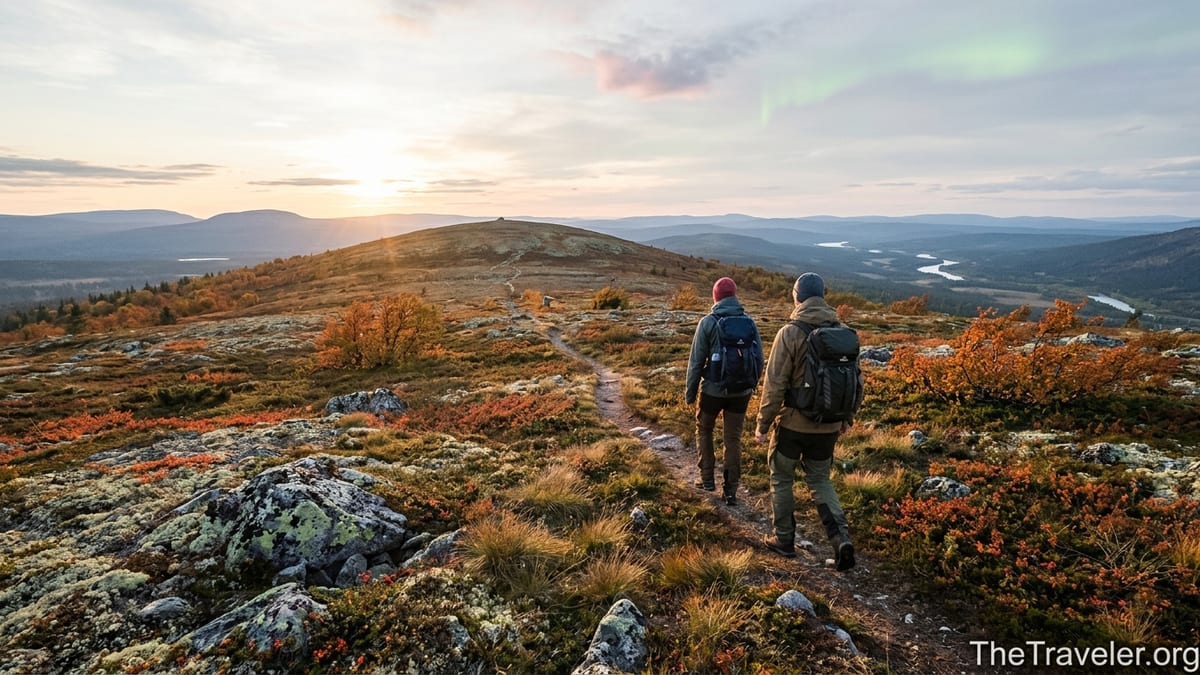
Why Urho Kekkonen National Park Belongs On Your Lapland Itinerary
Urho Kekkonen National Park lies in Finnish Lapland, stretching from the resort area of Saariselkä all the way to the Russian border. Established in 1983 and covering roughly 2,550 square kilometers, it is one of Finland’s three largest national parks and among the most visited, seeing well over 400,000 visits in 2024. Yet the park still feels wild and remote, especially once you leave the maintained trails near the western edge and head toward the trackless fells of the interior.
The landscape is classic subarctic Lapland. Rounded fells rise above birch and spruce forests, wide mires shimmer in late summer light, and clear rivers such as Luirojoki and Suomujoki cut through broad valleys. In summer and early autumn you hike under long days or even the midnight sun. From late August to October the hills glow with ruska, the short but intense Lapland fall foliage season. In winter, a thick snowpack transforms the park into one of Europe’s finest backcountry cross country skiing areas.
For visitors, the appeal is the mix of accessibility and genuine wilderness. On the western side, around Saariselkä and Kiilopää Fell Centre, you find marked summer trails, winter ski tracks, rental gear and guided excursions. Deeper in the park there are no marked hiking routes on the ground, only paths shown on maps, a sparse network of open wilderness huts and reservable cabins, and large areas where you may not see another party for days. That combination makes Urho Kekkonen an outstanding place to book guided tours, whether you want a gentle day hike to a fell viewpoint or a week navigating by map and compass.
Most international visitors base themselves in Saariselkä village, about a 30 minute drive from Ivalo Airport. From there, local operators and the official national park customer service center can help you arrange guided hikes, overnight trips, snowshoe or ski tours, and Northern Lights excursions. Typical small group day tours run from around 80 to 150 euros per person depending on length and inclusions, while multi day expeditions with full guiding and food usually start around 250 to 350 euros per day per person.
Top Day Hikes Near Saariselkä and Kiilopää
If you are new to Lapland hiking or visiting without much time, the western fringe of Urho Kekkonen offers several excellent day routes that start right from roadheads and visitor facilities. Trails here are generally well waymarked, with duckboard sections across wetlands and clear signposts at junctions. They are suitable for reasonably fit beginners and families, and many local guiding companies in Saariselkä offer half day and full day versions of these walks with transport, snacks and guiding included.
One of the most popular accessible routes is the circular Luulampi loop near Saariselkä, which combines fell views with a stop at the Luulampi day hut and café in summer. A typical guided variant is a 10 to 12 kilometer hike that gains moderate elevation as it climbs onto open fell before descending to the wetland fringed Luulampi pond. It is a good choice if you want a “first taste” of the park without venturing into remote terrain. Expect to pay roughly 90 to 120 euros per person for a full day guided version including hotel pick up and a simple trail lunch.
Another classic is the climb to Kiilopää Fell from the Kiilopää Fell Centre, which sits at the park’s western boundary. From the parking area you ascend through subalpine birch scrub onto an increasingly open ridge. The summit provides panoramic views across the fells of Urho Kekkonen, with Sokosti, the park’s highest peak at 912 meters, visible in clear weather. Independent hikers can complete the out and back in 2 to 4 hours depending on pace. Many guided tours combine the ascent with a visit to nearby fell tops such as Ahopää, and may end with a traditional Finnish sauna at the Fell Centre for around 30 euros extra.
For those looking for a more atmospheric evening experience, several outfits based in Saariselkä run twilight or “aurora hikes” along short forest and fell edge trails within the park boundary. These usually cover 3 to 6 kilometers at an easy pace, timed to coincide with astronomical twilight and possible Northern Lights displays between September and April. Prices often start from about 80 to 130 euros per person including transport, warm drinks and winter clothing rental if needed.
Signature Multi Day Hiking Routes Inside the Park
Beyond the day hiking zone, Urho Kekkonen opens into a vast area of unmarked fell country. While there are no color coded trail blazes in the interior, certain lines have become classic multi day routes shown on official maps and frequently described by Finnish hikers. Booking a guided trek along one of these makes sense if you are new to Arctic navigation, want local knowledge of river crossings and huts, or simply prefer to travel light with logistics handled for you.
One of the most famous hut supported routes is the Saariselkä to Raja Jooseppi traverse, often done in 5 to 7 days. Typically you start near Saariselkä or Kiilopää, strike east across a series of fells and river valleys, and finish at the remote Raja Jooseppi road near the Russian border. Along the way you can visit open wilderness huts such as Suomunruoktu or Tuiskukuru, overnight at the scenic Luirojärvi lake beneath Sokosti, and detour to climb the peak itself. Guided versions of this traverse with a professional wilderness guide, food, hut fees and transport usually cost around 1,500 to 2,200 euros per person for a week, depending on group size and level of support.
Another demanding but rewarding option is a 3 to 4 day circuit centered on Luirojärvi, often marketed by local companies as a “fell and fell lake adventure.” Hikers are typically transported by vehicle or arranged taxi to the Aittajärvi starting point, then follow faint paths along the Suomujoki valley before turning toward Luirojärvi. Days average 12 to 18 kilometers over mixed terrain that can include boggy sections, stream crossings and steep but short fell climbs. Many guided itineraries build in a rest afternoon at Luirojärvi with an optional side trip to Sokosti, then complete the loop back to the roadhead.
Less well known but increasingly featured in English language tour descriptions is the Nuortti Hiking Trail in the park’s southeastern corner. This approximately 40 kilometer route follows the scenic Nuorttijoki river canyon, with its mix of rocky slopes, pine forests and meadow like riverbanks. Finnish park authorities recommend 3 to 4 days for the full loop, which includes two river crossings, one via a bridge at Kolosaari and another via a wading cable when water levels allow. Several specialized outfitters now offer guided Nuortti treks in late summer and early autumn, generally priced from 900 to 1,400 euros per person for a small group including transport from Savukoski or Sodankylä, food and hut accommodation.
Experienced hikers frequently plan custom point to point or loop routes that link fell tops and huts across less trodden corners of the park. If you prefer this style of trip but lack Arctic experience, consider booking a private guide through a Lapland based wilderness guiding company. Rates typically range from 350 to 550 euros per day for the guide, which can be shared between 2 to 6 participants, plus your own food and transport costs.
Winter Adventures: Cross Country Skiing, Snowshoeing and Aurora Tours
From roughly late November to April, Urho Kekkonen becomes a prime destination for winter adventures. Snow cover is usually reliable by December, and the ski season in the fell areas often extends into late April, with the brightest spring skiing in March and early April. This is the time when many Finnish and international visitors book guided hut to hut ski tours and Northern Lights focused trips.
On the western side near Saariselkä and Kiilopää, an extensive network of machine groomed ski tracks and snowshoe trails offers easy access for beginners. Local operators run half day cross country lessons, snowshoe rambles into the forest edge of the national park, and evening aurora walks or snowshoe outings that combine a short tour with a campfire or kota shelter stop. Expect to pay in the region of 80 to 140 euros per person for small group outings, including rental of skis or snowshoes, poles and winter boots.
For more experienced skiers, the park’s hut system supports multi day backcountry ski expeditions on ungroomed terrain. A classic itinerary is a 5 to 7 day eastward ski from Kiilopää into the heart of the park, visiting wilderness huts such as Lankojärvi, Suomunruoktu and Luirojärvi. These trips require the ability to pull a pulk sled, navigate in whiteout conditions and manage Arctic winter camping skills even if you plan to sleep indoors most nights. Guided versions marketed through specialist tour operators usually cost from around 1,800 to 2,800 euros per person, often including all meals, shared hut or cabin accommodation, pulk and ski rental, and airport transfers.
Shorter two or three day winter tours are available for those who want a taste of hut life without committing to a week. For example, a “winter fell overnight” package might include skiing or snowshoeing from Kiilopää to a nearby open or reservable hut, preparing dinner together, spending the night in simple bunk style accommodation, and returning the next day. These mid length trips are popular with adventurous couples and families with teenagers, with prices often starting around 550 to 900 euros per person depending on group size.
Northern Lights specific tours are widely offered from Saariselkä and often enter the park’s dark sky areas, where the absence of light pollution gives excellent aurora viewing on clear nights. Operators use minivans or snowmobiles to reach suitable viewing spots, then provide hot drinks and photography tips. While many tours stay outside the park boundary on private land, some companies focus on silent, non motorized experiences within or close to Urho Kekkonen, such as aurora snowshoeing or kicksled outings, which suit travelers who prefer minimal noise and a stronger sense of wilderness.
Guided vs Independent: Which Is Right For Your Trip?
Deciding whether to book a tour or travel independently in Urho Kekkonen depends on your experience, season, and how far into the wilderness you want to go. For short summer day hikes near Saariselkä, confident hikers can easily explore with a good topographic map, trail information from the official park website and visitor center, and standard hillwalking gear. Public buses from Ivalo Airport to Saariselkä, along with well signed trailheads, make logistics straightforward. Booking a guided day hike still adds value through interpretation of local Sámi culture, geology and wildlife, but it is not essential if you are on a tight budget.
For multi day summer hikes beyond the maintained trail network, a guided trip is strongly recommended unless you already have experience with multi day backpacking in remote, pathless terrain. The park interior lacks consistent waymarking, and poor visibility, swollen rivers after rain, and long distances between huts can surprise even fit hikers. Guided groups benefit from local knowledge of safe river crossing points, realistic daily distances and backup plans if conditions change. In practice, many first time visitors opt for a 3 to 5 day guided trek, then return in future years to plan their own routes armed with better understanding of the terrain.
In winter, the balance tips even more clearly toward guided travel for most visitors. Navigation in whiteout or polar night conditions demands skills that many casual skiers do not possess, and temperatures can drop well below minus 20 degrees Celsius. Joining a guided ski or snowshoe tour ensures that you have appropriate equipment, learn safe travel techniques on frozen lakes and fells, and understand how to use the park’s hut system responsibly. Even experienced mountain hikers from milder climates often underestimate the energy demands of Arctic snow travel and benefit from a local guide’s pacing and risk assessment.
Cost is an important consideration, but guided trips in Lapland compare reasonably with other Arctic destinations. For example, a week long guided hut tour in Urho Kekkonen usually costs less than a comparable expedition in Svalbard or Greenland, partly because accommodation can rely on existing huts rather than full tent camps. Independent hikers, on the other hand, can keep costs modest by using free open wilderness huts, bringing their own food from supermarkets in Ivalo or Rovaniemi, and using public transport instead of private transfers, though they shoulder all responsibility for safety and navigation.
Planning, Seasons and Practical Tips
Urho Kekkonen is a true year round destination, but the nature of your visit changes dramatically with the seasons. June and early July bring long days, mosquitoes and the lushest greenery. Late July and August are popular for multi day hikes thanks to more stable weather and fewer insects. Early to mid September is prized for autumn colors, when birch leaves turn gold and ground vegetation glows red, but nights are already frosty and daylight hours shorter. From late September into early April the focus shifts to snow based activities and Northern Lights viewing.
When considering tours, match your season to your interests. For example, if your dream is a week long wilderness hike with tent or hut overnights, look at departures from late July to mid September, when river levels are generally lower and trails are mostly snow free. If you want to combine skiing with bright sunshine and longer days, target March and early April, when Lapland enjoys “spring winter” with strong sun and good snow. For aurora focused breaks, periods between late August and early April are suitable as long as skies are dark and clear, though cloud cover is always a wildcard.
Whatever the season, preparation matters. Temperatures can change quickly, so layered clothing, waterproof outerwear, a reliable map and compass, and a fully charged phone with offline maps are essential even on shorter hikes. For guided tours, check in advance what equipment is included. Many operators provide snowshoes, skis, poles, tents, pulk sleds or cooking gear as needed, while expecting you to bring appropriate base layers, socks and personal items. Travel insurance that covers remote area evacuation is strongly recommended, especially for winter trips or multi day treks far from roads.
Accommodation options in and around the park range from simple wilderness huts and reservable cabins to comfortable hotels and glass igloo type properties in and near Saariselkä. A common pattern for tour based trips is to spend the first and last night in a hotel or guesthouse, with the intervening nights in huts or tents. For example, a four night summer trek might package two nights in a Saariselkä hotel with breakfast and three nights in huts, while a shorter two night winter adventure might include a final night in a glass roof cabin for aurora watching. Booking early for peak periods, especially around Christmas, New Year and the main Finnish holiday weeks in February and March, is wise.
FAQ
Q1: Do I need to pay an entrance fee to visit Urho Kekkonen National Park?
There is no entrance fee to the park itself. Most trails and wilderness huts are free to use, though some reservable huts and guided tours have separate charges.
Q2: What is the best time of year for hiking in Urho Kekkonen?
The main hiking season runs from late June to mid September. July and August offer the most stable conditions, while early September is ideal for autumn colors but can be colder.
Q3: Are the hiking trails in the park clearly marked?
Near Saariselkä and Kiilopää many day trails are well signposted, but much of the park interior has no marked routes on the ground, only paths shown on maps, so navigation skills are important.
Q4: Can beginners join multi day tours in the park?
Yes, several operators offer beginner friendly multi day hikes and winter trips, but you should be reasonably fit and prepared for uneven terrain, changing weather and simple hut accommodation.
Q5: How do I reach Urho Kekkonen National Park without a car?
Most visitors fly or take the train to Rovaniemi or Ivalo, then continue by bus to Saariselkä, which sits next to the park and serves as the main hub for tours and trailheads.
Q6: Is it safe to drink water from rivers and streams?
Many locals drink directly from clear upland streams, but visitors are generally advised to treat water by boiling or filtering, especially near popular huts and campsites.
Q7: What wildlife might I see on tours and hikes?
Common sightings include reindeer, willow ptarmigan, various grouse and occasionally elk. Large predators such as brown bears and wolverines live in the park but are rarely seen.
Q8: Do I need special permits to camp or use wilderness huts?
No special permits are needed for camping or using free open wilderness huts, though some huts must be reserved in advance and standard park rules about fires, waste and conduct apply.
Q9: Can I see the Northern Lights from Urho Kekkonen?
Yes, the park lies well within the auroral zone, and on clear nights between roughly late August and early April there is a good chance of seeing Northern Lights away from artificial light.
Q10: What kind of fitness level is required for a week long trek?
For a 5 to 7 day hut to hut trek you should be comfortable walking 15 to 20 kilometers a day with a loaded backpack over uneven ground, and able to handle consecutive long days outdoors.