


More news on this day
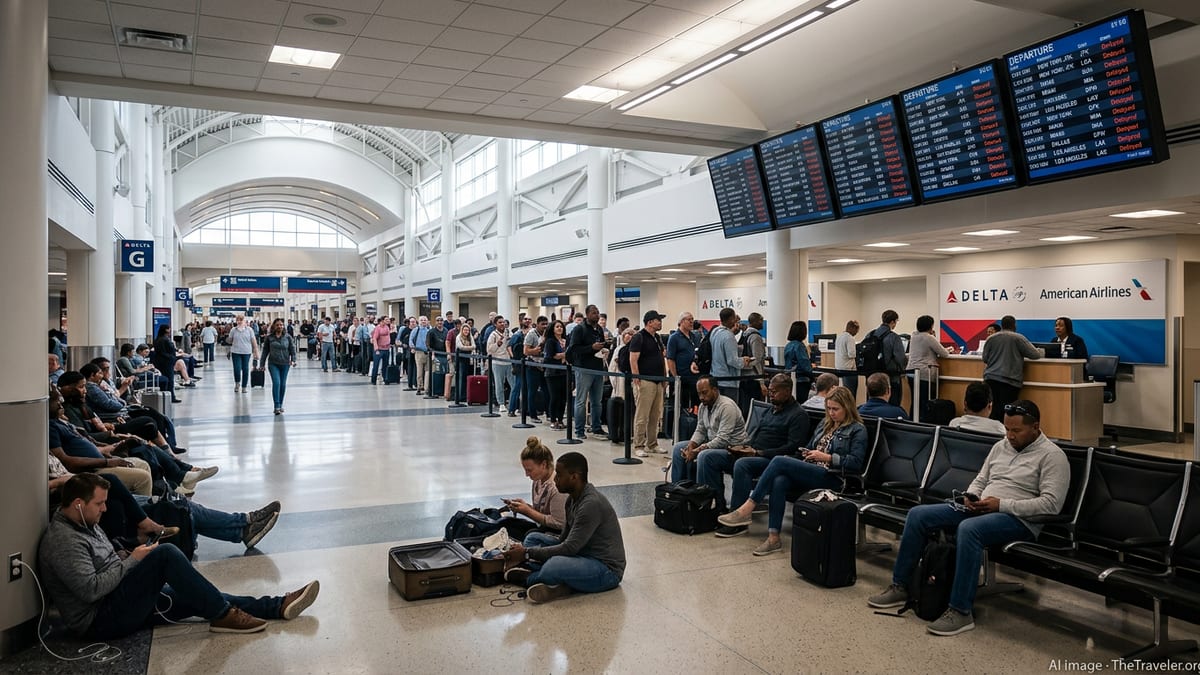
Air travelers are being warned to prepare for possible flight delays today as a mix of late-summer storms, infrastructure constraints and high traffic volumes strains operations at several major airports in North America and Europe.
Get the latest news straight to your inbox!
Weather and traffic patterns drive higher delay risk
Publicly available operational data indicates that a combination of thunderstorms, lingering tropical moisture and seasonal congestion is likely to slow departures and arrivals at multiple large U.S. airports today. The Federal Aviation Administration’s daily traffic report highlights the potential for ground delay programs and other flow controls when storms and low visibility overlap with peak travel periods.
Live tracking based on FAA feeds shows clusters of delays commonly building around the late afternoon and evening rush, particularly at hub airports where traffic volumes are already high. These constraints can quickly ripple across airline networks when aircraft and crews arrive late from earlier flights, leaving little room in the schedule to recover.
In Europe, recent network briefings from air traffic managers point to continued high traffic levels and sensitivity to storms over key air corridors. A recent weekly analysis reported hundreds of thousands of minutes of weather-related en-route delay in a single day during late August, with traffic still running above last year’s levels. Those patterns suggest that even localized thunderstorms can trigger widespread schedule knock-on effects.
Together, these conditions increase the odds that travelers may see departure holds, airborne holding, and missed connections, even if their local weather appears calm when they reach the airport.
Air traffic control and airport capacity remain under pressure
Forecast and regulatory documents show that structural constraints at several major hubs continue to influence delay patterns. The FAA has flagged staffing challenges and infrastructure projects in busy terminal areas, including the New York region, as factors that can necessitate more frequent use of traffic management initiatives when demand outstrips available capacity.
Recent federal notices on slot and schedule relief at New York area airports describe expectations for elevated congestion if airlines continue to operate close to historic levels while air traffic facilities remain short of ideal staffing. Even with schedule adjustments, high hourly arrival and departure rates during busy travel windows can leave these airports vulnerable to cascading delays when storms or low ceilings reduce usable runway capacity.
Construction and runway maintenance at select large airports, such as reduced runway configurations at San Francisco International Airport through later this year, add another layer of operational complexity. When key runways are closed or restricted, controllers must meter traffic more aggressively, which can translate into longer taxi-out times and inbound holding during peak periods.
Industry forecasts for the coming decade anticipate continued growth in flight activity without commensurate expansion of airport and airspace infrastructure in the near term. That imbalance, analysts note, points to a higher baseline risk of delays unless traffic management technologies and procedures can unlock additional capacity.
Recent disruptions highlight how quickly delays can escalate
Recent operational disruptions underscore how rapidly a localized issue can turn into widespread travel headaches. In the United Kingdom this week, an air traffic processing problem led to the cancellation of more than a thousand flights and extensive knock-on delays as airlines worked to reposition aircraft and rebook passengers once the system had been restored.
Similar patterns have played out in the United States during intense weather events earlier this year, when active storm systems over major hubs prompted airlines to activate broad travel waivers. During those periods, carriers encouraged passengers to move trips outside the worst forecast windows, citing elevated risks of long delays or cancellations as thunderstorms and low clouds repeatedly disrupted operations.
While today’s situation is not on the same scale as a full air traffic system outage, the combination of strained facilities, construction at selected hubs and unsettled late-summer weather means that modest disturbances can still propagate across airline networks. Travelers booked on tight connections or last departures of the day may be particularly exposed if earlier flights on their itinerary encounter delays.
Network-level data from recent weeks also shows that average air traffic flow management delay per flight has been climbing compared with earlier in the summer. Even a few extra minutes per flight, when multiplied across thousands of operations, can lead to congested taxiways, saturated gates and longer waits for takeoff and landing slots.
Airlines deploy waivers and flexible policies around storms
In response to the elevated risk of disruption, several major U.S. airlines have used travel waivers around recent storm systems to give customers more flexibility. Under these waivers, passengers traveling to, from or through specified airports during defined dates can often change to nearby travel days without paying additional change fees or fare differences, subject to seat availability.
Recent examples include waivers around tropical systems in the central Pacific and Gulf regions, as well as severe thunderstorm outbreaks affecting hubs such as Houston, New York and Chicago. Advisory pages from individual carriers and archived exception policies for travel agents show repeated use of these tools whenever forecasts call for significant convective weather in busy airspace.
Some airlines have already issued or extended waivers covering parts of this week for routes exposed to tropical weather near Hawaii and persistent thunderstorms in the eastern United States. These provisions are designed to shift some demand away from the most vulnerable periods and reduce the number of passengers who might otherwise be stranded when storms force last-minute schedule changes.
Travelers considering adjustments to their plans are generally advised, in public guidance, to make changes through the original ticketing channel. For tickets issued by online travel agencies or third-party sellers, policies typically require customers to work through those providers to take advantage of airline waivers.
What travelers can realistically expect and how to prepare
Available government and industry guidance suggests that travelers should plan for the possibility of delays rather than assume on-time performance during periods of unsettled weather and heavy traffic. The FAA’s daily air traffic report notes that its planning information is intended to set expectations for possible delays, with passengers urged to check directly with their airlines for flight-specific status updates.
Consumer protection materials from the U.S. Department of Transportation clarify that passengers may be entitled to refunds in certain cases of significant delay or schedule change when they choose not to travel. However, those rights vary by circumstance and are distinct from airline-specific policies on meals, hotels or rebooking when disruptions are caused by weather or other factors outside a carrier’s control.
Public tools that aggregate live FAA and airport data allow travelers to review current delay patterns by airport before leaving for the terminal. These services, along with airline mobile apps, can help passengers decide whether to arrive earlier, adjust connecting itineraries, or proactively seek alternative flights when large clusters of delays begin to form.
Given the conditions forecast for today, passengers flying through major hubs in the Northeast, upper Midwest, Gulf Coast and transatlantic gateways may want to build extra time into connections, keep essential items in carry-on baggage, and stay alert for messages about gate changes or revised departure times. While many flights are still expected to operate close to schedule, the likelihood of at least minor delays is elevated across portions of the network.
EUROCONTROL Network Flash Briefing