


More news on this day
Hundreds of travelers across Canada are facing missed connections and overnight disruptions after a fresh wave of delays and cancellations at Toronto Pearson International Airport spilled into major hubs including Vancouver, Montreal, Halifax, Calgary, Ottawa, Edmonton and Quebec City.
Get the latest news straight to your inbox!
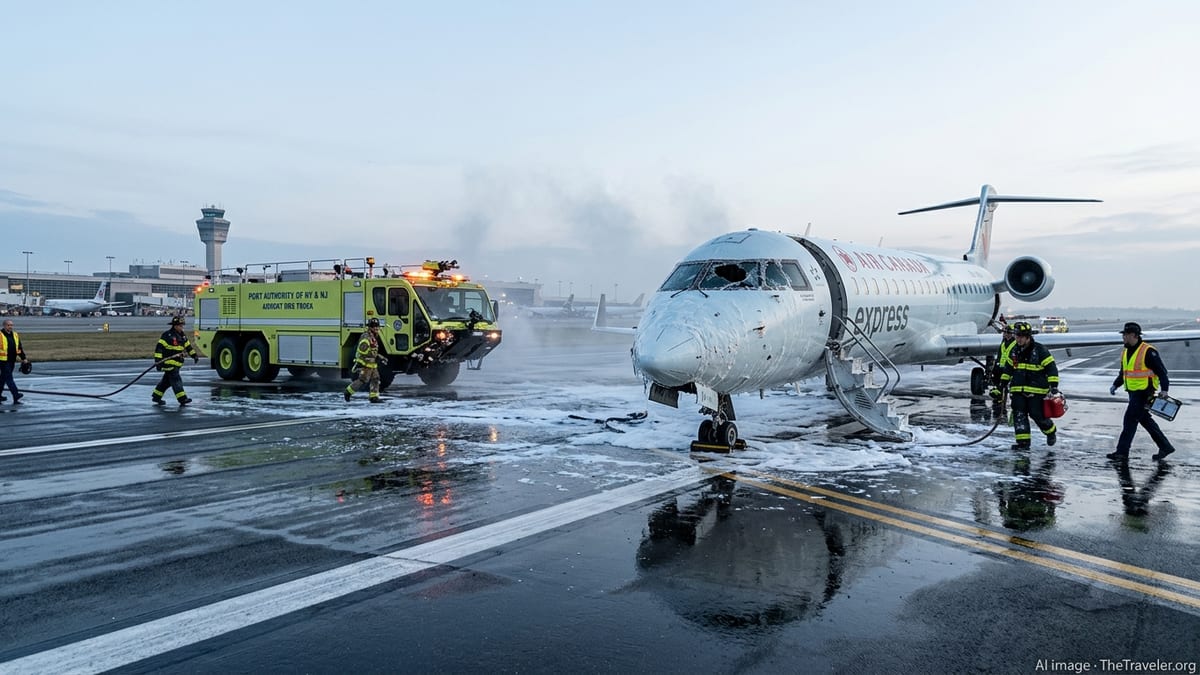
Dozens of Flights Scrubbed as Operations Snarl at Pearson
Publicly available tracking data on Monday showed a concentrated cluster of disruptions at Toronto Pearson, where more than 80 flights were delayed and over 20 were cancelled across multiple carriers. Air Canada, regional affiliate Jazz, and expanding challenger Porter Airlines were among the most affected operators, with schedules out of the country’s busiest hub repeatedly pushed back or scrubbed outright.
The latest figures underline how even a relatively modest number of cancellations at Pearson can translate into hundreds of disrupted journeys. With aircraft and crews cycling through tight daily rotations, a single late arrival can cascade into successive delays on onward legs to Western and Atlantic Canada.
Operational bulletins and airline status boards indicated a mix of causes, including lingering weather constraints on parts of the network and ongoing challenges sourcing available crews and aircraft at the right place and time. While the headline numbers at Pearson captured immediate attention, the effects were most keenly felt on the spokes of the national network.
For travelers, the pattern meant longer-than-expected waits in departure lounges, compressed connection times, and in some cases unplanned overnights as same-day rebooking options dwindled through the day.
Ripple Effects From Vancouver to Halifax
The disruption at Toronto Pearson quickly rippled outward across the country’s largest domestic routes. Flights between Toronto and Vancouver, Montreal and Calgary experienced some of the heaviest knock-on delays, as aircraft that should have arrived earlier in the day left gates well behind schedule or not at all.
According to published coverage of recent Canadian travel disruptions, these high-volume corridors are particularly vulnerable when Pearson’s schedule slips, because aircraft are often tasked with multiple back-to-back segments spanning several provinces. When an early Toronto departure goes late, evening services into Western Canada, the Atlantic region and key provincial capitals can find themselves short of both planes and rested crews.
Secondary hubs including Ottawa, Edmonton, Quebec City and Halifax also reported passengers facing rolling gate changes and revised departure times. In some instances, travelers departing those airports were held back to accommodate late-arriving inbound aircraft from Toronto, further extending the web of delays.
Travellers with multi-leg itineraries, especially those connecting from regional centers through Toronto to international gateways, faced the most complex rebooking scenarios, with some itineraries requiring complete rerouting or an additional connection to reach final destinations.
Air Canada, Porter and Jazz Under Renewed Scrutiny
The latest operational turbulence has once again placed Air Canada and its regional partner Jazz under scrutiny, as the flag carrier’s large share of Pearson traffic means its network bears the brunt when schedules unravel. Recent analyses of Canadian performance metrics have pointed to chronic congestion at the Toronto hub, along with staffing and aircraft availability pressures that complicate efforts to recover quickly from disruptions.
Porter Airlines, which has aggressively expanded from its traditional base at Toronto’s downtown island airport into Pearson with a new jet fleet, is also wrestling with the realities of running a larger, more complex operation. Travel forums and social media discussions have documented frustrated passengers dealing with rebooking delays, overnight waits and limited interline options when Porter services are significantly delayed or cancelled.
Jazz, operating many of Air Canada’s shorter regional segments under the Air Canada Express brand, remains a critical connector between smaller communities and major airports such as Toronto, Montreal and Calgary. When Jazz flights into Pearson are delayed or cancelled, passengers often lose same-day onward options, leaving them stranded in intermediate cities or facing long ground journeys as alternatives.
While the underlying causes can vary from weather and air traffic control constraints to technical checks and crew scheduling rules, the end result for passengers is similar: uncertainty at the departure gate and a heavy reliance on airline apps and airport departure boards for the latest information.
Passenger Rights and Limited Same-Day Alternatives
The wave of delays and cancellations has also revived questions around what travelers in Canada can reasonably expect when their flights do not run as scheduled. Publicly available guidance on the Air Passenger Protection Regulations outlines different levels of compensation and assistance depending on whether a disruption is within the airline’s control, within its control but required for safety, or outside its control altogether.
Reports indicate that travelers often struggle to understand how these categories are applied in real time. Weather and air traffic constraints may exempt carriers from compensation, but passengers may still be entitled to meals, hotel accommodation or rebooking support if delays stretch overnight. In practice, the distinction is not always clear at the departure gate, particularly during fast-moving operational disruptions.
The latest Pearson disruptions also highlighted the limits of same-day alternatives on many domestic routes. Unlike in some larger markets where multiple competing carriers share high-frequency corridors, many Canadian city pairs see just a handful of daily departures, often dominated by one airline grouping. When a clutch of those flights is delayed or cancelled, available seats on remaining services can disappear quickly.
Travel experts frequently recommend building longer layovers when connecting through Pearson, particularly in winter and peak holiday periods, and considering early-morning departures that have yet to absorb the day’s cumulative delays. Flexible tickets and travel insurance that explicitly cover missed connections can also offer a buffer when schedules unravel.
Growing Calls to Bolster Canada’s Air Travel Resilience
The latest day of disruption is feeding into a broader national debate about the resilience of Canada’s air travel system. Parliamentary committee hearings, regulator reports and industry analyses over the past two years have repeatedly flagged Pearson as a pressure point where high passenger volumes intersect with weather, staffing and infrastructure constraints.
Analysts note that the current pattern, in which a relatively small set of operational issues can rapidly strand hundreds of travelers across multiple provinces, suggests the need for more redundancy in airline scheduling, staffing and fleet planning. However, building that buffer can be costly in a market where carriers face tight margins and lingering financial impacts from the pandemic era.
Airlines have responded to past meltdowns by tweaking schedules, investing in technology to accelerate rebooking, and expanding self-service options for customers. Yet as the experience of Air Canada, Porter, Jazz and others at Pearson shows, these measures do not fully eliminate the risk that a confluence of weather, crew availability and airspace constraints will ground aircraft and upend travel plans.
For now, the disruptions at Toronto Pearson and their knock-on effects in Vancouver, Montreal, Halifax, Calgary, Ottawa, Edmonton and Quebec City serve as another reminder that Canadian air travel remains highly interconnected. When the country’s primary hub stumbles, passengers from coast to coast can feel the impact within hours.