


More news on this day
Flight operations at Birmingham Airport and East Midlands Airport are still recovering after a significant air traffic control technical issue halted many departures across England and Wales, leaving passengers facing rolling delays and cancellations.
Get the latest news straight to your inbox!
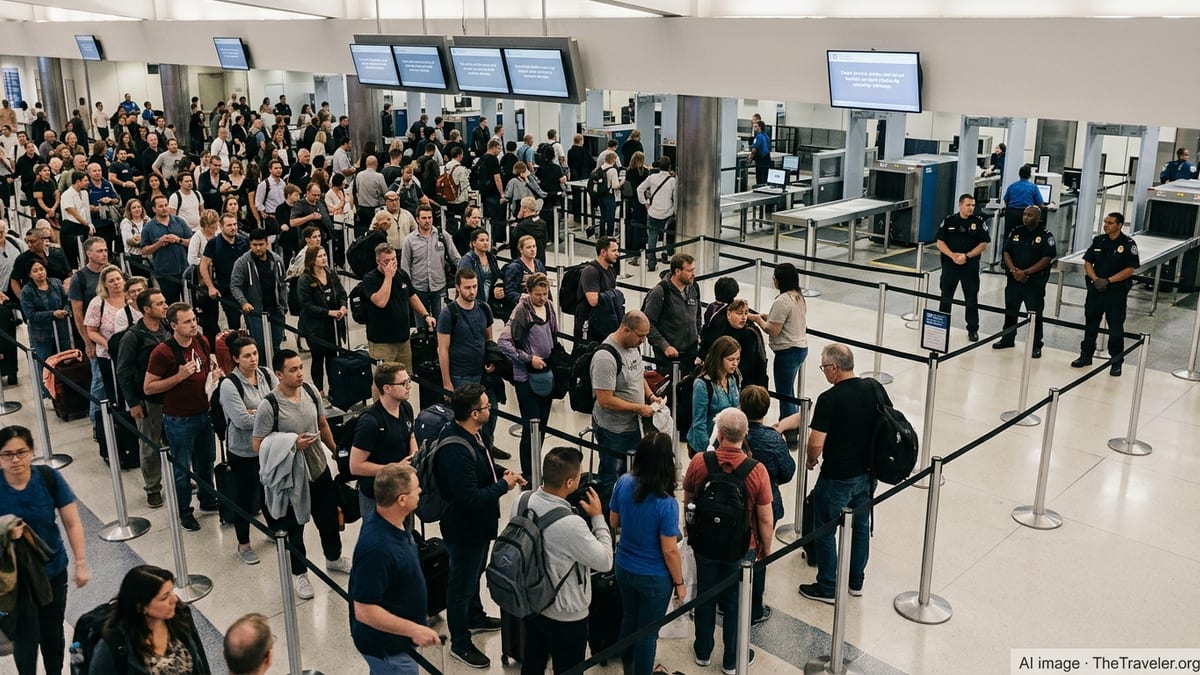
Air traffic fault triggers widespread disruption
According to recent coverage, departures from Birmingham and East Midlands were temporarily brought to a standstill on Tuesday 8 September after a technical problem in the UK’s air traffic control network affected large parts of English and Welsh airspace. National Air Traffic Services, which manages key control centres, identified the problem within its flight processing systems, resulting in strict limits on aircraft allowed to depart while the issue was investigated and rectified.
ITV News reports that Birmingham Airport described the disruption as impacting a significant number of departing flights across the country, as airlines rapidly adjusted schedules and imposed ground holds. East Midlands Airport, part of Manchester Airports Group, saw evening departures suspended while operators awaited updated guidance on when normal flows could resume.
Although aircraft already in the air were able to continue flying, the constraints on departures created immediate knock-on effects on turnaround times, with aircraft and crews displaced from planned rotations. Publicly available data from flight-tracking services showed mounting delays across the Midlands and southern England as the day went on.
By early evening, air traffic control systems were reported to be operating again, but the backlog of aircraft and crews out of position meant both Birmingham and East Midlands entered a prolonged recovery phase, with late-night and early-morning services particularly vulnerable to further delay.
Slow return to normal at Birmingham Airport
At Birmingham Airport, departures board information compiled in local reporting indicates that more than 20 flights were delayed or cancelled as the air traffic issue unfolded. Affected services included leisure routes to popular Mediterranean destinations, as well as links to key European hubs, leaving holidaymakers and business travellers facing long waits.
Regional coverage notes that some passengers remained on aircraft at the stand or on the taxiway while flight crews waited for clearance to depart. Others arrived at the terminal to discover that their flights had been cancelled or retimed by several hours, with limited options for same-day rebooking due to aircraft availability.
In updates shared publicly, Birmingham Airport urged travellers to stay in close contact with their airlines, stressing that carriers control individual flight schedules and rebooking decisions. Reports also highlight that airlines began prioritising later departures once air traffic restrictions eased, aiming to reposition aircraft to where they were most needed for the following day’s timetable.
While arrivals at Birmingham were less severely affected than departures, further disruptions continued into Wednesday as delayed inbound aircraft arrived late and early rotations ran behind schedule. Travellers heading to the airport on 9 September were advised by multiple outlets to check digital departure boards and airline apps frequently before setting off.
East Midlands operations hit by suspensions
East Midlands Airport experienced its own wave of disruption as the technical fault unfolded. ITV News Central coverage indicates that at one stage 19 outbound flights scheduled for Tuesday evening were suspended, with the airport confirming that it was awaiting further direction from the national air traffic provider before allowing departures to resume.
Public reports from the airport’s operator, Manchester Airports Group, show that East Midlands was one of several UK hubs affected within its network, alongside Manchester and London Stansted. The concentration of affected flights during the busy evening peak resulted in aircraft parked on stands and passengers remaining on board while crews sought updated departure slots.
While inbound flights to East Midlands initially faced fewer restrictions, subsequent schedule adjustments across airlines meant that some services were retimed or diverted as the network absorbed delays from elsewhere. Airlines were reported to be working through the night and into Wednesday to re-balance aircraft and crew rosters.
As with Birmingham, travellers using East Midlands were repeatedly directed, through publicly available information, to consult their airline for the latest status rather than relying solely on printed boarding passes or earlier itineraries. The emphasis remained on flexibility, with some carriers consolidating lightly booked flights and offering alternative routings where possible.
Nationwide knock-on effects and passenger rights
The issues at Birmingham and East Midlands formed part of a wider pattern of disruption across the UK. National and regional outlets report that airports including Heathrow, Gatwick and Manchester experienced significant delays and cancellations as the air traffic control problem rippled through the system. Some services between UK airports and European destinations were unable to operate, while others departed hours behind schedule.
Analysis published by travel and financial news outlets suggests that hundreds of flights were cancelled nationwide, with many more delayed, as airlines struggled to re-plan operations within restricted airspace. This level of disruption, while shorter in duration than some past system failures, still generated a large backlog that is expected to take time to clear fully.
Consumer-focused coverage has also highlighted passenger rights when flights are heavily delayed or cancelled. Under UK and European air passenger rules, travellers on affected services may be entitled to care and assistance, such as vouchers for meals or overnight accommodation, depending on the length of the delay and the circumstances of the disruption. Passengers are widely advised to keep receipts and check airline policies when claiming reimbursement.
However, commentators note that compensation for delays may be more complex when disruptions stem from air traffic control failures rather than airline-specific problems, making it important for passengers to review the precise cause stated by their carrier when submitting claims.
Advice for travellers as recovery continues
With Birmingham and East Midlands still working through residual delays into Wednesday, travel reports consistently recommend that passengers leave extra time for their journey, prepare for queues at check-in and security, and remain ready for short-notice gate or schedule changes. Many airlines are using digital channels and mobile apps as the primary means of communicating updates.
Specialist travel outlets advise that those with flexible plans consider rebooking to less busy times of day or later in the week, particularly on high-demand routes where spare seats are limited during the immediate recovery period. For those with essential travel, checking onward connections and accommodation arrangements before departure can help reduce the impact of late arrivals.
Publicly available information from Birmingham Airport and East Midlands Airport continues to emphasise that operations are improving but not yet fully back to normal. With the technical issue at the heart of the disruption now resolved, the focus has shifted to gradually restoring regular timetables, repositioning aircraft and crews, and clearing any remaining backlog in the days ahead.
ITV News Central: Air traffic issues ground Birmingham and East Midlands flights
Brum Daily: Birmingham Airport advises passengers after nationwide flight delays
The Independent: Flight delay recovery caused by technical issue will ‘take some time’
Alliance News: UK flight delay recoveries will take some time