


More news on this day
Kenya’s status as one of Africa’s premier safari destinations is under fresh scrutiny after the United States sharply tightened its travel advisory for the country, urging Americans to “reconsider travel” in a move that is already rippling across tour operators, lodge owners and local communities that depend on international visitors.
Get the latest news straight to your inbox!
Advisory raised to Level 3 amid health and security concerns
The U.S. Department of State updated its Kenya Travel Advisory on October 19, 2026, lifting the overall country rating from Level 2, “Exercise Increased Caution,” to Level 3, “Reconsider Travel.” Publicly available State Department information cites a combination of health risks, crime, kidnapping, terrorism, civil unrest and traffic safety as key factors behind the change in status.
The revision comes as Kenyan health authorities and international agencies track an Ebola outbreak caused by the Bundibugyo virus, with eight confirmed cases in Kenya reported by October 19 and at least one death linked to the disease, according to open health bulletins and recent coverage of the situation. U.S. health and travel authorities describe the interconnected nature of global air travel as a credible pathway for cross-border spread, reinforcing the need for tighter advisories even as the number of cases remains limited.
According to the updated advisory, Kenya is now grouped with countries where travelers are asked to think carefully before proceeding, a category that sits one step below a full “Do Not Travel” warning. While the overall rating has changed, the advisory still distinguishes between higher-risk regions and areas that continue to attract tourism, including major wildlife reserves that have not been directly affected by recent health alerts.
Travel-industry monitoring sites and regional media reports indicate that the October move replaces an advisory dated July 28, 2026, which had maintained Kenya at Level 2 but flagged growing concerns related to public health and security. The latest upgrade is therefore seen as a formal recognition that those risks have intensified sufficiently to alter official U.S. guidance.
What the new warning means for Maasai Mara and other safari hubs
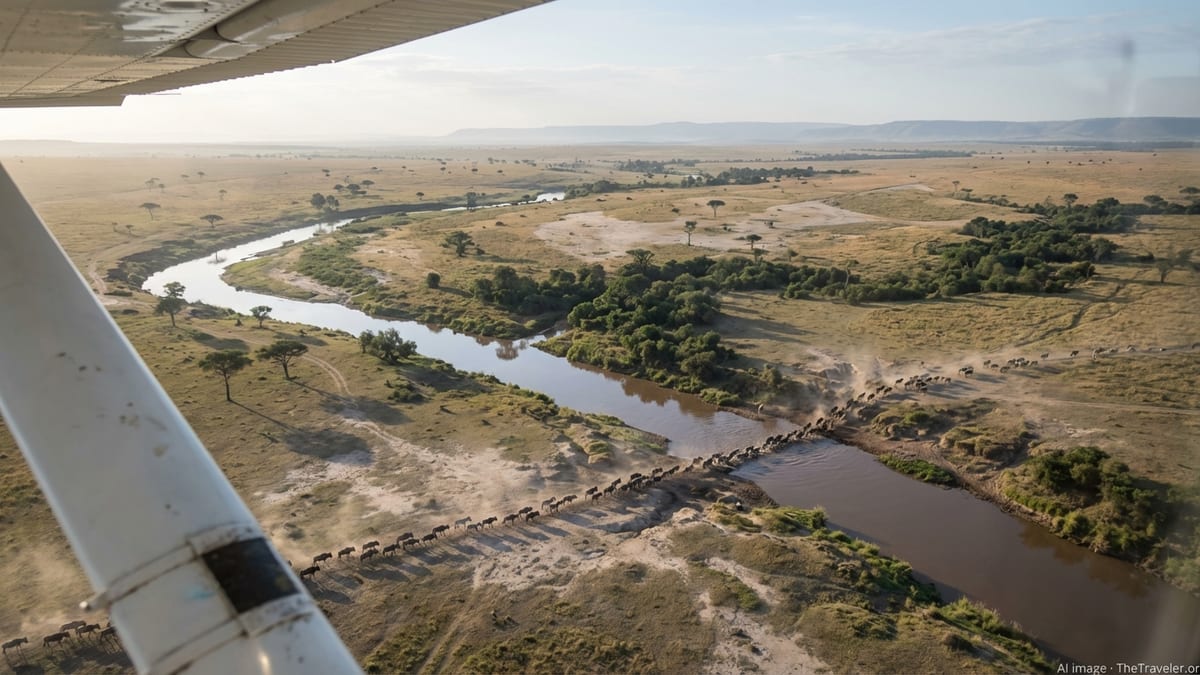
The shift to Level 3 has drawn particular attention in Narok County, home to the Maasai Mara National Reserve, a globally known safari hotspot that anchors Kenya’s tourism economy. The Mara’s annual wildebeest migration, big-cat sightings and concentration of high-end lodges typically draw substantial numbers of visitors from the United States, one of Kenya’s most important long-haul source markets.
Current U.S. government material does not classify Narok County or the Maasai Mara as “Do Not Travel” areas, in contrast with certain regions of coastal and northern Kenya that now carry the highest warning level. However, the nationwide elevation to Level 3 means American travelers are officially advised to reconsider discretionary trips, including leisure safaris, unless they are comfortable with the outlined risks and prepared to manage potential disruptions.
Safari operators who follow the advisories closely note that key Mara gateway routes, including flights from Nairobi’s Wilson Airport to airstrips inside or near the reserve, continue to operate as normal, and there have been no public indications of Ebola cases in the Maasai Mara area itself. Many lodges in Narok and neighboring conservancies remain open, with booking platforms still advertising stays in late 2026 and into the 2027 high season.
Nonetheless, travel analysts warn that Level 3 status can trigger cancellations or postponements, particularly for first-time visitors, family travelers and group tours that rely on corporate or institutional risk policies. Travel insurance terms also sometimes change in response to advisory upgrades, affecting coverage for medical evacuation or trip interruption, which are critical considerations for remote safari locations.
High‑risk zones and how they differ from core wildlife circuits
The revised advisory draws a sharp distinction between Kenya’s traditional safari heartlands and specific regions categorized as Level 4, “Do Not Travel.” Public information on the State Department site lists the Nairobi neighborhoods of Eastleigh and Kibera, as well as entire counties including Garissa, Wajir, Mandera, Lamu, Tana River, and parts of Kilifi, along with coastal areas north of Malindi, as locations where U.S. citizens are urged to avoid travel due to elevated risks of crime and terrorism.
Additional areas in West Pokot and western Turkana are identified because of crime, while sections of Marsabit and Turkana counties within 50 kilometers of the Ethiopian border are flagged over concerns about unrest. These regions lie a significant distance from Kenya’s principal safari circuits of Maasai Mara, Amboseli and Laikipia, which are typically accessed from Nairobi by domestic flights or main highways that do not pass through the highest-risk counties.
Travel safety guides that track Kenya on a region-by-region basis point out that most international visitors remain within established tourism corridors, where security measures are comparatively robust and incidents involving foreign tourists remain relatively rare compared with urban crime hotspots. Game reserves and private conservancies commonly operate controlled entry gates, trained ranger teams and, in some cases, dedicated airstrips to limit uncontrolled movement in and out of wildlife areas.
Even so, the advisory notes broader structural issues, including limited medical services outside major cities. In remote safari areas, serious illness or injury may require costly medical evacuation to Nairobi or a neighboring hub, which is why many tour operators and travel planners have long recommended comprehensive insurance and detailed contingency planning, regardless of advisory level.
Ebola, health protocols and implications for safari travelers
The timing of the advisory coincides with growing international scrutiny of Ebola Bundibugyo cases detected in Kenya after cross-border spread from the Democratic Republic of Congo. Public health documents and media summaries indicate that, by mid-October, eight cases had been identified in Kenya, most of them among known contacts in a limited number of locations, with authorities emphasizing tracing and isolation as primary containment tools.
At present, there is no indication in widely available guidance that broad domestic travel bans within Kenya have been introduced in response to the outbreak, and major international gateways, including Nairobi’s Jomo Kenyatta International Airport and coastal tourism centers, remain open. However, the U.S. advisory underscores that health risks are a central reason for the shift to Level 3, placing Ebola alongside persistent issues such as road safety and crime.
Health agencies recommend that travelers to countries with active viral hemorrhagic fever outbreaks pay close attention to hygiene, avoid contact with bodily fluids, and stay informed through official channels about any evolving entry or screening requirements. For safari visitors, this typically means monitoring guidance from airlines, governments and reputable health organizations before departure, then following lodge or camp protocols once on the ground.
Some travel medicine specialists quoted in international coverage suggest that, for well-informed visitors who are not part of high-risk groups and who remain far from known clusters, the individual likelihood of infection remains low, though the situation can change quickly. In this context, the Level 3 label functions less as a blanket ban and more as a signal to weigh personal risk tolerance carefully.
How the advisory may reshape upcoming high season plans
The announcement arrives just as Kenya looks toward the December holiday period and the early 2027 safari high season, when the Maasai Mara, Amboseli and other reserves normally welcome strong numbers of North American and European visitors. Industry watchers say the impact of the Level 3 classification will likely vary, with some travelers choosing to proceed while others postpone or reroute to alternative destinations.
Booking and cancellation patterns reported in trade media after similar advisory shifts in other countries suggest that organized group tours, school programs and corporate incentive trips are particularly sensitive to changes in U.S. government guidance. Individual travelers with flexible itineraries and prior experience in East Africa may be more inclined to travel with additional precautions, particularly if airlines and lodges maintain normal operations.
Kenyan tourism officials and private-sector associations have in past situations responded to risk-perception challenges with campaigns emphasizing the safety record of key parks and the economic importance of tourism to rural communities. Early commentary around the latest advisory indicates that stakeholders are again preparing to highlight the distinction between high-alert regions and flagship conservation areas, while acknowledging that health and security realities must be addressed transparently.
For prospective visitors, the new advisory adds extra homework to the planning process. Travelers considering a safari in Kenya in late 2026 or 2027 are being encouraged by travel planners and publicly available advisories to follow developments closely, consult both governmental and medical guidance, and build flexibility into itineraries so that plans can be adjusted if the health or security picture changes.