


More news on this day
Flights into three airports in the US Northeast were temporarily halted this week after a radio-related equipment problem disrupted air traffic, an operational jolt that landed amid fresh federal warnings that key aircraft communications links remain exposed to hacking and interference risks.
Get the latest news straight to your inbox!
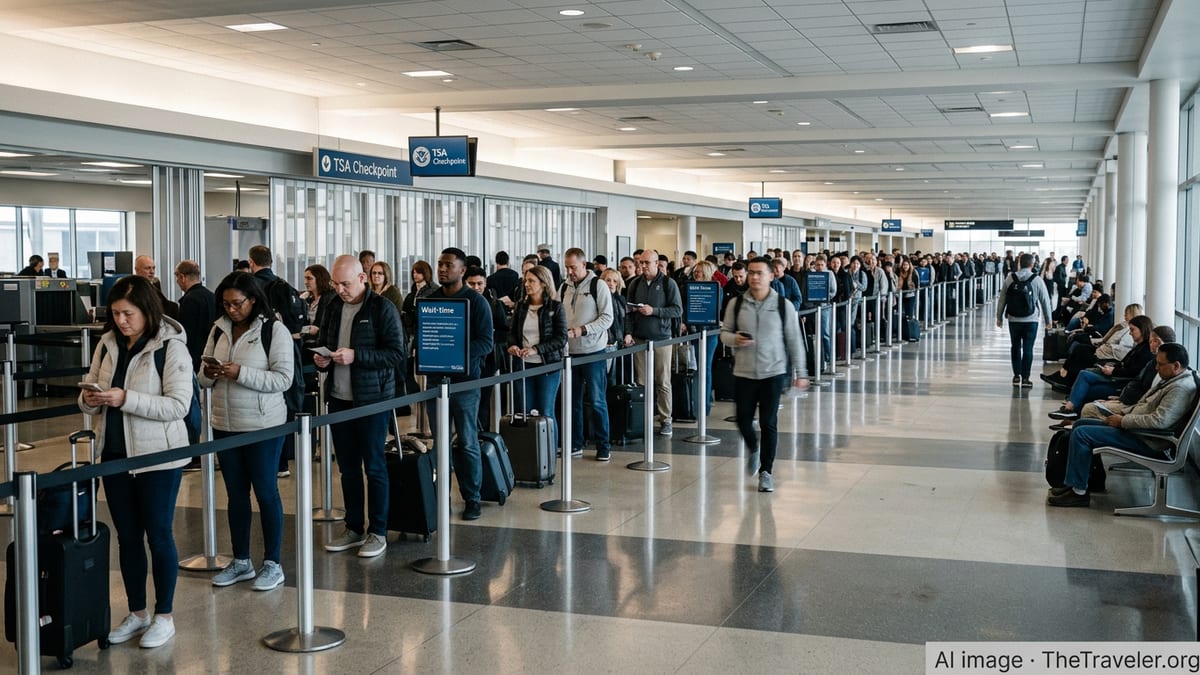
What happened at Newark, Philadelphia, and Teterboro
Published coverage indicates the Federal Aviation Administration ordered a ground stop affecting Newark Liberty International Airport (EWR), Philadelphia International Airport (PHL), and Teterboro Airport (TEB), a major hub for business aviation in northern New Jersey. The action paused inbound traffic as the system worked through the disruption.
In the most visible impact, commercial air traffic at Newark slowed to a near standstill for much of the day. Flight-tracking data cited in reporting showed a lengthy window in which commercial arrivals effectively stopped, underscoring how quickly a communications or equipment failure can ripple across one of the country’s most congested air corridors.
Separately, reports described broader delays across the Northeast after a technical problem at a key air traffic facility, with knock-on effects for travelers connecting through the New York and Philadelphia regions. The timing also overlapped with elevated demand in the area tied to major events in New York City, compounding congestion once operations began to recover.
The watchdog warning: spectrum threats and “message tampering” scenarios
The disruption coincided with the release of a US Government Accountability Office report dated September 21, 2026, focused on spectrum-related cybersecurity threats to aviation communications. The report outlines how aviation depends on radio-frequency signals across the electromagnetic spectrum, and how interference or malicious manipulation could disrupt flight operations or create safety risks.
The GAO’s findings center on risks such as spoofing and jamming, along with the possibility that attackers could inject or alter data in certain aviation communications. The report highlights vulnerabilities in applications used to exchange operational messages, and it warns that until stronger authentication and data protection are implemented, weaknesses could be exploited.
Among its recommendations, GAO calls for FAA to strengthen management of spectrum cybersecurity risks and to improve security for communication applications. The report also points to the need for better monitoring of threats such as interference, spoofing, and jamming within the National Airspace System, and for a plan to harden message authentication for systems including ACARS and CPDLC, two widely used datalink communications methods.
Why a local outage can cascade into nationwide disruption
Airports in the Northeast operate within tightly constrained airspace, and the region’s traffic flow is sensitive to even short interruptions in communications, surveillance, or controller tools. When an air traffic facility loses a key capability, ground stops and flow-control measures can be used to prevent aircraft from arriving faster than the system can safely handle.
That is why a technical issue in one part of the network can quickly translate into arrival holds, missed connections, and crew and aircraft displacement. Even after a ground stop is lifted, schedules often remain uneven for hours as airlines reposition aircraft, reset crews within duty-time rules, and work through backed-up departure queues.
The new GAO report adds a cybersecurity dimension to that operational reality. The same dependence on reliable radio links and data exchange that enables high-volume traffic also means that interference, whether accidental or malicious, can have outsized effects when it touches a critical node in the system.
What travelers should do when ground stops hit
For passengers traveling through Newark, Philadelphia, or nearby New York-area airports, the practical takeaway is that disruptions can evolve quickly from localized delays to missed connections and rebookings. Travelers typically benefit from checking flight status frequently on the day of travel, particularly during peak periods, and allowing extra time for irregular operations that can trigger gate changes and congested customer-service lines.
When a ground stop or air traffic constraint is in effect, flights may appear “on time” until a late change triggers a hold at the gate or a delay in pushback. Travelers with tight connections should monitor inbound aircraft assignments, since a late-arriving aircraft can cause a downstream departure delay even if the departure airport is operating normally.
In addition, travelers should be cautious about misinformation during fast-moving disruptions. The GAO’s warning about spoofing and message integrity is aimed at aviation systems rather than passenger communications, but it highlights a broader theme: during major incidents, verify changes through official airline channels and airport displays rather than relying on screenshots or forwarded messages.
Cyber-resilience efforts are expanding, but the report flags gaps
The FAA has ongoing work across safety and technology modernization, including efforts tied to communications resilience and spectrum planning. At the same time, GAO’s recent aviation cybersecurity work has emphasized the complexity of overlapping responsibilities among federal agencies and the industry’s reliance on interconnected systems spanning aircraft and ground networks.
The September 21, 2026 GAO report on aircraft communications argues that better coordination, monitoring, and technical safeguards are needed to reduce risk in spectrum-dependent links. It also reflects a broader shift in aviation security thinking: reliability and safety increasingly depend not only on physical infrastructure and procedures, but also on the integrity of wireless communications and the ability to detect and respond to interference.
For travelers, the near-term impact is less about changing how people fly and more about understanding why disruptions can be both sudden and widespread. The longer-term question raised by the watchdog is whether the systems that keep traffic moving can be hardened quickly enough to stay ahead of evolving interference and cyber threats while air travel demand remains high.