


More news on this day
Flight operations are restarting across Kenya’s main airports after aviation workers suspended a disruptive two-day strike, allowing airlines to begin clearing backlogs and reconnecting key domestic and regional routes.
Get the latest news straight to your inbox!
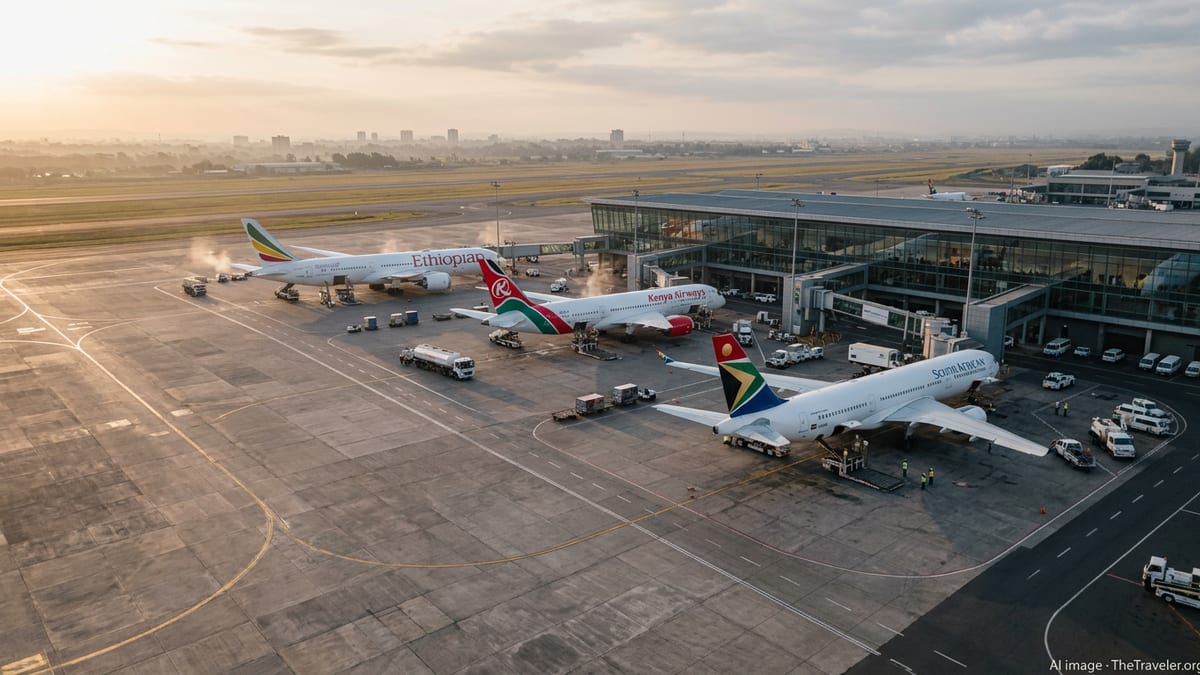
Industrial Action Brings Airports to a Standstill
Aviation workers represented by the Kenya Aviation Workers Union (KAWU) launched the strike on Sunday, halting or severely delaying services at Jomo Kenyatta International Airport (JKIA) in Nairobi and other key aviation gateways including Mombasa, Kisumu and Eldoret. Published coverage indicates that ground handling, security screening and airside support were all affected, forcing airlines to cancel or reschedule departures as passenger queues lengthened.
Reports from local outlets describe widespread disruption at JKIA, a critical regional hub that connects East Africa with Europe, the Middle East and other parts of the continent. International and domestic carriers, including national airline Kenya Airways and low-cost operator Jambojet, warned travellers of significant delays as operational teams attempted to work around reduced staffing levels.
The strike followed a period of escalating tensions between KAWU and various aviation agencies over issues such as implementation of existing collective bargaining agreements, salary structures and recognition arrangements. According to publicly available information, the union accused employers and regulators of stalling on labour commitments and raised concerns over governance and management practices at Kenya’s main airports.
With the walkout coinciding with a busy travel period, the impact was quickly felt beyond Kenya’s borders, as connecting passengers missed onward flights and regional itineraries were thrown off schedule. Travel advisories urged passengers heading to or transiting through Nairobi to check flight status frequently and allow additional time at the airport.
Return-to-Work Agreement Clears Path for Normal Operations
On Tuesday, September 1, KAWU and representatives of the Kenyan government and aviation agencies signed a return-to-work agreement, effectively ending the industrial action. Several Kenyan news outlets report that the accord instructs union members to resume their duties immediately, enabling the phased restoration of normal operations at affected airports.
Published coverage of the agreement notes that it addresses key grievances raised by workers, including stalled talks over a collective bargaining agreement between KAWU and the Kenya Civil Aviation Authority. The Salaries and Remuneration Commission is reported to have committed to new parameters for the negotiations, a step seen as central to unlocking the deadlock over pay and benefits.
Other provisions highlighted in local reporting include the immediate remittance of agency fees owed to the union by the Kenya Airports Authority and assurances that staff who participated in the strike will not face disciplinary action. Commentators describe those protections as important for rebuilding trust between management and front-line aviation workers following two days of disruption.
While some elements of the broader labour agenda remain unresolved, particularly a separate recognition dispute involving a domestic carrier, the return-to-work deal sets out a framework for handling outstanding issues through negotiation and existing dispute resolution mechanisms rather than further stoppages.
Airlines Focus on Clearing Backlogs and Stabilising Schedules
With union members back on duty, airlines and airport operators have shifted their focus to restoring reliability across Kenya’s air transport network. Publicly available advisories from carriers and airport authorities indicate that full normalisation of schedules will take time, as aircraft and crews are repositioned and stranded passengers are rebooked.
Kenya Airways, which had signalled delays of several hours during the height of the stoppage, is now working to clear the backlog of passengers whose flights were cancelled or missed due to missed connections. Travel industry analyses of recent aviation strikes in other markets suggest that it can take anywhere from a few days to more than a week for complex airline networks to fully absorb such disruptions, depending on fleet size and route structure.
For travellers, the immediate advice remains cautious. Specialist travel outlets recommend that passengers flying into or out of JKIA and other Kenyan airports in the coming days monitor airline apps and websites closely, reconfirm departure times and consider arriving earlier than usual to allow for residual congestion at check-in, security and boarding gates.
Tourism operators and business travel coordinators are also assessing the impact on itineraries that rely on tight domestic connections, particularly routes serving safari destinations and coastal resorts. Many are working with airlines to reroute clients or adjust travel dates while seat availability gradually returns to normal levels.
Labour Pressures Highlighted Across Global Aviation
The events in Kenya come amid a broader pattern of labour pressures in the global aviation industry. In the past three years, airlines in markets such as Canada and Europe have experienced high-profile strikes involving flight attendants, mechanics and pilots, which have temporarily grounded fleets and stranded passengers, according to international news archives.
Analysts note that many of these disputes share similar themes, including demands for wage increases that keep pace with inflation, concerns over staffing levels and schedules, and calls for stronger recognition of unions representing specialised aviation roles. The resolution in Kenya, observers suggest, is likely to be watched closely by labour groups and airlines across the region as a reference point for future negotiations.
For Kenya, the priority now is to reinforce confidence in its role as a reliable aviation hub for East Africa. Industry commentators point out that maintaining stable labour relations at JKIA and other key airports will be essential to supporting tourism recovery, trade flows and the growth of Nairobi as a regional business and conference destination.
As flights take off again and terminals begin to resemble their usual rhythm, attention is expected to shift from the immediate operational challenges to the longer-term task of implementing the commitments set out in the return-to-work agreement, with the goal of reducing the risk of similar disruptions in the future.
Citizen Digital: Kenya aviation workers call off strike
The Kenya Times: Flight operations resume after strike
The Standard: Aviation workers back at work after KAWU, government sign deal
Radio Generation Kenya: Aviation workers call off airport strike