


More news on this day
Airlines began moving passengers again after a series of ground stops disrupted service at major Northeast airports, including New York’s John F. Kennedy International (JFK) and LaGuardia (LGA), with delays expected to ripple into Tuesday as carriers reposition aircraft and crews.
Get the latest news straight to your inbox!
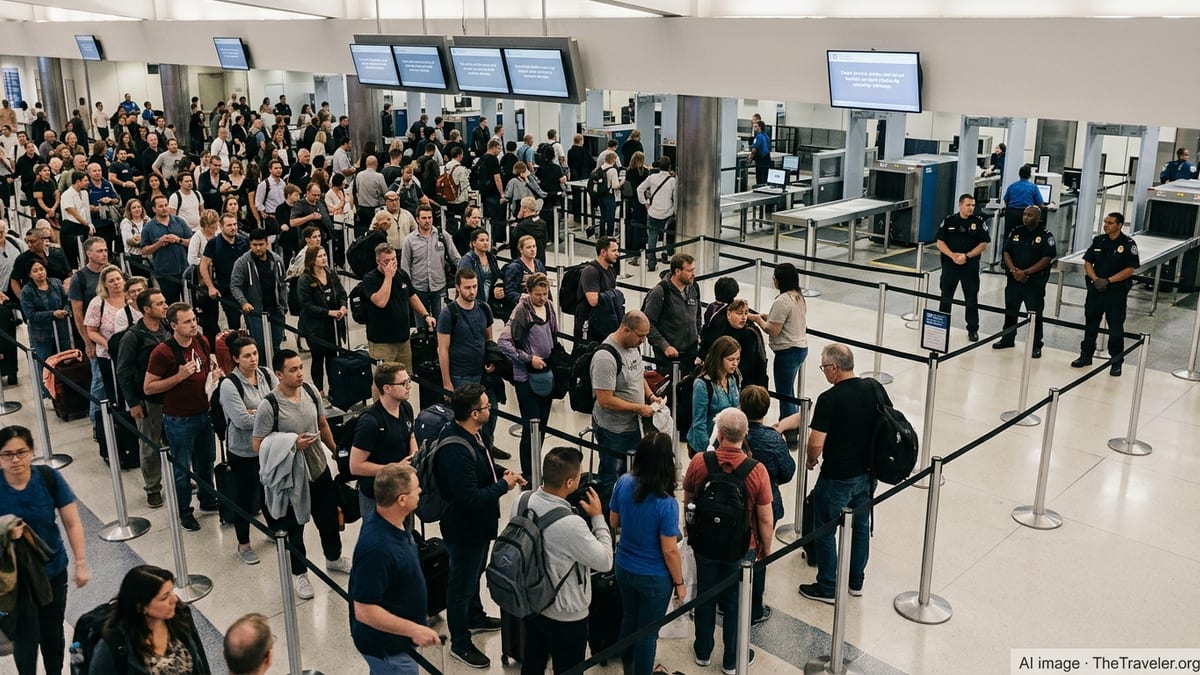
What triggered the Northeast ground stops
Published coverage described a communications breakdown tied to regional air traffic control facilities, centering on the Philadelphia Terminal Radar Approach Control (TRACON), which manages flows into and out of several of the region’s busiest airports. As the disruption unfolded, the Federal Aviation Administration (FAA) issued ground stops for portions of the Northeast, affecting both arrivals and departures across multiple airports.
Reports indicated the incident involved a failure of a primary telecommunications circuit, with a separate problem on a backup connection after a fiber line was severed at a construction site in New Jersey. With communications impaired, traffic managers slowed or temporarily halted inbound flows until the system stabilized.
While Newark Liberty International (EWR) and Philadelphia International (PHL) were heavily affected, the impact broadened to the wider New York metro airspace, prompting ground stops at JFK and LaGuardia as the network absorbed shifting traffic and controller workload.
Flights resume, but delays and cancellations take time to unwind
By late Monday, publicly available updates and published reporting indicated that repaired telecom lines allowed airport operations to begin resuming across the region. Even after ground stops lift, recovery is rarely immediate because aircraft and flight crews are often out of position, and many flights depend on inbound aircraft arriving on schedule.
Data cited in published coverage showed Newark experienced the most severe interruption, including a long period with little to no commercial arriving traffic. With such a large operational hole in the schedule, airlines typically need hours, and sometimes a full day, to restore rotations for aircraft and crews.
At New York’s JFK and LaGuardia, some flights restarted while airlines continued trimming schedules and managing gate space. Travelers also faced longer taxi-out times, congestion at terminals, and missed connections, particularly on itineraries routed through New York and Newark to the rest of the U.S., Canada, and Europe.
Which airports were impacted beyond New York City
The disruption extended beyond New York’s two major city airports. Published reporting described impacts at Newark, Philadelphia, and Teterboro, along with knock-on effects across the broader Northeast corridor as flights diverted, held, or canceled.
Boston Logan (BOS) also saw significant disruption, with reporting linking delays to the same telecom trouble in the region and to downstream congestion as airlines adjusted networks. When New York-area airports slow down, nearby hubs can see spikes in holds, reroutes, and gate crowding as diverted aircraft arrive unexpectedly.
Some coverage also noted intermittent ground-stopping or flow restrictions at additional East Coast airports, reflecting how quickly volume constraints spread when a high-density airspace like the Northeast corridor loses capacity.
What travelers should do next: rebooking, waivers, and airport timing
Even after flights resume, Tuesday travel can remain uneven. Travelers departing from or connecting through JFK, LaGuardia, Newark, or Philadelphia may see rolling delays as airlines reset schedules and aircraft rotations. Checking flight status directly with the airline is essential before heading to the airport, since departure boards can lag behind real-time operational changes.
Published coverage indicated some carriers offered flexible rebooking options during the disruption window. Travelers with canceled flights may have better outcomes by requesting reroutes through less congested hubs, when available, rather than waiting for the next open seat on a heavily impacted New York-area flight.
Passengers who are traveling internationally should also build in extra time for re-checking bags on rebooked itineraries, clearing security again after a terminal change, or dealing with last-minute aircraft substitutions. For those picking up travelers, arrival times can shift repeatedly when inbound flights face holds or crew constraints.
Why a short outage can cause a long travel mess
The Northeast is the most traffic-dense part of the U.S. airspace, with tightly packed arrival and departure banks and limited flexibility to absorb sudden capacity losses. When communications failures hit TRACON-level operations, managers often have to reduce flows quickly for safety, and the resulting schedule shock spreads through airline networks far beyond the immediate airports.
Published reporting also pointed to the role of telecom redundancy in air traffic operations, highlighting how a failure of a primary circuit combined with damage to a backup line can create cascading disruptions. Even after repairs, airlines must reposition crews within duty-time limits, move aircraft to where they’re needed, and recover passenger connections, which can take well into the following day.