


More news on this day
Kazakhstan’s low cost carrier FlyArystan has resumed direct seasonal flights between Almaty and Samarkand for the 2026 spring and autumn schedules, a move widely viewed as a fresh boost to regional tourism, cultural exchange and economic connectivity between Kazakhstan and Uzbekistan.
Get the latest news straight to your inbox!
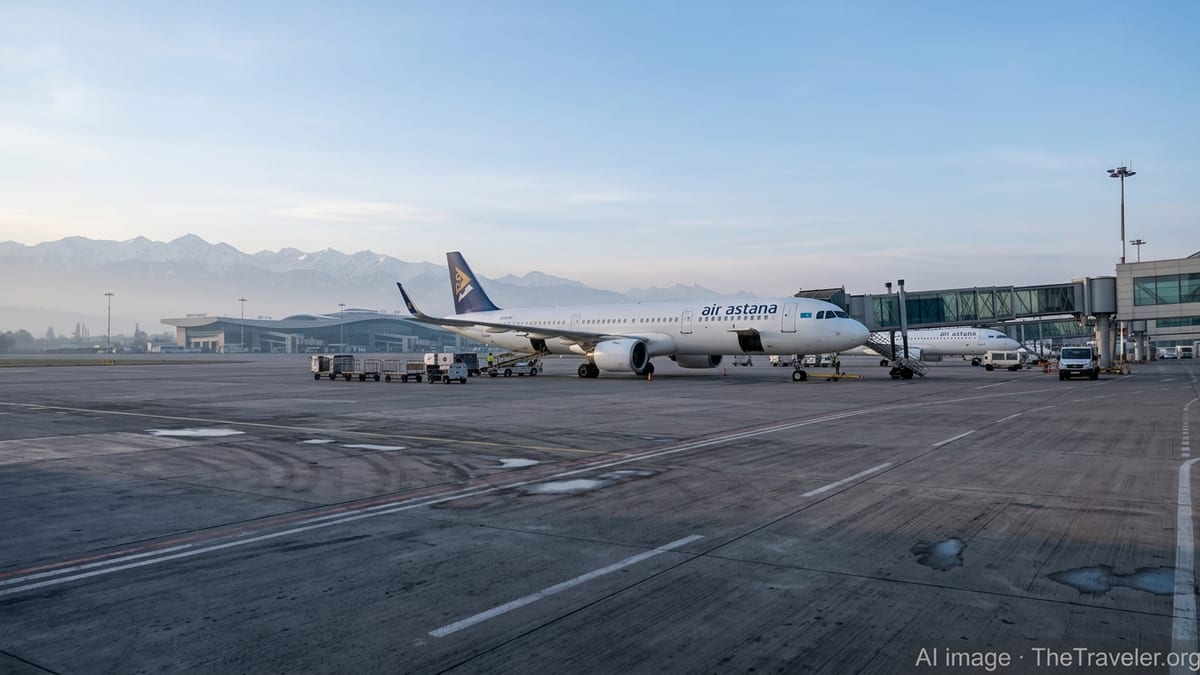
Seasonal Direct Flights Return on Key Central Asian Corridor
According to publicly available information from the airline and regional media, FlyArystan’s Almaty–Samarkand–Almaty service restarted on 17 March 2026, reinstating a direct low cost link between Kazakhstan’s largest city and one of Uzbekistan’s most visited heritage destinations. The flights are operated by Airbus A320 aircraft, covering the journey in around one and a half hours.
The route is scheduled as a seasonal connection. Current schedules indicate that flights will run from 17 March to 30 May and again from 1 September to 24 October 2026, with two weekly rotations typically offered on Tuesdays and Saturdays. The pattern is designed to capture peak demand in spring and autumn, when milder temperatures in both cities are particularly attractive for regional and international visitors.
Reports indicate that FlyArystan, part of the Air Astana Group, has positioned the route firmly within its low cost model, combining basic fares with optional paid services. This approach is intended to make cross border travel more accessible to residents of both countries as well as to transit passengers using Almaty as a gateway to wider Central Asia.
Publicly available coverage from Central Asian news outlets notes that the first flights of the resumed schedule were marked at Samarkand International Airport with a ceremonial event, underlining the importance attached to the corridor by local aviation and tourism stakeholders.
Tourism Growth in Kazakhstan and Uzbekistan Underpins Demand
The resumption of the Almaty–Samarkand service comes as both Kazakhstan and Uzbekistan report rising visitor numbers and seek to diversify source markets. Uzbekistan has been highlighting strong tourism growth figures in recent years, with millions of foreign arrivals drawn to its Silk Road cities, including Samarkand, Bukhara and Khiva.
On the Kazakh side, Almaty continues to function as the country’s primary tourism and air transport hub, combining mountain and city attractions with expanding flight options across Asia, the Middle East and Europe. FlyArystan’s growing regional network is seen as complementing this broader strategy by giving budget sensitive travelers more straightforward ways to combine multiple Central Asian destinations in a single trip.
Travel industry commentary suggests that the restored direct flights are particularly attractive for independent travelers and tour operators designing twin center itineraries that link Almaty’s alpine landscapes and urban culture with Samarkand’s UNESCO listed monuments. Reduced travel time compared with overland routes makes short stays and weekend breaks more realistic for residents of both countries.
Regional observers also note that the low cost model can help stimulate new demand from younger travelers, students and small business owners, groups that may previously have relied on long bus journeys or complex multi stop itineraries to cross the border.
Cultural Exchange Strengthened Between Historic Neighbor Cities
Samarkand’s status as one of the most storied cities of the Silk Road gives the route a strong cultural dimension. Public information from tourism authorities points to growing interest from Kazakh visitors in exploring Samarkand’s Registan ensemble, necropolises and madrassas, as well as its developing culinary and creative scenes.
In the opposite direction, Almaty offers Uzbek travelers access to modern galleries, music venues and a cosmopolitan café culture set against a backdrop of the Zailiysky Alatau mountains. Cultural organizations in both countries have been expanding cross border projects in recent years, and improved air connectivity is widely seen as a practical enabler of joint festivals, academic exchanges and youth programs.
Analysts of Central Asian integration trends note that easier point to point travel often translates into more informal people to people contact. The reintroduced Almaty–Samarkand link is expected to encourage family visits, student exchanges and short cultural trips that reinforce historical ties between the two Turkic speaking nations.
Published commentary in regional media also highlights the symbolic value of low cost carriers linking major cities along historic trade routes, arguing that such services make the idea of a shared Central Asian cultural space more tangible for ordinary residents.
Economic Connectivity and Trade Prospects Receive a Lift
Beyond tourism, the renewed air corridor is being interpreted as a practical tool for deepening economic links between Kazakhstan and Uzbekistan. Both countries are among Central Asia’s largest economies and have identified transport and logistics cooperation as priorities in their national development strategies.
According to publicly available coverage of the launch event, representatives of Kazakhstan noted that the direct flights are expected to support trade, investment and educational cooperation by shortening travel times for business delegations, entrepreneurs and students. Faster and more predictable connections can be especially valuable for small and medium enterprises exploring cross border opportunities in sectors such as services, light manufacturing and agribusiness.
Almaty’s role as a financial and commercial hub complements Samarkand’s ambitions to grow as a regional tourism and services center. Observers point out that regular low cost flights can help link conferences, exhibitions and business forums in both cities, feeding into wider regional integration agendas pursued through multilateral platforms.
While the route is primarily a passenger service, analysts suggest that improved connectivity can indirectly benefit cargo flows too, by encouraging closer coordination among airports, airlines and logistics providers serving the Kazakhstan–Uzbekistan corridor.
Competitive Landscape and Outlook for Regional Air Links
The Almaty–Samarkand link operates in a competitive and evolving regional aviation market. Uzbekistan Airways and other carriers also serve routes between the two countries, and overland options by rail and road remain available for travelers prioritizing price over speed. In this context, FlyArystan’s focus on low base fares and dense seasonal scheduling is positioned as an attempt to capture cost conscious demand without sacrificing frequency.
Industry data and airline communications suggest that FlyArystan has grown rapidly since its launch in 2019, expanding its fleet of A320 family aircraft and building a network of domestic and international routes across Central Asia, the Caucasus and parts of South Asia and the Middle East. The return to Samarkand fits into a broader pattern of targeting high potential regional destinations within short to medium range of Kazakh hubs.
Travel analysts watching Central Asia expect further adjustments to schedules and capacity as airlines respond to demand patterns, visa policy changes and infrastructure upgrades at airports in both countries. If passenger response to the 2026 seasonal program is strong, observers anticipate that FlyArystan and rival carriers may explore longer operating windows, higher frequencies or additional city pairs linking Kazakhstan and Uzbekistan.
For now, the restored Almaty–Samarkand service is being seen as a concrete step toward denser, more affordable air links across Central Asia, reinforcing a trend in which low cost carriers play a growing role in connecting the region’s historic cities, emerging business centers and tourism hotspots.