


More news on this day
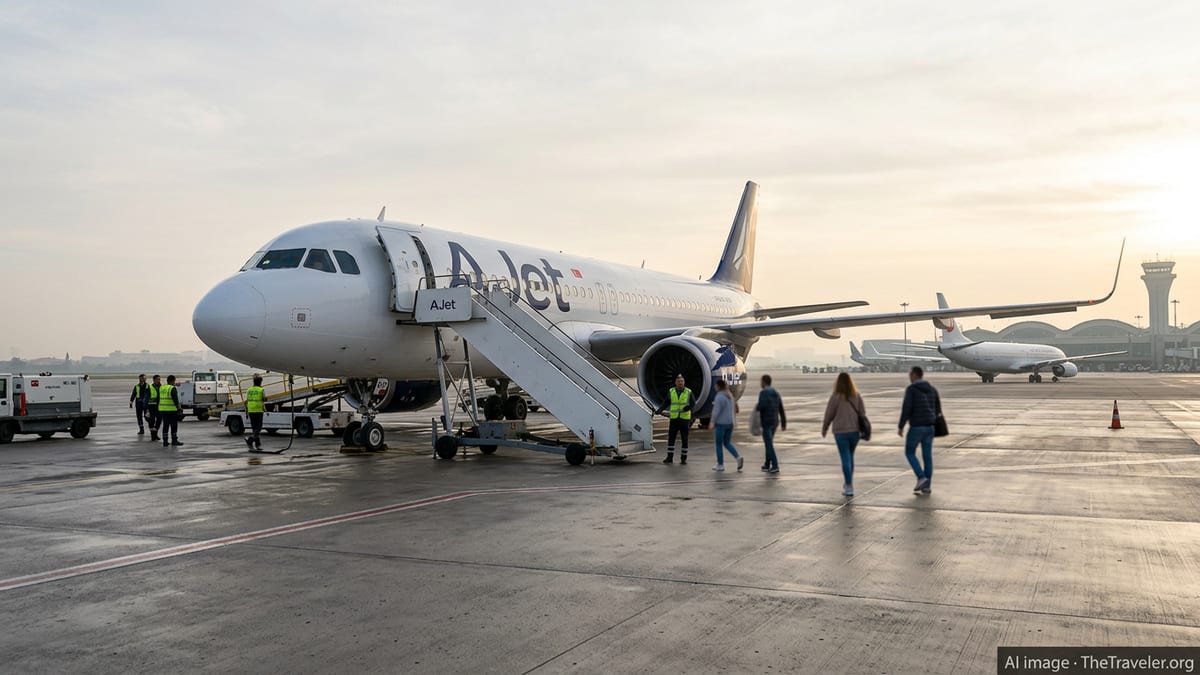
Turkey and Albania are set to deepen tourism and trade ties as Turkish Airlines launches daily flights between Istanbul and Tirana, firmly anchoring both capitals on a fast-growing Balkan travel corridor.
Get the latest news straight to your inbox!
Daily Flights Cement a Strategic Corridor
Publicly available schedule data shows that Turkish Airlines is now operating daily nonstop services between Istanbul Airport and Tirana International Airport Nënë Tereza, with at least one and in many cases two direct flights each day on the route. The carrier’s own booking channels indicate that services are being flown mostly with narrowbody aircraft, offering a flight time of around one hour and 45 minutes and connecting the Albanian capital to the airline’s main global hub.
Information released by Tirana International Airport in January 2026 describes the launch of daily Istanbul flights as a significant expansion of the airport’s airline portfolio and a move expected to contribute positively to passenger volumes. Travel industry reports characterize the Istanbul–Tirana link as part of a broader strategy by Turkish Airlines to reinforce its presence in the Western Balkans and to restore or enhance connectivity that had fluctuated during previous seasons.
Route databases and timetable trackers note that the daily pattern represents a step up from earlier, more limited operations, with some days now showing two departures in each direction. This level of frequency gives both leisure and corporate travelers greater flexibility in planning short breaks, weekend stays, or rapid business trips between the two countries.
The move also aligns with Turkish Airlines’ wider network expansion, which has seen new or upgraded services across Europe, the Middle East, and beyond. Analysts point out that positioning Tirana within this growth phase signals confidence in Albania’s tourism prospects and its role as a regional gateway for travelers heading into the western Balkans.
Tourism Demand Between Turkey and Albania Rises
Tourism bodies and regional travel coverage have highlighted Albania’s sharp rise in visitor numbers over recent years, with its Adriatic and Ionian coastline, historic towns, and competitive prices drawing growing interest from European travelers. Easier access from a major hub such as Istanbul is expected to accelerate that trend by funnelling visitors from long haul markets through a single connection.
Travel media focused on the Schengen and Balkan markets report that demand from both leisure travelers and the Albanian diaspora has supported the case for a stable, year-round Istanbul–Tirana schedule. While Albania remains outside the Schengen Area, writers note that its beaches and compact cities increasingly appeal to cost-conscious travelers who may combine Turkey and Albania in one multi-country itinerary.
The daily service also benefits Turkish travelers, who can reach Tirana for short cultural or city breaks as well as nature-based trips into the Albanian Alps. Package operators and online travel agencies are already promoting combined stays that pair Istanbul’s urban attractions with Albania’s coastal resorts, presenting the route as an efficient means of accessing two distinct Mediterranean experiences in a single journey.
Industry observers suggest that as capacities grow and awareness improves, secondary destinations in both countries may see knock-on benefits. From Tirana, travelers can reach coastal centers such as Durrës and Vlorë within a few hours, while Istanbul offers onward domestic links to resort areas including Antalya, Izmir, and Bodrum for those wishing to extend their trips deeper into Turkey.
Business Connectivity and Investment Opportunities
According to business press coverage and economic statistics compiled by regional institutions, Turkey ranks among Albania’s key trading partners, with Turkish companies active in sectors such as construction, banking, and energy. The establishment of reliable daily air links between Istanbul and Tirana is therefore viewed as an important logistical asset for firms operating across both markets.
Transport and investment analysts underline that frequent flights cut travel time and provide greater certainty for corporate travel planners, from short-notice meetings to multi-country roadshows across Southeast Europe. The option of same day returns on certain weekdays, as suggested by schedule data, is likely to prove particularly attractive for executives and project teams coordinating activities in both capitals.
Financial and professional services also stand to benefit from smoother air connections. Istanbul’s position as a regional financial center, combined with Albania’s efforts to attract foreign investment and develop its services sector, creates demand for regular face-to-face engagement. The Istanbul–Tirana route effectively shortens the perceived distance between investment decision makers and on the ground operations.
Observers additionally point to opportunities in conferences and events. With improved air access and growing hotel capacity in both cities, organizers of regional trade fairs, sector-specific summits, and cultural festivals can now consider twin city formats or rotating venues, relying on the daily flights to move participants efficiently.
A Gateway to Turkish Airlines’ Global Network
Turkish Airlines markets its Istanbul hub as a central meeting point between Europe, Asia, Africa, and the Americas, and the carrier’s global schedule data supports this positioning with an extensive list of destinations. For Albanian travelers, the daily Tirana flights effectively open a one stop pathway to a wide range of long haul routes that might otherwise require multiple connections.
Travel commentators note that popular onward destinations from Istanbul for passengers originating in Tirana include major cities in North America, the Gulf, and East Asia, where the airline operates high frequency services. The synchronized timing of some Tirana arrivals with overnight long haul departures is considered a competitive advantage, minimizing layover times for connecting passengers.
Conversely, the Istanbul–Tirana sector gives inbound travelers from across the Turkish Airlines network a simple way to add Albania to their itineraries. Tourism reporting suggests that this could encourage more multi-country trips through Southeastern Europe, with visitors using Istanbul as a first entry point before branching out to the western Balkans.
For the airline itself, integrating Tirana into its hub and spoke system supports aircraft utilization and seat occupancy on both regional and intercontinental services. Aviation analysts argue that such routes help sustain the broader network by feeding passengers into long haul services while also reinforcing Istanbul’s status as a leading transfer airport.
Regional Competition and Future Prospects
The Western Balkans air travel market has grown increasingly competitive, with low cost carriers, flag airlines, and hybrid operators expanding their presence at airports across the region. Reports tracking airline network moves suggest that Turkish Airlines’ decision to operate daily Istanbul–Tirana flights is partly a response to this intensifying competition, aimed at consolidating its role as a primary connector between the Balkans and global markets.
Albania’s aviation landscape has also evolved, with local and regional carriers developing their own networks and, in some cases, cooperating with Turkish partners. Industry profiles of Air Albania, which was created with involvement from Turkish Airlines, illustrate how cross border partnerships have already shaped connectivity out of Tirana, particularly on routes linking the country with Turkey and other European cities.
Looking ahead, aviation observers indicate that sustained demand will be crucial to maintaining daily frequencies and possibly adding capacity in peak seasons. Factors such as regional economic performance, currency movements, and broader geopolitical developments are expected to influence booking patterns on the Istanbul–Tirana route.
Nonetheless, current schedules and the tone of recent airport and airline announcements point to a shared expectation of continued growth. As Turkey and Albania deepen ties in trade, tourism, and cultural exchange, the daily bridge in the sky between Istanbul and Tirana is emerging as both a symbol and a practical engine of that closer relationship.