


Airport parking has become big business, and comparison platforms like Flyparks promise to cut through the chaos with cheaper, easier options than parking directly at the terminal. For many travelers, though, the idea of handing over car keys to a third-party service they have never heard of can feel risky. Understanding exactly how Flyparks works, what role it plays in your booking, and how to use it wisely is the key to saving money without adding stress to the start of your trip.
Get the latest updates straight to your inbox!
What Flyparks Is – And What It Is Not
Flyparks is a digital middleman. It does not own car parks or run shuttle buses itself. Instead, it operates as an online comparison and booking platform that connects travelers with independent parking providers near major airports, primarily in Australia and New Zealand. Think of it as similar in spirit to hotel comparison tools that show you options from multiple brands on one page, except here the focus is purely on airport parking.
When you search on Flyparks for somewhere to leave your car while flying out of airports like Auckland, Perth, or Christchurch, the website pulls in prices and availability from partner car parks around those airports. You choose a product, pay Flyparks, and receive a confirmation voucher. Behind the scenes, Flyparks passes your booking details on to the car park operator, which then provides the actual service on the day of travel.
This separation matters. If something goes wrong on the ground, such as a shuttle delay or a dispute over damage, you will deal mainly with the local parking business, not Flyparks staff at the airport. Flyparks handles the online marketplace, customer communications, and in many cases the payment flow, but the parking, security, and transport to the terminal are delivered by third-party companies that have their own terms and conditions.
Because of this structure, the Flyparks brand might appear on your booking confirmation, while the sign you follow at the destination could say something entirely different, such as Flypark near Auckland Airport, Busy Beaver Parking in Perth, or a local park and ride operator close to Brisbane. Recognizing that distinction can help manage expectations and guide who you contact if issues arise.
Step-by-Step: How a Flyparks Booking Actually Works
The process typically begins at home, when you search for airport parking for specific travel dates. On the Flyparks site, you enter your departure airport, the date and approximate time you expect to arrive at the car park, and your return date and time. In response, the platform displays a list of partner car parks with headline daily rates, distance from the terminal, and basic service details, such as whether a free shuttle is included or the lot is open 24 hours.
Imagine you are flying out of Auckland for a 10-day trip. You might see an on-airport car park at Auckland Airport charging around the equivalent of a few dozen New Zealand dollars per day, but a partner like Flypark at 310 Landing Drive in Māngere advertising a much lower daily rate for secure outdoor parking, plus a free shuttle service that takes roughly 7 to 8 minutes to the terminal. You compare these options on the Flyparks screen, taking into account price, review score, and shuttle frequency.
Once you choose a car park, you complete your details, pay online, and receive a booking confirmation by email. This confirmation typically includes your parking provider’s trading name, address, arrival instructions, and reference number. On the day of travel, you drive straight to the car park listed in the email, not to the airport’s own parking garages. Staff at the lot check your booking, often note your vehicle’s current condition, and direct you to either park the car yourself or hand over the keys if valet-style service is offered.
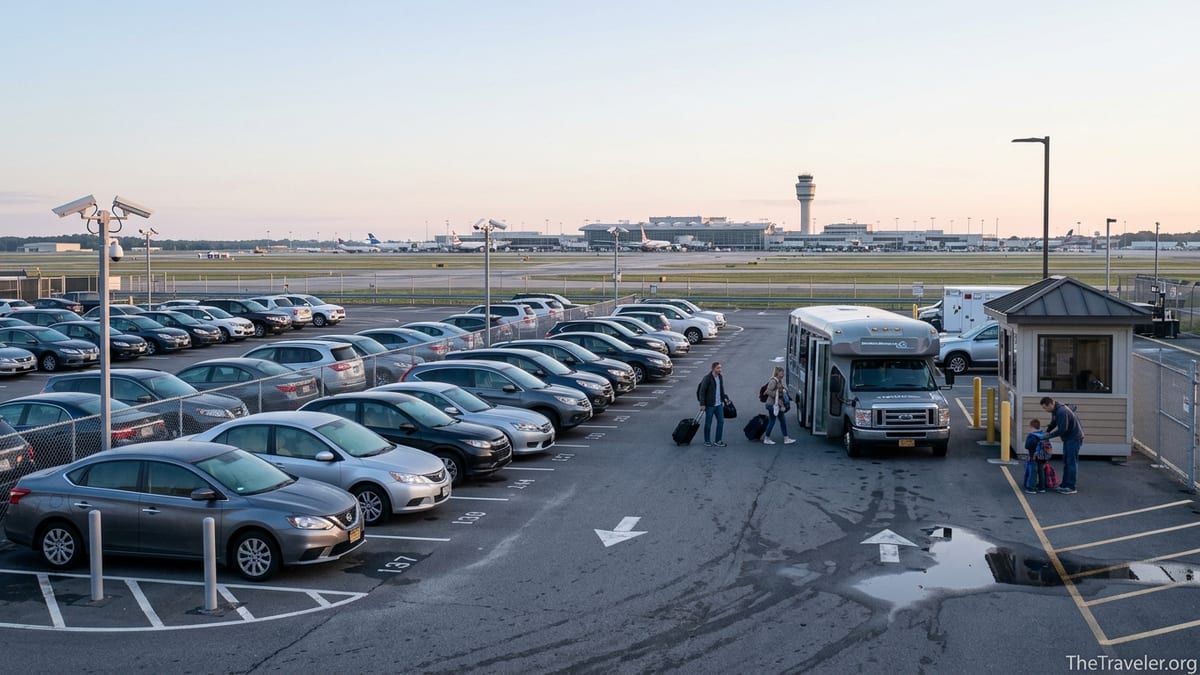
After your car is checked in, you board a shuttle operated by the car park and travel to the terminal. At the end of your trip, you follow the instructions on your voucher to call a shuttle number or walk to a designated pick-up point. The shuttle returns you to the lot, where you collect your car and exit. In short, Flyparks handles discovery and reservation, the provider handles every step from gate to terminal and back again.
Real-World Examples: What Using Flyparks Looks Like
To understand how this works in practice, consider a traveler flying from Perth on a two-week holiday. Booking direct with the on-airport long-term parking might add hundreds of Australian dollars to the cost of the trip. Through Flyparks or a similar comparison site, the same traveler might find an off-airport provider a few minutes’ drive from the terminal advertising a rate that comes out significantly cheaper across 14 days, especially when early-booking discounts or seasonal promotions apply.
Another example is Auckland, where travelers regularly weigh up whether to pay higher prices to park in the airport’s official multi-story or outdoor car parks or to book an off-site option such as Flypark. A traveler leaving their car for five days might see that using an independent provider with a fenced compound and free shuttle can keep the cost closer to what they would pay for just two or three days in one of the more convenient on-site garages. For families with several suitcases and child seats, the shuttle can be especially appealing compared with wrestling luggage in and out of public transport.
In the United States, similar booking logic appears on other platforms dedicated to US airports. A traveler out of Denver or Chicago might use a parking comparison site to see that on-airport garages at Denver can run in the mid-tens of dollars per day, while off-airport options, such as ParkDIA or Canopy Airport Parking, advertise lower daily rates that become meaningful over a week-long trip. The structure is the same: the comparison platform presents the options, collects payment, and passes the reservation to the independent lot, which operates shuttles to and from the terminals.
These examples underline why Flyparks-style platforms have grown quickly. For trips longer than just a couple of days, shifting from terminal garages to vetted off-site operators often delivers savings that can easily cover an extra night in a hotel or a nice meal at your destination. The trade-off is a reliance on shuttle timing, clear instructions, and the professionalism of the individual car park you choose.
Types of Parking You Will See on Flyparks
When browsing Flyparks, you will notice several categories of airport parking that mirror the broader market. The most common option is off-site park and ride. Here, you drive to a lot a short distance from the airport, park your car, and take a shuttle that runs on a schedule or on demand. This is the default choice for many budget-conscious holidaymakers, particularly at airports where terminal parking commands a premium.
Some providers offer valet-style services. In these cases, you may pull up at the lot entrance where staff take your keys and park the car for you, or at certain airports you may even meet a driver at the terminal who collects your vehicle and takes it to the off-site compound. This can be attractive for travelers with limited mobility, those carrying oversized sports equipment, or anyone trying to minimize walking distance in poor weather. However, this also introduces additional trust considerations, since your keys and car will be out of sight for the duration of your trip.
Another common category is whether parking is indoor or outdoor. Many Flyparks partners operate fenced outdoor compounds monitored by cameras and staff, while a smaller number provide covered or fully indoor spaces at higher daily rates. In locations with intense sun, hail risk, or heavy snowfall, that upgrade can provide extra peace of mind. Travelers may also spot extras like electric vehicle charging, car washing, or basic servicing that can be added while the car is parked, effectively turning idle time into an opportunity for maintenance.
Finally, time-based distinctions matter. A business traveler on a two-night trip might look for an option that offers 24-hour operations and very frequent shuttles, even if the price per day is slightly higher, while someone leaving on a three-week overseas holiday may be comfortable with a more basic lot if the savings are substantial and reviews suggest reliable service.
Pricing, Payment, and Where Savings Come From
Platforms like Flyparks tend to advertise savings compared with parking directly at the airport. These savings arise from several factors. Off-airport operators generally pay less for land than airports do for central terminal plots, and they do not have to maintain elevated garages or terminal walkways. They rely on shuttle buses rather than expensive multi-story infrastructure, and they often adjust pricing more flexibly to keep occupancy high.
As a result, a traveler flying for a week from a large airport may find on-site terminal garages priced at a relatively high daily rate, while off-site options bookable through comparison sites sit noticeably lower. Over seven or ten days, the difference can add up to three figures, even after factoring in the modest shuttle times. For travelers on longer trips, that functionally becomes a form of discount travel budgeting without sacrificing the convenience of driving to the airport.
Payment on Flyparks is usually taken at the time of booking, using common online methods such as credit cards. The amount charged is typically for the full duration of stay based on the times you enter. Some providers price per calendar day, counting each midnight crossing as a new day, while others calculate based on the number of 24-hour blocks. The confirmation you receive will outline the charging structure and may note any local surcharges, such as airport access fees, that are included in the price.
It is important to read these details carefully. Arriving significantly earlier than your booked time or returning later than planned can incur additional charges when you exit the lot, as the car park will usually calculate the final bill according to its own rules. In practice, building in a buffer of an extra hour or two at either end when you estimate your drop-off and pick-up times can reduce the risk of being caught out by delays or schedule changes.
Safety, Security, and Service Quality
Security is often the first concern travelers raise when considering off-airport parking. Many Flyparks partner car parks emphasize features such as gated access, CCTV coverage, security patrols, and 24-hour staffing. For example, operators near busy international airports advertise fully fenced compounds, lighting, and monitored entrances, positioning themselves as safer or more controlled than informal parking options like leaving a car on a residential street.
However, not all facilities are equal. Reputable comparison platforms typically screen their partners and remove lots that generate repeated serious complaints, but conditions can still vary. Some off-site operators deliver polished services, modern shuttle buses, and helpful staff. Others may feel more bare-bones, focusing strictly on low prices with minimal extras. Recent traveler reviews are often the most telling indicator of what to expect, particularly comments about shuttle wait times, staff responsiveness, and the condition in which cars are returned.
Service quality also extends to how car parks handle problems. Dead batteries, flat tires, or delayed flights are common scenarios. Many established lots are prepared with jump-start equipment and flexible policies for late returns within reason, especially when flight disruptions are widespread. Others may charge extra for assistance or apply per-hour penalties the moment a booking window is exceeded. Checking the terms linked from your Flyparks confirmation before you travel can help you anticipate these situations.
For peace of mind, some travelers photograph the exterior of their vehicle and note the fuel level when handing over keys. While most trips proceed without incident, having a clear record can simplify discussions if you later notice a scratch or other issue. Remember that Flyparks itself usually does not inspect vehicles; that responsibility sits squarely with the operator whose yard you park in.
Common Pitfalls and How to Avoid Them
Despite the potential savings, airport parking through comparison platforms can go wrong if travelers skim the fine print. A frequent pitfall is misreading the location. Because Flyparks and similar sites may list multiple lots for the same airport, some at varying distances, it is easy to click the cheapest rate without realizing that the lot sits further away or requires a more complex route. On the day of travel, that extra distance can be stressful if traffic is heavier than expected.
Another issue arises around shuttle timing. Not all operators run shuttles around the clock. Some match their operating hours to typical flight times, while others reduce frequency late at night. Travelers with very early departures or late-night returns should double-check that their chosen lot operates 24 hours and that shuttles are available at the times they need. Failing to confirm this can lead to long waits outside terminals or scrambling for a taxi back to the parking lot.
Changes to travel plans also create friction. If you shorten or extend your trip after booking, you may need to modify your reservation through Flyparks or directly with the provider. Depending on the lot’s policy, this can be simple and fee-free up to a certain cutoff point, or it may involve charges for no-shows or partial refunds. Assuming that off-airport parking is always as flexible as airport-owned lots can lead to surprises, especially during peak holiday periods when spaces are in high demand.
Finally, booking at the last minute can undermine the value of comparison platforms. Many of the best deals appear when spaces are still plentiful. Leaning on Flyparks as an emergency solution the night before travel might still save money compared to walking up at the airport, but the choice of providers and times will be narrower. Where possible, treating parking as part of your initial trip planning, booked alongside flights and accommodation, will generally yield better prices and a smoother experience.
The Takeaway
Flyparks has stepped into a simple but powerful role in modern air travel: helping drivers find and book airport parking that fits their budget and needs without visiting multiple individual websites. By gathering prices, availability, and basic service information for off-airport operators, it allows travelers to see at a glance how much they might save compared with parking directly at the terminal.
At the same time, Flyparks is not the company that will park your car, drive the shuttle, or handle your keys. Those responsibilities sit with local operators whose quality, security measures, and policies can vary. Taking a few minutes to read recent reviews, confirm shuttle hours, and check the fine print on pricing and changes can turn a good online deal into a hassle-free experience on the ground.
Used thoughtfully, Flyparks-style platforms can be an effective tool for cutting the cost of airport parking, especially for longer trips. The key is to treat the booking with the same care you would give to choosing a hotel or rental car: verify the details, allow for delays in your timing, and keep your confirmation handy. Do that, and the savings can become a regular, low-stress part of how you plan your journeys.
FAQ
Q1. Is Flyparks itself a car park operator?
Flyparks is primarily an online comparison and booking platform. It connects you with independent airport car parks but does not usually own or operate the parking lots or shuttles itself.
Q2. How early should I arrive at the car park before my flight?
As a general rule, aim to reach the car park at least 30 to 45 minutes before you would normally want to be at the airport terminal, allowing time for check-in, parking, and the shuttle ride.
Q3. What happens if my return flight is delayed?
If your flight is delayed, most reputable car parks will still collect you when you land and sort out any extra parking charges at exit if your stay extends beyond the booked time. Check the provider’s policy before you travel.
Q4. Do I always have to leave my car keys?
Not always. Some lots are pure self-park, where you keep your keys. Others, particularly valet-style or densely parked compounds, will require you to leave your keys so staff can move vehicles as needed.
Q5. Is off-airport parking as safe as on-airport parking?
Many off-airport car parks offer strong security measures, such as fencing, cameras, and lighting, but standards vary. Reading recent reviews and checking how security is described in the listing can help you judge individual sites.
Q6. Can I change or cancel a Flyparks booking?
Change and cancellation policies depend on the specific car park and product you select. Some allow fee-free changes up to a cutoff time, while others may charge or restrict refunds. Always review the terms before confirming.
Q7. Are shuttles included in the price?
In most cases, yes. Off-airport car parks marketed through platforms like Flyparks typically include shuttle transfers between the lot and the terminal in the advertised price, but you should confirm this in the service description.
Q8. How do I find the car park on the day of travel?
Your confirmation email will include the car park’s name, street address, and usually directions or a brief description of the entrance. It is wise to double-check the route on a map app before you set off.
Q9. What if I arrive earlier or leave later than my booked times?
Small variations are often tolerated, but substantial extra time may incur additional charges when you exit. Planning a buffer into your booking times can reduce the risk of unexpected fees.
Q10. How does Flyparks compare with booking direct with a car park?
Flyparks provides a single place to compare multiple car parks by price, location, and features, which can save time and sometimes money. Booking direct may occasionally offer special promotions, so some travelers still check both options.