


More news on this day
Foreign airlines have begun canceling and diverting flights to Russia after Ukraine issued a formal warning that expanding long-range drone operations are making the country’s airspace increasingly hazardous for civilian aircraft.
Get the latest news straight to your inbox!
Kyiv Issues Formal Hazard Alert Over Russian Skies
Ukraine’s government this week escalated its campaign to deter civilian flights over Russia, notifying international aviation bodies that Russian airspace should be considered unsafe due to intensified military activity and drone strikes. Public statements from Ukraine’s foreign ministry indicate that the International Civil Aviation Organization (ICAO) and partner governments have received formal notice describing heightened risks for civil aviation over Russia. Published coverage notes that Kyiv’s move followed days of heavy Russian strikes on Ukrainian cities and an acceleration of Ukrainian drone activity deep inside Russian territory.
According to reports summarizing recent presidential addresses, Ukrainian leaders have framed the warning as a preventive measure designed to keep commercial jets away from areas where combat drones and air defense systems are operating. They stress that Ukrainian forces do not target civilian aviation but argue that the density of military flights, drone sorties and interception efforts inside Russia has reached a point where overflying the country carries an elevated risk for passenger aircraft.
Ukraine’s message builds on a global cautionary trend that began after the 2014 downing of Malaysia Airlines Flight MH17 over eastern Ukraine, an event that reshaped how regulators and carriers evaluate flying over active conflict zones. Since Russia’s full-scale invasion of Ukraine in 2022, most European Union and United States airlines have already avoided Russian airspace entirely, rerouting long-haul traffic over alternative corridors.
Foreign Carriers Cancel and Divert Russia-Bound Flights
The latest warning is now prompting additional disruption among non-Western airlines that had continued to serve Russia despite earlier sanctions and route bans. Flight-tracking data cited in recent news reports show a spike in cancellations and delays at Moscow’s main airports, particularly Sheremetyevo and Vnukovo, in the hours after Ukraine publicized its concerns about Russian skies. At one point, publicly available schedules and tracking services indicated dozens of delayed or canceled movements into and out of the capital.
Coverage from regional outlets and international wire services indicates that carriers from Turkey, the Gulf and parts of the Middle East and Central Asia figure prominently among those adjusting operations. Turkish low-cost airline Pegasus has been highlighted for canceling multiple flights to Moscow and for turning some Russia-bound jets back to Turkish airports after departure. Reuters and local media in Turkey have also pointed to schedule changes by other carriers including Turkish Airlines, flydubai, Nesma Airlines, Shirak Avia, Kuwait Airways and Somon Air, though the scale and duration of their adjustments vary.
Public statements from some airlines attribute the disruptions to “operational” or “technical” reasons, language commonly used when carriers move quickly in response to changing security or regulatory assessments. Aviation analysts quoted in international press reports suggest that Ukraine’s warning, combined with potential implications for insurance coverage and crew safety, is likely to weigh heavily on airline risk calculations in the short term.
Dueling Narratives Over Safety and Legality
As airlines review their exposure, Moscow and Kyiv are presenting sharply contrasting narratives about what the warning means. Russia’s federal aviation authority, Rosaviatsiya, has rejected Kyiv’s notice, characterizing Ukraine’s safety alert as illegitimate and arguing that documents issued in Kyiv concerning Russian airspace have no legal force under international aviation conventions. Russia’s transport ministry has echoed that stance in comments carried by Russian and international media, saying it has provided foreign airlines with clarifications on airport and airspace safety procedures.
Russian officials highlight the continued operation of domestic flights and the presence of foreign carriers that still use Russian routes as evidence that its airspace remains safe. They argue that Russian airports are functioning normally, with security and air navigation services described as consistent with international standards. These assurances are intended to counteract the perception that Russian skies are closing to international traffic.
Ukraine, by contrast, points to a series of drone strikes and air-defense incidents inside Russia as proof that the risk environment for civil aviation is deteriorating. Reports from Ukrainian and international outlets have chronicled long-range drone operations against oil terminals, military infrastructure and strategic facilities across multiple Russian regions. Analysts interviewed by European media outlets warn that the main hazard for airliners is not deliberate targeting, but the danger of misidentification, debris from intercepted drones, or rapid changes to airport operations and airspace restrictions near contested zones.
Travel Disruption and Rerouting for Passengers
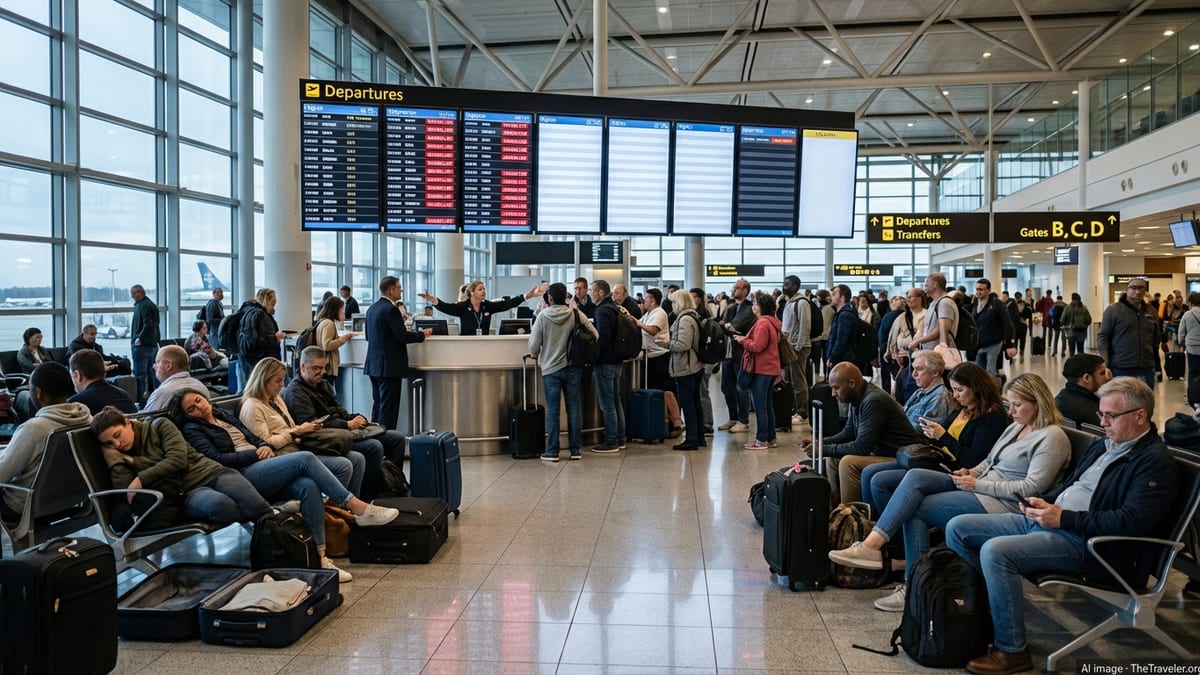
For international travelers, the immediate impact is most visible in disrupted schedules and longer flight times on routes that previously used Russian airspace as a shortcut between Europe, the Middle East and Asia. Passengers booked on Russia-bound flights with carriers now scaling back their operations have reported sudden cancellations at airports and in-flight diversions back to origin hubs, according to accounts collected by regional newsrooms and social media monitoring.
Industry commentators note that many Western travelers had already lost direct access to Russian destinations following the sanctions and reciprocal airspace bans imposed in 2022, when European, U.S. and several Asian airlines halted flights to and over Russia. The current wave of adjustments further narrows remaining options for reaching Russian cities via foreign airlines, shifting more demand onto Russian carriers and a shrinking pool of non-Western operators still serving the market.
Longer term, aviation specialists quoted in financial and sector-specific publications suggest that sustained avoidance of Russian airspace by additional carriers would reinforce a global east-west traffic pattern that bypasses Russia entirely. Some routes between Europe and East Asia have already been flying extended detours over the Middle East, Central Asia or the Arctic, adding fuel burn and time. An expanded de facto no-go zone over Russia would consolidate these shifts and increase operating costs, with potential knock-on effects for ticket prices and schedule planning.
Risk Management in a Conflict-Exposed Sky
The confrontation over Russian airspace underscores how modern conflicts increasingly spill into commercial aviation, forcing airlines and regulators to make rapid judgments about threats that can change within hours. International guidelines emphasize that states bear primary responsibility for declaring risks in their own flight information regions, but recent conflicts have shown that neighboring countries and industry bodies sometimes move faster than national authorities to warn carriers away from volatile zones.
Ukraine’s appeal to international organizations, coupled with the early response from some foreign airlines, fits into a broader pattern where airlines adopt a precautionary approach even when overflight routes remain technically open. Incident databases and historical analyses of past conflicts, including earlier phases of the war in Ukraine, show that route bans, no-fly zones and insurance exclusions tend to expand incrementally as fighting intensifies and as high-profile incidents shape perceptions of risk.
For now, the picture over Russia is fragmented: many Western carriers have already been out of the market for years, some non-Western airlines are beginning to pull back, and Russian authorities are working to reassure the partners that remain. Travelers whose itineraries rely on transiting Russian airports or airspace are being advised by airlines and travel agents to monitor schedules closely and be prepared for last-minute changes as the security situation and regulatory landscape continue to evolve.
Kyiv Post coverage of foreign airlines canceling Russia flights
ABC News report on airlines suspending Russia flights