


More news on this day
Flight disruption at Moscow’s main airports intensified on September 3 as Ukraine’s escalating drone campaign and a formal warning over Russian airspace safety triggered mounting cancellations, delays and diversions affecting travelers across the region.
Get the latest news straight to your inbox!
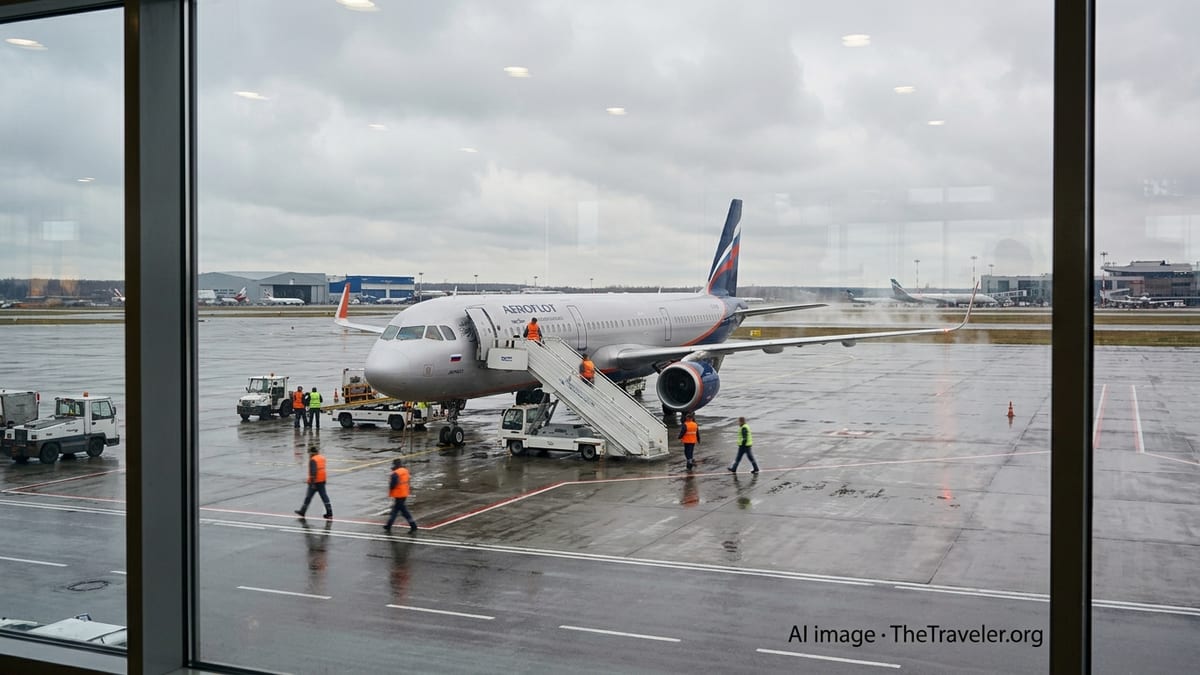
Drone Campaign Pushes Moscow Airports to the Brink
Travelers using Moscow’s key gateways faced deepening uncertainty as air traffic around the Russian capital was curtailed for a second consecutive night following large-scale Ukrainian drone activity. Publicly available flight-tracking data indicated that Sheremetyevo, Russia’s busiest airport, recorded more than 20 cancellations and over 200 delayed services on September 2 and 3, while Vnukovo saw a similar pattern of scrubbed and late departures and arrivals.
Reports indicate that Russia’s Federal Air Transport Agency introduced temporary restrictions on aircraft movements at several Moscow-region airports in response to drone alerts. While operations resumed intermittently, the rolling suspensions left passengers sleeping in terminal corridors and scrambling to rebook onward connections, extending a pattern of night-time interruptions that has persisted through the summer.
Analysis from aviation risk specialists suggests that Ukrainian forces have been using sustained waves of long-range drones to pressure Russian logistics hubs, energy facilities and military infrastructure. Airports around Moscow have repeatedly been caught inside the affected airspace, forcing controllers to close runways and redirect traffic until the skies are cleared.
Travel-focused monitoring services note that, although mass closures are typically short-lived, their frequency has increased, transforming what were once sporadic disruptions into a looming operational challenge for Russian domestic and international connectivity.
Kyiv’s Warning: Russian Skies Branded Unsafe
The latest wave of disruption followed a sharp escalation in rhetoric from Kyiv. In an evening address on September 1, Ukrainian President Volodymyr Zelenskyy warned airlines, insurers and organizations still using Russian airports that the country’s skies were becoming “completely dangerous” because of intensive Ukrainian drone operations deep inside Russian territory. He framed the message as a response to continued Russian strikes on Ukrainian cities and energy infrastructure.
According to published coverage of the address, Zelenskyy emphasized that Ukraine did not intend to target civilian aircraft but signaled that the sheer number of unmanned systems in Russian airspace would create a hostile environment for normal passenger operations. Observers say the speech effectively transformed what had been a de facto security issue for airlines into a formal political warning designed to shift risk calculations for carriers and underwriters.
On September 2, Ukrainian officials moved to codify that stance, formally notifying the International Civil Aviation Organization that Ukraine regards Russian airspace as unsafe for civilian overflights because of increased military activity. Publicly available information on the filing indicates that Kyiv’s stated goal is to reduce the chance of unintended incidents involving commercial aircraft transiting zones where drones and air defense systems are active.
The combination of a high-profile presidential warning and a formal safety notification has amplified calls within the aviation risk community for airlines to reassess their exposure on routes that cross Russian territory or use its airports, even if no regulatory bans have yet been introduced by foreign governments.
Russian Response and Strain on Domestic Travel
Moscow has sought to project confidence in the face of the growing disruption. Statements cited in Russian media from Transport Minister Andrei Nikitin stress that civil aviation authorities are tightening flight safety and airport security requirements and working closely with military and security services to prevent what they describe as “significant” disturbances to domestic travel.
Despite those assurances, schedules at Moscow’s main hubs show continued strain. Arrivals and departures clustered around key overnight and early-morning banks have been particularly vulnerable, with aircraft held in holding patterns, diverted to alternate fields or kept on the ground while drone alerts are assessed. For passengers, the result has been missed connections to regional Russian cities, extended layovers in the capital and uncertainty over when full operations might normalize.
Aviation analysts note that Russia’s domestic network is heavily dependent on Moscow as a central hub, magnifying the impact of any disruption in the capital’s airspace. When Sheremetyevo, Domodedovo or Vnukovo slow down, ripple effects spread quickly across Siberia, the Far East and regional centers, complicating everything from business travel to medical trips and family visits.
Some foreign carriers that still serve Moscow have already demonstrated how fast plans can change. Reporting from the region highlights cases where flights from popular leisure destinations were diverted to alternate airports or returned to origin because of airspace security concerns, underscoring the nervousness among operators who continue to fly to Russia under heightened insurance and compliance scrutiny.
Global Airlines Recalculate Routes and Risks
For international travelers and the airlines that carry them, the situation raises broader questions about the viability of Russian airspace as a transit corridor. Before the full-scale invasion of Ukraine in 2022, carriers from Europe and Asia relied heavily on cross-Russia routes for efficient links between continents. Many Western airlines subsequently withdrew because of sanctions and overflight bans, but a diverse mix of carriers from the Middle East, Asia and Turkey have continued to use Russian skies.
Specialist aviation publications report that large network airlines are now reviewing contingency plans in light of Ukraine’s warnings, weighing longer routings that avoid Russian territory against the fuel and time penalties such deviations entail. Risk advisory firms such as Osprey Flight Solutions have circulated briefings assessing a high likelihood of continued Ukrainian drone and missile activity within several hundred kilometers of the Ukrainian border, with attacks deeper into Russia, including near Moscow and Saint Petersburg, seen as likely to persist through 2026.
Insurers are another critical audience for Kyiv’s messaging. Publicly available commentary from the sector indicates that underwriters are reassessing war risk premiums and policy conditions for flights entering Russian airspace. Any further tightening of coverage could add cost pressure to carriers that still overfly Russia or serve its airports, and in extreme cases might tip the balance toward route suspensions.
For passengers outside the region, the immediate impact is limited, as many major global airlines already avoid Russia entirely. However, should additional carriers re-route or curtail services, travelers could see longer flight times on some Asia–Europe sectors, compressed capacity on alternative corridors over the Middle East and Central Asia, and potential fare increases on the most affected routes.
What Travelers Should Watch in the Weeks Ahead
Industry observers say the coming weeks will be crucial in determining whether the current Moscow airport disruptions harden into a prolonged pattern. Much will depend on how intensively Ukraine pursues its stated objective of “closing” Russian skies through drone pressure and how effectively Russian authorities manage to protect critical aviation nodes without imposing constant flight bans around the capital.
Travel advisories from governments and airlines will be a key reference point for those with existing bookings to or through Russia. Several European states already classify Russian airspace as high risk, and any further tightening of official guidance could prompt more carriers to scale back operations, even in the absence of new legal restrictions.
For travelers who must transit Moscow, experts recommend building in additional buffer time for connections, monitoring flight status closely and staying alert for rebooking offers or schedule changes as airlines adjust to evolving security assessments. Given the pace of developments, itineraries that appear stable at time of purchase may be revised on short notice if drone activity spikes or air traffic regulators impose fresh restrictions.
More broadly, the situation around Moscow’s airports illustrates how the Russia–Ukraine conflict continues to reshape global aviation geography, from the closure of Ukrainian skies to the partial isolation of Russian carriers and the re-routing of long-haul flows. As Ukraine presses its airspace warning and drone operations continue, Russian hubs that once symbolized east–west connectivity are becoming focal points of a new era of contested skies.
EU Today: Moscow Airport Disruption Deepens as Ukraine Presses Russian Airspace Warning
Euronews: Ukraine formally warns airlines that Russian airspace is unsafe
Travel Daily News: Ukraine warns ICAO over Russian airspace as Moscow flights face disruption
RFE/RL: How Much Can Ukraine Disrupt Civilian Flights in Russia?