


More news on this day
Ukraine’s long-range drone strikes on Russian territory are increasingly colliding with the country’s civilian aviation system, triggering temporary airport closures, airspace restrictions and growing questions over how much of Russia’s vast skies can remain reliably open to commercial traffic.
Get the latest news straight to your inbox!
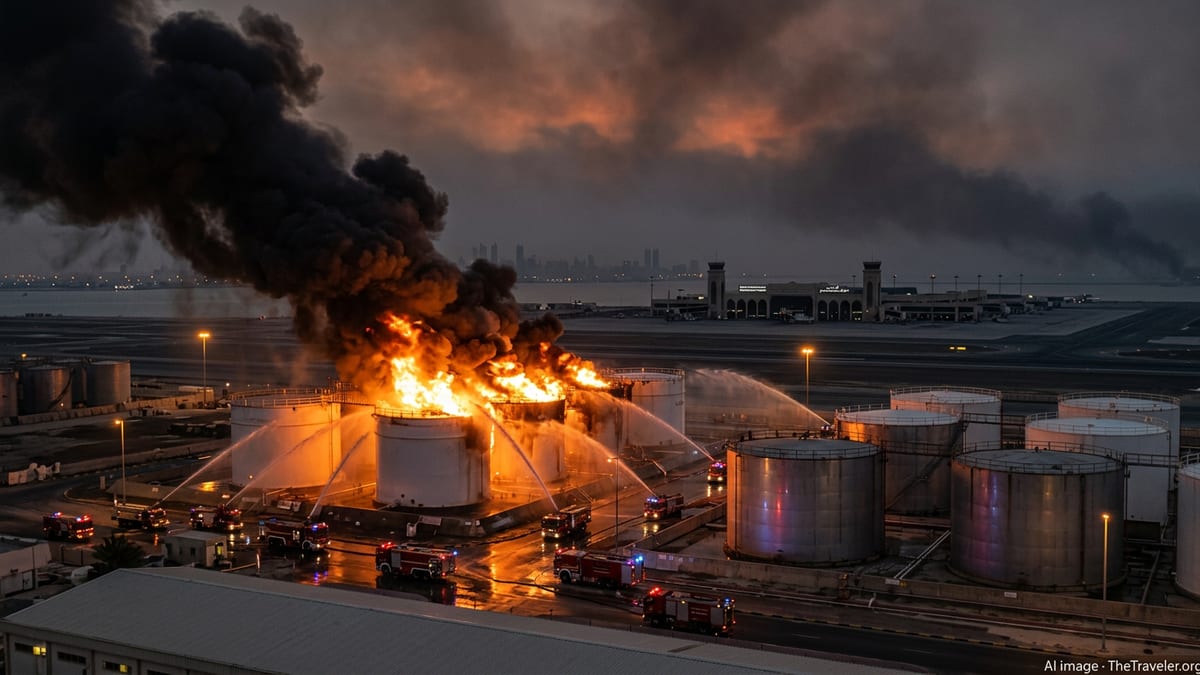
Expanding Drone Range Brings Conflict Closer to Russian Hubs
Publicly available information shows that Ukraine has moved from striking targets near the frontline to hitting oil depots, military airfields and industrial sites hundreds of kilometers inside Russia. Reports from late 2024 and 2025 describe waves of drones reaching regions such as Tatarstan and the Volga area, well beyond the immediate combat zone. These strikes demonstrate an extended reach that overlaps with major domestic air routes and regional hubs.
Analysts at independent research organizations note that this long-range campaign is designed to pressure Russia’s war logistics and energy infrastructure. A byproduct is that drones increasingly transit through or near controlled civil airspace. When strikes or interceptions occur close to busy corridors, Russian aviation authorities have responded with short term flight restrictions that ripple through the network.
International aviation bodies have highlighted the broader impact of the wider Russia Ukraine conflict on traffic flows. A briefing by the global airline industry association and Eurocontrol indicates that the war remains a primary driver of reroutings and cancellations across the wider European network, with Russian and Ukrainian skies treated as high risk zones that airlines either bypass entirely or approach with additional caution.
Temporary Airport Closures Have Become a Recurring Pattern
Since 2023, Russian airports have repeatedly halted operations in response to incoming drones or reported threats. Coverage of previous attacks on the Moscow region describes instances where major airports such as Vnukovo and Domodedovo temporarily closed, forcing dozens of flights to divert or cancel while air defenses engaged targets in the vicinity. These shutdowns have typically lasted a few hours but created visible disruption for passengers and airlines.
A similar pattern has appeared in regional centers. Open source reporting on incidents in southern Russia and the Volga region describes drone attacks that damaged infrastructure and led to temporary suspensions of operations at airports including Saratov and Kazan. In these cases, local authorities and aviation regulators curtailed arrivals and departures until inspections and safety checks were completed, before gradually restoring normal schedules later the same day or the following day.
Recent Russian media summaries suggest that airports in southern Russia have also faced coordinated interruptions. A bulletin from Russia’s Transport Ministry, cited in domestic coverage, referred to operations being suspended at more than a dozen airports in the south after strikes on air navigation facilities. Airline statements referenced postponements and cancellations affecting thousands of travelers on both domestic and outbound international routes, underscoring how a single attack can briefly ripple across multiple destinations.
Airspace Restrictions and Rerouting Across a Vast Territory
While individual airport closures tend to be short, airspace management across Russia has been tightening in more structural ways. The country had already prohibited civil flights over areas directly adjoining Ukraine at the outset of the full scale invasion in 2022. Subsequent Ukrainian drone activity deeper inside Russia has prompted additional localized restrictions as air defense zones expand around sensitive facilities.
Assessments by independent conflict monitors in 2026 describe Russian authorities imposing wider limitations within the Moscow flight information region during periods of heightened drone activity. These reports indicate that risk mitigation measures extend from the capital’s busy airspace north toward Saint Petersburg and east toward the Volga, in addition to long standing prohibitions along the Ukrainian border. Such steps aim to create more room for military air defense operations, but they also reduce flexibility for civil routings.
European and international aviation safety agencies continue to list parts of both Ukrainian and Russian airspace as active conflict zones. Guidance from European regulators advises operators to carefully assess the risk of overflying affected FIRs, referencing the presence of long range missiles and drones as key factors. In practice, many international carriers have minimized or entirely avoided overflight of western Russia, concentrating remaining commercial traffic on more northerly corridors or alternative routes through Central Asia and the Caucasus.
How Much Disruption Can Ukraine Realistically Inflict?
Despite headline grabbing closures, the pattern of disruption so far points to intermittent, localized impacts rather than a complete shutdown of Russian skies. Ukraine’s drone fleet, while expanding, remains limited compared with the scale of Russia’s territory and its dense network of domestic routes. Most documented airspace restrictions have coincided with specific attack waves or threats, after which normal or near normal operations resume.
Analysts argue that the main pressure point for Ukraine is not the continuous grounding of flights but the cumulative effect of unpredictability. Frequent, short notice closures of key hubs force Russian carriers to build in more contingency time, carry extra fuel for potential diversions and accept schedule instability that can frustrate passengers and raise operating costs. For leisure travelers and tourists inside Russia, this uncertainty can push some demand toward rail and road options, especially on routes that have experienced repeated suspensions.
From a risk management perspective, international guidance emphasizes that even a low probability of a drone or missile incident near a civilian aircraft is enough to justify conservative restrictions. As Ukrainian drones reach deeper into Russia and target areas that overlap with civil air corridors, aviation authorities may increasingly choose to pre emptively close segments of airspace during high risk periods. This approach limits the volume of continuous disruption, but ensures that flights in affected regions remain vulnerable to rolling delays, diversions and occasional cancellations.
Implications for Travelers and Airlines Watching the Conflict
For passengers, the most tangible consequence is operational uncertainty on routes to, from or within Russia. Published schedules may not reflect last minute airspace closures prompted by a new drone attack, leaving travelers facing delays at departure or unplanned diversions en route. Travel industry reports already reference cases of Russians opting for trains or buses to southern resorts after repeated warnings and interruptions at regional airports.
International airlines largely withdrew from the Russian market after the 2022 invasion, and those few still serving Russian destinations tend to operate with heightened caution. Industry risk assessments place the region among global hotspots where conflict related activity directly shapes routing decisions. This means limited capacity, indirect routings and potentially higher fares on remaining services, even when skies are technically open.
Looking ahead, much depends on Ukraine’s ability to maintain or further extend its drone range, and on how Russia calibrates its air defense posture around major cities and industrial zones. If Ukrainian strikes continue to reach deeper into Russian territory, observers expect periodic shutdowns of airports and corridors to remain a feature of the aviation landscape. For now, Ukraine can significantly disrupt pockets of Russian civil aviation and inject persistent uncertainty, but available evidence suggests it falls short of closing the country’s skies to civilian flights on a nationwide and sustained basis.
European Union Aviation Safety Agency conflict zone status
IATA airspace risk assessment guidance
EUROCONTROL briefing on Ukraine Russia impact on civil traffic
TASS coverage of southern Russia airport suspensions
BBC report on temporary Moscow airport closures after drone attacks