


More news on this day
Turkey remains one of the Mediterranean’s busiest holiday destinations in 2026, but a series of updated government advisories in the UK, United States and other countries are prompting travellers to look more closely at security risks, regional restrictions and what they mean for planned trips.
Get the latest news straight to your inbox!
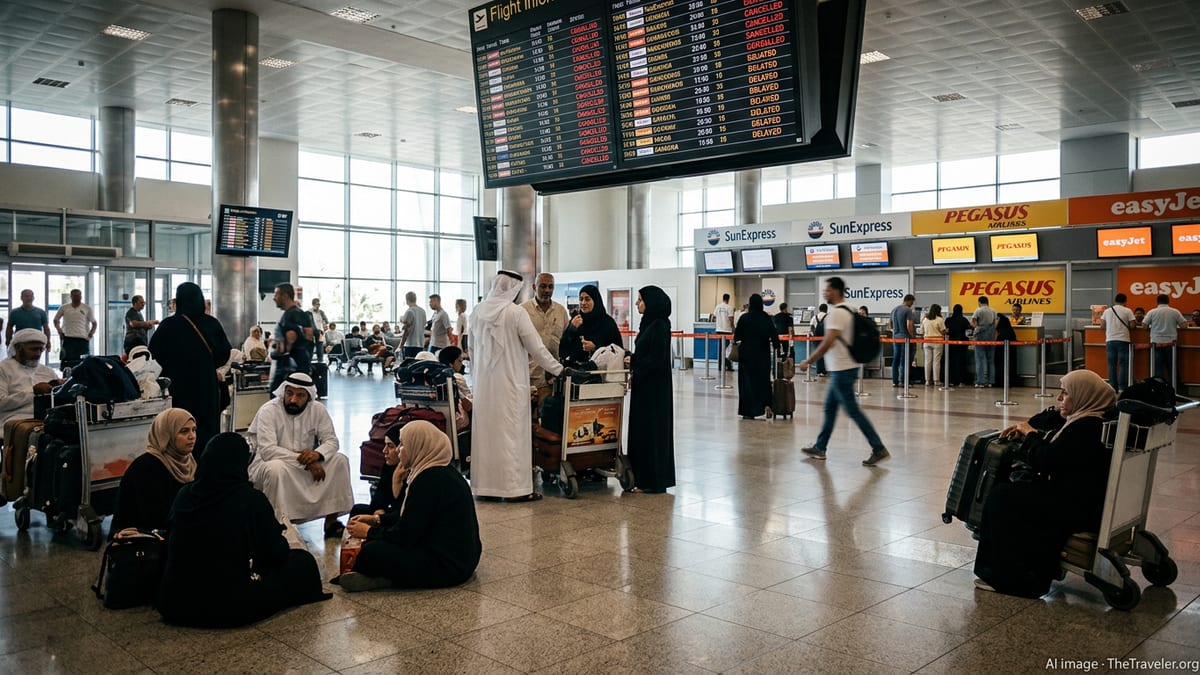
What the latest Foreign Office update actually says
The UK Foreign, Commonwealth and Development Office (FCDO) continues to state that most trips to Turkey are trouble free, but its travel advice was revised again on 21 September 2026 with new wording for LGBT+ visitors and a renewed warning that some areas are off limits. The guidance, which remains current as of 24 September 2026, advises against all travel to parts of the country and stresses that no journey can be guaranteed safe.
The clearest red line concerns the frontier with Syria. The FCDO advises against all travel to within 10 kilometres of the Turkish-Syrian border because of fighting and a heightened risk of terrorism and armed conflict. Travellers are reminded that insurance policies are often invalidated if they visit locations that their government explicitly lists as no-go zones, leaving them exposed to medical and repatriation costs.
Beyond the border region, the FCDO highlights a general risk of terrorism, political tensions and sporadic security incidents in major cities. It points to the need to monitor local and international media for changes affecting airports, airspace and public transport, and to keep departure plans under regular review. Advice includes staying away from security installations, avoiding demonstrations and being prepared to follow shelter-in-place instructions if a serious incident occurs.
Separate FCDO pages signpost tailored guidance for women, disabled travellers, LGBT+ travellers, and those visiting independently. The emphasis is on researching destinations in advance, understanding local laws and customs, and securing comprehensive insurance that explicitly covers Turkey and the planned activities.
How other governments rate the risk
The United States currently classifies Turkey as a Level 2 destination, meaning travellers are advised to exercise increased caution. The US advisory, updated on 9 June 2026, cites terrorism, armed conflict and arbitrary detentions as the main concerns. It specifically warns against travel within 10 kilometres of the borders with Syria and Iraq and urges travellers to be vigilant in crowded public places such as transport hubs, markets, shopping centres, places of worship, hotels and major events.
Canada’s official travel advice, last updated on 22 September 2026, adopts similar language, recommending that visitors maintain a high level of security awareness across the country and avoid all travel near the Syrian and Iraqi borders. Australia’s Smartraveller service, current as of mid‑September 2026, also advises people not to travel to areas within 10 kilometres of Syria because of the serious threat of terrorism, violence and acts of war, and to reconsider the need to travel to certain parts of the southeast.
These advisories do not equate to blanket warnings against tourism in Turkey. Instead, they reflect a pattern of targeted cautions that distinguish between the main coastal and city destinations, where large numbers of holidaymakers continue to travel, and more volatile border regions and political flashpoints. Travellers are encouraged to check their own government’s mapping of risk zones before booking internal flights or long-distance road journeys.
Several governments also underline the importance of understanding Turkey’s legal environment. Publicly available information from US and European sources notes reports of arbitrary detentions, exit bans, tight restrictions on unauthorised protests and laws that can penalise criticism of the government, including on social media. Visitors are urged to avoid political gatherings and to be careful with what they post online while in the country.
Terrorism and recent security incidents
Recent history plays a significant role in shaping travel advice. The UK’s safety and security guidance for Turkey lists a string of attacks involving firearms, knives and explosives over the past few years, including at places that are frequented by locals and visitors alike. Locations highlighted in the advisory include public buildings, places of worship, airports and large public gatherings, especially around major events and religious holidays.
Examples referenced in the UK guidance include an attack near a building housing the Israeli consulate in Istanbul in April 2026, in which gunmen opened fire and injured police officers. Earlier incidents cited include shootings at a courthouse and a church in Istanbul, an attack on a police station in Izmir, an explosion at a defence-industry facility near Ankara and a 2022 bombing in a busy shopping area of central Istanbul. Turkish and international reports have described several of these incidents as acts of terrorism.
Security assessments point out that extremist groups linked to Syria, including Islamic State affiliates and other armed organisations, retain the capability to strike inside Turkey. Intelligence summaries note that some groups have previously targeted border crossings and crowded civilian locations. As a result, official advice consistently recommends a heightened level of awareness in urban centres, especially around transport nodes, tourist attractions and religious sites.
At the same time, domestic security has been heavily reinforced in areas that attract international visitors. Police and gendarmerie presence is highly visible in central Istanbul, Antalya and other leading resorts, particularly at airports, ferry ports and major monuments. Publicly available information from Turkish tourism authorities emphasises that tourist operations across the country, from accommodation to entertainment and tours, continue to run normally despite periodic incidents.
Tourism flows and what visitors are actually experiencing
Despite the security caveats, Turkey’s tourism industry remains robust in 2026. Statistics released by the Turkish Ministry of Culture and Tourism show that international arrivals to Istanbul alone run into the tens of millions annually, and official figures presented by the Transport and Infrastructure Ministry indicate that Istanbul’s main airports together handled more than 63 million passengers in the first half of 2026. These volumes suggest that foreign visitors continue to travel in large numbers to the country’s main gateways.
Tourism promotion agencies report that classic destinations such as Istanbul, Antalya, Bodrum, Izmir and Cappadocia are operating as normal, with hotels, tours and entertainment programmes open through the main summer season. Travel industry updates show that European and North American tour operators are still selling package holidays to the Turkish Riviera and city-break itineraries focusing on Istanbul’s historic peninsula, Bosphorus districts and nearby cultural sites.
For most holidaymakers staying in established resort areas or central neighbourhoods of major cities, everyday risks tend to resemble those in other large urban and coastal destinations. Government and media reports highlight familiar issues such as petty crime, scams targeting tourists, road safety and water safety, particularly around unregulated activities. Standard advice includes using licensed taxis, taking care with valuables in crowded areas, and booking excursions through reputable providers.
Travel advisories also underline the importance of seasonal factors. From April to October, the FCDO notes a high risk of wildfires across parts of Turkey, including some coastal regions popular with tourists. Visitors are asked to heed local instructions regarding fire restrictions and to be prepared for the possibility of smoke disruption or evacuation orders if conditions deteriorate in specific areas.
Practical steps for a safer trip
For travellers weighing whether it is safe to visit Turkey now, official guidance points towards a balanced approach. The country is not subject to an across-the-board “do not travel” warning from major Western governments, but all of them advise increased caution and set clear red lines for certain regions. Understanding those distinctions and planning itineraries accordingly is central to managing risk.
Before departure, visitors are encouraged to check the latest government advisories for Turkey on the day they book and again shortly before they travel. Because updates in September 2026 have included new sections for specific groups of travellers, those who are LGBT+, travelling alone, or with medical conditions may find additional tailored advice that affects their planning and choice of neighbourhoods or nightlife venues.
During a trip, the consistent message is to stay informed and flexible. Travellers are advised to follow local news, sign up for safety alerts where available, avoid demonstrations or large political gatherings and steer clear of security facilities. In crowded spots such as bazaars, metro stations, bus terminals and popular squares, simple precautions like keeping bags closed, limiting displays of valuables and noting emergency exits are recommended.
Ultimately, current evidence shows that millions of people continue to holiday in Turkey each year while a smaller number of serious security incidents, often unrelated to tourism, continue to occur. Whether a trip feels acceptable will depend on each traveller’s risk tolerance, health needs and willingness to adjust plans if the security picture changes. What the latest Foreign Office and allied government updates make clear is that good preparation, awareness of restricted regions and close attention to official advice are now essential parts of planning a Turkish getaway.