


More news on this day
The UK Foreign, Commonwealth and Development Office (FCDO) has issued new guidance advising against all but essential travel to the international airport and seaport serving Jordan’s Red Sea city of Aqaba, following security alerts related to escalating regional tensions.
Get the latest news straight to your inbox!
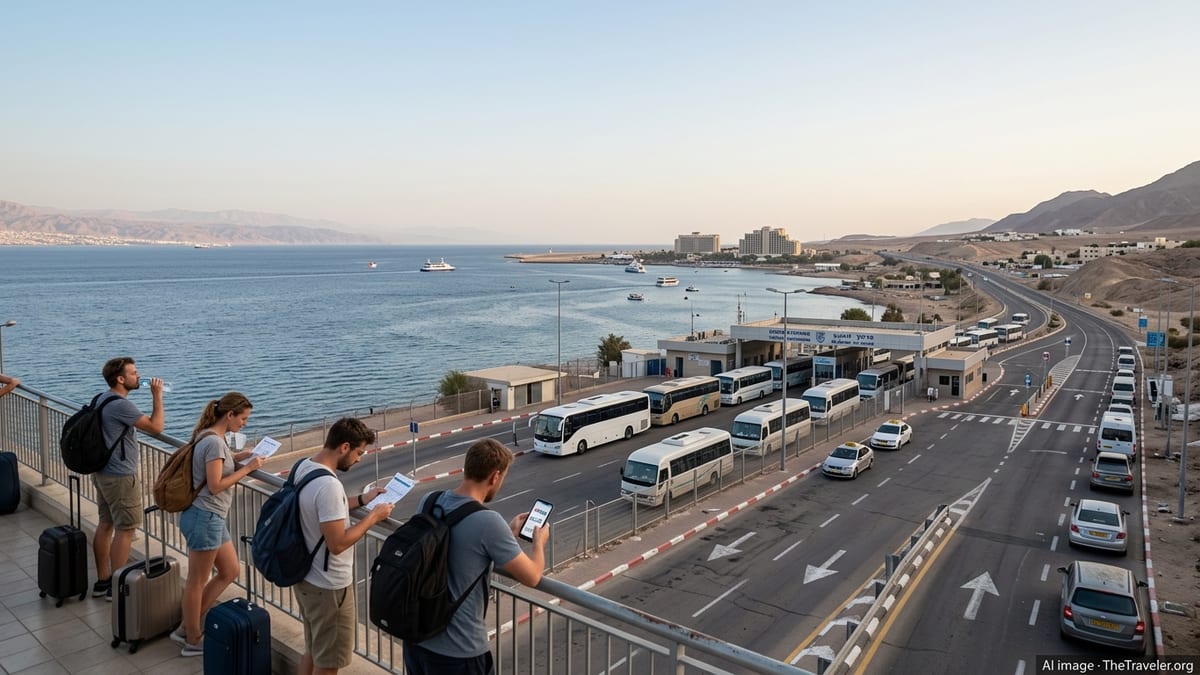
New FCDO advice targets key transport gateways
The updated advice, published on July 20, 2026, refines the United Kingdom’s wider travel guidance for Jordan by singling out Aqaba’s King Hussein International Airport and the adjacent seaport as locations where only essential travel is now recommended. The change follows a period of heightened concern over the risk of drone and missile attacks tied to the confrontation between the United States and Iran.
According to publicly available information, the revised wording appears in the Jordan country section of the FCDO travel pages, specifying that travel to Aqaba’s airport and seaport should be limited to essential purposes. While the broader Red Sea resort city continues to be presented as accessible to visitors who are prepared to accept an increased level of risk, the two critical transport nodes are treated as exceptions.
The move is significant because FCDO advisories are a benchmark for UK travellers, tour operators and insurers. Travel that proceeds against explicit FCDO warnings can leave holidaymakers without insurance cover, prompting many package providers to reassess or cancel itineraries relying on the affected facilities.
The updated guidance also reflects growing concern over infrastructure that may be viewed as strategically sensitive. Aqaba’s port is Jordan’s only seaport and a major export gateway, while its airport is used by both commercial airlines and foreign military traffic, increasing its profile in a tense security environment.
Security alerts and disputed evacuation reports
The Foreign Office revision comes in the wake of a security alert issued by the United States Embassy in Amman on July 19, in which the mission reported what it described as a “specific and credible threat” against the international airport and seaport in Aqaba. The alert indicated that Jordanian authorities had evacuated both facilities as a precaution.
Coverage in regional and international media described an unusual level of activity around Aqaba’s transport hubs over the weekend, set against a backdrop of increased drone and missile activity elsewhere in the region. Reports noted that the alert was linked to fears that Iranian or Iran-aligned groups could target locations used by US military personnel and assets.
However, public statements from Jordanian officials, reported by local outlets, disputed suggestions that normal operations at either the airport or the seaport had been halted. Accounts in Jordanian media indicated that both facilities were working normally, underlining a gap between foreign embassy messaging and the narrative presented by the host government.
The FCDO advisory does not take a position on the conflicting accounts over evacuation, but the timing of the updated wording suggests UK officials are responding to the same underlying threat picture. By advising against all but essential travel specifically to the airport and seaport, the guidance effectively acknowledges heightened concern without declaring a broader shutdown.
Impact on UK travellers, cruise calls and tour programs
Travel industry reports indicate that the updated advice is already prompting reviews of winter 2026 and early 2027 programmes that feature Aqaba as a gateway to Petra, Wadi Rum and the Dead Sea. Many itineraries use the Red Sea city as either a short-stay beach destination or a logistics hub for overland touring in southern Jordan.
Package holiday companies and specialist tour operators typically treat “all but essential travel” advice as a trigger to cancel or re-route, particularly when key arrival and departure points are directly affected. Industry commentary suggests that some trips may be restructured to use Amman’s Queen Alia International Airport instead, with overland transfers replacing internal flights to Aqaba.
The advisory may also affect cruise operations in the Red Sea. Aqaba’s port is a regular call for international cruise ships, which use it as a gateway for excursions to Petra and Wadi Rum. While the FCDO wording focuses on travel to the port rather than calls by foreign-flagged vessels, operators catering to UK passengers are likely to weigh the updated risk profile when finalising deployment for upcoming seasons.
Independent travellers who had planned to enter or leave Jordan via Aqaba, including overland connections to Egypt’s Sinai or Israel’s Eilat region, are being urged by travel insurers and consumer groups to check how the new wording affects existing policies. In many cases, cover may be limited or invalidated if travellers choose to pass through locations highlighted by the FCDO as suitable only for essential journeys.
Broader Jordan advisories remain more permissive
Despite the sharper warning for Aqaba’s gateways, much of Jordan continues to be treated more leniently in official advice from several governments. The core tourist corridor linking Amman, the Dead Sea, Petra, Wadi Rum and Aqaba remains accessible in most guidance, albeit with language stressing the potential for rapid changes in the security environment.
The UK’s overall country page describes Jordan as affected by regional instability, citing the risk of terrorism and possible spillover from conflicts in neighbouring states. Recent UK, Canadian, Australian and US advisories all highlight the threat of drone and missile activity targeting military or diplomatic sites, and caution that airspace closures and flight diversions are possible at short notice.
Some governments, including Canada, currently advise against non-essential travel to Jordan as a whole, reflecting a more conservative stance in light of broader Middle East tensions. Others have taken a more calibrated approach, reserving their strictest language for specific border regions, refugee camps and areas near military installations, while allowing leisure travel to continue elsewhere for those prepared to accept additional risk.
Travel planners note that the Aqaba-specific wording by the FCDO aligns it more closely with these stricter approaches on critical infrastructure, but still stops short of advising against all leisure travel to Jordan. This leaves space for tourism to continue in other parts of the country, even as uncertainty grows around the Red Sea gateways.
What travellers should monitor in the coming weeks
Analysts following regional travel disruption suggest that the key variables for visitors will be the duration of the heightened alert around Aqaba and the trajectory of tensions between the United States and Iran. Any confirmed attack or attempted strike near the city’s airport, seaport or nearby military facilities would likely prompt a further tightening of official guidance.
Airlines serving Jordan are also expected to track developments closely. Previous surges in regional tensions have triggered temporary closures of Jordanian airspace or last-minute diversions, affecting flights to both Amman and Aqaba. Even without a direct incident at the Red Sea city’s transport hubs, commercial schedules could be altered if the perceived risk to aircraft increases.
For now, travel experts generally advise UK holidaymakers and business travellers with upcoming trips to Jordan to monitor the FCDO pages frequently, stay in close contact with airlines or tour operators, and review their insurance policies in light of the new wording on Aqaba’s airport and seaport. Travellers already in the country are being encouraged to remain alert to local announcements and be prepared for potential changes to itineraries at short notice.
As the peak autumn and winter travel seasons approach, the situation in Aqaba will be watched carefully by the global tourism industry. The port city is a strategic gateway not only for Jordan’s exports but also for regional cruise movements and overland tourist circuits, meaning any prolonged restriction on its airport or seaport is likely to reverberate through Red Sea and Middle East travel plans in the months ahead.