


More news on this day
France’s busy summer travel season has been hit by a sharp aviation disruption, with more than 1,140 delayed flights and over 50 cancellations reported across major hubs including Paris, Nice, Lyon and Bordeaux, affecting tens of thousands of passengers on airlines such as Air France, easyJet and Ryanair.
Get the latest news straight to your inbox!
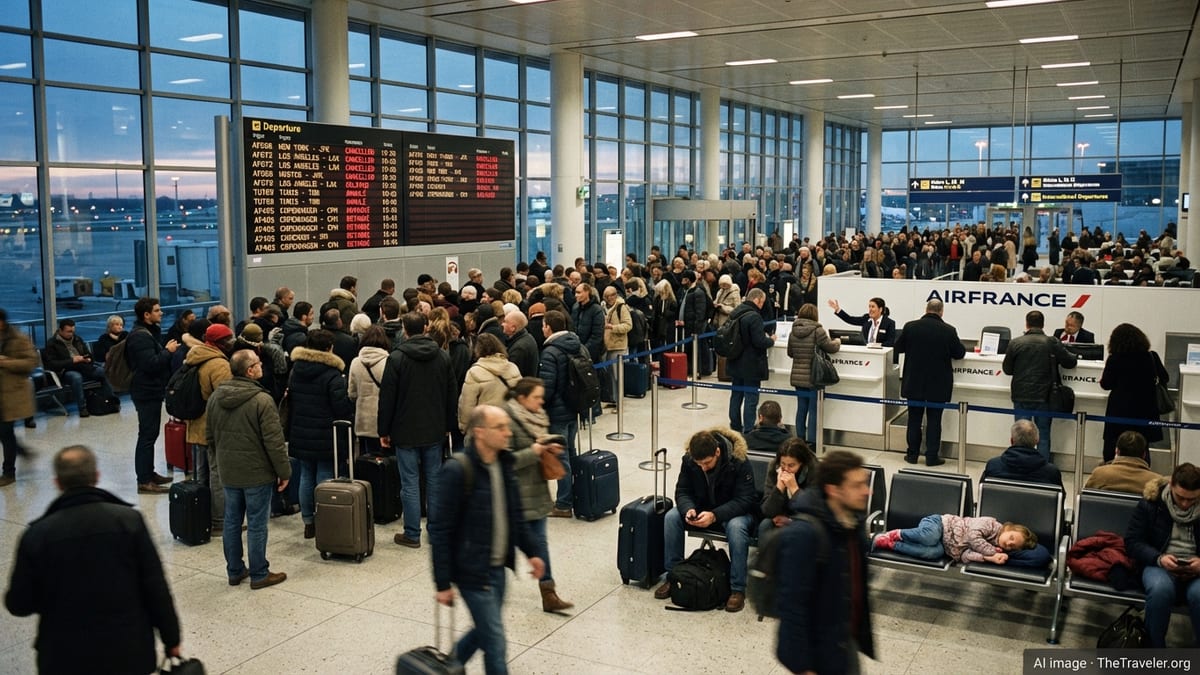
Network-Wide Disruption Across Key French Hubs
Publicly available operations data and industry reporting on June 29, 2026 indicate that France’s aviation network is under acute strain, with 1,146 delayed flights and 51 cancellations recorded across the country in a single day. The disruption is heavily concentrated at Paris Charles de Gaulle and Paris Orly, but the knock-on effects are being felt at Nice Côte d’Azur, Lyon Saint-Exupéry and Bordeaux Mérignac.
Travel-sector coverage notes that the current disruption involves a mix of domestic and European routes, with particularly high levels of delays on services linking Paris with Mediterranean and regional cities such as Nice, Lyon and Bordeaux. Many departures have left significantly behind schedule, while some rotations have been removed from schedules altogether, creating aircraft and crew imbalances that ripple through the network.
Reports indicate that the impact is not confined to one carrier. While Air France, easyJet and Ryanair feature prominently in the disrupted schedules because of their large footprint in France, other airlines operating at these hubs, including major European network and leisure carriers, are also experiencing extended delays. The result is a system-wide slowdown that is lengthening journey times for both point-to-point and connecting passengers.
Operational snapshots from the French hubs show crowded departure halls, long queues at check in and security, and busy rebooking desks as travelers search for alternative options. With many flights close to capacity at the height of the summer season, spare seats on later departures are limited, leaving some passengers facing overnight stays or lengthy detours via other European gateways.
Paris, Nice, Lyon and Bordeaux Bear the Brunt
Paris Charles de Gaulle and Paris Orly, which function as France’s primary international and domestic gateways, have registered the highest number of affected flights. Reports describe a pattern of rolling delays, with short-notice schedule changes and gate swaps adding to the confusion for travelers attempting to make tight connections or reach onward rail services.
At Nice Côte d’Azur, one of Europe’s busiest holiday airports in summer, travel-industry coverage highlights a dense cluster of delays on short-haul European routes, particularly those operated by low cost carriers. Earlier in June, separate reporting had already pointed to operational stress on the Paris to Nice corridor, and the latest figures suggest that congestion and rotation issues are persisting into the peak holiday period.
Lyon Saint-Exupéry and Bordeaux Mérignac are also experiencing significant disruption despite handling fewer passengers than the Paris airports. These regional hubs are important connectors for domestic business traffic and for leisure routes to Mediterranean and Atlantic destinations. Flight-tracking data shows multiple late-running arrivals and departures at both airports, complicating same-day return trips and onward connections to smaller French cities.
For travelers, the geographic spread of the disruption means that common fallback strategies, such as rerouting via another French hub, are proving difficult. With several of the country’s principal airports affected at the same time, options to bypass a problem hotspot are constrained, and even flights that depart on time may be carrying passengers who have already missed earlier connections.
Air France, easyJet and Ryanair Under Pressure
The disruption is placing particular pressure on Air France, easyJet and Ryanair, which together operate a large share of intra-European and domestic flights touching French airports. Network maps and schedule data show that these carriers are central to connectivity on routes linking Paris with Nice, Lyon and Bordeaux, making them especially exposed when delays accumulate.
Air France, as the flag carrier and primary occupant of key slots at Charles de Gaulle and Orly, appears prominently in delay statistics, including on trunk domestic routes and European services that feed its long haul network. When short haul rotations run late or are cancelled, long haul passengers may find themselves misconnecting or facing rebooking onto later transatlantic or Asian departures, adding a further layer of complexity to recovery efforts.
Low cost operator easyJet, with strong bases at Paris and Nice, is reported to be handling dozens of delayed sectors, particularly on leisure-heavy routes to Mediterranean destinations and popular city breaks. Ryanair, which operates from regional airports and secondary Paris-area bases, is also featured in disruption tallies, with some services reportedly running significantly behind schedule or being cut from the day’s operations.
For all three carriers, the current situation comes on top of a broader European summer marked by tight capacity, high load factors and limited spare aircraft and crew. Under those conditions, one heavily disrupted day can create a backlog that takes several rotations to clear, meaning that travelers booked for later in the week may still encounter revised schedules or aircraft swaps.
Knock-On Effects for Summer Holidaymakers
The timing of the disruption coincides with the build-up to the peak July and August holiday season, increasing its impact on leisure travelers heading to and from France’s coastal regions and major cities. Travel media accounts describe families, tour groups and individual holidaymakers facing missed cruise departures, shortened stays and lost prepaid reservations for accommodation and activities.
In destinations such as Nice and Bordeaux, where many visitors rely on tightly coordinated arrivals to join tours or check in to rental properties, even a few hours of delay can trigger additional costs. With multiple flights arriving late, local ground transport providers and hotels are also having to adapt to shifting arrival patterns, including late night check ins and last minute cancellations.
The disruption also has implications for passengers combining air and rail, a common pattern in France. Travelers who planned onward TGV or regional train connections from Paris, Lyon or Bordeaux face the risk that late-arriving flights will invalidate carefully timed transfers. Some may need to purchase new rail tickets or, in the worst cases, secure overnight accommodation if both air and rail options are saturated.
Given the scale of the delays and cancellations, consumer rights discussions are resurfacing in public forums, with travelers seeking clarity on their entitlements under European air passenger regulations, particularly when disruptions are attributed to operational rather than weather-related causes. Passengers are being encouraged, in publicly available guidance, to keep documentation of delays, additional expenses and communications with airlines for potential reimbursement or compensation claims.
What Travelers Can Expect in the Coming Days
While there is no single identified trigger for the current wave of disruption, the pattern mirrors previous episodes in France and across Europe during peak seasons, when high demand, tight schedules and any localized operational issue can quickly spill over into a broader aviation slowdown. Industry observers point out that once a critical threshold of delayed flights is reached at major hubs, recovery often takes several days.
In the short term, travelers booked to fly into or out of Paris, Nice, Lyon or Bordeaux are being advised in publicly available advisories to monitor their flight status frequently and to anticipate last minute changes to departure times and gates. Airline apps and airport information screens are expected to remain essential tools for tracking evolving conditions on the day of travel.
Given the network-wide nature of the disruption, passengers may also see a rise in schedule adjustments for flights in the coming days, as airlines attempt to rebuild resilience into their operations by retiming departures, swapping aircraft or trimming less critical rotations. This could mean earlier departures, longer planned connection times or, in some cases, the consolidation of lightly booked services.
For travelers with flexible itineraries, experts quoted in public travel guidance often recommend considering alternative days or times of travel, as well as exploring rail options on key domestic corridors where capacity allows. However, with France entering the height of its summer tourist season, seats across all modes are in high demand, and the current aviation disruption is likely to remain a significant factor for anyone planning to fly through the country’s main gateways in the near term.