

Few travel debates are as enduring as France versus Italy. Both countries offer blockbuster cities, layered history, celebrated cuisine and landscapes that run from snow-dusted Alps to sunlit Mediterranean coves. Yet they deliver very different atmospheres once you land. Deciding which one is better to visit is less about crowns and rankings and more about matching their strengths to your own style of travel. This guide weighs the key factors that matter most to travelers today, from culture and scenery to crowd levels and trip costs, to help you decide whether France or Italy should come first on your list.
Overall Vibe and First Impressions
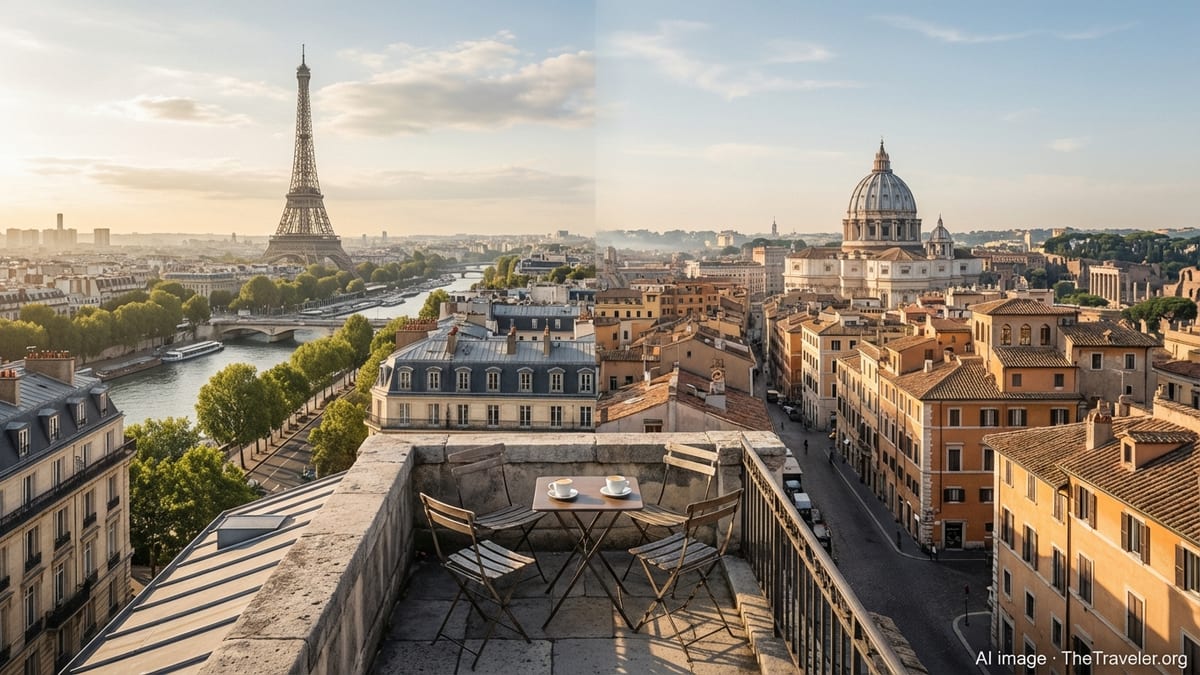
France and Italy share a Mediterranean sensibility, but the feeling on the ground is distinct almost as soon as you step outside the airport. France, especially Paris, often feels polished and poised. Architecture is carefully preserved, public spaces are manicured and there is a strong emphasis on aesthetics, from the typography on a bakery awning to the flower displays on a village square. Italy tends to be more exuberant and informal, where beauty can be slightly weathered and chaotic but also immediate and disarming.
In France, visitors often speak of a certain reserve. Service can be professional rather than effusive, and social codes are more formal, particularly in Paris. Simple gestures, like greeting staff with a “bonjour” before ordering, go a long way. Italy, by contrast, frequently feels more openly welcoming. In many cities and small towns, café owners and market vendors may engage in conversation, share local tips or add a complimentary biscotti to your coffee without comment.
For travelers who appreciate order, reliable timetables and a sense of urban elegance, France often has the edge. Those who thrive in lively street life, late-night socializing and a more relaxed approach to rules often find Italy closer to their ideal. Neither is objectively better, but understanding these differences can help you choose the destination that best matches your travel temperament.
Iconic Cities: Paris vs Rome (and Beyond)
Paris and Rome are the headline acts in this comparison, and many trips to France or Italy orbit around at least one of them. Paris is known for its grand nineteenth-century boulevards, graceful bridges and world-class museums. It is a city built for slow walking: you can move from the Louvre to the Tuileries gardens, across the Seine and into Saint-Germain in a single, memorable stroll. Cultural institutions, from the Musée d’Orsay to newer contemporary art spaces, are dense and easily linked by reliable metro lines.
Rome offers a more layered, sometimes unruly urban experience. Here, ancient ruins sit in open view next to Baroque churches and apartment buildings strung with laundry. The historic center can feel more compact than Paris, but the sensory overload is higher: scooters weaving through traffic, fountains bubbling in hidden piazzas, and church interiors that rival museums in artistic value. Public transport is improving, but walking and the occasional taxi or rideshare often remain the easiest ways to navigate.
Beyond the capitals, France’s major cities such as Lyon, Marseille, Bordeaux and Nice provide a mix of gastronomy, maritime culture and wine heritage. Lyon is frequently praised for its food scene, Marseille for its multicultural character and sea views, Bordeaux for its elegant architecture and vineyard access. Italy counters with Florence, Venice, Milan and Naples. Florence is an open-air Renaissance gallery, Venice a fragile water city grappling with overtourism, Milan a fashion and design hub, and Naples a raw, energetic gateway to the Amalfi Coast. If your priority is museum-hopping and grand urban design, France’s cities may appeal more; if you are drawn to crumbling beauty and intense street life, Italy’s might win.
Landscapes, Coasts and Small-Town Charm
Both countries are exceptionally varied in their landscapes, and both reward travelers who venture beyond the major cities. France stretches from the English Channel to the Mediterranean and from the Atlantic to Alpine peaks. This range includes gentle vineyard hills in Burgundy, lavender fields in Provence, rugged coasts in Brittany and dramatic alpine scenery in Chamonix and the Pyrenees. The French Riviera, from Menton to Cannes, combines palm-fringed promenades with hillside villages perched in the backcountry.
Italy’s geography is more vertical, running down a peninsula and encompassing multiple seas. The northern lakes region around Como and Garda delivers postcard-perfect waterside towns backed by mountains. Further south, the Tuscan and Umbrian countryside is a patchwork of hilltop towns, cypress-lined lanes and olive groves. Coastal highlights include the Amalfi Coast, the pastel villages of Cinque Terre and the wide sandy beaches of Puglia. Islands like Sicily and Sardinia each feel almost like separate countries in their mix of landscapes and traditions.
In terms of small-town charm, both France and Italy excel, but in different registers. French villages often feel carefully preserved, with stone houses restored in uniform tones, flower decks on windowsills and weekly markets that function as both social and shopping hubs. Italian towns tend to be more densely packed and lived-in, with church bells marking the hours and evening passeggiata, or leisurely stroll, filling main streets with locals. If your dream is peaceful countryside stays and refined village squares, rural France may be slightly more aligned with your expectations. If you prefer high-energy plazas, laundry-draped alleys and late-night gelato walks, Italy’s small towns are hard to beat.
Food, Wine and Café Culture
Choosing a winner between France and Italy on food alone is almost impossible, but the culinary experiences differ in tone and structure. French cuisine is historically associated with fine dining, multi-course menus and sauces, though bistro and neo-bistro culture has made high-quality casual meals much more accessible. In Paris, Lyon and many regional cities, you can expect meticulous plating, a focus on technique and a deep respect for seasonality. Classic dishes may share menus with more contemporary, globally influenced cooking.
Italy’s food culture is rooted strongly in regional traditions and simplicity. Menus change noticeably from north to south, with risotto and polenta more common in the north, pasta and tomato-based dishes more prevalent further south, and seafood characterizing coastal areas. Meals often emphasize a few high-quality ingredients treated with minimal intervention: a plate of pasta with local olive oil, garlic and a handful of clams can be as memorable as a complex French sauce. Street-level food culture is also strong, from slices of pizza al taglio to arancini and filled focaccia.
Both countries are major wine producers with globally recognized regions. France is home to Champagne, Bordeaux, Burgundy and the Loire, each with tightly controlled appellations and long histories. Italy offers Barolo and Barbaresco in Piedmont, the wines of Tuscany, sparkling Franciacorta and many lesser-known regional varieties. For visitors, France often presents wine in a slightly more formal framework, with structured tastings and chateau visits. Italy can feel more relaxed, with vineyard stays and family-run wineries where tastings may blend quickly into long, convivial meals. Café culture in both countries encourages lingering, but in different ways: in France, a single coffee on a terrace can justify an hour of people-watching; in Italy, espresso is usually taken quickly at the bar, with longer socializing reserved for aperitivo hour in the early evening.
Costs, Logistics and Crowds
Trip budgets in France and Italy can vary widely depending on where and when you travel, but broad patterns have emerged as tourism has rebounded. France, and especially Paris and the Riviera, can feel slightly more expensive on average than many Italian destinations when it comes to accommodation and dining in prime locations. Italy’s big-name cities such as Venice, Florence and the Amalfi Coast, however, now command prices that are comparable with or even higher than French hotspots during peak seasons. Away from these marquee areas, both countries offer good value in smaller cities and rural regions.
In terms of transport, France benefits from an extensive high-speed rail network that makes it straightforward to combine Paris with regions like Provence, Bordeaux or the Loire without flying. Italy also has a robust train system, including fast trains connecting cities such as Milan, Florence, Rome and Naples, though regional connections can be less predictable and sometimes slower. For travelers who like to plan connections with precision, France may offer a marginal edge; for those comfortable with a looser schedule, Italy’s network works well and often proves good value.
Both countries are now dealing with record visitor numbers. France remains the world’s most visited country, hosting more than 100 million international visitors annually, while Italy has reported all-time highs in arrivals and overnight stays in recent years. This surge has intensified crowding at marquee attractions from the Eiffel Tower and Mont Saint-Michel to the Colosseum and Venice’s historic center. Italy has begun experimenting with measures such as entrance fees for day trippers in Venice and restrictions on large cruise ships, while French authorities are working on dispersing visitors more evenly across regions and seasons. For travelers, the practical takeaway is the same: advance booking is increasingly necessary for major sights, and visiting in shoulder seasons can dramatically improve the experience.
Culture, History and Language Experience
On culture and history, France and Italy are more complementary than competitive. France’s story spans medieval cathedrals, chateaux of the Loire, Enlightenment-era salons and the artistic revolutions of the nineteenth and twentieth centuries. Museums are central to that narrative, housing everything from prehistoric cave art replicas to Impressionist masterpieces and fashion archives. Public spaces also play a cultural role, whether in the literary cafés of Paris or the opera houses in cities like Lyon and Marseille.
Italy is often described as an open-air museum. Ancient Roman sites are embedded into everyday life, from the Forum and Colosseum in Rome to amphitheaters in Verona and seaside ruins in Sicily. Renaissance art and architecture dominate Florence and many smaller Tuscan and Umbrian towns, while Baroque churches and palaces mark cities from Lecce to Turin. Religious heritage, Catholic festivals and local patron saint celebrations remain visible and often accessible to visitors who time their trips with local calendars.
Language adds another dimension to the experience. In both countries, English is widely understood in major tourist areas, though proficiency can vary by region and age group. French and Italian are both Latin languages with reputations for musicality, and making an effort with basic phrases often changes the dynamics of an interaction. In France, visitors sometimes perceive a stronger expectation to attempt the local language, at least for greetings and simple requests. In Italy, travelers frequently report that even very basic attempts at Italian are met with enthusiasm and encouragement. Neither impression is universal, but if language interaction is important to you, Italy may feel slightly more forgiving, while France may reward preparation with smoother, more respectful exchanges.
Seasonality, Weather and Best Times to Go
Climate and seasonality are increasingly important considerations when comparing France and Italy, especially as both countries experience hotter summers and rising concerns about heatwaves. In France, peak season typically runs from late June through August, with coastal and urban areas seeing high temperatures and dense crowds. Winters can be gray and damp in the north, though they bring excellent conditions for skiing in the Alps and Pyrenees. Spring and early autumn are often considered the sweet spots, when temperatures are milder and major sights less crowded.
Italy also sees its most intense tourism between June and early September, particularly along the coasts and in major art cities. Summers in central and southern Italy can be very hot, with some afternoons best spent indoors. Shoulder seasons, especially April to early June and late September to October, generally bring more comfortable weather and softer light, ideal for both city walking and countryside touring. Northern regions and alpine areas offer cooler conditions in summer and a long ski season in winter.
Both countries are adapting gradually to more frequent heatwaves and other climate pressures, which may influence how travelers plan trips in the coming years. Urban destinations in both France and Italy are expanding shade, cooling systems and water access in public spaces, while many hotels and rentals now highlight air conditioning in their listings. When choosing between the two, consider your own heat tolerance and interests. Those who prioritize skiing and cool Atlantic or Channel breezes might lean slightly toward France, while travelers chasing Mediterranean warmth and long beach seasons may find Italy more aligned with their preferences.
The Takeaway
France and Italy are not simply rivals; they are two different expressions of European culture that reward repeat visits and deeper exploration. France often shines for travelers who value polished cities, extensive museums, orderly logistics and a sense of understated elegance. Its diversity of landscapes, from Brittany’s wild coastlines to the wine routes of Burgundy and the glamour of the Riviera, offers almost endless permutations for future trips.
Italy tends to win hearts through a more immediate emotional appeal: meals that stretch late into the night, plazas filled with families and friends on evening walks, and historic streets that feel as if they have barely changed in decades. It is especially compelling for travelers who prioritize food, spontaneous street life and layered history experienced in situ rather than behind glass.
In the end, the better country to visit is the one that most closely mirrors the trip you want right now. If you are planning your first major European journey and crave iconic landmarks, efficient connections and a blend of art and fashion, France is a natural starting point. If you are seeking sensory immersion, convivial meals and a slightly scruffier beauty, Italy may be the better fit. The fortunate reality is that you do not truly have to choose; many travelers return to both countries multiple times, discovering fresh facets on every trip.
FAQ
Q1. Is France or Italy better for a first-time trip to Europe?
For a first trip, France is often slightly easier for structured sightseeing and fast train connections, while Italy offers a more immersive, free-flowing experience. Your choice should reflect whether you prefer polished museums and grand boulevards or lively streets and slower, more spontaneous days.
Q2. Which country is more budget-friendly for travelers?
Costs can be similar, but France, especially Paris and the Riviera, can feel pricier for central hotels and dining. Italy’s top hotspots like Venice and the Amalfi Coast are now just as expensive in peak season, while both countries become more affordable in smaller cities and rural regions.
Q3. Where will I eat better, France or Italy?
Both countries are outstanding for food. France leans toward technique-driven cuisine and refined bistros, while Italy emphasizes simple dishes built on high-quality local ingredients. If you love tasting menus and intricate sauces, France may appeal more; if you prefer straightforward, flavor-first cooking, Italy often wins.
Q4. Which has better beaches, France or Italy?
Italy generally offers a greater variety of beach settings, from rocky coves in Liguria to long sandy stretches in Puglia and Sardinia. France’s Mediterranean coast and Atlantic beaches are beautiful but more limited in swimming season and often more built-up. Both can be wonderful if you plan around peak summer crowds.
Q5. Is it easier to get around France or Italy without a car?
Both have good rail networks, but France’s high-speed trains make long-distance travel particularly efficient. Italy’s fast trains work well between major cities, though some regional lines are slower. In rural areas of both countries, a car can greatly expand what you are able to see.
Q6. Which country is better for art and museums?
France excels in large, well-curated museums, especially in Paris, Lyon and other major cities. Italy shines in situ art, where masterpieces remain in churches, palaces and town squares. If you enjoy major galleries and structured exhibitions, France has an edge; if you prefer art woven into everyday streetscapes, Italy may feel richer.
Q7. Where will I find fewer crowds at famous sights?
Both countries see heavy crowds at marquee attractions, especially in summer. France sometimes offers more scope to spread out across under-the-radar regions, while Italy’s most famous cities and coasts can feel saturated. Visiting either in spring or autumn and exploring secondary destinations will ease crowd pressure.
Q8. Which destination is better for a romantic honeymoon?
France is a classic choice for honeymoons that mix city sophistication with countryside retreats and vineyard stays. Italy provides a more intensely romantic atmosphere in many travelers’ eyes, especially in places like the Amalfi Coast, Tuscany or the lakes. The best choice depends on whether you prefer chic urban evenings or rustic, sun-soaked landscapes.
Q9. How much language do I need in France and Italy?
Basic phrases are helpful in both countries. In France, a simple greeting in French before switching to English often improves interactions. In Italy, even elementary Italian is usually welcomed warmly. You can travel in either country with only English, but a small effort in the local language pays off.
Q10. If I only have one week, should I choose France or Italy?
For a single week, focusing on one country is wise. France works well for a Paris-centered trip with a couple of day trips or a secondary city. Italy is ideal for combining one major city such as Rome or Florence with a nearby region like Tuscany or the Amalfi Coast. Choose based on whether you are more drawn to France’s urban elegance or Italy’s everyday vibrancy.