


More news on this day
A Ryanair passenger who reported being left “stranded” in Tenerife after battling lengthy airport queues has drawn fresh attention to the mounting pressures facing Spain’s busiest holiday gateways as post-Brexit checks, infrastructure bottlenecks and booming visitor numbers collide.
Get the latest news straight to your inbox!
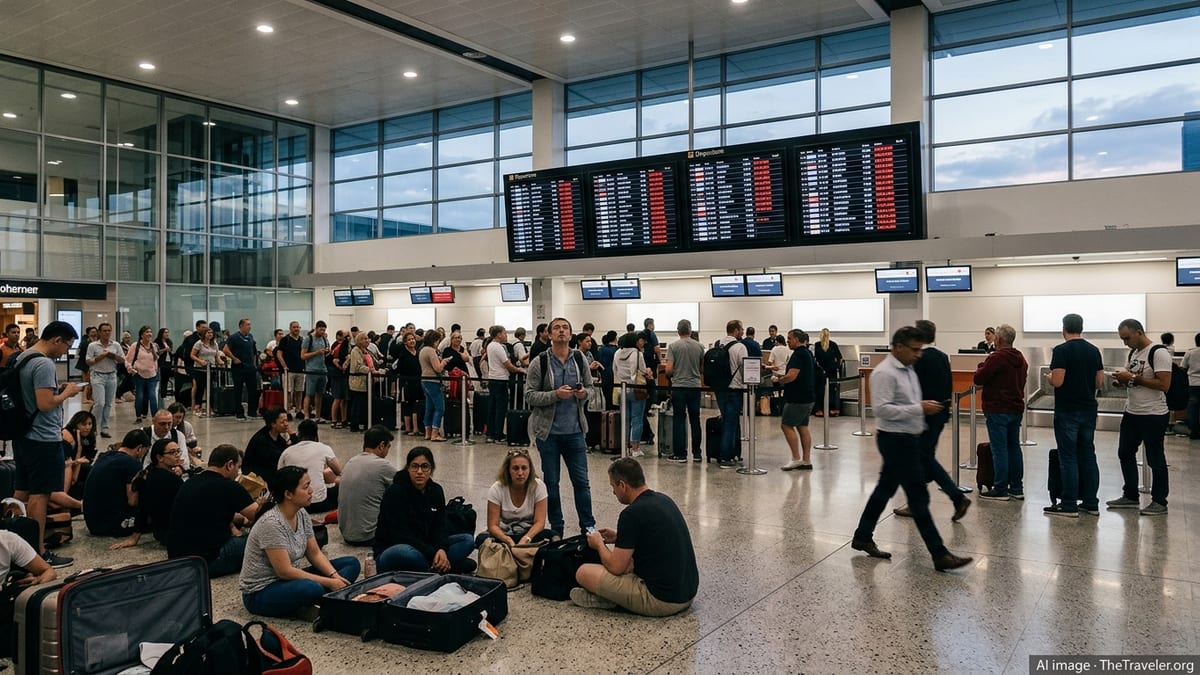
Viral complaint spotlights bottlenecks at Tenerife South
Reports from Tenerife South Airport in recent weeks describe scenes of dense lines snaking through departure halls, with some holidaymakers fearing they will miss flights despite arriving hours in advance. In one widely shared account, a Ryanair customer claimed they were effectively stranded after queuing delays prevented timely access to their departure gate, prompting criticism of both airport management and airline procedures.
Publicly available information indicates that pressure points at Tenerife South are not new. Aviation-focused outlets have periodically highlighted congestion at check-in, security and passport control during peak holiday periods, noting that the island’s main airport often operates close to capacity when tour operators and low-cost carriers ramp up schedules in high season.
Social media posts and travel forums suggest that, on some days, the slow-moving queues have left families with young children and elderly travellers standing for extended periods with limited seating or shade. For passengers already anxious about flight timings, these conditions can quickly escalate from an inconvenience into a missed departure and unexpected extra costs.
While each incident involves its own circumstances, the latest Tenerife complaint has crystallised growing frustration among leisure travellers who feel they are bearing the brunt of systemic strains within Europe’s most popular sun destinations.
Post-Brexit border rules add to waiting times
The Tenerife experience is unfolding against a broader backdrop of longer queues for UK nationals entering and leaving the Schengen area. Since the end of free movement, British passport holders are subject to full third-country checks, including manual stamping, which can slow the flow of passengers at busy airports serving routes from the United Kingdom.
In recent weeks, senior figures in the low-cost sector have publicly warned that new or expanded border controls risk entrenching queues of an hour or more for non-EU travellers at peak times. They argue that without additional staffing, smarter layouts and greater use of automated gates, popular leisure airports in Spain and elsewhere could see prolonged congestion at passport control.
Travellers passing through Canary Islands gateways have echoed those concerns, describing a stark divide between fast-moving lanes for eligible EU passengers using e-gates and longer lines for non-Schengen visitors who must wait for manual checks. For outbound journeys, this can feed into pressure on security lanes and boarding gates as late-running passengers hurry to make final calls.
The Ryanair passenger’s account from Tenerife fits into this pattern, with lengthy queues, complex flows between different checkpoints and tight boarding deadlines combining to create a sense that relatively minor delays can quickly tip into travel disruption.
Ryanair’s role and recurring complaints over queues
Ryanair is one of the largest carriers serving Spanish holiday destinations, including the Canary Islands, and regularly operates high-density schedules to Tenerife from regional airports across Europe. The airline has built its model around quick turnarounds and strict adherence to cut-off times at bag drop, security and boarding, practices that can heighten tension when airport infrastructure is stretched.
Customer complaints shared online frequently focus on the intersection of those rigid rules with unpredictable airport queues. Some passengers argue that, once they are physically present in a line within the secure area, they expect greater flexibility if bottlenecks emerge. Others contend that, with low fares and tight slot timings, budget airlines have limited scope to delay departures without knock-on effects across their networks.
Published coverage and discussion threads show that similar disputes have surfaced at other Mediterranean and Atlantic holiday airports, where travellers claim they were left behind after spending long periods in passport or security queues. In a number of cases, passengers have accused airlines of failing to make targeted announcements, send staff to identify late-running customers, or provide clear guidance on whether flights would wait.
Ryanair typically responds in general terms that customers must allow sufficient time to pass through all airport processes and that it complies with legal obligations for care and assistance when disruption occurs for reasons within its control. In situations linked to airport operations or border force capacity, the carrier has argued that responsibility lies primarily with local authorities and airport operators.
Infrastructure strain at a key Canary Islands hub
Tenerife South Airport is the principal international gateway to Spain’s most visited Canary Island and a cornerstone of the archipelago’s tourism economy. During peak months, the airport handles dense waves of arrivals and departures clustered around late-morning and afternoon banked operations, placing intense pressure on security lanes, passport booths and boarding gate areas.
Analyses of airport performance in the Canary Islands have repeatedly pointed to a mismatch between soaring visitor numbers and the pace of investment in terminal space, staffing and technology. Reports indicate that, in busy periods, check-in queues can spill into shared concourses, while long lines form at security and passport control as multiple flights converge within short time windows.
Local media and specialist aviation outlets have previously documented bottlenecks at Tenerife South, noting that delays at one stage of the journey can cascade through the terminal. When passport control slows, for example, passengers may crowd gate areas simultaneously, stretching seating capacity and complicating boarding procedures for carriers such as Ryanair that rely on rapid aircraft turnaround.
For the island’s tourism sector, these scenes risk undermining its image as an accessible, stress-free escape for visitors from northern Europe. Travel industry commentators have warned that repeat stories of chaotic queues and stranded passengers may eventually influence destination choice, especially among families and older travellers who prioritise smooth, predictable airport experiences.
What travellers can expect and how the debate may evolve
For now, holidaymakers passing through Tenerife South and similar leisure hubs are being urged by airlines and travel agents to build in additional time for every stage of their journey. Pre-departure messaging increasingly advises passengers to go directly to security and passport control after check-in, minimising time spent in shops and restaurants before clearing key checkpoints.
Consumer groups and passenger-rights advocates continue to highlight the importance of clear, proactive communication when delays emerge. They argue that, while airlines and airports may not always be able to prevent queues, they can help to prevent people feeling stranded by providing accurate, timely updates on expected waiting times, gate changes and any knock-on impact on departures.
On the policy side, the Tenerife incident feeds into a wider European debate on how to maintain secure borders without sacrificing passenger experience. Proposals range from expanded use of e-gates for more nationalities to increased staffing during known peak periods and redesigned terminal flows that reduce pinch points where multiple queues intersect.
As long as demand for low-cost flights to sun destinations remains strong, observers suggest that tensions around queues, boarding deadlines and responsibility for missed flights will persist. The Ryanair passenger who felt stranded in Tenerife has become the latest symbol of a travel system in which even minor delays can have outsized consequences when infrastructure, regulation and ultra-tight airline schedules collide.