


More news on this day
A Ryanair passenger’s viral footage from Tenerife South Airport in early 2026 has thrown fresh attention on mounting queues, with scenes of packed halls and snaking lines adding to growing alarm over how new EU border rules are affecting one of Spain’s busiest island gateways.
Get the latest news straight to your inbox!
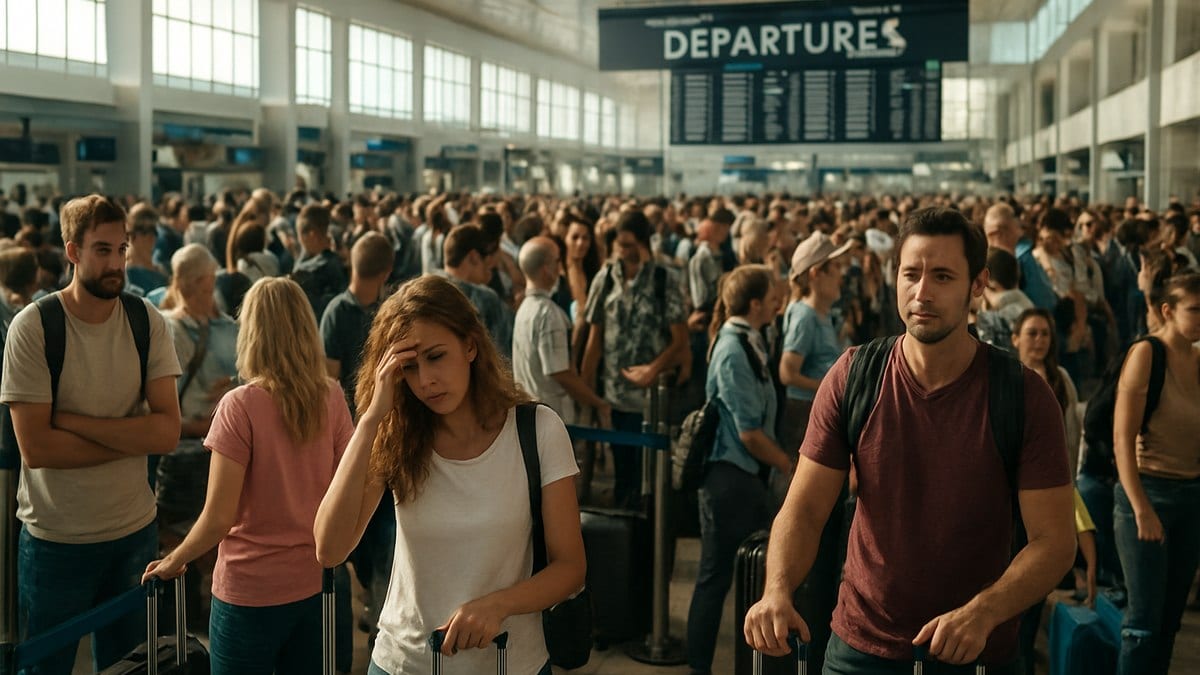
Viral clip captures hours-long queues at Tenerife South
The Ryanair traveler’s video, widely shared on social platforms in March 2026, shows passengers inching forward in dense queues that appear to stretch across the arrivals and border-control areas at Tenerife South Airport. Viewers describe the scenes as chaotic, with travellers stuck in line for extended periods after landing on the island.
Comments and travel forum posts referencing the clip indicate that some non-EU passengers reported waiting well over an hour to clear border checks on busy days. Families with children and older travellers were among those highlighting the strain of prolonged standing in confined, crowded spaces at peak arrival times.
The footage has resonated with many recent visitors who say it reflects their own experiences at the airport this year. Several social media users and holidaymakers have pointed to similar congestion at both passport control and security screening, suggesting the problem is not limited to a single busy weekend.
New EU Entry/Exit System blamed for bottlenecks
The Tenerife queues are emerging just as Spain and other Schengen countries begin rolling out the European Union’s new Entry/Exit System, an automated regime that records biometric data and travel movements of non-EU nationals. Travel industry reports indicate that the combination of additional checks and partial technical failures has slowed processing at several high-volume leisure airports.
Local coverage in the Canary Islands has highlighted the role of Tenerife South’s biometric e-gates, which form a core part of the new system. Reports from early 2026 describe only a fraction of the new machines operating at any given time due to door malfunctions and connection issues, forcing many passengers through a reduced number of working lanes.
These disruptions have contributed to long backlogs in front of border-control points, particularly when multiple international flights arrive within a short window. Travel specialists note that the system is intended to speed up processing in the long term, but warn that the early implementation phase has coincided with strong tourism demand and limited spare capacity at the airport.
Concerns grow among tourism groups and local businesses
The viral Ryanair passenger video has amplified concerns already voiced by hotel associations and tourism groups in Tenerife. Public statements from these organisations describe delays at border checks as a recurring issue that risks undermining visitor satisfaction in one of Spain’s flagship holiday destinations.
Industry representatives argue that the airport is often the first physical point of contact for visitors to the island and that long, poorly managed queues can damage the overall image of Tenerife as an easy and welcoming getaway. Business groups have repeatedly called for improvements to staffing levels, border-control resources and queue management as international arrivals continue to grow.
Some hoteliers report that guests are now arriving at their accommodations visibly fatigued and frustrated after lengthy waits at the airport. Travel agents and tour operators have also started updating their guidance, advising clients to factor in longer processing times both on arrival and departure, especially during school holidays and other peak periods.
Ryanair operations intersect with wider Spanish airport tensions
Although the queues at Tenerife South relate primarily to airport infrastructure and border procedures, they intersect with a broader backdrop of tension between airlines and Spain’s state airport operator. Ryanair in particular has been publicly critical of rising airport charges, and has already announced route cuts and base closures at various Spanish airports for the 2026 season.
In the Canary Islands, the carrier has signalled reductions in capacity and a withdrawal from Tenerife North, citing higher airport fees and challenging operating conditions. Aviation analysts note that while Ryanair’s dispute focuses on costs, congestion and long queues at key leisure airports have become another pressure point shaping the carrier’s relationship with Spanish infrastructure providers.
For passengers, the combination of potential schedule changes and uncertainty over processing times creates a more complex travel environment. Consumer-rights information platforms have started to remind travellers of their rights in the event of missed connections or significant delays, even where disruption stems from airport control processes rather than airline operations.
Travellers adapt with earlier arrivals and new strategies
As reports of congestion circulate, many Ryanair customers and other airline passengers are adjusting their habits when flying through Tenerife South. Travel forums and social media posts frequently recommend arriving at the airport earlier than in previous years, with some contributors suggesting at least three hours for departures to allow for check in, security and passport queues.
Passengers also describe a shift in focus away from spending time in retail and dining areas before boarding. Instead, recent first-hand accounts advise moving directly to security and border-control points once check-in or bag drop is complete, to avoid being caught in unexpectedly long lines and risking a missed flight.
While some travellers continue to report relatively smooth experiences, the viral Ryanair passenger video from early 2026 has underscored how uneven conditions can be from day to day. Until the new border systems are fully stable and resourced, regular visitors to Tenerife South appear likely to plan around the possibility that their trip will begin or end with a substantial queue.