


Few places in the United States serve up a bigger contrast in landscapes and lifestyles than New York State. Within a single day’s travel you can watch the sunrise over misty Adirondack peaks, stop for maple syrup at a family-run roadside stand, then end the evening under Times Square’s neon glare. From mountain villages to multicultural boroughs, New York delivers a spectrum of experiences that feel like several trips rolled into one. For travelers looking to combine wilderness, culture, and big-city buzz, it is one of America’s most diverse destinations.
Get the latest updates straight to your inbox!
From Adirondack Peaks to Hudson Valley Hillsides
Start at the top of the state, quite literally, in the Adirondack Mountains. This six-million-acre park, one of the largest protected areas in the continental United States, is laced with thousands of miles of hiking and ski trails, dotted with clear lakes and old-growth forests. Near the village of Lake Placid, trails in the High Peaks region lead to the tallest summits in New York, while paddlers set out onto quiet waters before breakfast and cyclists follow curving roads beneath dense spruce and maple.
Lake Placid itself, a former Winter Olympic host, has the feel of a mountain hub. In winter, skiers and snowboarders head for nearby Whiteface Mountain, known for having one of the biggest vertical drops in the East, while non-skiers try bobsled rides on the Olympic track or skate on outdoor rinks. In summer, the same slopes turn into hiking and mountain-biking terrain, and travelers base themselves in lakeside inns or simple motels along the village’s main street, where gear shops sit beside pizza counters and independent coffee bars.
Head a few hours south and the peaks soften into the rolling Catskills and Hudson Valley hillsides. Here, instead of high-elevation rock scrambles, you find gentler forest walks, farm stands piled with apples in autumn, and vineyard patios overlooking the Hudson River. Small towns like Hudson, Kingston, and Beacon mix brick warehouses converted into galleries with busy weekend farmers markets. For travelers who want mountain air without committing to steep summits, this region offers an easier-going counterpart to the Adirondacks, yet it is still firmly part of the same New York story.
Because most of these mountain and valley towns sit a manageable drive or train ride from New York City, many visitors weave them directly into a longer trip. It is entirely feasible to spend two nights in a lakeside cabin near Saranac Lake or a renovated motel in the Catskills, then roll into Manhattan by afternoon train or car, swapping trail shoes for walking sneakers and a subway map.
Small-Town Main Streets and College Cities
Between the mountains of the north and the megacity on the coast, New York is thick with towns and small cities that add yet another layer of diversity. Places like Saratoga Springs, Ithaca, and Rochester each bring their own mix of history, higher education, and local culture. In Saratoga Springs, Victorian houses line leafy streets and a summer racing season draws crowds in linen and sundresses, while year-round the town’s walkable center is filled with bookstores, coffee shops, and mineral springs.
Farther west in the Finger Lakes, cities such as Ithaca and Geneva back onto steep hillsides and deep, glacial lakes. Travelers often spend mornings hiking gorge trails past waterfalls and afternoons on wine-tasting routes along Seneca or Cayuga Lake. The presence of major universities brings international students and visiting faculty, which in turn supports a restaurant scene where you can eat Tibetan momos, Mexican street tacos, and locally sourced vegetarian dishes within a few blocks of each other.
These mid-sized communities show another side of New York’s diversity: the rhythms of daily life outside the five boroughs. Instead of subways and skyscrapers, you get school buses, minor-league ballparks, and independent theaters. For road-trippers, they function as natural stopping points between the Adirondacks or Niagara region and the city, adding flavor to a journey that might otherwise be simply a long highway drive.
Travelers who structure their itineraries around live events can easily link these places together. A weekend might include a concert in a repurposed factory in Troy, a farm-to-table dinner in the Hudson Valley, and a college hockey game in a packed rink in the North Country, all before catching a Broadway matinee in Manhattan a day or two later.
New York City: A World of Neighborhoods in One Metropolis
Then there is New York City itself, a destination that could fill a lifetime of trips. The city drew well over 60 million visitors in recent years, with tourism officials reporting that visitor spending generates tens of billions of dollars in economic impact annually. Even frequent travelers, though, sometimes forget that this massive metropolis is really a patchwork of distinct neighborhoods and five very different boroughs, each with its own identity.
Manhattan holds many of the icons first-time visitors expect: Central Park, the Empire State Building, Broadway theaters, and museums lining Fifth Avenue. A traveler might start a day with a bagel from a corner deli, spend the morning at the Metropolitan Museum of Art, and sit in a darkened Midtown theater by evening. Yet step away from the main corridors and you enter calmer worlds of tree-lined blocks in the West Village or family-run groceries in Washington Heights, where the tourism buzz fades into everyday city life.
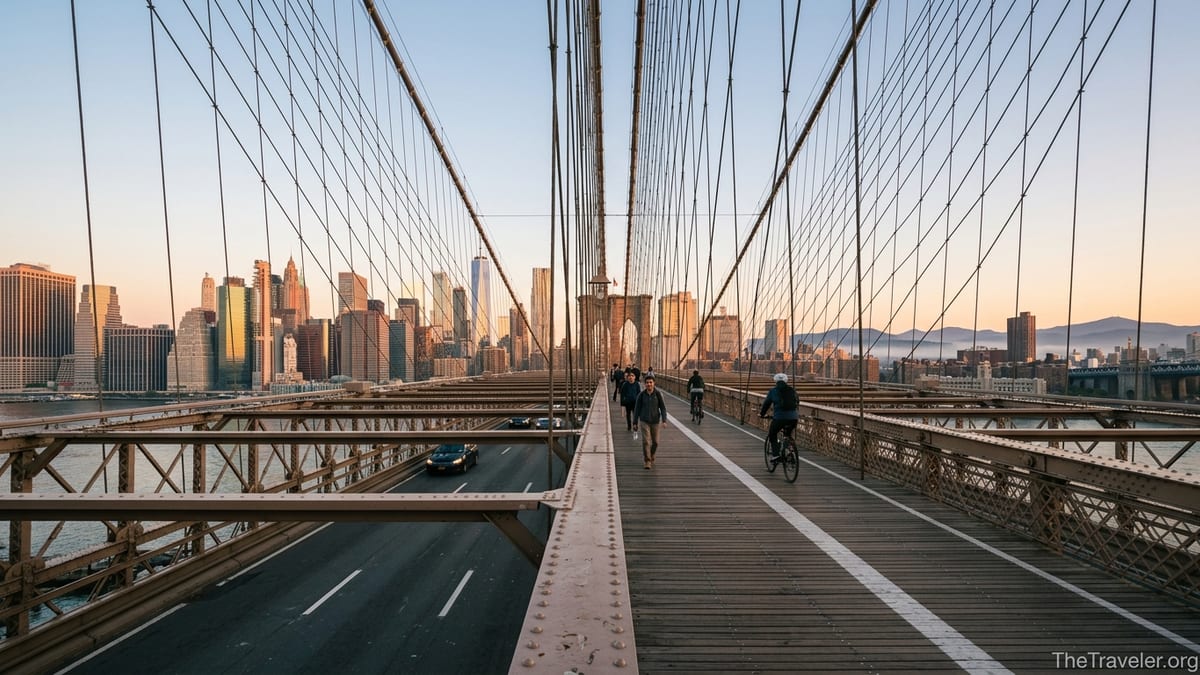
Brooklyn offers another dimension of urban New York. In neighborhoods like Williamsburg and Greenpoint, old industrial buildings have become lofts and music venues, while Park Slope and Brooklyn Heights combine brownstone architecture with playgrounds, cafes, and bookstores. Down by the water, Brooklyn Bridge Park frames postcard views of the Manhattan skyline, yet locals use it for pickup soccer, dog-walking, and sunset picnics. For many travelers, splitting hotel nights between Manhattan and Brooklyn gives them two very different city experiences in one stay.
The outer boroughs reveal still more diversity. Queens is sometimes described as one of the most ethnically varied counties in the United States, which travelers can experience simply by walking through neighborhoods like Jackson Heights or Flushing and counting how many languages they hear. The Bronx is home to Yankee Stadium and the New York Botanical Garden, but also to immigrant communities whose restaurants serve West African stews, Dominican specialties, and Italian pastries on the same commercial stretches. Staten Island, often reached by the free ferry from lower Manhattan, surprises many visitors with waterfront neighborhoods and a more small-town feel, especially around historic Stapleton and its cluster of local eateries.
Cultural Collisions: Food, Festivals, and Everyday Encounters
One of the clearest ways to experience New York’s diversity is on a plate. In a single day in New York City, a traveler might have Uzbek lagman noodles for lunch in Queens, fresh mozzarella from an Italian deli in the Bronx in the afternoon, and West African jollof rice at a small restaurant in Harlem for dinner. A night out could mean seeking out hand-pulled noodles in Flushing’s food courts, then grabbing a late slice from a corner pizzeria as you walk back to a subway stop.
Beyond the city, the food story continues, although in different forms. In the Adirondacks, menus tilt toward hearty pub meals, local trout, and maple-syrup desserts. In summer, roadside snack shacks near lakes sell soft-serve ice cream to families still in swimwear and sandals. The Hudson Valley and Finger Lakes showcase farm-to-table cooking that changes with the seasons, from sweet corn and tomatoes in late August to hard ciders and pumpkin dishes in October. Winery bistros overlook vineyard rows, while small-town bakeries feature fruit pies using local berries and apples.
Festivals and events further highlight the state’s range. In New York City, parades march up Fifth Avenue to mark everything from Lunar New Year to Caribbean heritage and Pride. Governors Island hosts outdoor art and food events with the skyline as a backdrop, while neighborhood street fairs temporarily block traffic so vendors can sell empanadas, jerk chicken, or cannoli under strings of lights. Upstate, fall foliage festivals bring craft tents and bluegrass bands to village greens, while winter carnivals in mountain towns offer ice sculptures, toboggan races, and hot chocolate in paper cups.
Some of the most memorable cultural encounters, though, happen in ordinary moments. It might be a conversation on an Adirondack trailhead parking lot with a local hiker recommending an easier summit, or a chat with a street vendor in Queens explaining how they adapted recipes from home to meet the tastes of passersby. Because New York’s residents come from so many different backgrounds, travelers are constantly bumping into small stories that connect distant parts of the world.
Connecting Wild and Urban: How Travelers Stitch It Together
Part of what makes New York so attractive for diverse itineraries is the relative ease of moving between its different worlds. Travelers can land at a major New York City airport, spend a few nights exploring galleries and neighborhoods, then pick up a rental car at a midtown garage and be at a trailhead or lakeshore within half a day. Major interstate highways run north from the city into the Catskills, Adirondacks, and Lake George region, while Amtrak routes follow the Hudson River, offering scenic train rides with views of cliffs, riverfront mansions, and small stations.
For visitors without a car, buses and trains make mountain and small-town trips manageable. Weekend bus services connect Manhattan to Catskills towns where renovated motels and cabins cater specifically to city dwellers escaping for two nights. In winter, ski buses carry riders from the city to slopes at large resorts. While reaching the most remote Adirondack trailheads often still requires a vehicle, travelers can base themselves in larger hubs like Lake Placid, Saranac Lake, or Lake George and join guided hikes, paddling excursions, or shuttle services.
Within the city, the subway and an expanding network of ferries and bike lanes help travelers cover ground between boroughs. A visitor might spend the morning in Lower Manhattan, then ride the subway to the Bronx Zoo, continue to Queens for dinner in Jackson Heights, and end the night on a Brooklyn rooftop bar, all without getting in a car. The same visitor, a day later, could be pulling into a country inn driveway in the Hudson Valley, passing orchards and farmstands only a couple of hours from that rooftop view.
This interconnectedness means travelers do not have to pick a single type of vacation. A week in New York can be part hiking getaway, part city-break, and part culinary tour. Families might spend three days letting kids burn off energy on mountain trails and lakeside beaches, then shift to a hotel near Central Park where playgrounds, carousels, and child-friendly museums take over. Couples might pair a few nights at a quiet cabin with a final weekend in the city, dressing up for a show after days in fleece and hiking boots.
Travel Practicalities: Seasons, Budgets, and Styles
New York’s diversity also extends to the kinds of trips and budgets it can accommodate. In upstate regions like the Adirondacks and Catskills, travelers can choose between basic campgrounds, family-run motels, and high-end lakefront lodges. A couple might split a week between a national-chain hotel off a highway exit and a rustic cabin where they cook their own dinners, keeping overall costs predictable while still enjoying mountain scenery. In New York City, accommodation ranges from simple budget hotels in outlying neighborhoods to luxury towers in Midtown and boutique properties tucked into Brooklyn side streets.
Seasonality plays a major role in shaping experiences. Winter in the Adirondacks and Catskills means snow sports, frozen lakes, and early sunsets, often paired with fireplace lounges and hearty food. Summer brings long days, swimming, paddling, and evenings spent on patios or around campground fire rings. In the city, winter lights up with holiday markets and skating rinks, while summer offers outdoor concerts, rooftop dining, and open-air movies in parks across all five boroughs. Spring and autumn can be especially pleasant times to link mountains and city, when temperatures are milder and foliage either bright green or blazing red and orange.
New York also adapts well to different travel styles. Solo travelers often gravitate toward New York City’s hostels and social hotel bars, joining walking tours or food tours that provide structure and company. Families may prioritize rentals with kitchens in both the city and the mountains to simplify meals and keep routines familiar. Road-trippers can follow loops that start and end in the city but include overnight pauses in areas like the Hudson Valley and Adirondacks, making the driving distances manageable while sampling a variety of landscapes.
Because popular places can be busy in peak periods, travelers benefit from planning ahead and being flexible. A fully booked lakeside hotel might prompt a stay in a nearby village with easier parking and quieter streets. A sold-out Broadway show can lead to discovering an off-Broadway production or a neighborhood jazz club. In New York, some of the best finds happen when original plans change, and the state’s variety ensures there is almost always an appealing alternative.
The Takeaway
From high Adirondack summits to subway platforms and Staten Island ferries, New York State contains an uncommon range of worlds within its borders. Travelers can move from pine-scented trails to gallery openings, from farmers markets to global food courts, and from small-town parades to major-league stadiums in the span of a single trip. Rather than forcing visitors to choose between a mountain getaway and an urban immersion, New York invites them to have both.
For anyone planning a future journey, that combination is what makes New York one of America’s most diverse destinations. It is not simply the contrast between peaks and pavement, but the way they are linked: by trains and highways, by shared histories, and by the everyday lives of New Yorkers themselves. Build time into your itinerary to explore both the wild and the urban sides of the state, and you will come away with a fuller picture of how many stories one place can hold.
FAQ
Q1. How many days do I need to experience both the mountains and New York City in one trip?
Most travelers find that 7 to 10 days works well, with 3 to 4 nights in a mountain region such as the Adirondacks or Catskills and 3 to 4 nights in New York City.
Q2. What is the easiest way to get from New York City to the Adirondacks or Catskills?
Many visitors rent a car in the city and drive north, but there are also bus services to popular Catskills and Hudson Valley towns, and train routes that follow the Hudson River to gateways like Albany and Hudson.
Q3. When is the best season to combine outdoor activities upstate with a city stay?
Late spring and early autumn are ideal for comfortable hiking temperatures, colorful foliage, and pleasant walking weather in New York City, though summer offers the longest days and the most outdoor events.
Q4. Is it realistic to visit more than one New York region in a single week?
Yes, many itineraries include two regions, such as a few days in the Hudson Valley followed by time in New York City, or a loop that links the Adirondacks, a small city like Saratoga Springs, and Manhattan.
Q5. Are the outer boroughs of New York City worth visiting for first-time travelers?
Absolutely. Places like Queens, the Bronx, Brooklyn, and Staten Island offer distinctive neighborhoods, parks, and food scenes that add depth beyond the classic Manhattan sights.
Q6. Do I need a car to enjoy upstate New York?
A car gives you the most flexibility, especially for remote trailheads, but it is possible to enjoy larger hubs like Lake Placid, Lake George, or Hudson using buses, trains, local taxis, and guided tours.
Q7. How should I budget for a trip that includes both mountains and city time?
Many travelers save money by choosing simpler accommodations upstate, then allocating more of the budget to restaurants, shows, and centrally located hotels during the New York City portion of the trip.
Q8. Is New York a good destination for families who want both nature and culture?
Yes. Families can hike easy trails, swim in lakes, and visit small-town playgrounds upstate, then shift to child-friendly museums, zoos, and parks in New York City.
Q9. How diverse is New York City compared to the rest of the state?
New York City is one of the most ethnically and linguistically diverse urban areas in the country, while upstate regions tend to be less dense but still include a mix of long-time residents, students, and seasonal workers.
Q10. Can I plan a car-free New York trip that still includes nature?
Yes. You can rely on public transit within New York City, then use trains or buses to reach nearby areas like the Hudson Valley, where town centers connect you with river views, parks, and short walking trails.