


More news on this day
UK airports are entering a second day of severe disruption after a major air traffic control failure, with live tracking data showing several of the country’s busiest hubs still grappling with high levels of cancellations and delays on 9 September 2026.
Get the latest news straight to your inbox!
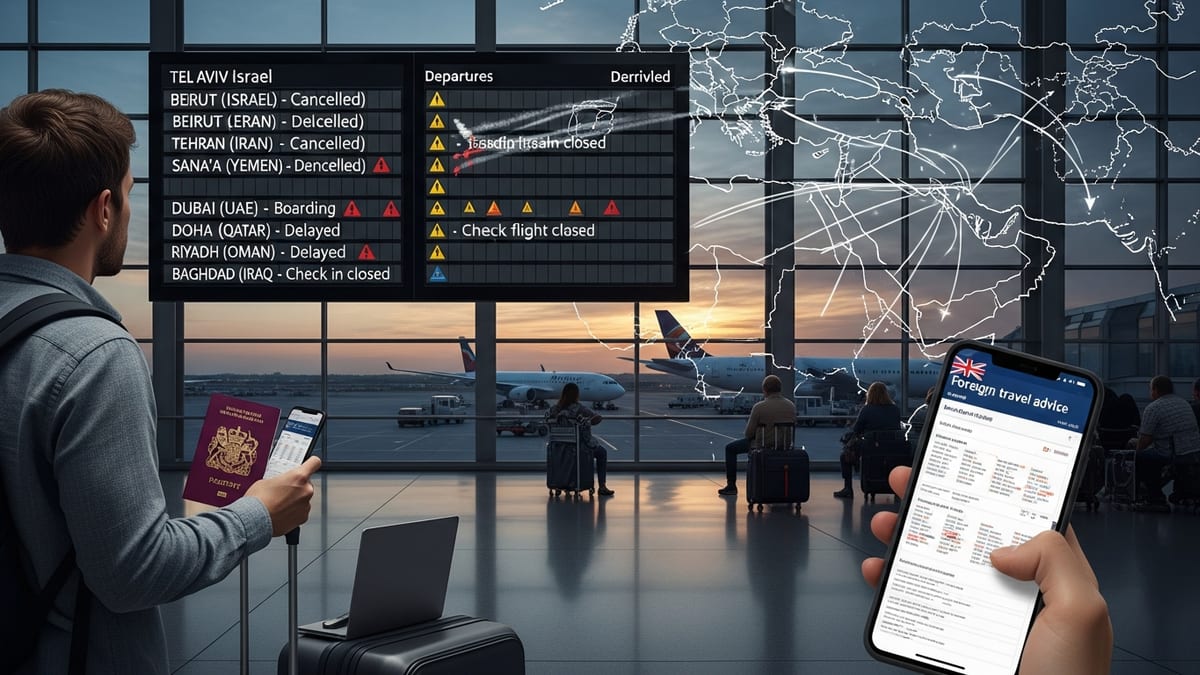
Air traffic control glitch triggers nationwide disruption
The latest problems began on Tuesday 8 September when air traffic control provider NATS reported a technical issue that restricted departures across the country. Reports from multiple outlets describe hundreds of flights being cancelled and delayed as systems were brought back online and capacity was reduced for safety checks.
Published coverage indicates that more than 1,000 flights were cancelled on Tuesday alone, with further cancellations added on Wednesday as the knock-on effects spread through airline schedules. Aviation analysts note that disruption of this scale typically takes several days to unwind as aircraft and crew end up in the wrong locations, creating gaps in timetables even after the original fault is fixed.
By Wednesday morning, NATS said the core technical problem had been resolved, but airlines and airports were still working through backlogs. Publicly available disruption maps and tracking tools show multiple UK airports with significantly elevated levels of delays and cancellations compared with a normal operating day.
London airports: Heathrow, Gatwick, Stansted and City
London’s major airports remain at the centre of the disruption. Live airport disruption data shows London Heathrow with one of the highest cancellation and delay indices in the UK on 9 September, reflecting a combination of grounded services on Tuesday and rolling delays as airlines attempt to reposition aircraft. Heathrow has advised passengers via public updates to travel only once their flight is confirmed as operating and to expect longer queues at check in and security.
London Gatwick is also reporting continued disruption, with flight-tracking platforms listing a significant proportion of departures as delayed or cancelled. According to published coverage, Gatwick was among the airports most affected during the initial outage, and schedules into key short-haul markets remain particularly vulnerable as airlines juggle aircraft availability.
Stansted and London City airports, both important bases for low-cost and business-focused carriers, continue to show elevated delay levels. Public statements from affected airlines and airports indicate that while some early morning flights departed on time, mid-morning and afternoon waves are seeing longer-than-normal turnaround times as ground operations work through aircraft arriving late from elsewhere in Europe.
Major regional hubs: Manchester, Birmingham, Edinburgh and Glasgow
Outside London, some of the UK’s largest regional airports are still experiencing significant knock-on disruption. Flight tracking and media reports confirm that Manchester Airport continues to face delays to both departures and arrivals, with some services cancelled outright as airlines consolidate lightly booked flights or free up aircraft for severely delayed routes.
Birmingham Airport has also warned of ongoing disruption to its schedules. Public travel advisories emphasize that passengers should check the status of their flight before leaving home, as aircraft arriving late from other airports can force last-minute gate changes and rolling delays through the day.
In Scotland, Edinburgh and Glasgow are both listed among the airports affected by the air traffic control issue. While operations are generally improving compared with Tuesday, live departure boards show clusters of delayed flights, especially during peak travel banks to European hubs. Airlines have cautioned that even flights listed as “on time” may experience minor delays as airspace flow restrictions are eased gradually.
Other affected airports: Belfast, Bristol, Liverpool and beyond
The impact is not limited to the largest hubs. According to published coverage collated from regional outlets and passenger reports, disruption remains visible at Belfast City and Belfast International, where several services to London and regional English airports are running late or have been cancelled as airlines prioritize trunk routes.
In the south west, Bristol Airport has been highlighted in local reporting and passenger accounts as particularly congested, with long queues and multiple cancellations after Tuesday’s outages. Knock-on effects are especially severe on early-morning departures, where crews and aircraft are still out of position following diversions and overnight delays.
Liverpool John Lennon Airport and other medium-sized UK airports, including East Midlands and Newcastle, also show higher than usual disruption levels on tracking services. While many flights are operating, a higher proportion than normal is departing late, and scattered cancellations are visible throughout the day as operators adjust their networks.
How long will disruption last and what travellers can expect
Aviation data providers and industry analysts suggest that the worst of the immediate crisis passed once NATS restored core functionality, but that the network effects will take time to resolve. Experience from previous large-scale air traffic control issues indicates that irregular operations can persist for up to 72 hours, particularly on complex multi-leg routes where a single aircraft serves several destinations in sequence.
For travellers flying from UK airports on 9 and 10 September, publicly available information points to a mixed picture. Many services are operating close to schedule, especially on domestic routes and shorter European hops, but passengers departing from the airports most affected by cancellations are being advised to allow extra time and to monitor airline apps or airport websites closely.
Experts quoted in recent analyses note that compensation and care entitlements depend on the cause of disruption and the timing of individual flights. While a technical fault at air traffic control can fall into the category of extraordinary circumstances for some compensation claims, passengers are still generally entitled to meals, refreshments and accommodation during long delays once certain thresholds are met, according to guidance from the UK Civil Aviation Authority.
With schools returning and late-summer travel still strong, the timing of this latest disruption is likely to be felt by airlines and passengers for several days. Travellers yet to depart are being urged by consumer groups and travel advisers to keep boarding passes, receipts and written confirmations to support any subsequent claims once operations stabilise.
Flightradar24 live airport disruption map
Guardian coverage of UK flight cancellations