


Few places capture Istanbul’s nighttime drama like Galata Tower. As the stone cylinder glows above steep cobbled streets and the Bosphorus shimmers in the distance, the neighborhood around the tower becomes one of the city’s most atmospheric evening playgrounds. This guide looks at what it is really like to visit Galata Tower after dark: how the night views compare to daytime, how safe and crowded it feels, where to find good bars nearby, and what to know about photos, taxis and late-night logistics.
Get the latest updates straight to your inbox!
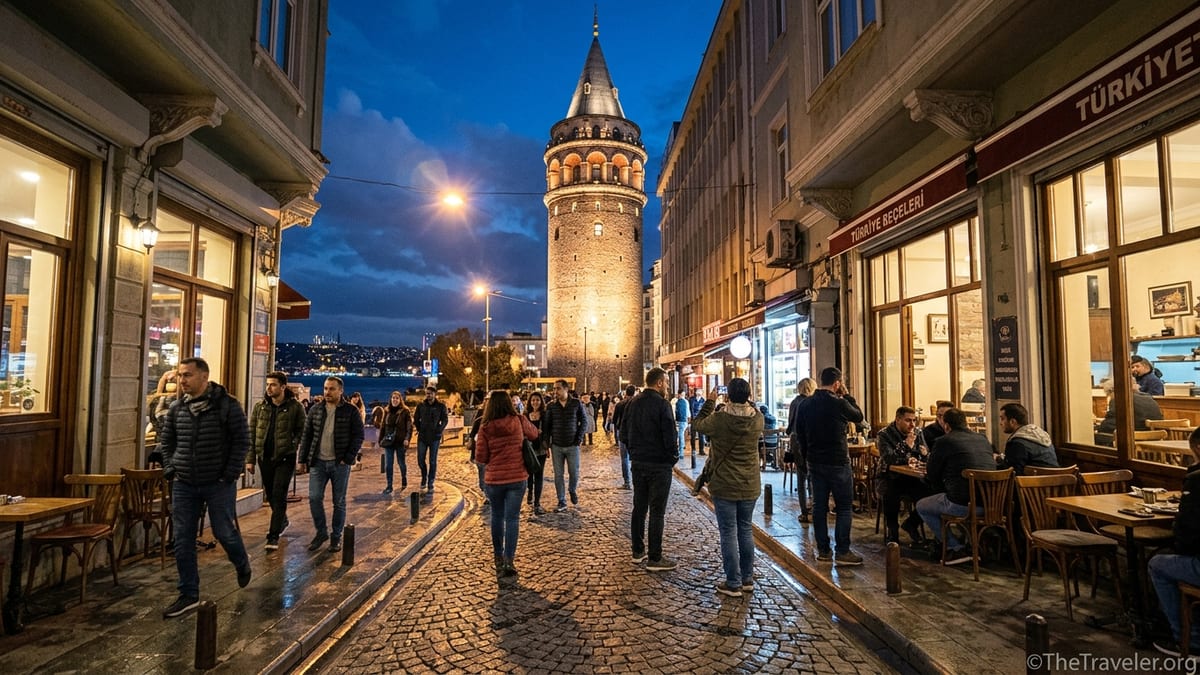
Galata Tower at Night: What Actually Happens After Dark
Galata Tower has transformed in recent years from a simple lookout to a regulated museum experience with extended hours. In 2026, official opening times are generally 08:30 to 23:00, with last entry around 22:00, though the museum-style “daytime session” and the separate evening “Night Museology” session are ticketed differently. In practice, this means you can still ride the elevator up, step onto the circular terrace and catch Istanbul illuminated below well into the evening, instead of rushing to beat a late-afternoon closing time.
The mood at night is markedly different from the day. By day the tower terrace is full of selfie sticks, tour groups and school trips, with visitors jostling for a glimpse of the Golden Horn. After 20:00, crowds usually thin out, leaving a slightly slower, more romantic atmosphere. You will still share the terrace with others, but it is more couples, small groups of friends and a few photographers who have come specifically for blue hour and city lights.
Down at street level, the neighborhood known as Kuledibi, the immediate area around the tower, stays lively until late. Cafes on Büyük Hendek Caddesi move their tables outside in warm months, and a mix of locals, students and visitors use the tower as a meeting point. Street musicians often play under the tower’s walls, especially on summer and early autumn evenings, giving the plaza a festival feel rather than the hushed quiet some travelers might expect at night.
Because Beyoğlu is one of Istanbul’s main nightlife districts, Galata Tower is rarely deserted in the evening. Even well after the tower itself stops admissions, the surrounding streets hum with people returning from dinner in Karaköy, bar-hopping along İstiklal Avenue or simply wandering for views of the Bosphorus and the Old City’s illuminated mosques across the Golden Horn.
Night Views vs Daytime Views: When Are They Better?
From Galata Tower’s circular terrace, you get a 360-degree panorama: to one side the Old City skyline with Hagia Sophia and the Blue Mosque; to another the Bosphorus and Asian shore; to another the dense apartments of Beyoğlu and Taksim. By day, these details are crisp and layered, with ferries clearly visible crossing the water and the domes and minarets sharply defined if the air is clear. Day visits are better if you want to identify individual landmarks, study the city’s layout or capture photos with lots of architectural detail.
At night, the same view trades detail for mood. Bridges glow with colored lights, ferries streak across the water as moving strings of bulbs and the Old City becomes a silhouette dotted with spotlit mosques. If you visit around sunset, you can watch the light shift from warm golden tones to deep blue, then stay as the city lights come fully alive. Many travelers aim for entry about 45 to 60 minutes before sunset so they experience both the daytime cityscape and the full night effect from the terrace without having to queue twice.
There are important practical differences too. On clear summer evenings in July and August, sunset times push crowds later; the last hour before sunset and the first hour after are typically the busiest. In shoulder seasons like April, May, September and October, the air is often clearer and less humid, which makes both sunset colors and night views sharper and more photogenic. In winter, you are more likely to find thin crowds after dark but also colder winds on the terrace, so a hat and windproof jacket make a big difference.
For many visitors, the decision between day and night comes down to photography. If you are shooting with a phone and prefer crisp, bright images, daytime or golden hour will be more forgiving. If you are comfortable with night photography or simply want to soak up the atmosphere rather than capture perfect detail, a night visit is hugely rewarding. A good compromise is to skip the tower itself by day and instead enjoy free daytime views from places like Süleymaniye Mosque courtyard, then pay for a dedicated evening visit to Galata Tower to focus on the illuminated city.
Tickets, Crowds and Safety After Dark
Foreign visitors should budget for a relatively high ticket price compared with many other city viewpoints. As of mid-2026, typical entry prices hover around several hundred Turkish lira for international tourists, with local museum passes valid only during daytime museum hours and a separate fee charged for the Night Museology session in the evening. Prices change frequently with inflation, so it is best to check the latest rate at the official Galata Tower Museum information before planning a night visit.
Crowd patterns shift through the day. Late morning to mid-afternoon see the longest lines, with tour buses depositing groups that sometimes wait 30 to 45 minutes in high season. By contrast, queues often shrink noticeably after 20:00, especially on weekdays outside school holidays. A couple arriving at 21:00 on a Tuesday in May, for example, might wait just 5 to 10 minutes to enter, compared with half an hour at sunset. Weekends, public holidays and summer nights when major events take place can still be busy, but you rarely face the same dense crush as mid-afternoon.
In terms of personal safety, the streets immediately around Galata Tower are considered reasonably safe by big-city standards, even late at night, largely because they remain busy and well lit. You will see solo travelers, mixed groups and locals with children walking around until at least 23:00. Usual big-city common sense applies: keep valuables close, avoid displaying large amounts of cash when paying for drinks, and be wary of anyone trying to pull you into an unmarked bar or club with vague promises of “free” drinks or shows. Such scams are less common here than in some other nightlife districts, but they do occasionally surface.
Women traveling alone generally report feeling comfortable walking between the tower and main streets like İstiklal Avenue or down to Karaköy in the evening, especially before midnight. Sticking to better-lit routes like the stairs down to Karaköy via Bereketzade or the main streets around Şişhane metro station is preferable to cutting through deserted back alleys. If you are returning to a hotel near Taksim or in Sultanahmet after midnight, a registered yellow taxi or app-based ride is usually a safer and easier option than long walks or late-night buses.
Best Night Photo Spots In and Around Galata Tower
The tower terrace itself is the classic spot for night photography, but it is not your only option. On the terrace, you are shooting through a safety rail, so wide-angle phone lenses work best. To avoid lens flare from the tower’s own spotlights, many photographers move a step back from the edge, position the rail at the bottom of the frame and angle slightly downward toward the Bosphorus, capturing the Galata Bridge and Old City as the main subject. A smartphone with night mode or a mirrorless camera with a fast prime lens can handle typical night conditions well.
Below the tower, several streets give you postcard-style shots of the illuminated stone cylinder rising above colorful buildings. Serdar-ı Ekrem Street is one of the most photographed angles, with boutiques and cafes in the foreground and the tower glowing at the end of the street. Arrive around blue hour, when the sky is cobalt but the streetlights are already on, to avoid a featureless black background. Another popular viewpoint is from the Camondo Stairs, where you can frame the tower among curving stone railings and the slopes of Galata.
For a broader nighttime cityscape with the tower as part of the skyline rather than the central subject, cross the Galata Bridge or stand on the Karaköy side of the Golden Horn. From here, Galata Tower rises as a lit cone among the apartments, balancing the Old City’s domes across the water. Many travelers finish dinner in Karaköy, then take 10 minutes to walk out onto the bridge and capture the tower and Beyoğlu hillside glowing behind lines of fishermen and passing trams.
Practical photo tips matter. Tripods are sometimes discouraged or at least frowned upon on the tower terrace during busy hours, so a compact travel tripod or a small clamp you can attach to the railing is more discreet. In the streets below, be aware of traffic on narrow cobbles and keep your bag close while concentrating on shots. If you are traveling with a partner, one person watching bags while the other shoots is an easy precaution, especially in crowded alleys.
Bars, Rooftops and Late-Night Drinks Near Galata Tower
One of Galata’s biggest evening draws is that you can step out of the tower and be in the middle of a dense bar and cafe scene within minutes. Directly by the tower plaza, venues such as Tower Pub serve as casual spots for a beer or cocktail almost in the tower’s shadow, popular with both international visitors and younger locals. These bars typically offer standard Turkish beers, simple mixed drinks and snack plates at prices that are higher than a neighborhood esnaf lokantası but still moderate compared with upscale hotel bars.
For people who want drinks with a view rather than a pub atmosphere, several rooftop and terrace bars sit within a 5 to 10 minute walk. Zula Galata Rooftop Bar, for example, is known for its cocktails and open-air views over the Golden Horn, pulling in a crowd that starts the evening with sundowners and often stays through late-night DJ sets on weekends. Many mid-range hotels around Galata and Şişhane hide small rooftop terraces open to non-guests; these can offer excellent tower views from a quieter seat, especially in shoulder season evenings when the weather is mild.
If you are willing to walk 10 to 15 minutes downhill, Karaköy’s waterfront has become a major nightlife cluster, with craft beer spots, wine bars and modern meyhanes. It is realistic to visit Galata Tower for sunset and blue hour, then descend to Karaköy for a late dinner and drinks without needing any transport. On the other side, heading up toward İstiklal Avenue brings you to busy bar streets around Galatasaray and the fish market, where live music venues and classic meyhanes stay open well past midnight.
Prices for drinks vary widely. A draft beer near the tower will usually cost noticeably more than in more local neighborhoods like Kadıköy, but you are partly paying for the location and nighttime view. Cocktails at a rooftop bar with a Bosphorus panorama tend to be at the higher end of the Istanbul scale. To keep costs down, some travelers grab a takeaway simit or dürüm from street vendors, enjoy the view and atmosphere of the tower area and then move a little further away for a sit-down drink in less touristy side streets.
Taxis, Transport and Late-Night Logistics
Reaching and leaving Galata Tower at night is straightforward but benefits from a bit of planning. In the evening, many visitors arrive on foot from Şişhane metro station at the upper end of İstiklal Avenue, from Karaköy tram stop down by the water, or by taxi directly to the streets below the tower. The last uphill stretch from Karaköy involves steep cobbled lanes and stairs, so if mobility is an issue or you are in formal clothes for a special dinner, consider taking a taxi at least for the uphill part.
Taxi issues in Istanbul are well known, and the Galata area is no exception. While many drivers are honest, some try to refuse short rides, quote flat tourist prices instead of using the meter or take unnecessarily long routes late at night when traffic is light. To reduce hassle, it helps to hail taxis from main roads like Şişhane, Tarlabaşı Boulevard or the Karaköy waterfront rather than from the narrow streets right below the tower, where opportunistic drivers may linger for tourists. Make sure the meter is running from the start, and if a driver insists on a fixed price that feels high for a short distance, politely decline and look for another cab.
Ride-hailing apps widely used in Istanbul can be a helpful alternative, especially after midnight when public transport frequencies drop. Ordering a car to a well-known landmark such as Şişhane metro, Karaköy tram stop or a major hotel on the main street avoids confusion in the maze of small alleys. If you are staying in Sultanahmet, a typical late-night ride back from the Galata area is usually fast outside peak hours, as you cross the Galata Bridge and go straight into the Old City with relatively light traffic.
For travelers on a budget or those who prefer to avoid taxis entirely, walking remains viable up to a point. The route between Galata and Taksim via İstiklal Avenue is pedestrianized and busy well into the evening, making it feel safer than many backstreet alternatives. The downhill walk to Karaköy and the waterfront is also popular, but the steep gradient and polished cobblestones can be slippery after rain. Sensible shoes and a small flashlight on your phone go a long way toward making that walk comfortable at night.
Is Galata Tower Better by Day or After Dark?
Whether Galata Tower is “better” by day or at night depends on what you want from the experience. If your priority is classic sightseeing, identifying landmarks and taking bright, detail-rich panorama photos, a daytime visit or a late-afternoon slot that runs into sunset is ideal. Families with young children and travelers who feel uneasy in nightlife-heavy areas often prefer this window, when the surrounding streets feel more clearly like a museum quarter than an evening bar scene.
After dark, the experience shifts from pure sightseeing to mood and ambiance. The stone tower itself glows warmly, music drifts through the streets, and the energy in the plaza feels more like a gathering spot than a queue for an attraction. Couples use the tower as a romantic stop before or after dinner, young locals meet friends on the low walls around the base, and photographers linger for long exposures of ferries tracing light paths across the Golden Horn. If you enjoy cities most when they are lit up and buzzing, a night visit will likely be the highlight.
One realistic strategy is to split your experience across two visits without paying twice. Spend one evening wandering the streets around the tower without going up: photograph it from below, explore Serdar-ı Ekrem and nearby alleys, have dinner and drinks, and get a feel for how the neighborhood breathes after dark. Then, on another day, time a single paid visit to the tower itself for late afternoon, staying long enough to see both daylight and the first hour of night from the terrace if crowd control rules allow. This way you get the best of both worlds without waiting through the longest lines twice.
In short, Galata Tower is not an either-or proposition. The structure and its neighborhood reward repeat visits at different times of day. Morning brings clearer air and quieter streets, afternoon offers a classic city panorama, and night wraps the whole scene in a glow of lights, sounds and human activity that many visitors remember long after they leave Istanbul.
The Takeaway
Planning an evening around Galata Tower is as much about the surrounding streets as it is about the view from the top. The extended opening hours mean you can see Istanbul’s lights from the terrace well into the evening, while the Kuledibi and broader Beyoğlu neighborhoods give you plenty of cafes, bars and viewpoints to turn a simple visit into a full night out. With some awareness of crowd patterns, taxi quirks and the realities of a busy nightlife district, it is an experience that feels atmospheric rather than stressful for most travelers.
If you come expecting a quiet historical monument, you may be surprised by the lively, youthful energy around the tower after dark. But if you arrive ready for a mix of heritage, city lights, music and late-night conversation in steep cobbled streets, Galata Tower at night can easily become one of the most memorable chapters of an Istanbul trip.
FAQ
Q1. Is it safe to visit Galata Tower at night?
For most visitors, yes. The area around Galata Tower stays busy, well lit and full of locals and tourists until late evening. Normal big-city precautions apply: keep valuables secure, avoid very quiet side streets after midnight and use registered taxis or ride-hailing apps if returning far across the city.
Q2. What are the typical opening hours for night visits?
In 2026, Galata Tower generally opens around 08:30 and closes around 23:00, with last entry roughly an hour before closing. Exact times and any seasonal changes are posted by the Galata Tower Museum, so it is wise to confirm same-day hours before planning a late visit.
Q3. Are tickets more expensive at night?
Ticket prices for foreign visitors are broadly similar throughout the day, but the evening “Night Museology” session is a separate ticket if you hold a Turkish museum pass that only covers daytime hours. Because prices change with inflation, check the current rate on official information boards or at the ticket office.
Q4. How bad are the crowds in the evening?
Sunset and the hour just after can still be crowded, especially in summer and on weekends, but lines usually ease later in the evening. Arriving after 20:00 on a weekday often means significantly shorter waits compared with mid-afternoon or peak sunset slots.
Q5. Are there good bars and rooftops within walking distance?
Yes. Pubs like Tower Pub sit almost next to the tower, and rooftop spots such as Zula Galata Rooftop Bar and various hotel terraces are within a 5 to 10 minute walk. A slightly longer walk takes you to Karaköy’s busy waterfront bar and restaurant scene.
Q6. Can I take good night photos without professional gear?
Most modern smartphones handle Galata’s night views well, especially in night or low-light modes. On the terrace, hold the phone steady against the railing and shoot slightly downward toward the Golden Horn. In the streets below, blue hour offers the easiest conditions for sharp, colorful photos without a tripod.
Q7. Is the neighborhood noisy if my hotel is near the tower?
It can be. The streets around Galata Tower are lively into the late evening, especially on weekends, and you may hear music, conversations and occasional street performers. Light sleepers should consider rooms facing inner courtyards or higher floors, or choose accommodation a few blocks away on quieter side streets.
Q8. How should I get back to Sultanahmet or Taksim after a late visit?
From Galata, many people walk to Taksim via İstiklal Avenue, which stays busy well into the evening. For Sultanahmet or other districts, registered yellow taxis or ride-hailing apps are the most practical options after the tram and metro start running less frequently late at night.
Q9. Is Galata Tower worth visiting if I have already seen other viewpoints?
Even if you have enjoyed views from places like Süleymaniye Mosque courtyard or rooftop restaurants, Galata Tower offers a unique 360-degree perspective and a different social atmosphere, especially at night. Many travelers consider it worth the ticket for at least one visit, particularly if timed for sunset and early evening.
Q10. What should I wear for an evening around Galata Tower?
Comfortable shoes are essential because the surrounding streets are steep and cobbled. Even in summer, evenings on the terrace can be breezy, so a light layer is useful. For nearby bars and rooftops, smart-casual clothing is generally sufficient, with no strict dress codes at most venues.