


Relocating to the United Arab Emirates offers access to modern infrastructure and increasingly digital public services, yet expatriates still report a distinct set of administrative challenges once on the ground. These issues rarely prevent relocation outright, but they can create avoidable delays, service interruptions, and financial stress if not anticipated. Understanding the most common administrative problems expats face in the UAE helps potential movers assess practical risks and prepare realistic timelines and documentation strategies.
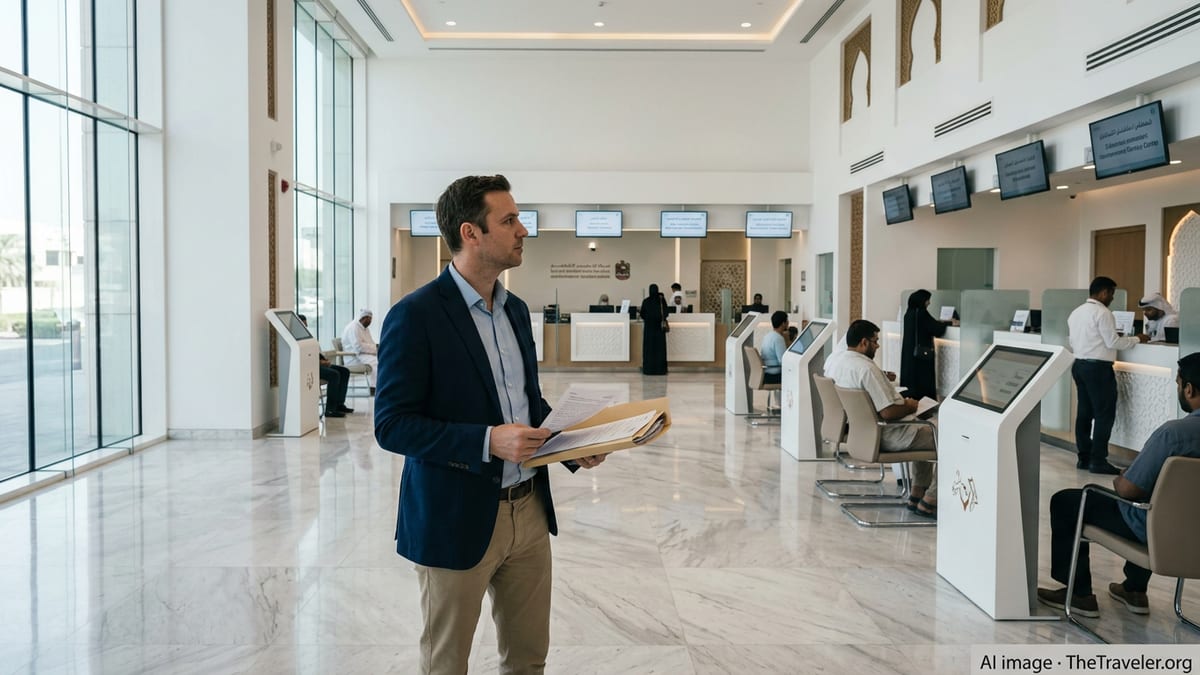
Identity Documentation and Emirates ID Processing Bottlenecks
For expatriates, the Emirates ID card is the core administrative credential in the UAE. It is required for a wide range of services, including banking, utilities, telecom contracts, vehicle registration, and many government e-services. Although standard issuance after biometrics can be relatively fast, expats frequently report processing times stretching from a few days to several weeks when documentation is incomplete, when applications are submitted through intermediaries, or when technical issues occur in the federal identity system. During this period, access to other services can be constrained, since many providers will not complete onboarding without a valid Emirates ID or at least proof that one is in process.
Common causes of delay include missing or incorrectly uploaded documents, inconsistencies between visa data and application details, and failures to meet insurance or residency prerequisites. Digital uploads may be rejected due to file size or format constraints, forcing applicants to resubmit. When the status appears to be stalled, communication from authorities can be limited to generic messages instructing applicants to wait, which makes it difficult for new arrivals to understand whether substantive action is required or the delay is routine. This uncertainty complicates planning for tasks such as signing leases, setting up utilities, or opening bank accounts that assume the Emirates ID will be issued within a certain timeframe.
Identity documentation also creates knock-on issues during renewals and status changes. When Emirates ID renewal is delayed or when residency changes employer or sponsorship, some service providers treat any break in validity as a trigger for additional checks or temporary service holds. Although many banks and telecom operators allow short grace periods, expats report inconsistent application of these policies. Those who travel or move jobs during renewal windows face a heightened risk that expired or mismatched identity records will disrupt everyday transactions until updated documentation is accepted across all systems.
Finally, the central role of Emirates ID amplifies the consequences of basic errors in spelling, dates of birth, or nationality coding. Correcting such errors can require in-person visits to service centers and reissuance of cards, which again cascades into revalidation requirements with banks, insurers, and other entities. For expats evaluating relocation, this reinforces the importance of meticulous review of all identity-related entries at each step of the residency and ID process.
Digital Platforms, Multi-Channel Government Services, and Fragmentation
The UAE government has invested heavily in smart services and unified digital access, notably through platforms that allow residents to complete numerous transactions online or via mobile applications. In practice, however, expatriates often encounter a fragmented landscape of portals and apps maintained by federal, emirate-level, and sectoral entities. Registration for one platform does not always translate seamlessly into access on another, and login procedures may differ depending on whether the service sits under a federal ministry, a local municipality, or a specialized authority.
Expats consistently report confusion over which portal controls specific services such as trade licences, tenancy registrations, traffic fines, and municipal permits. Certain emirates maintain their own digital ecosystems, so a process that is fully online in one emirate may still require physical visits or paper submissions in another. Even where unified accounts are theoretically available, legacy records and partially digitized workflows can result in data discrepancies, such as outdated addresses or mixed language entries, which then trigger manual reviews and processing delays.
Technical issues also generate administrative friction. Scheduled and unscheduled downtime, payment gateway errors, and failed document uploads are recurrent complaints in user feedback on government and quasi-government platforms. When transactions fail near deadlines, expats risk incurring fines for late renewals of licences, IDs, or registrations. Since support channels are often limited to call centers and generic email queues, it can be difficult to obtain case-specific guidance quickly, particularly outside normal business hours or during peak filing periods such as year-end or major holiday seasons.
Language is an additional factor. While English interfaces are widely available, certain error messages, notifications, and back-office correspondence may appear primarily in Arabic, increasing the likelihood that non-Arabic-speaking expats overlook important instructions or deadlines. Misinterpretation of system prompts can result in incomplete applications or missed steps, prolonging resolution times. For prospective relocators, the key implication is that digital government services in the UAE are extensive but not yet uniformly frictionless, and a degree of administrative literacy and persistence is required to use them effectively.
Banking Procedures, Compliance Checks, and Account Restrictions
Opening and maintaining bank accounts is another area where expatriates in the UAE face pronounced administrative challenges. Local banks operate under strict know-your-customer and anti-money-laundering rules, which translate into detailed documentation requirements for both personal and corporate accounts. In practice, expats frequently encounter requests for multiple forms of identification, salary certificates, tenancy contracts or Ejari registrations as proof of address, and bank statements from home jurisdictions or previous employers. For non-residents and investors, additional evidence of source of funds and business activity is often required.
Delays at the account opening stage are common, and sector specialists report that a significant share of applications experience holdups or rejections due to incomplete or inconsistent documentation. Even relatively minor mismatches, such as a spelling difference between passport and trade licence or a discrepancy between registered business activities and supporting contracts, can prompt extended review. For small and medium-sized enterprises with foreign shareholders, processing times of several weeks to a couple of months are not unusual, especially where documents must be attested overseas or translated.
After accounts are opened, periodic compliance checks can create further friction. Banks are required to update customer information on a regular cycle and may temporarily freeze accounts if renewed Emirates ID cards, updated passports, or current proof of address are not supplied by specified deadlines. Expat residents report instances of payment cards stopping, online banking access being suspended, or transfers being blocked until updated documents are accepted and processed. These situations can be particularly disruptive when they coincide with job transitions, relocation between emirates, or extended travel abroad.
Another administrative issue is the opacity of decision-making and limited avenues for recourse when applications are declined or accounts are restricted. Front-line staff may provide only generic indications that the customer profile does not meet the bank’s risk criteria, with little detail on how to remedy the situation. While a financial ombuds service exists for escalations, many expats are not aware of it or are unsure how to document their cases adequately. For individuals and businesses considering relocation, it is therefore critical to treat banking onboarding and ongoing compliance as structured administrative projects rather than routine errands, with time buffers built into their personal and operational cash-flow planning.
Contracts, Attestations, and Document Translation Requirements
Administrative life in the UAE relies heavily on formal documentation. Employment contracts, educational certificates, marriage and birth certificates, powers of attorney, and corporate documents often need to be notarized, legalized, and in some cases translated into Arabic before being accepted by local authorities, banks, or courts. Expatriates regularly underestimate the time and cost associated with meeting these standards, especially when their original documents are issued in multiple jurisdictions.
For many procedures, documents must be legalized first in the country of origin, then by that country’s foreign ministry, followed by authentication at a UAE embassy or consulate. Once in the UAE, additional attestation by local ministries or notary services may be required. Each step typically attracts fees and scheduled appointments, and processing times can extend from a few days to several weeks depending on the issuing country and demand at consular and notarial offices. Lack of familiarity with exact sequencing often results in documents being rejected at a later stage, necessitating repetition of earlier steps.
Translation adds another layer of complexity. While English is widely used, certain authorities and courts insist on Arabic translations by certified legal translators. Inconsistent or poor-quality translations can generate discrepancies between language versions, leading to disputes over names, dates, or legal clauses. When multiple institutions hold different versions of the same document, expats may face repeated requests to “correct” paperwork, even if their original documents are in order. Specialist sectors such as healthcare and engineering often have additional licensing bodies and verification services that must re-check certificates, further extending timelines for professional practice.
Administrative requirements also evolve as foreign missions and local authorities adjust the services they offer. For example, when some consular offices reduce notarial or certification offerings, expats must engage alternative channels such as local law firms, licensed document clearing agencies, or remote notarization services where permitted. These changes increase both complexity and cost and can materially affect how quickly new arrivals can formalize employment, family sponsorships, and business ownership structures.
Address Registration, Utility Set-Up, and Service Transfers
Establishing and maintaining proof of address is a recurring administrative challenge for expatriates in the UAE. Many processes require an official tenancy contract or registration in the relevant emirate’s property system, often referred to by labels such as Ejari in Dubai or similar registries elsewhere. However, not all landlords are equally familiar with or diligent about completing these registrations, and some informal arrangements leave tenants without recognized documentation. This becomes problematic when banks, schools, and government entities insist on system-generated address proofs rather than private contracts.
Utility connections for electricity, water, gas, and air-conditioning are generally straightforward but can still present obstacles. Deposits, activation fees, and documentation requirements vary between emirates and providers, and many now require valid Emirates ID details in addition to passport and tenancy contracts. Where previous tenants have outstanding bills or where meter readings are disputed, new residents can experience delays or be asked to settle prior balances before activation. Disconnection and reconnection during moves between properties also carry a risk of service overlaps or gaps if timelines are not carefully managed and if cancellation requests are not confirmed in writing.
Telecommunications services exhibit similar patterns. Mobile and internet contracts commonly require Emirates ID and local bank account details for direct debit arrangements. Some expats report difficulty cancelling contracts when leaving the UAE or changing providers, especially where minimum contract terms, device financing plans, or unpaid early termination fees are involved. Without clear closure documentation, residual debts can remain associated with an individual’s Emirates ID, potentially affecting future contract approvals or credit assessments.
Finally, the lack of a uniform national address system in the traditional sense means that different entities may store addresses differently, from building codes to geo-location references and community names. This can lead to inconsistent address records across banks, utilities, and government databases. When addresses do not match exactly, automated systems may flag applications for manual review, creating avoidable delays. For relocators, ensuring that tenancy, utilities, and telecom records all reflect a standardized address format is an important but often overlooked administrative task.
Dispute Resolution, Complaints Handling, and Regulatory Interfaces
When administrative issues escalate into disputes, expatriates must navigate a network of regulators, ombuds services, and internal complaints procedures. Many sectors, including banking, insurance, and certain government-related services, require customers to exhaust institutional complaint channels before approaching external resolution bodies. These internal processes typically specify timelines for response, but expats report variability in adherence, with some cases stretching weeks or months without clear updates.
Understanding which authority has jurisdiction over a specific issue can be complex, particularly in situations that cross boundaries between emirates or where both federal and local regulations apply. For instance, a dispute involving a municipal tenancy registration, a bank’s proof-of-address requirements, and a telecom company’s contract obligations may touch three or more different oversight entities. Without specialized legal or advisory support, foreign residents can struggle to map the correct escalation path or assemble the documentation needed to support their claims.
Language and documentation standards also affect dispute resolution. Complaints often need to be supported by contracts, invoices, and correspondence, and in some contexts Arabic translations are required for official consideration. Incomplete files, missing receipts, or informal agreements that were never properly documented can significantly weaken an expat’s ability to obtain redress, even where the underlying grievance is legitimate. This environment rewards meticulous record-keeping and systematic archiving of all administrative interactions.
On the positive side, the regulatory landscape has been evolving, with newer consumer protection frameworks and digital complaint portals gradually expanding. However, awareness among expatriates remains uneven, and many continue to rely primarily on informal channels such as employer human resources departments or community networks for guidance. For those assessing relocation, an accurate view of dispute resolution capacity is essential: administrative problems can be managed, but resolution frequently demands persistence, organized documentation, and, in complex cases, professional advice.
The Takeaway
From identity documentation to banking, utilities, and dispute resolution, expatriates in the UAE confront a distinctive cluster of administrative challenges. These do not negate the country’s strong infrastructure and increasingly digital public services, but they influence how predictable and convenient daily life feels in the first months and years after relocation. Reliance on the Emirates ID as a universal credential means that any delay or error in its issuance or renewal can ripple across multiple aspects of personal and professional activity.
Equally, the interaction between ambitious digital government initiatives and legacy processes creates friction points, particularly where data synchronization, language consistency, and cross-emirate coordination are concerned. Banking and compliance procedures, while aligned with international standards, impose documentation burdens and can trigger service interruptions if deadlines are missed or records are incomplete. Contractual formalities, legalizations, and translations add time and cost to many life events, and gaps in address and service registrations introduce further complexity.
For individuals and companies evaluating relocation to the UAE, these patterns suggest several practical considerations. Administrative life in the country rewards early preparation of documentation, conservative assumptions about processing times, and a disciplined approach to record-keeping. Those who invest upfront in understanding the institutional landscape, aligning their documents to local standards, and planning for periodic compliance reviews generally experience fewer disruptions. Conversely, expats who assume that all processes will be fully digital, uniform across emirates, or comparable to their home country norms are more likely to encounter avoidable delays and frustrations.
Ultimately, the UAE remains administratively manageable for most expatriates, but not frictionless. Decision-makers should factor in the learning curve and resource commitment associated with local bureaucracy when assessing the overall practicality of relocation, especially for complex household situations or highly regulated professions. Anticipating the common administrative problems outlined above can significantly improve both the speed and the predictability with which new arrivals integrate into the country’s institutional systems.
FAQ
Q1. How long should expats realistically expect Emirates ID processing to take?
Processing times vary, but expats should plan for anywhere from a few days to several weeks, especially if biometrics, insurance, or documentation issues require additional review.
Q2. Can I open a bank account in the UAE before receiving my Emirates ID?
Some banks may start the process using a passport and visa, but most require a valid Emirates ID for full activation, so delays in ID issuance often delay complete banking access.
Q3. Why do UAE banks ask for so many documents and updates?
Banks operate under strict regulatory standards, so they must periodically confirm customer identity, address, source of funds, and employment status, which leads to frequent document requests.
Q4. Are government services in the UAE fully online for expats?
Many services are available digitally, but coverage is uneven across emirates and sectors, and some processes still require in-person visits, paper submissions, or hybrid workflows.
Q5. How important is an officially registered tenancy contract for administrative tasks?
Registered tenancy contracts or equivalent property registrations are often required as proof of address for banks, schools, and certain government services, making them administratively important.
Q6. Do documents from my home country need to be legalized before use in the UAE?
In many cases, yes. Certificates and contracts often need legalization in the issuing country, authentication by UAE missions, and sometimes further attestation or legal translation in the UAE.
Q7. What happens if my Emirates ID or residency expires while I am still in the UAE?
Expiry can trigger late fines and may prompt banks, telecom providers, and other institutions to request urgent updates or even restrict services until renewed documents are recorded.
Q8. How can I reduce the risk of account freezes or service interruptions?
Monitoring document expiry dates, renewing early where possible, standardizing address records, and promptly providing requested documents greatly reduces the risk of administrative disruptions.
Q9. Are there official bodies that help resolve administrative disputes in the UAE?
Yes. Depending on the sector, there are consumer protection and financial dispute mechanisms, but they usually require that you first complete the provider’s internal complaints process.
Q10. Is it necessary to hire a PRO or document clearing service to handle UAE bureaucracy?
It is not mandatory, but many expats and companies use professional services for complex tasks such as attestations, licensing, and multi-emirate filings to save time and reduce errors.