


More news on this day
Governments across Asia, Europe and Africa are accelerating visa-free and visa-light entry policies, triggering a new wave of cross-border travel and reshaping where and how international tourists spend their money.
Get the latest news straight to your inbox!
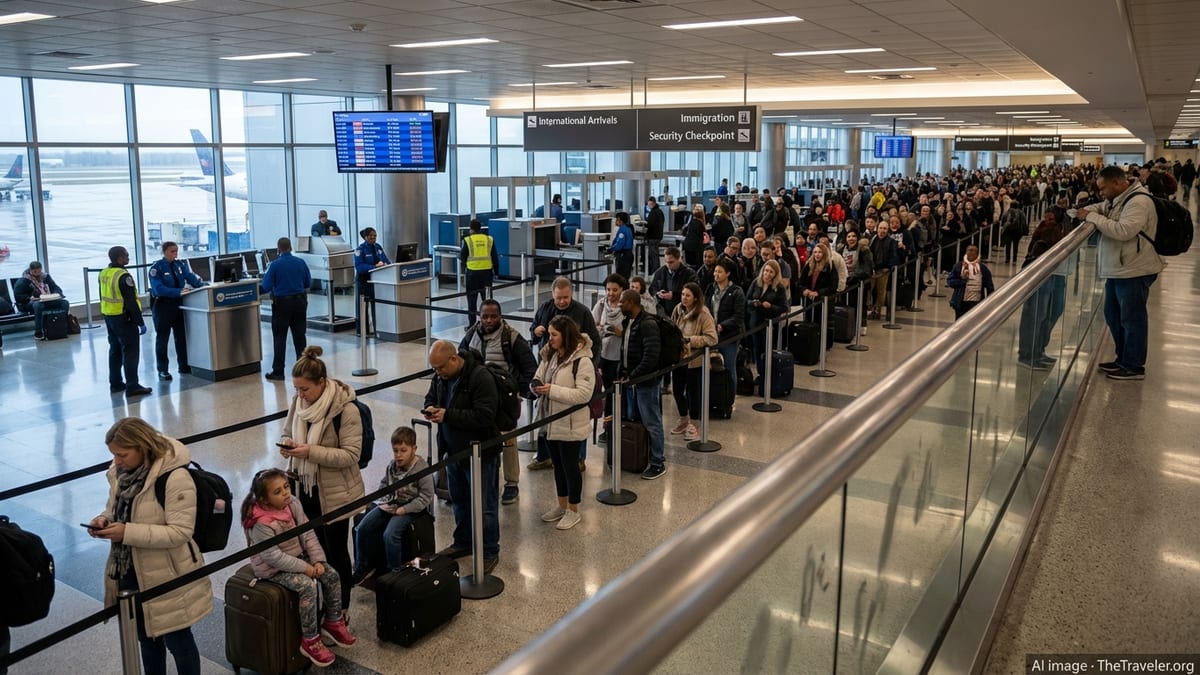
Passport power rises as access widens worldwide
Passport rankings and border policies indicate that travelers have more visa-free options today than at any point in the past two decades. Data underlying recent editions of the Henley Passport Index show that the global average number of destinations accessible without a prior visa has almost doubled since the mid-2000s, reflecting hundreds of bilateral deals and unilateral waivers introduced over time to stimulate mobility and tourism.
Top-ranked passports now unlock visa-free or visa-on-arrival access to nearly 200 destinations, giving their holders an unprecedented degree of choice in planning itineraries. Analysts note that the climb in scores has not been limited to a handful of wealthy states. Middle-income countries in Asia, Eastern Europe and Latin America have also gained ground, often driven by reciprocal agreements and regional integration efforts that encourage short-term visits for leisure and business.
At the same time, the gap between the most and least mobile travelers remains wide. Passports at the bottom of global rankings still offer visa-free access to only a fraction of the destinations available to top-tier travelers. The current boom in waivers is therefore highly uneven, benefiting some source markets far more than others, and shaping which nationalities are most likely to take advantage of emerging travel corridors.
Industry observers describe this as a structural shift in the operating environment for airlines, hotel groups and destination marketers. With visa barriers falling in multiple regions at once, travel providers are reallocating capacity and promotional spending toward markets whose citizens can now travel more spontaneously and at lower administrative cost.
Asia leads with aggressive visa waivers to revive tourism
Asian destinations have moved particularly quickly to dismantle pre-pandemic visa barriers as they race to capture pent-up demand. China has announced and expanded temporary visa-free entry schemes for nationals of dozens of countries, allowing stays of up to 30 days for tourism and business. Reports on the tourism recovery note that the waivers, initially framed as time-limited pilots, have been extended through 2026 for several nationalities, improving planning certainty for travelers and tour operators.
Thailand has also used visa policy as a primary recovery tool. Government communications in 2024 detailed a package of measures that extended visa-free stays for more nationalities, relaxed documentation requirements and set up a dedicated committee to keep entry rules under review. The measures sit alongside discussions among several mainland Southeast Asian states over deeper regional facilitation, including the possibility of Schengen-style arrangements that could eventually allow visitors to move between neighboring countries on a single authorization.
Other regional players are following suit. Vietnam, Indonesia and Cambodia have all either lengthened permitted stays for visa-exempt visitors, expanded e-visa schemes to hundreds of nationalities or signaled plans to restore and widen pre-pandemic visa waivers. Officials and tourism executives in these markets have consistently presented visa easing as a lever to reclaim market share, particularly from long-haul travelers who now compare entry rules across competing sun and culture destinations.
The net effect is a more competitive Asian tourism landscape in which speed and simplicity of entry are becoming differentiators. Destinations that once relied on their brand power or natural assets alone are now emphasizing frictionless borders in their international campaigns, encouraging repeat visits and longer stays by reducing uncertainty at the planning stage.
Africa and emerging destinations court visitors with open-door policies
In Africa, a growing number of states are experimenting with unilateral or near-unilateral visa-free regimes as they seek to attract greater volumes of regional and intercontinental travelers. The Africa Visa Openness Index highlights a series of notable reforms in 2024 and 2025, including decisions by some governments to remove visa requirements for large groups of foreign nationals and replace them with electronic travel authorizations issued on arrival.
Kenya has positioned itself as one of the continent’s most open gateways by removing traditional visa requirements for most African visitors and shifting to an electronic clearance model. Policy documents emphasize the goal of turning the country into a transport and tourism hub that connects landlocked neighbors to global markets, with easier passenger mobility seen as integral to that vision. Travel industry feedback points to smoother arrivals for regional tourists and a clearer value proposition for airlines building connecting itineraries through Nairobi.
Elsewhere, countries such as Zambia have scrapped visa requirements for dozens of nationalities in moves explicitly framed as efforts to boost tourism, trade and investment. These policy changes often come alongside campaigns to promote national parks, adventure tourism and conference facilities to new audiences, particularly in Europe, the Gulf and Asia.
Central Asian states are also entering the competition. Uzbekistan has steadily expanded its list of visa-exempt countries in recent years and has approved visa-free entry for short tourist stays for certain nationalities from 2026. Publicly available policy summaries link the measures to broader goals of developing cultural tourism along Silk Road routes and attracting diaspora visitors.
Europe balances openness with new digital controls
Europe remains one of the most accessible regions for short-term visitors, with Schengen-area countries collectively offering visa-free stays of up to 90 days in any 180-day period to nationals of many advanced and emerging economies. For millions of travelers, particularly from North America, East Asia and parts of Latin America, this arrangement effectively functions as a single visa-free zone covering nearly 30 countries.
At the same time, European authorities are rolling out new digital border systems that will alter the experience of visa-free travel without eliminating its core benefits. The Entry/Exit System for non-EU nationals, which began phasing in during 2024 and 2025, records biometric data and travel history at the external border in order to replace manual passport stamping and strengthen oversight of overstays.
For visa-exempt visitors, the most visible upcoming change will be the European Travel Information and Authorisation System, or ETIAS. Official briefings describe it as a pre-travel security screening and authorization that will become mandatory for visa-free nationals visiting the Schengen area and Cyprus for short stays. Once in force, travelers who previously relied on spontaneous trips will need to secure online approval in advance, but they will still avoid the longer and more complex process associated with a traditional visa.
Tourism boards across the continent are watching how the introduction of these systems affects booking behavior from key long-haul markets. Industry analysts generally expect a short period of adjustment, followed by normalization as travelers become familiar with low-cost digital authorizations similar to those already used by countries such as the United States, Canada and Australia.
Tourism flows and spending patterns shift with easier entry
Early data and payment-industry research suggest that visa liberalisation is already influencing where travelers choose to spend. Cross-border tourism reports for 2024 and 2025 highlight strong growth in spending to destinations that have introduced or expanded visa-free schemes, particularly in parts of Asia where policies have changed quickly and marketing campaigns have emphasized ease of entry.
Carrier schedules and hotel investment plans are adjusting in response. Airlines are adding capacity on routes linking major source markets to destinations that have recently eased visa rules, while international hotel brands are accelerating openings in cities and resort areas now more accessible to spontaneous travelers. Travel intermediaries report increased demand for multi-country itineraries in regions where crossing borders has become simpler, such as mainland Southeast Asia and parts of East Africa.
However, the boom in visa-free travel also raises questions around sustainability and security. Policy documents from the European Union and regional organizations in Asia stress the importance of maintaining screening standards, monitoring irregular migration and managing environmental pressures in popular destinations. Several new or proposed schemes incorporate digital pre-clearance systems and data-sharing arrangements intended to reconcile openness with risk management.
For travelers, the rapidly evolving landscape means that entry conditions can shift with little notice as governments pilot, extend or revise visa-free programs. Industry advisories increasingly recommend that visitors check the latest requirements, including potential electronic authorizations, shortly before departure. For destinations, the trend underlines that border policy has become a central component of tourism strategy, with visa-free access now a powerful tool in the global competition for visitors and their spending.