


Grand Cayman’s Crystal Caves turn a classic beach vacation into something far more unexpected. In less than two hours you move from bright Caribbean sun into cool, shadowy caverns filled with stalactites, stalagmites and underground lakes. This guide walks you through exactly what happens on a typical Crystal Caves tour from arrival to departure, so you know how it works in practice, what the physical demands are, and how to get the most out of your time underground.
Get the latest updates straight to your inbox!
Where the Crystal Caves Are and How Tours Work
Cayman Crystal Caves sit in the North Side district of Grand Cayman, roughly a 40 to 50 minute drive from Seven Mile Beach and George Town in normal traffic. Most visitors either rent a car for the day, book a hotel transfer, or arrive on a packaged excursion sold by cruise lines and local tour operators. Independent travelers typically drive up the island’s sparsely developed north coast, turn inland near Old Man Bay and follow clear roadside signage to the main entrance and parking area.
The attraction is set up as a guided-only experience. You cannot walk into the caves on your own. Instead, you buy or present pre-booked tickets for a specific time slot, then join one of the small groups that depart in sequence. Standard tours focus on three primary caves that show different sides of the island’s limestone geology, with a forest walk connecting them. The overall time on site is usually around 90 minutes from the moment your guide collects you to the time you are dropped back at the visitor center, not including any extra time you may spend browsing the shop or café before or after.
Tour slots are offered throughout the day, and on busy cruise ship days mid-morning and early afternoon departures can sell out in advance. Travelers who prefer a quieter, cooler experience tend to book the first tours of the morning, often around 9 am, when there is less heat build-up in the caves and fewer buses in the parking lot. Afternoon visits can still be enjoyable, but humidity and crowd levels are often higher.
While prices vary slightly depending on whether you book directly or through a third-party operator, you can expect admission to be in the range typical for a major island attraction rather than a budget activity. Family packages and combination tours that pair the caves with spots like nearby Rum Point or Starfish Point are common, and cruise excursion descriptions will usually list the total time from pier departure to return, which is longer than the 90 minutes actually spent at the caves.
Arrival, Check-In and Pre-Tour Briefing
On arrival, you pull into a paved parking lot next to a low-rise visitor center surrounded by native trees. Independent visitors head inside to check in at the reception counter, where staff confirm your booking time, collect payment if needed, and advise you of the next available departure. Cruise passengers and travelers on packaged tours are typically brought directly to the entrance by coach or minibus and guided inside as a group, with tickets and timing already arranged.
The visitor center serves as the hub of the experience. There are restrooms, a shaded verandah with seating, and a gift shop that doubles as a small café, selling cold drinks, basic snacks, and souvenirs like locally themed T-shirts and cave-themed trinkets. Many travelers grab a bottle of water here if they did not bring one, as the combination of Caribbean heat and cave humidity can be draining even on a relatively short walk.
Once your time slot is called, a guide gathers your group just outside the building. This is where you receive a short safety and orientation talk. The guide will explain the approximate tour length, remind you about watching your step on uneven ground and stairs, and often give a quick primer on the difference between stalactites and stalagmites. They will also outline any house rules, such as no touching the formations, keeping to the marked paths, no food inside the caves, and whether flash photography is acceptable that day.
From the visitor center you board a short shuttle ride to the cave trailhead. The ride usually takes around 5 to 10 minutes on a narrow private road through secondary forest and scrubland. Windows often stay open, giving you a sense of the heat and vegetation that surround the cave system you are about to explore. On quieter days this vehicle might be a small bus with just one or two families on board; during cruise peaks it could be full, but operators generally try to keep individual walking groups to a manageable size.
The Forest Walk: What the Trail Is Really Like
The shuttle drops you at a simple open-sided shelter that marks the start of the walking loop. From here, your guide leads you into the surrounding tropical dry forest on a compacted earth and gravel path. This forest walk is an integral part of the experience, not just a way to move between caves. Guides often point out native trees such as silver thatch palms and hardwoods, show where limestone bedrock peeks through the soil, and sometimes pause to talk about the island’s original settlers and how caves and sinkholes shaped local water sources.
The trail itself is relatively short and mostly undulating rather than steep, though there are sections with steps and short inclines. Most visitors in average health find it manageable, but it is not a polished urban walkway. Exposed roots, small rocks and some narrow spots are part of the terrain. Sturdy, closed-toe shoes make a noticeable difference here; thin flip-flops can feel insecure when you are stepping down damp, slightly slick stone steps entering or exiting a cave.
Insects are present, especially after rainfall and in cooler shady sections of the trail. Many visitors apply mosquito repellent at the trailhead; some operators keep a communal bottle available for those who forgot. The forest is hot and humid, with air temperatures typically above 80 degrees Fahrenheit, though shaded. You will likely sweat on the walk, then feel a change in temperature and air movement as you step inside each cave opening where the environment can be slightly cooler but denser and wetter.
Between caves, the group pauses occasionally for the guide to highlight rock features or small sinkholes, and to give slower walkers a chance to catch up. It is normal for the group to string out along the trail for a minute or two, but guides usually stop before important viewpoints so that everyone hears the commentary. This pacing keeps the whole circuit, including the forest segments, within the typical 90-minute window.
Inside the Caves: Stalactites, Stalagmites and an Underground Lake
A standard Crystal Caves tour includes three distinct caverns, often referred to informally as the open cave, the roots cave and the lake cave. The exact names used by guides can vary, but the idea is that each chamber shows a different aspect of the same limestone system. You enter and exit each cave by a series of built stairs and platforms, with handrails at steep points, and well-placed electric lighting that reveals formations without flooding the space in harsh light.
In the first cave you are introduced to the basic vocabulary of speleology. Long, tapering stalactites hang like stone icicles from the ceiling, while stalagmites rise from the floor beneath them, sometimes meeting to form smooth columns. Guides often shine a flashlight beam up or down a particularly clear example, explaining how mineral-rich rainwater seeps through the ground and deposits calcium carbonate, building the formations slowly, drop by drop, over thousands of years. You may also see thin curtains of rock and delicate soda-straw stalactites that emphasize how fragile the environment is.
The second cave emphasizes the relationship between surface and underground. Tree roots from the forest above snake through the roof and down the walls, sometimes reaching the cave floor. In places these roots weave through and around the crystal formations, creating dramatic natural sculptures. Guides often pause here to talk about how the island’s vegetation grips the porous limestone, how caves once acted as shelters, and how bats use some of the darker recesses today. The smell of damp earth and a faint organic scent from roots and bat guano is noticeable but normally not overpowering.
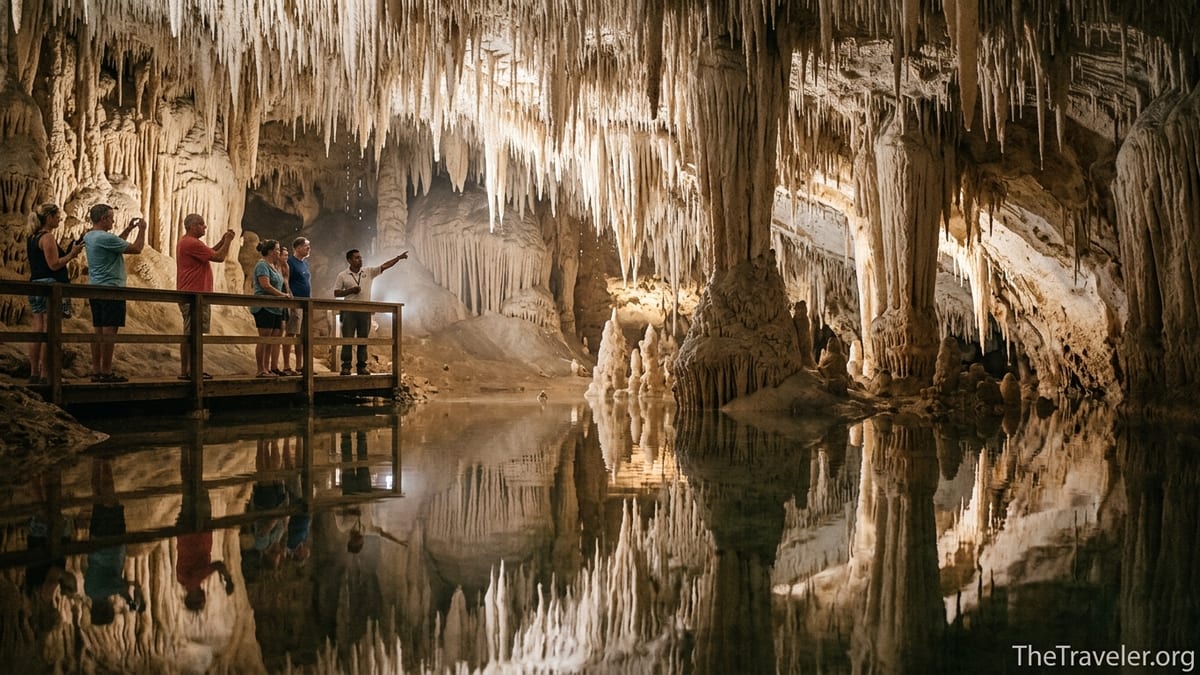
The final stop is usually the lake cave, widely regarded as the highlight of the circuit. You step onto a viewing platform beside a still, clear pool of water that reflects the ceiling formations almost perfectly when the air is still. Guides sometimes ask the group to be silent for a few moments while they dim or reposition the lights so you can see the mirror effect. The water is not for swimming; it is part of a protected cave system. Here you can appreciate just how three-dimensional the cave is, with stalactites above, their mirror images below, and stalagmites pushing up from the lakebed, all formed by the same slow mineral processes.
Group Sizes, Guides and Overall Pace
Group size can vary through the week, but tours are typically structured so that you are walking with a small cluster of other visitors rather than a huge crowd. Early morning slots sometimes leave with as few as six to ten people, especially outside peak holiday periods, which makes it easier to hear the guide and take uninterrupted photos. Later in the day, particularly when multiple cruise ships are in port, groups may be closer to two dozen, although operators try to stagger departures so that you are not sharing a cave chamber with multiple groups at once.
Guides are central to the experience. Many have grown up on Grand Cayman or in the wider Caribbean and weave local stories into their geological explanations. They tend to mix simple science with humor and practical tips, pointing out where to watch your head or which spot delivers the best wide-angle photo of the lake cave. On a typical circuit, your guide will stop two or three times per cave to talk, then allow a few minutes of free exploring within each chamber so that everyone can walk around the viewing platforms and look at formations from different angles.
The pace is moderate and designed to suit multi-generational groups. Families with children, older grandparents and fit adults often tour together. You usually spend 5 to 10 minutes walking between caves and 10 to 15 minutes in each one, with regular short pauses for commentary. Visitors who want to photograph every detail sometimes wish for more time in the lake cave in particular, but the schedule keeps tours moving so the system does not become congested. If you know you like to linger, an earlier or less busy time slot is usually more satisfying.
English is the primary language of guiding, but due to the island’s international tourism base you may occasionally encounter bilingual guides on days when there are many visitors from a particular country. If you have specific needs, such as staying near the front to hear better or walking at a slower pace, letting the guide know at the briefing point outside the visitor center usually results in simple adjustments, such as positioning you close to them during the explanations.
Physical Difficulty, Safety and Who the Tour Suits
For most visitors with average mobility, the Crystal Caves tour feels moderately easy. The walking distance is not long, the steps are solidly built, and there are handrails in steeper areas. However, this is not a flat, paved attraction. If you have difficulty with stairs, balance on uneven surfaces, or walking in heat and high humidity, the experience can be tiring. There are no elevators or ramps down into the caves, and the attraction is not fully wheelchair accessible.
Inside the caves, temperatures are warm and the humidity is high, which can feel intense for anyone sensitive to enclosed, stuffy environments. The chambers, though, are generally quite open and tall compared to some wild caves, and many people who describe themselves as mildly claustrophobic report that they were able to complete the tour without distress because there are no long, crawling passages or tight squeezes. If you feel uncomfortable at any point, you can usually stand closer to an entrance or ask the guide to position you near wider sections.
Footwear and hydration are the biggest practical safety points. Closed-toe shoes with a good grip, such as lightweight sneakers or walking sandals with firm soles, reduce the risk of slipping on damp rock or gravel. Bringing a reusable water bottle, or buying one at the café before departure, allows you to sip between caves so that the combination of walking and humidity does not leave you light-headed. Parents often carry a small backpack with water and a light towel to wipe sweat between caves, especially for younger children.
Children who enjoy outdoor activities typically handle the tour well. The novelty of bats, roots and underground lakes tends to hold their attention, and guides often tailor their explanations at certain stops to keep kids engaged. Strollers, however, are not practical because of the stairs and narrow path sections. Older travelers and those with heart or respiratory conditions should consider the effort of walking in heat and climbing multiple flights of steps. If in doubt, discussing your condition with a medical professional before your trip is wise.
What Happens After the Tour and How to Combine It with Other Stops
After the final cave, the group walks a short section of forest trail back toward the shuttle stop, often passing a few last rock features and tree formations. The same bus or minivan that brought you out from the visitor center takes you back along the private access road. This return ride is usually quiet, with people flipping through photos or talking over favorite formations, and takes just a few minutes.
Back at the visitor center, the guide will typically thank the group and invite questions. This is your chance to ask about specific formations you saw, the age of the caves in general terms, or other things to do nearby on the North Side of the island. Some visitors tip their guide here in appreciation, especially if the commentary was particularly engaging or they received help with children or mobility on the stairs. Tipping is optional but common for good service in the Cayman Islands.
Many people spend an extra 15 to 30 minutes around the visitor center after the tour. The café offers cold drinks, ice creams and simple snacks, and the gift shop sells everything from postcards and cave-themed magnets to higher-priced local crafts. The shaded veranda and surrounding garden provide a comfortable spot to cool down after the humidity of the caves, and restrooms are available for changing out of damp shirts if you plan to continue to another activity immediately afterward.
Because of the North Side location, it is common to pair the Crystal Caves with nearby attractions for a full day out. Travelers with rental cars often continue on to a beach club or restaurant at Rum Point or Kaibo for a late lunch and a swim, or stop at roadside fruit stands and viewpoints along the north coast drive. Cruise excursions sometimes package the caves with stops at Starfish Point or a quick island drive, but independent visitors have more flexibility to linger wherever the scenery or a quiet stretch of beach tempts them.
The Takeaway
A visit to Grand Cayman’s Crystal Caves adds texture to an island trip dominated by beaches and open water. From the moment you step off the shuttle and into the dappled shade of the forest, the experience feels different from the typical Caribbean shore excursion. The combination of short but atmospheric trails, three contrasting caverns and a well-paced guided narrative makes it approachable for most visitors while still feeling adventurous enough to be memorable.
Understanding how the tour runs from arrival to departure helps set realistic expectations. This is a structured, 90-minute guided walk rather than a free-form exploration, with steps, humidity and some uneven ground, but without extreme physical demands or tight squeezes. Travelers who come prepared with sturdy shoes, water, insect repellent and a willingness to climb a few flights of stairs generally find the caves a highlight of their time on the island.
Whether you slot it into a day of exploring the quieter North Side or book it as a standalone excursion from a resort or cruise ship, the Crystal Caves offer a rare chance to see Grand Cayman from the inside out. The stalactites, stalagmites and mirror-still lake are striking in photos but even more impressive in person, and the stories your guide shares about the island’s geology and history linger long after you step back into the Caribbean sun.
FAQ
Q1. How long does the Cayman Crystal Caves tour take from start to finish?
The guided walking portion, including the forest trail and three caves, typically takes about 90 minutes, not counting extra time you may spend at the visitor center before or after.
Q2. How physically demanding is the tour, and can older visitors manage it?
The tour involves walking on uneven paths and climbing several flights of stairs, but distances are short and the pace is moderate. Many older visitors complete it comfortably, though anyone with significant mobility or heart issues should consider the heat, humidity and stairs carefully.
Q3. Are the caves suitable for children and families?
Yes, the Crystal Caves are generally family friendly. Children who enjoy nature and exploring tend to be fascinated by the bats, tree roots and underground lake, but strollers are not practical because of the steps and narrow sections.
Q4. What should I wear and bring for the Crystal Caves tour?
Lightweight, breathable clothing, closed-toe shoes with good grip, insect repellent and a refillable water bottle are the most useful items. Many visitors also bring a small towel and a camera or smartphone for photos.
Q5. Are the caves very cramped, and how do people with mild claustrophobia usually cope?
The main chambers are relatively spacious and open compared to wild caves, with high ceilings and wide walkways. Many mildly claustrophobic visitors report feeling comfortable as there are no crawling passages, though the warm, humid air can feel intense for some.
Q6. Can I visit the Crystal Caves without booking a tour in advance?
Walk-in tickets are sometimes available, especially on quieter days, but tours are capacity controlled. Booking a specific time slot in advance is strongly recommended, particularly during high season or when multiple cruise ships are visiting.
Q7. Is photography allowed inside the caves?
Personal photography is generally allowed, and many visitors take photos of the stalactites, stalagmites and lake reflections. Tripods and large lighting setups are usually not permitted, and guides may ask you to avoid flash in certain areas.
Q8. Are the Crystal Caves accessible for wheelchairs or walkers?
The tour route includes multiple staircases and uneven surfaces, and is not fully accessible for wheelchairs or standard walkers. Visitors who rely on wheeled mobility aids may find it difficult or impossible to complete the circuit.
Q9. What facilities are available at the Crystal Caves visitor center?
The visitor center offers restrooms, a small café for drinks and snacks, a gift shop with souvenirs, shaded seating areas and a parking lot. This is also where you check in, meet your guide and board the shuttle to the trailhead.
Q10. Can I combine the Crystal Caves with other attractions on the same day?
Yes, many travelers pair the caves with nearby North Side spots such as beach clubs, quiet coastal viewpoints or restaurants. With a rental car, it is easy to turn the tour into a relaxed full-day outing on this quieter side of Grand Cayman.