


More news on this day
A sudden ground stop affecting several major airports in the US Northeast on Monday, September 21, 2026, caused cascading delays across the national air travel network, leaving thousands of passengers facing long waits, missed connections and overnight disruptions.
Get the latest news straight to your inbox!
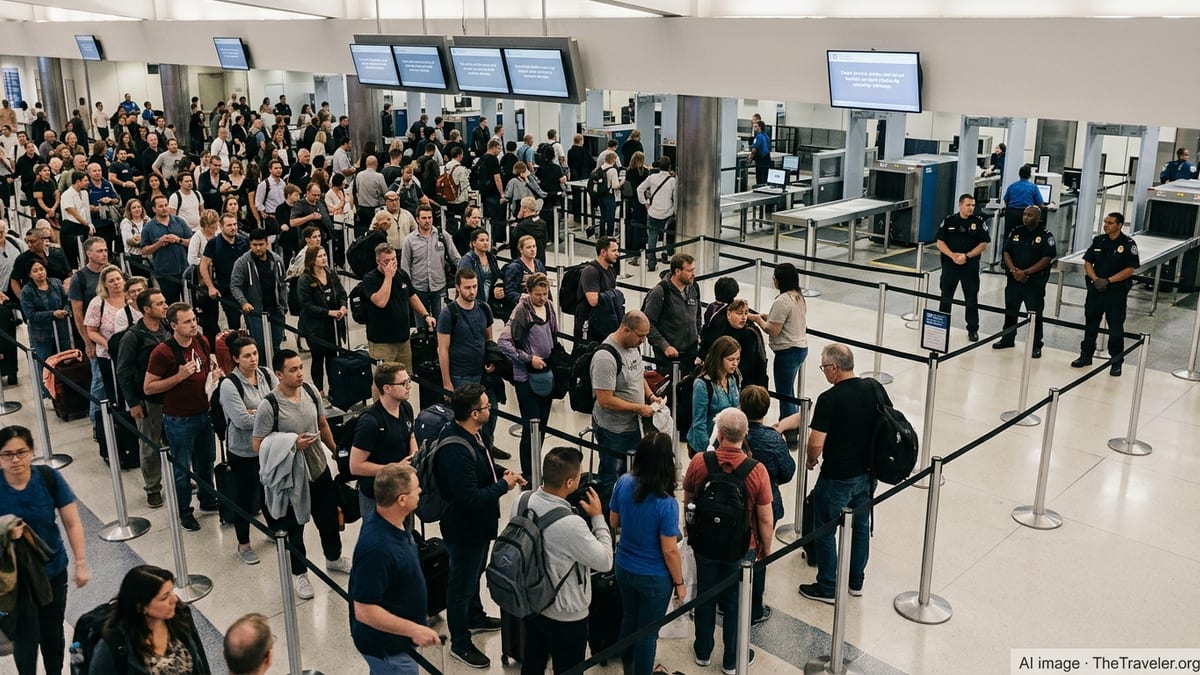
Equipment outage at key air traffic facility triggers ground stops
Publicly available Federal Aviation Administration traffic management advisories and media reports indicate that the disruption originated with a technical failure tied to air traffic control systems serving the busy New York and Philadelphia region on Monday. Coverage from multiple outlets describes a communications and radar problem at a regional facility that forced controllers to sharply limit arrivals into some of the country’s most congested airspace.
According to published summaries of FAA advisories, the agency responded by issuing ground stops for flights bound for several major Northeast airports, including New York’s John F. Kennedy International Airport, LaGuardia Airport, Newark Liberty International Airport and Philadelphia International Airport. Smaller fields in New Jersey and Pennsylvania that depend on the same systems were also affected.
Reports indicate that the equipment outage prevented the normal flow of aircraft into the affected airspace, leaving controllers with fewer tools to safely manage high volumes of traffic. In this type of situation, a ground stop is used to prevent additional inbound flights from departing for the affected airports until capacity can be restored or a controlled arrival flow can be organized.
Information compiled from aviation data services and news outlets suggests that the issue emerged in the late morning and persisted through much of the afternoon, with some airports transitioning from full ground stops to ground delay programs as systems were partially restored.
New York and Philadelphia hubs bear the brunt
Based on FAA operations data cited in national and local coverage, Newark Liberty International Airport experienced some of the heaviest disruption, with hundreds of arrivals and departures delayed or canceled on Monday. Newark is a primary hub for United Airlines and a key entry point for transatlantic traffic, magnifying the impact of any extended capacity reduction.
LaGuardia and John F. Kennedy airports, which handle a mix of domestic shuttle routes and long haul international flights, also saw schedules unravel as the ground stops took effect. Public flight-tracking information showed long departure queues, aircraft held at gates awaiting new slots and a growing tally of cancellations through the afternoon and evening peaks.
In Philadelphia, FAA traffic management advisories referenced an equipment outage as the reason for a ground stop that halted many inbound flights for a period of time. Airlines serving Philadelphia implemented flexible rebooking policies, according to their public travel waiver notices, in an attempt to give passengers more options as the scope of the disruption became clear.
The knock-on effects were not limited to the core hubs. Regional airports such as Teterboro, Trenton, Northeast Philadelphia and smaller business aviation fields tied into the same control system also reported significant delays, further constraining options for diversions and repositioning flights.
Ripple effects stretch across the U.S. network
Because New York and Philadelphia sit at the center of many airline route maps, the ground stops quickly produced knock-on delays far beyond the Northeast. Data compiled by aviation analytics firms and reported in national media showed late departures and missed connections as far away as the Midwest and West Coast as aircraft and crews fell out of position.
Travelers connecting through the Northeast on transcontinental and transatlantic itineraries were particularly exposed. Once the initial ground stops were lifted, airlines still had to work through backlogs, leading to rolling delays into the late evening on Monday and residual disruptions on Tuesday, September 22.
Public information from one major airline showed a Northeast outage travel waiver that covered multiple airports for travel on September 21 and 22, allowing affected customers to rebook without change fees under certain conditions. Similar policies at other large carriers underscored the scale of the event and its impact on network reliability.
Rail and road options in the region also came under pressure as some passengers opted to abandon delayed flights in favor of Amtrak or intercity buses, a pattern that has recurred during previous air traffic disruptions in the corridor between Washington, New York and Boston.
Travelers still facing residual delays after ground stops lifted
By Tuesday morning, public FAA National Airspace System status pages showed that the specific outage-related ground stops in the Northeast had been lifted, with remaining restrictions more closely tied to routine weather and volume management. However, according to airport operations updates and airline status pages, many travelers were still dealing with the aftermath in the form of scattered cancellations and multi hour delays.
Published updates from airports such as Bradley International in Connecticut described how flights diverted there during the height of the disruption were gradually departing again, even as some Monday services remained canceled. Schedules at New York and Philadelphia hubs also showed gaps where aircraft and crews had not yet returned to their intended rotations.
Because airlines operate tightly timed schedules on trunk routes in the Northeast, a single afternoon of severe disruption can leave aircraft out of position for days, particularly when planes are tied to long haul services that operate only once daily. Industry analysts quoted in media coverage noted that full recovery of normal operations can sometimes take 24 to 48 hours, even after the technical trigger has been resolved.
For travelers, that means continued vigilance is required even after headlines about a ground stop fade. Same day rebookings can be complicated when downstream flights are already heavily booked, and travelers with fixed events or cruise departures may find that an early decision to re route or delay travel is preferable to waiting at the gate.
What a ground stop means for passengers in practical terms
Public guidance from aviation agencies and travel industry experts describes a ground stop as one of the most severe forms of traffic management. When a ground stop is in effect for an airport, flights bound for that airport are held at their origin, and new departures to the affected destination may not be allowed until the restriction is eased or replaced with a controlled flow program.
From the passenger perspective, the effect can be counterintuitive. A traveler at a sunny departure airport in the Midwest or South may see clear skies outside and an aircraft ready at the gate but still be unable to depart because the destination airport in the Northeast is not accepting additional arrivals. Airline mobile apps and departure boards often list these delays under generic headings such as air traffic control, flow control or equipment outage.
Travel publications advise that during such events, passengers should monitor both their airline’s app and the departure and arrival airports’ status pages rather than relying on static itinerary emails. Same day schedule changes, gate swaps and aircraft substitutions are common coping measures for airlines as they attempt to thread limited slots through congested airspace.
In situations where an equipment failure rather than weather is the primary cause, travel waivers are more likely to vary by airline, since policies differ on whether such events are considered within the carrier’s control. Publicly posted waivers for the current Northeast disruption provide a reference point for travelers planning future trips through the region’s busiest hubs.