


More news on this day
Flights are once again arriving and departing at Philadelphia International Airport after a federal ground stop tied to an equipment outage was lifted, but travelers are being warned to expect significant delays and lingering disruptions across the schedule.
Get the latest news straight to your inbox!
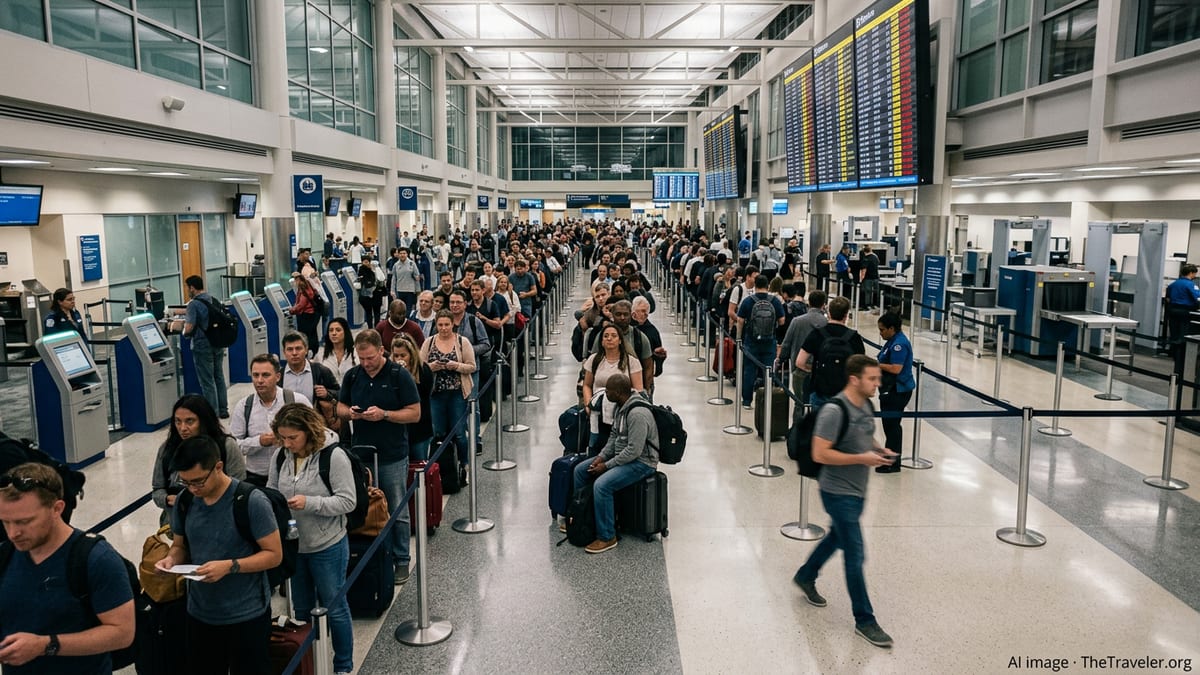
Ground stop lifted after air traffic equipment outage
Publicly available Federal Aviation Administration traffic management advisories show that a ground stop affecting arrivals into Philadelphia International Airport was lifted after an equipment outage disrupted operations on Monday, September 21, 2026. The restrictions were put in place as air traffic controllers lost access to key communications and radar functions that manage traffic for Philadelphia and other major Northeast airports.
Regional coverage indicates that the disruption originated at an air traffic control facility responsible for handling approaches into Philadelphia and Newark, where a telecom issue cut off critical data feeds. The outage prompted the FAA to halt flights bound for Philadelphia from other U.S. airports for several hours while technicians worked to restore service and ensure that backup systems were stable.
By late afternoon, the formal ground stop for Philadelphia had been allowed to expire, clearing the way for new arrivals to depart their origin airports. However, separate ground delay programs and flow restrictions continued to meter traffic into the region, reflecting the time needed to safely rebuild the arrival stream after hours of sharply reduced capacity.
Reports from national wire services and local broadcasters describe similar, though shorter, disruptions at major New York City area airports, underscoring how a single equipment problem at a shared regional facility can impact multiple hubs at once.
Major delays and cancellations expected to persist
Even with the ground stop lifted, publicly available flight-tracking data on Tuesday, September 22, showed Philadelphia still dealing with a high volume of delayed and canceled flights. Local reporting cited average arrival delays measured in hours on Monday evening, with some aircraft held at origin airports and others waiting on the ground at PHL for gates, crews, or connections.
Advisories from the FAA’s national airspace status system indicated that arrival management programs for Philadelphia remained in place into the evening following the outage, limiting the number of flights that could land each hour. Such programs are commonly used after a disruption to smooth out inbound demand, but they also prolong delays for travelers whose flights are pushed into later time slots.
Coverage from Philadelphia-based outlets described airport concourses crowded with passengers rebooking trips, waiting out rolling departure times, and lining up for customer service as airlines worked through backlogged operations. Some carriers offered waivers that allow passengers with bookings to or from PHL to change travel dates without standard change fees, reflecting expectations that disruption would not resolve immediately.
Operational data cited by national news organizations indicated that delays and cancellations extended beyond Philadelphia, affecting connecting flights through other hubs as aircraft and crews missed planned rotations. That knock-on effect is expected to linger through at least the remainder of Tuesday’s schedule, even if no additional technical issues arise.
What travelers flying through PHL should expect today
For travelers heading to or from Philadelphia on Tuesday, reports from airlines and airport representatives point to a “recovery day” in which schedules gradually stabilize but remain fragile. Flight-status boards and tracking services show clusters of delayed departures and arrivals, especially for flights scheduled around the peak of Monday’s outage or relying on aircraft arriving from the Northeast corridor.
Passengers are being advised in public statements and travel advisories to arrive early, monitor their flight status frequently, and be prepared for last-minute gate or timing changes. Many airlines continue to recommend using mobile apps or airport kiosks for same-day rebooking when seats are available, rather than waiting in line at ticket counters during peak disruption periods.
Travelers with tight connections into or out of PHL, including those connecting internationally, may face particular challenges as residual delays ripple through the system. Published coverage notes that some long-haul departures were held to wait for connecting passengers, while others departed without them to keep aircraft and crew utilization on track. In either case, the variability introduces extra uncertainty for onward journeys.
Ground transportation around the airport has also experienced periodic surges in demand as passengers switch to trains, intercity buses, or rental cars for regional trips that would otherwise have been flown. While those options remain available, travelers making last-minute changes may find limited seat availability at popular times between major Northeast cities.
Regional impact across the Northeast air network
The Philadelphia disruption is part of a broader pattern of delays and ground stops that affected multiple Northeast airports at the start of the week. According to widely circulated accounts and FAA system notices, the same equipment problem that triggered the PHL ground stop also constrained traffic into Newark Liberty, New York’s John F. Kennedy and LaGuardia airports, and several smaller fields in the region.
National media reports indicate that the immediate trigger was a damaged telecommunications line supporting the regional air traffic facility that manages approaches and departures for these airports. Once connectivity was lost, controllers had to rely on backup and procedural methods that significantly reduced the capacity of the airspace, making ground stops and ground delay programs necessary to prevent congestion.
While New York area airports lifted their own ground stops earlier than Philadelphia and transitioned to delay programs, the combined effect was a sharp spike in delays and cancellations across the Northeast on Monday. Airlines flying multi-leg routes through the region faced cascading disruption as aircraft were stranded away from their next scheduled flights and crews reached duty-time limits.
Industry observers note that the episode highlights the interconnected nature of the U.S. air traffic system, where an outage centered on one regional facility can affect travelers flying between cities that appear unrelated on the map. For passengers, this translates into the possibility of disruptions even when their itineraries do not list Philadelphia or New York as endpoints.
Next steps for infrastructure and resilience
In the wake of the outage, public statements from transportation officials and aviation agencies have emphasized both the rarity of such incidents and the need to strengthen infrastructure resilience. Early accounts point to an accidental cut of a communications line during construction work as a key factor, with additional complications arising when backup systems did not immediately provide full redundancy.
Policy discussions referenced in national coverage suggest that regulators and infrastructure providers are reviewing how critical telecom links are routed, protected, and monitored to reduce the risk of similar disruptions. Questions include whether additional physical diversity, faster automatic failover, or more frequent stress testing could have limited the impact on air traffic.
Aviation analysts cited in industry publications also point to the importance of contingency planning for airlines, including flexible crew scheduling, aircraft positioning strategies, and customer-care policies that can mitigate the effects of sudden, large-scale constraints on airspace capacity. While weather remains the leading cause of flight delays, events tied to infrastructure and technology draw attention because of how quickly they can affect large numbers of passengers.
For now, the priority for Philadelphia International Airport and its airline partners is to work through the backlog of flights and restore normal operations. Travelers scheduled to pass through PHL in the coming days are being encouraged, through publicly available advisories and news reports, to check their itineraries closely and build in extra time, especially if their plans involve connections or time-sensitive commitments.