


Grünerløkka, or simply “Løkka” to Oslo locals, is the city’s most talked-about neighborhood for good reason. Just a 10 to 15 minute walk or short tram ride from downtown, this former industrial district along the Akerselva river has turned into a compact maze of cafes, creative restaurants, small design shops and leafy parks. It is one of the best areas to base yourself in Oslo if you want to skip the purely business-hotel feel and plug directly into local life.
Get the latest updates straight to your inbox!
Why Base Yourself in Grünerløkka
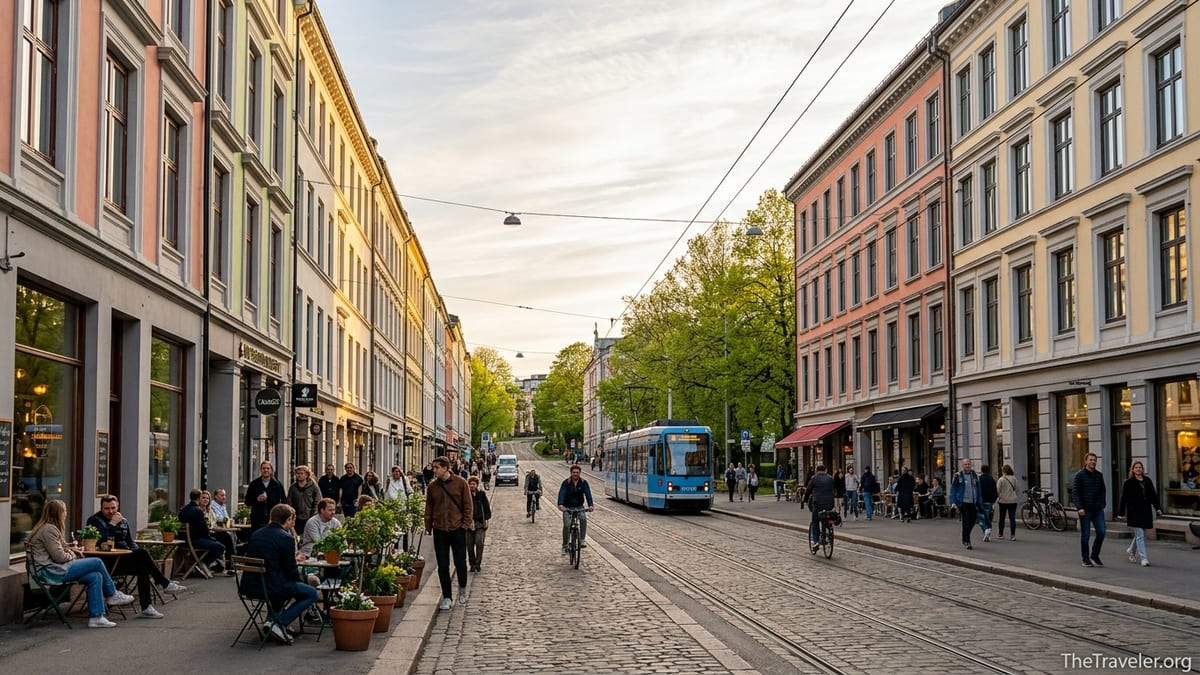
Grünerløkka sits just northeast of central Oslo, close enough that you can walk to the main station area in around 20 minutes yet far enough to feel like its own small city. Streets like Thorvald Meyers gate and Markveien are lined with independent boutiques, vinyl shops and bars rather than international chains, and the whole area hums with students, young families and long-time locals. Compared with the glassy waterfront districts, Løkka feels more lived-in, with brick factory buildings, cobbled side streets and generous green spaces.
For visitors, the biggest advantage is how easy it is to combine sightseeing with everyday Oslo routines. You can stroll along the Akerselva river in the morning, take a tram five or six stops to the new Munch museum in Bjørvika after lunch, and still be back in time for an early evening drink on Olaf Ryes plass. Public transport is excellent, and if you buy a 24-hour or 7-day Ruter pass you can jump between central Oslo and Grünerløkka without thinking about ticket zones every time.
Prices in Oslo are high by most standards, and Grünerløkka is no exception, but you will find more mid-range and budget-friendly options here than in some of the more corporate hotel clusters around the central station. Coffee bars, kebab stands, bakeries and supermarket chains make it easy to balance the occasional splurge dinner with cheaper lunches and picnics in Sofienbergparken or along the river. For many travelers it strikes the right balance between character, convenience and cost.
Best Hotels and Places to Stay in and around Grünerløkka
There are relatively few big-name hotels inside Grünerløkka’s core streets, so many visitors choose to stay just outside the district and walk or tram in. One widely recommended choice for value and location is Thon Hotel Munch in Oslo city centre, which sits on a quiet side street near the courthouse and is roughly a 15 to 20 minute walk from Olaf Ryes plass. Rooms are compact, with clean Scandinavian interiors, good beds and a substantial breakfast buffet, and midweek prices can come in notably lower than some waterfront properties. From the hotel door you can walk straight up Torggata and over the fairy-tale bridge into Grünerløkka without changing transport.
If you prefer a more boutique, eco-minded stay, consider one of the Guldsmeden hotels in Oslo, often praised for their cozy, bohemian interiors with lots of wood, textiles and organic products. Their Oslo property combines Balinese-influenced decor with a laid-back atmosphere that fits well with the Grünerløkka mindset, and tram connections make it straightforward to reach Thorvald Meyers gate in under 15 minutes. Expect nightly rates that sit in the mid to upper range for Oslo, but with extras like hearty organic breakfasts and welcoming lounges that feel more like a home than a lobby.
Travelers on tighter budgets often choose small independent guesthouses or serviced apartments within Løkka’s residential streets. While names and ownership change, the typical setup is a self-catering apartment with a compact kitchen, washing machine and simple furnishings. Staying in one of these can significantly reduce your daily costs because you can shop at local supermarkets such as Rema 1000 or Coop and cook a few meals at home. It also lets you blend in with locals, queuing for fresh bread at the corner bakery in the morning or strolling to Sofienbergparken in the evening.
Another option is to split your stay: spend a night or two at a full-service hotel near the central station for easier arrival and departure, then move to an apartment or smaller hotel closer to Grünerløkka once you are oriented. Oslo is compact, taxis from the station to most Løkka addresses are relatively short rides, and moving between accommodations is rarely more than a 10 to 15 minute journey.
Where to Eat: Standout Restaurants, Cafes and Coffee Bars
Grünerløkka is one of the best food neighborhoods in Oslo, and you could easily spend a long weekend eating without repeating the same style twice. Start with coffee, because Oslo takes it seriously. The small espresso bar and roastery of Tim Wendelboe on Grüners gate is a pilgrimage spot for coffee enthusiasts, known for light roasts and careful brewing. You will often find a small queue on weekend mornings, but your reward is a meticulously prepared cup that sets the tone for the day. For a less intense but still excellent coffee break, look for neighborhood cafes along Thorvald Meyers gate, where you can sit at a window table and watch the tram glide past.
For lunch or a casual dinner, pizza is a local favorite. Villa Paradiso on Olaf Ryes plass is an Oslo institution for Neapolitan-style pizzas with chewy crusts and simple toppings, and the large terrace around the square fills quickly on sunny evenings. If you are looking for something quicker, a growing cluster of burger spots and street-food stalls around Schous plass offers everything from smash burgers to chicken katsu sandwiches at prices that, while not cheap, are more gentle than full-service restaurants. Locals also point to a small pizza food truck at Schous plass that has become known for serving some of the tastiest slices in town.
The neighborhood also showcases Oslo’s increasingly international food scene. Theka at Olaf Ryes plass serves Indian-inspired street food and colorful cocktails in a relaxed setting, particularly lively on weekend nights. Nearby, smaller bistros and wine bars pour natural wines and plates built around seasonal Nordic ingredients, like local root vegetables, cured fish and game. You will also find Middle Eastern grills and Turkish eateries along and east of Trondheimsveien, reflecting the area’s diversity and offering filling plates of kebab, mezze and flatbreads at more moderate prices.
For something a bit more refined without crossing into fine-dining territory, look for new Nordic restaurants on or just off Markveien that focus on set menus with locally sourced produce. Menus change with the season, but a typical dinner might include baked celeriac with brown butter, cod from the Barents Sea or slow-cooked lamb, often paired with Scandinavian craft beers or carefully chosen European wines. Reservations are highly recommended on Friday and Saturday nights, and you may find that early seatings are easier to secure.
Bars, Nightlife and Live Music
Once the sun goes down, Grünerløkka’s streets feel different from central Oslo’s corporate districts. Many evenings you will hear buskers playing along the river or in small squares, and locals drift between neighborhood bars rather than mega-clubs. For craft beer fans, Grünerløkka Brygghus is a natural first stop, with its own beers on tap and a cozy interior that works in both winter and summer. House-made pale ales and seasonal special brews sit alongside a solid pub menu of burgers and sharing plates.
For a more alternative atmosphere, head toward Brenneriveien and the area around the venue Blå, a former industrial complex right on the river that now hosts club nights, live concerts and an outdoor bar area. During the day, this stretch is known for bold street art and graffiti; at night, it fills with students, artists and visitors. Sundays are special, when a creative market sets up beside the river, selling handmade jewelry, secondhand clothes and local art, often accompanied by live music and coffee stands.
If cocktails are more your style, smaller bars sprinkled along Thorvald Meyers gate and Markveien mix both classics and modern Nordic-inspired drinks, often using aquavit, local berries or housemade syrups. Many keep a laid-back atmosphere where conversation is easy, especially early in the evening. As in most of Oslo, door policies are generally relaxed but you should carry ID, and note that drinking out can be expensive, with simple cocktails commonly costing close to the equivalent of a mid-range restaurant main course in other European cities.
Travelers who enjoy music culture without necessarily wanting a late night can look out for early-evening gigs in small venues and bars, many of which start shows around 8 or 9 pm. Posters on lampposts and cafe walls are still a good way to discover what is happening during your stay, and local English-language listings often highlight jazz nights, indie bands and DJ sets around Løkka. On warm evenings, the squares and riverbanks themselves become informal social spaces, with people bringing takeaway food, drinks from the supermarket and portable speakers.
Local Experiences Along the Akerselva and in the Parks
Grünerløkka’s western edge runs along the Akerselva river, the historic industrial artery of Oslo. Today the riverbanks are a car-free green corridor where locals walk, run and cycle. A classic way to experience the area is to follow the riverside path from the waterfall at Nedre Foss, near the border of the neighborhood, northwards past old brick mills, small bridges and shady trees. Informational signs along the way explain how this was once one of the most polluted waterways in Norway, now transformed into a clean, fish-filled river where you may even see people casting lines in summer.
On warmer days, both locals and visitors sprawl on the grass in Sofienbergparken, a large park just east of Thorvald Meyers gate. Families picnic, groups of friends play frisbee or kick footballs, and in the evenings you will see portable disposable grills in use, particularly around weekends. The park hosts the Piknik i Parken music festival on a June weekend, drawing crowds for live concerts, food trucks and a relaxed summer atmosphere. If you are visiting outside festival dates, the park is still one of the easiest places to feel how Oslo residents use their outdoor spaces as an extension of their living rooms.
Olaf Ryes plass, a square ringed by trees and cafes, acts as another informal gathering point. On bright days, benches and lawns fill with people sipping takeaway coffee or licking ice creams from nearby kiosks, and children play around the central fountain. The square is particularly atmospheric in late spring and early autumn, when the light stays long but the air is still crisp. From here, it is only a short stroll to Sofienbergparken in one direction or down to the river in the other, making it an ideal mid-walk pause.
For a deeper look at Oslo’s green side, consider walking south along the river corridor from Grünerløkka all the way to the waterfront and the Munch museum in Bjørvika. This turns into a half-day urban hike that connects industrial history, neighborhood life and the modern fjordfront in a single route. Pack a light picnic from one of Løkka’s bakeries or supermarkets and stop at one of the small parks along the way for a break by the water.
Shopping, Markets and Street Art
Grünerløkka is one of Oslo’s best districts for independent shopping. Markveien and its side streets host vintage clothing stores, small design boutiques, record shops and concept stores selling everything from Norwegian wool sweaters to minimalist homewares. Prices reflect Oslo’s general cost level so this is not necessarily the place for deep bargains, but it is a very good area to find gifts and pieces that you are unlikely to see in typical tourist shops downtown.
On Sundays, the area around Blå turns into a colorful market where local designers and craftspeople sell handmade jewelry, ceramics, knitwear and artwork. Even if you are not in the mood to buy, weaving through the stalls with a coffee in hand is a pleasant way to spend part of the day, and the market gives you a chance to talk directly with Oslo-based makers about their work. Nearby, smaller flea markets and pop-up vintage sales appear throughout the year, often advertised on posters or social media a week or two in advance.
Street art is another major part of Grünerløkka’s character. Large murals by Norwegian and international artists decorate the sides of apartment blocks, and the narrow streets of Brenneriveien and Ingens gate by the river are especially dense with graffiti and stencils. Many visitors simply wander without a map, turning corners whenever they see a splash of color, but if you prefer more structure you can look for self-guided street-art routes that outline some of the most famous works in the district.
Traditional shopping centers are limited in the immediate area, but the city center’s larger malls are a short tram ride away if you need mainstream clothing chains or electronics. The contrast between those polished spaces and the more ad hoc, creative retail in Løkka only emphasizes the neighborhood’s independent spirit and makes returning to its streets feel like stepping back into a more human-scale part of Oslo.
Practical Tips: Getting Around and Managing Costs
Oslo’s public transport system connects Grünerløkka seamlessly with the rest of the city. From the central station area you can take trams that travel along Thorvald Meyers gate and stop at hubs such as Nybrua, Olaf Ryes plass and Schous plass, with journeys taking roughly 10 to 12 minutes. Buying a time-based ticket through the Ruter app is usually the most convenient option, and a 24-hour or 7-day ticket can be particularly good value if you also plan to use ferries to the Oslofjord islands or metro lines to lakes and viewpoints outside the center.
Walking, however, is often the most enjoyable way to move in and out of Løkka. From the downtown area, a common route is to follow the pedestrianized part of Torggata north, cross the decorative Fairytale Bridge, then continue into Thorvald Meyers gate. The whole walk takes around 15 minutes at a relaxed pace and passes small cafes, street art and everyday Oslo life. Bicycles and e-scooters are also widely available, but remember that pavements can be icy in winter and that Oslo has rules about where and how scooters can be parked.
Costs are an unavoidable consideration in Oslo. To keep your budget in check, mix restaurant meals with simpler options: lunch from a bakery, takeaway kebab or falafel, or groceries from chain supermarkets. Many cafes and restaurants offer a lunch menu that is noticeably cheaper than their evening offerings, so planning your main meal for midday can help. Tap water in Oslo is safe and excellent, often coming from lakes in the surrounding forests, so there is no need to buy bottled water.
Seasonally, Grünerløkka feels different but remains attractive year-round. Summer brings late sunsets, busy park lawns and packed terraces; autumn is ideal for walking along the river under changing leaves; winter is colder and darker but cozy, with candlelit bars and, if you are lucky, a dusting of snow on the streets. Spring can be a sweet spot, with lengthening days and fewer crowds. Pack layers regardless of the month, as weather in Oslo can shift quickly, and be prepared for higher prices than in many other European capitals, offset by the ease and safety of getting around.
The Takeaway
Grünerløkka is more than just Oslo’s “hipster” quarter. It is a compact neighborhood where industrial history, street art, food culture and everyday Norwegian life meet along a revitalized river. Staying nearby allows you to start your days with specialty coffee or a riverside walk, eat your way through a dense cluster of international and Nordic restaurants, and end the evening in a small bar or at a live gig without ever feeling far from home base.
By choosing accommodation within walking distance, using Oslo’s efficient trams and planning a mix of paid and low-cost activities, you can experience the best of Løkka without your budget spinning out of control. Whether you visit for a night or weave several days here into a longer Norway trip, Grünerløkka offers a grounded, local perspective on the capital that complements the museums, fjord views and grand avenues elsewhere in the city.
FAQ
Q1. Is Grünerløkka a good area to stay in for first-time visitors to Oslo?
Yes. It is well connected to the city centre by tram and on foot, has plenty of cafes and restaurants, and feels lively but generally safe, making it a strong base for first-time visitors.
Q2. How far is Grünerløkka from Oslo Central Station?
Walking from the station area to central Grünerløkka typically takes around 15 to 20 minutes, while a tram ride from stops near the station to Olaf Ryes plass or Schous plass takes roughly 10 to 12 minutes.
Q3. Are there many hotels directly in Grünerløkka?
There are fewer large hotels inside the core streets of Grünerløkka than in downtown Oslo, so many visitors choose central hotels or apartments within walking distance and use trams to get in and out of the neighborhood.
Q4. Is Grünerløkka safe at night?
The area is considered generally safe, with lots of people out in the evenings thanks to its bars and restaurants, though normal big-city precautions such as watching your belongings and avoiding very quiet backstreets late at night still apply.
Q5. What is the best way to get from the airport to Grünerløkka?
Most travelers take the airport train or regional train to Oslo Central Station, then switch to a tram heading toward Grünerløkka or walk if they are staying close enough, which keeps costs and travel time manageable.
Q6. Are restaurants and bars in Grünerløkka expensive?
By international standards, prices are high, but within Oslo there is a broad range, from more affordable street food, pizza and kebabs to mid-range bistros and higher-end Nordic restaurants, so you can adjust your choices to your budget.
Q7. Do I need to book restaurants in advance?
For popular spots, especially on Friday and Saturday nights, it is wise to reserve a table, while many cafes, burger places and pizza restaurants accept walk-ins, particularly earlier in the evening or at lunchtime.
Q8. What are some free or low-cost things to do in Grünerløkka?
You can walk or cycle along the Akerselva river, relax in Sofienbergparken or Olaf Ryes plass, explore street art around Brenneriveien and Ingens gate, and browse the Sunday market by Blå without spending much.
Q9. Is Grünerløkka suitable for families with children?
Yes. The area has several parks, playgrounds, traffic-calmed streets and family-friendly cafes, and trams make it easy to reach central attractions, although prams can be trickier to navigate on snowy or icy winter days.
Q10. What time of year is best to experience Grünerløkka?
Summer and late spring are ideal for outdoor terraces, riverside walks and park picnics, while autumn brings beautiful colors along the river; winter is quieter but offers a cozy atmosphere in cafes and bars, so the best time depends on the kind of trip you prefer.