


More news on this day
Guam is emerging as a timely beneficiary of falling jet fuel surcharges on South Korean routes, with lower add-on fees beginning to filter into advertised airfares and giving the U.S. territory’s tourism recovery a fresh lift.
Get the latest news straight to your inbox!
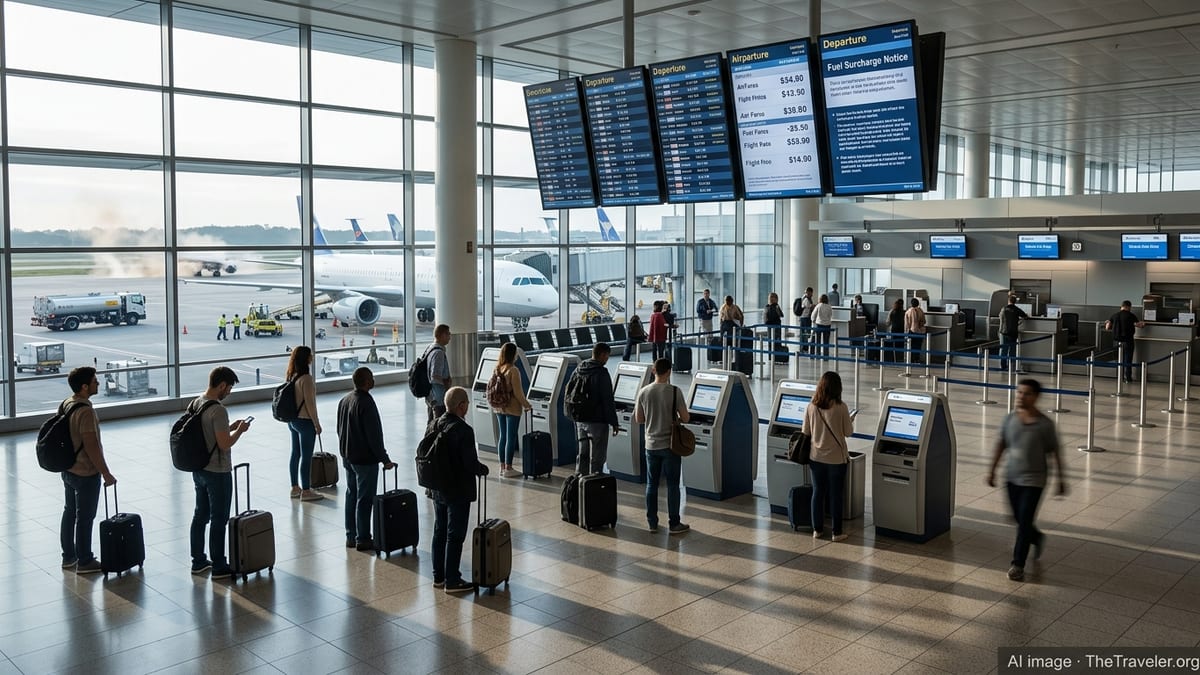
Cheaper Korean Air Tickets Put Guam Back in the Spotlight
Recent updates from South Korean carriers show that international fuel surcharges, which had surged to historically high bands in early 2026, have begun to ease, cutting the extra cost added to long- and medium‑haul tickets. Korean Air’s published tables for 2026 indicate a step-down in the surcharge levels applied from Korea on many international routes compared with peak assessments, a shift that directly affects leisure destinations favored by Korean travelers, including Guam.
Fuel surcharges are calculated separately from base fares and can rise or fall with global oil prices and airline pricing policies. When they spike, the total price of a ticket can climb sharply, even if the base fare remains unchanged. As the levels come down, airlines gain more room to promote headline fares that appear meaningfully lower to price‑sensitive travelers, especially on short‑to‑medium‑haul leisure routes like Incheon–Guam.
Publicly available fare data on Korea–Guam routes in August 2026 already show more aggressive discounting periods and promotional seats from both full‑service and low‑cost carriers, supported by the softer surcharge environment. Travel agencies in Seoul and Busan are advertising package prices to Guam that undercut peak‑season 2025 levels, signaling that the cost advantage is beginning to reach consumers shopping for winter and spring getaways.
Industry observers note that while base fares can still fluctuate with demand, the moderation in fuel surcharges is a pivotal factor in restoring Guam’s competitiveness among Korean travelers comparing options such as Okinawa, Saipan, the Philippines and Southeast Asia. A lower total ticket price can be decisive for family and group travel, segments that remain central to Guam’s Korean market.
Korean Visitors Remain Guam’s Tourism Powerhouse
Guam’s dependence on South Korea as its primary overseas market has deepened during the post‑pandemic recovery. The Guam Visitors Bureau’s 2024 tourism economic impact reporting, as summarized in regional business coverage, shows that Korea and Japan together accounted for nearly four‑fifths of all arrivals, with South Korea alone representing just over half of total visitor volume.
Subsequent industry updates indicate that this reliance has continued into 2025. A recent earnings disclosure from a major Asia‑Pacific hospitality group with substantial Guam holdings reported that South Korea contributed about 48.7 percent of Guam’s visitor arrivals in 2025, with Korean arrivals edging higher year on year. That share underscores how strongly the island’s hotels, retailers and tour operators are tied to the spending power of Korean travelers.
Official arrival summaries published by Guam’s tourism authorities through mid‑2026 further illustrate the pattern. Korean arrivals posted some volatile months in early 2025, but statistics for late 2025 highlighted pronounced growth in Korean visitor numbers compared with the previous year, with November and December showing double‑digit percentage increases. These gains helped lift Guam’s total annual visitor count and signaled that Korean demand was rebounding even before fuel surcharges began to ease.
Economic reporting out of Guam places tourism’s contribution at roughly 1.4 billion dollars in 2024, with analysts emphasizing that recovery is still incomplete relative to 2019. Given that Korean visitors now account for roughly half of all arrivals, lower air‑travel costs from Korea have an outsized influence on whether Guam can close the remaining gap and move closer to its pre‑pandemic benchmarks.
Expanded Air Capacity Aligns With Lower Surcharges
Guam’s tourism planners have spent the past two years trying to secure more airline seats from South Korea, and those efforts are converging with the current easing in fuel surcharges. Board materials and industry releases from the Guam Visitors Bureau show that air seat capacity from Korea was projected to exceed 50,000 seats in July 2025 and 60,000 seats in August 2025, with additional growth continuing into 2026 as airlines restored and expanded routes.
Marketing documents released in late 2025 detail a dedicated Korea marketing budget running into the millions of dollars, including incentive funds earmarked for carriers and campaigns to sustain or increase seat supply. The bureau’s October 2025 Korea roadshow recap highlighted the resumption or expansion of Korea–Guam services and noted strong interest from Korean trade partners and online travel platforms, pointing to a more favorable aviation landscape.
Arrival statistics posted on Guam’s tourism research portal through July 2026 confirm that this capacity is translating into stronger visitor flows. Monthly summaries for late 2025 and early 2026 describe what officials term a breakout year, with air arrivals rising more than 40 percent year on year in certain peak months and Korea leading the gains. As more seats enter the market, airlines have greater flexibility to run sales, and the recent drop in fuel surcharges gives them extra margin to promote lower all‑in prices without eroding yields as severely as during the 2024 recovery phase.
For travelers, this combination of increased frequency and lower surcharges translates into more options on departure times, a mix of full‑service and low‑cost carriers, and an expanding array of bundled offers that combine airfare with hotels, car rentals and activities in Tumon and beyond. For Guam’s tourism economy, it represents a chance to convert airline strategy into sustained foot traffic across beaches, shopping districts and cultural attractions.
Guam Repositions Itself for the Korean Leisure Market
Behind the changing airfare dynamics is a broader strategic push to reposition Guam as a higher‑value destination for Korean visitors. The government’s updated tourism recovery and repositioning plans, finalized in late 2024 and expanded in 2025, describe a shift away from purely volume‑driven, group‑tour models and toward free independent travelers who prioritize safety, cleanliness and authentic local experiences.
Policy papers published by Guam’s Bureau of Statistics and Plans and related consultants call for coordinated investments in public spaces, hiking trails, heritage sites and maritime activities such as traditional sailing. These documents argue that to retain and grow its Korean market share in the face of competition from destinations like Thailand and Okinawa, Guam must pair attractive ticket prices with a more compelling on‑island product.
Marketing updates from the Guam Visitors Bureau show that this repositioning is already shaping Korea‑focused campaigns. Promotional materials highlight cultural festivals, family‑friendly beachfront developments and events such as the Tumon night market, which runs weekly in the heart of Guam’s main resort strip. Roadshow presentations in Seoul and regional Korean cities emphasize Guam’s status as a U.S. destination within a relatively short flight from the peninsula, combining American infrastructure and security frameworks with Pacific island landscapes.
Lower fuel surcharges and cheaper airfares add a financial incentive to this message. By trimming the cost barrier, Guam’s tourism promoters hope that more Korean visitors will be willing to sample newer experiences beyond the classic resort‑and‑shopping circuit, reinforcing the island’s efforts to diversify its tourism offerings and increase per‑visitor spending.
Outlook: Price Relief Supports Guam’s Recovery Targets
Forward‑looking tourism plans for Guam anticipate that Korean outbound travel will exceed 2019 levels by 2025 and 2026, but earlier strategy documents warned that Guam’s share of that market had slipped sharply in recent years. Analysts pointed to rising competition across Asia, constraints on airlift, and high ticket prices exacerbated by elevated fuel surcharges as key factors limiting Guam’s recovery.
The current dip in surcharges gives the island a timely opportunity to regain lost ground. Visitor arrival projections compiled by Guam’s tourism and economic agencies through fiscal 2026 foresee a gradual climb in total arrivals, with Korea expected to remain the leading source market. Industry commentaries stress that keeping air travel affordable will be crucial if Guam is to convert broad Korean travel demand into bookings that flow specifically to its hotels and attractions.
Local business reports underline that tourism generated about 739,000 arrivals in 2024, roughly 44 percent below 2019’s peak of around 1.67 million visitors. Closing that gap would require sustained year‑over‑year growth, and price‑sensitive Korean families are seen as a cornerstone of that strategy. Lower surcharges, more seats and targeted marketing together improve the odds that Guam can move closer to those pre‑pandemic benchmarks over the next two years.
For now, publicly available booking data suggest that Korean demand for Guam is responding to the shift in air‑travel costs. As carriers continue to publish lower surcharge bands and maintain or grow capacity, Guam’s beaches, shopping malls and cultural venues appear well‑positioned to welcome a new wave of Korean visitors taking advantage of more affordable flights.
Korean Air – Fuel surcharge notices
Guam Visitors Bureau – Visitor arrival statistics
Guam Tourism Recovery Plan – Bureau of Statistics and Plans