


More news on this day
A string of travel company failures linked to cruise and tour packages out of Melbourne is rippling across Australia, as stranded holidaymakers pursue banks, regulators and liquidators in a widening search for refunds.
Get the latest news straight to your inbox!
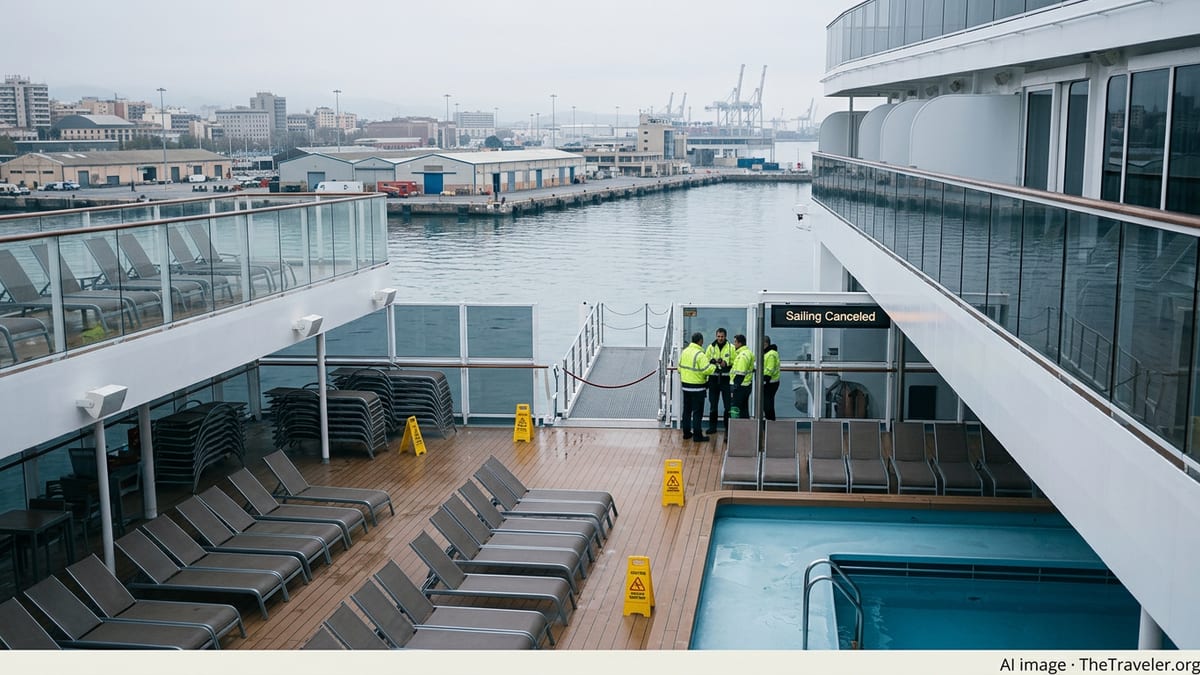
From Discount Dreams to Liquidation Shock
The abrupt liquidation of Melbourne agency AVG Travels in late May 2026 has intensified concern about how securely Australian holiday payments are held when a travel business fails. Reports indicate the company marketed heavily discounted international tours, flights and cruise-inclusive packages before suddenly cancelling or placing trips “under review” in the days leading up to departure.
Publicly available information shows that insolvency firm McGrathNicol was appointed to wind up AVG Travels after weeks of mounting customer complaints. The company’s St Kilda office was shut, with a notice directing all inquiries to the liquidators, while online support groups rapidly swelled with travellers reporting shattered plans and large upfront payments now at risk.
The AVG collapse follows other Melbourne-based travel failures in recent years that also touched the cruise sector. In 2025, discounted holiday specialist Traveldream, registered as Australian Travel Deals Pty Ltd, went under with more than a million dollars in customer funds tied to flights, cruises and tours. An administrator’s report later indicated that payments passed to a separate wholesaler had not reached airlines and tourism operators, leaving customers exposed.
Together, these failures have heightened anxiety among cruise passengers booking complex itineraries that bundle sea voyages with international airfares, hotel stays and onshore excursions, all often prepaid months in advance.
Refund Rules Under Scrutiny as Banks Face Mixed Reviews
As the latest liquidation unfolds, Australians are testing every possible refund pathway, from credit card chargebacks to complaints through dispute resolution schemes. Coverage of the AVG Travels fallout indicates cardholders are experiencing highly inconsistent outcomes, even when they booked under similar circumstances and timelines.
Some travellers have reported swift chargeback approvals from their banks, treating undelivered holidays like any other failed service. Others say claims have been knocked back on technicalities, including arguments that purchase protections apply mainly to “goods” such as electronics rather than travel services or that too much time has passed since payment.
Information provided by Consumer Affairs Victoria outlines the broader challenge. Under Australian insolvency rules, unsecured customers generally sit at the back of the queue once a business collapses, after banks and employees. Guidance notes that while a credit card chargeback can sometimes replicate a refund, it depends heavily on the card scheme’s rules, time limits and the bank’s assessment of the evidence.
The uneven experience is fuelling calls for clearer, nationally consistent guidance on when travellers can rely on chargebacks, and what evidence is needed to prove a cancelled cruise or tour was never delivered. Advocates argue that without predictability, thousands of Australians are left gambling on whether to pursue banks, travel insurers, or the liquidator first.
Cruise Contracts, Cancellations and the Fine Print
The travel turmoil is also focusing attention on how major cruise brands structure their own refund promises. Publicly available booking conditions for large operators sailing from Australian ports show detailed cancellation schedules, with full refunds typically available only when passengers cancel well in advance.
A review of cruise ticket contracts and terms for lines operating Australia and New Zealand itineraries indicates that many offer sliding-scale refunds that decrease as departure approaches, sometimes converting payments into future cruise credits rather than cash. Where airfares or hotel stays are sold as part of a package, separate airline and accommodation rules can further complicate what is ultimately refundable.
Cruise contracts generally outline options if the operator itself cancels a voyage, such as full fare refunds or rebooking onto alternative sailings. However, the current crisis illustrates that these promises rely on the cruise line’s financial health and its relationships with third-party travel sellers. When an intermediary travel agency or wholesaler fails before funds reach the cruise company, passengers can find that the operator has no record of their booking and no obligation to provide a sailing or a refund.
These gaps are especially acute in “bucket list” long-haul itineraries from Melbourne and other Australian ports, where customers routinely pay tens of thousands of dollars upfront for cabins, long-distance flights and pre- or post-cruise touring weeks or months before departure.
Regulators and Industry Bodies Confront Systemic Weaknesses
The pattern of collapses has drawn the attention of consumer regulators, ombudsman schemes and travel industry associations. Public commentary from sector leaders in the wake of AVG Travels’ failure points to longstanding concerns about voluntary accreditation and the lack of mandatory, independently audited trust accounts for all travel intermediaries.
Coverage of the AVG case notes that the company had previously lost membership in a key industry accreditation program after failing to meet financial and ethical benchmarks. Travel groups now argue that the episode shows how easily consumers can mistake marketing badges, online reviews and social media popularity for robust financial safeguards, even when a business no longer meets industry standards.
At the national level, recent initiatives by bodies such as the Australian Financial Complaints Authority and the corporate regulator ASIC, in response to high-profile investment fund collapses, signal a shifting enforcement climate. Public resources released this year seek to clarify how different agencies handle disputes and compensation schemes when financial firms fail, and some consumer advocates see parallels with the way travel intermediaries hold large sums paid for future services.
There is growing debate about whether similar, dedicated compensation arrangements should exist for pre-paid travel, including cruises, so that customers are not left dependent on the fortunes of a single intermediary or the goodwill of card issuers.
What Australian Cruise Travellers Can Do Now
For travellers caught up in the unfolding Melbourne travel crisis, the immediate challenge is untangling complex payment trails. Consumer guidance suggests starting with a detailed review of all contracts and confirmations, including the cruise line’s own terms, the travel agent’s conditions, and any airline or hotel policies embedded in a package.
Public information from insolvency and consumer agencies indicates that affected passengers should promptly notify liquidators of their claims, keep records of all correspondence, and contact their bank or card provider without delay to ask about possible chargebacks. In some cases, domestic travel insurance may cover insolvency of travel providers, although many policies exclude this risk.
Longer term, industry commentary and policy reports recommend that Australians treat big-ticket cruise bookings much like major financial investments. That includes checking whether an agent is accredited with a recognised travel industry body, understanding where client money is held, and favouring payment methods that offer strong dispute rights if something goes wrong.
As the repercussions of the AVG Travels liquidation continue to emerge, thousands of would-be cruise passengers are discovering that the small print around refunds and financial protections can be as critical to a holiday as the itinerary itself.
ABC News: AVG Travels enters liquidation
ABC News: Traveldream collapse administrator’s report
Consumer Affairs Victoria: Insolvency and consumer refunds