


More news on this day
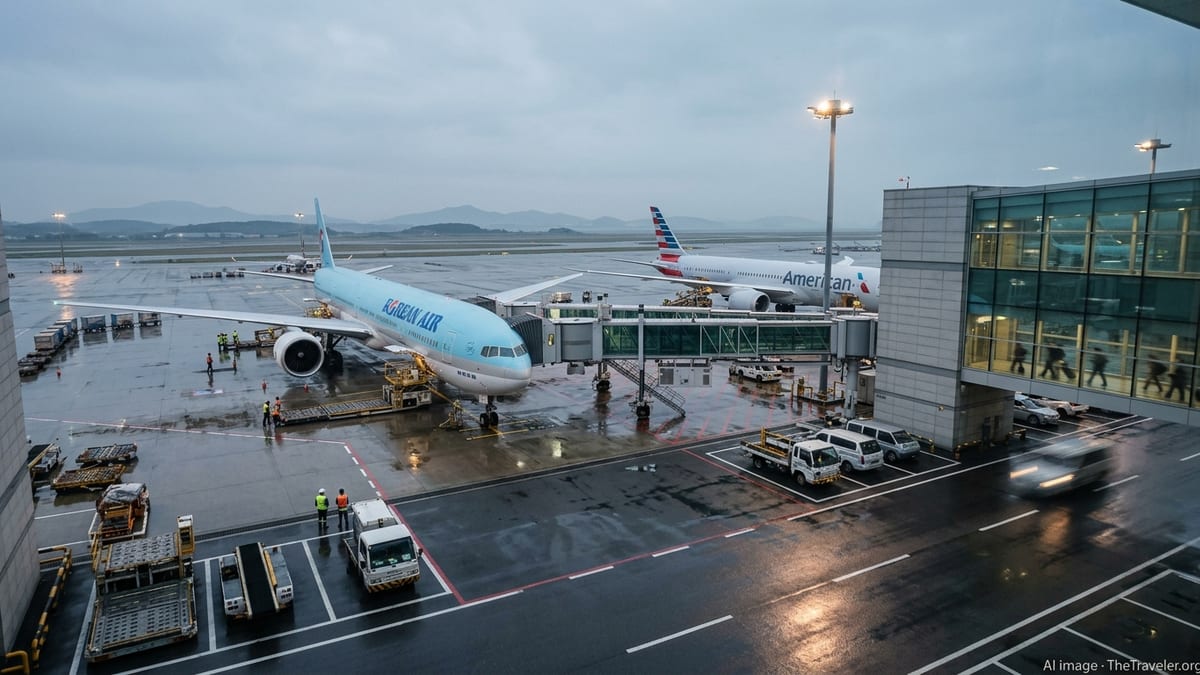
Incheon International Airport’s 2026 flight schedules are ramping up just as Terminal 2 absorbs more carriers, including Asiana’s move into the building earlier this year, creating a new congestion pattern for Korean Air travelers: check-in and security pinch points on peak departure waves, and tighter margins when disruptions ripple across long-haul networks.
Get the latest news straight to your inbox!
Why 2026 looks busier at Incheon, even after expansion
Publicly available information from Incheon International Airport Corporation shows the airport completed a multi-year buildout that added a fourth runway and expanded Terminal 2, raising overall capacity to 106 million passengers a year and 6.3 million tons of cargo. That extra infrastructure is designed to reduce delays, but it also enables more scheduled flights, which can crowd processing areas during peak banks.
Published coverage of the 2026 summer season indicates Incheon increased available slots to as many as 80 aircraft movements per hour, with schedules projected to average about 1,260 daily flights between March 29 and October 24, 2026. More flights can mean more choice for travelers, but it also concentrates demand at check-in islands, security lanes, and immigration when multiple long-haul departures align.
Terminal 2, in particular, has been adjusting to airline reshuffles. Asiana’s published notice shows all Asiana flights began operating from Terminal 2 effective January 14, 2026, moving activity that previously sat in Terminal 1 into the same departures hall used by Korean Air. That consolidation is a key reason some travelers are seeing longer lines at Terminal 2 at specific times of day.
Korean Air disruption basics: rebooking, refunds, and overnight delays
When delays or cancellations happen, Korean Air’s publicly posted terms describe a rebooking process that centers on getting travelers onto the next available option in the same class of service when re-accommodation is necessary. If the disruption is severe enough that the trip no longer serves its purpose, the carrier’s published policy also outlines the option of returning to the origin point and refunding the unused portion of the ticket.
For travelers stuck overnight away from home or destination because of a delay, misconnection, or cancellation within the airline’s control, Korean Air’s customer service plan indicates hotel accommodations may be provided at contracted facilities, subject to availability. The practical takeaway in 2026 is that airport-area hotels can fill quickly during irregular operations, so travelers who are offered lodging generally benefit from completing the rebooking and accommodation steps as early as possible after a disruption is announced.
One detail that can help reduce stress during a rolling delay is making sure contact information is up to date in the booking record, since disruption handling often depends on notifications and the ability to accept itinerary changes quickly. Travelers booked through third parties may want to confirm where ticket changes must be handled, because Korean Air’s published guidance notes that change and refund conditions can vary by fare type and place of purchase.
Terminal 2 pressure points: check-in, security, and “wrong terminal” mistakes
In 2026, a common congestion problem is not just long lines, but misrouted passengers. Incheon’s official transfer and terminal information pages list Korean Air and Asiana among the airlines operating at Terminal 2, and published airline notices emphasize that codeshare arrangements can affect the operating terminal. Travelers should verify the operating carrier and terminal assignment for the specific flight number before leaving for the airport, especially when itineraries mix marketing and operating airlines.
Korean Air encourages time-saving steps that can reduce time at the counters. Its online check-in information shows international online check-in opens 48 hours before departure and is available until 1 hour before departure, which can let some passengers head straight toward departure processing instead of waiting for full-service check-in. That said, travelers with checked bags still need to use bag drop or staffed counters, and some itineraries and passenger types are not eligible for online check-in.
Another tool that has drawn attention is Incheon’s SmartPass app, which Incheon’s sustainability reporting describes as part of a broader digital transformation, including expansion of dedicated lanes and user-convenience improvements. The key limitation for travelers is that such programs can speed up only certain steps, and performance can vary by lane availability, eligibility, and how many travelers are using the same shortcut at the same time.
Seoul Station City Airport Terminal: a practical workaround for some Korean Air flyers
For travelers starting in Seoul, the Seoul Station City Airport Terminal can shift the most time-consuming part of departures away from Incheon: counter check-in and checked-bag drop. Publicly available guidance shows the service is located in Seoul Station (B2 level) and operates with set hours, and published tourism materials describe a standard requirement that passengers complete check-in at least three hours before departure, with an earlier cutoff cited for Korean Air.
The operational implication is straightforward: if you can check in and drop bags in central Seoul, you can arrive at Incheon with your boarding pass already issued and your checked luggage routed through the system, which can make the airport portion more predictable on heavy-departure days. This approach is most useful when Terminal 2 counters are expected to be congested, or when travelers are connecting from hotels in central Seoul and want to avoid building extra buffer time for check-in lines.
However, the City Airport Terminal is not universal. Eligibility depends on airline participation and the passenger’s specific flight, and cutoffs can differ by carrier and terminal. Travelers using this option should confirm that their Korean Air itinerary is accepted for in-town check-in on the day of travel and arrive with enough margin to meet the earlier cutoff window.
What travelers can do on the day: timing choices that reduce missed connections
In a congestion environment, the most effective strategy is choosing the right sequence and deadlines. Korean Air’s published online check-in window for international departures closes one hour before departure, which can serve as a hard reminder to finalize seats and boarding pass access early, rather than waiting until arrival at a crowded terminal.
At the airport, leaving room for variability matters more than chasing an exact “average” wait time. Incheon’s own materials emphasize that terminal assignments can differ for codeshares, and real-world delays often begin with a simple terminal mistake or a late realization that bag drop lines are longer than expected. Building a buffer that accounts for counter, security, and immigration steps is especially important on peak departure banks when multiple long-haul flights are scheduled close together.
Finally, travelers facing a Korean Air delay should separate two issues: what happens to the ticket, and what happens to the day. Korean Air’s published policies outline rebooking and refund paths depending on the nature and length of the disruption, while the airport-side reality is that congestion can compound the inconvenience. The earlier travelers lock in a new itinerary and confirm whether accommodations apply, the easier it is to make informed choices about ground transportation, hotel availability, and onward connections.