


More news on this day
Hundreds of travelers moving through major Gulf gateways such as Riyadh, Dubai and Bahrain have been caught in a fresh wave of disruption, with flight-tracking data showing 1,315 delays and 36 cancellations across regional airports in a single recent 24-hour window.
Get the latest news straight to your inbox!
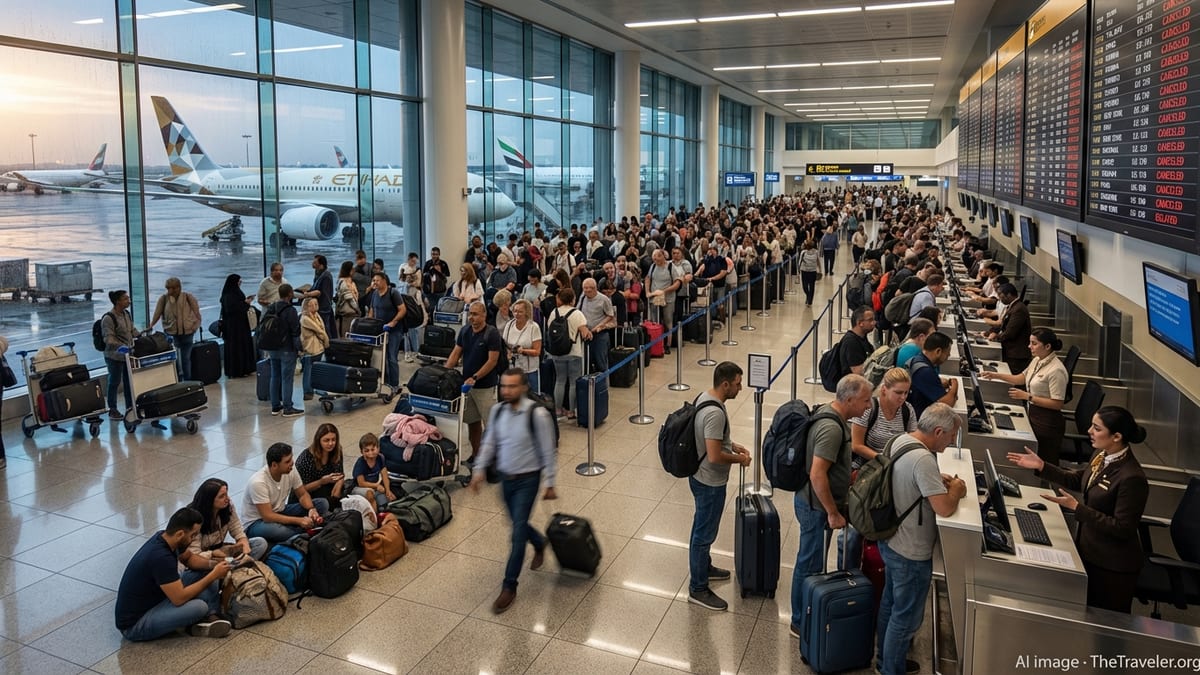
Riyadh and Gulf Hubs See Disruption Spike
Publicly available aviation statistics indicate that Riyadh’s King Khalid International Airport, a primary hub in Saudi Arabia, has been operating under mounting pressure through August 2026, averaging roughly 849 flights per day over the past month. Data compiled for the most recent disruption window points to Riyadh as one of several Gulf airports contributing to a total of 1,315 delayed flights and 36 cancellations, affecting both regional and long-haul traffic.
Historical performance data shows that in the last 30 days alone more than 25,000 flights have moved through Riyadh, with about 18 percent of departing services delayed by more than 15 minutes and just over 2 percent cancelled. Those rates, when layered onto a peak travel week, translate into hundreds of passengers dealing with missed connections, late arrivals and unexpected overnight stays.
Regional coverage from Gulf-focused outlets in July and August 2026 has also highlighted repeated cancellations on routes linking Saudi airports with Bahrain, Kuwait and the wider Middle East, underscoring how operational strain in one hub can quickly ripple through neighboring airports. Flight listings across Dubai, Abu Dhabi and other Gulf gateways have shown clusters of cancellations and rolling delays as airlines adjust schedules and aircraft rotations.
Industry trackers further suggest that domestic links serving secondary Saudi cities, along with high-demand international corridors, have been particularly exposed during these disruption peaks, compounding the impact on travelers who rely on Riyadh and other Gulf hubs as essential transit points.
Operational Strain, Weather and Regional Tensions Combine
Reports from recent months indicate that the current wave of disruption in the Gulf does not stem from a single cause. Earlier episodes at Riyadh’s King Khalid International, for example, have been linked to a combination of diverted traffic from other airports and maintenance activities affecting key systems such as refueling infrastructure. On days when those operational factors coincide with heavy demand, routine timetable buffers can quickly erode.
Broader Gulf coverage has also pointed to bouts of severe weather, particularly heavy rain episodes affecting parts of the region, as a trigger for delays and diversions. When storms impact one or more hubs at the same time, aircraft and crews may be forced out of position, leading to knock-on cancellations hours or even days later as airlines work to realign their networks.
More recently, reporting focused on Middle East air travel has drawn a connection between heightened regional tensions and a rise in precautionary schedule adjustments, including cancellations on some Riyadh-linked routes. Flight-tracking summaries from mid-August 2026 recorded more than a thousand delays and over a hundred cancellations across Middle Eastern airports on a single day, illustrating how swiftly the picture can deteriorate once security advisories tighten.
Against that backdrop, the tally of 1,315 delays and 36 cancellations across Gulf airports in one 24-hour period appears consistent with a pattern of intermittent but intense disruption spikes, rather than a steady deterioration in reliability. For travelers, however, the distinction offers little comfort when individual journeys are suddenly thrown off course.
What the Numbers Mean for Passengers
For travelers on the ground, the statistics translate into long queues at rebooking desks, crowded departure halls and rising uncertainty about onward connections. Even at airports with relatively strong on-time performance over the medium term, a delay rate approaching one in five departures, combined with a measurable cancellation share, can significantly disrupt itineraries during busy holiday and business travel periods.
Performance data compiled for Riyadh shows that the average departure delay over the past month has hovered at just over 20 minutes, with some flights seeing far longer waits when congestion builds. While many services still depart on time or with only modest slippage, clusters of late departures can cascade through the day’s schedule, especially when aircraft are operating tight turnarounds.
Elsewhere in the Gulf, the impact of the 1,315 delays and 36 cancellations has been magnified by the role of major hubs such as Dubai International and Abu Dhabi’s Zayed International Airport as intercontinental connectors. Disruptions on Gulf-to-Gulf sectors can cause passengers to miss long-haul departures to Europe, Asia or North America, forcing airlines to arrange hotel stays and meal vouchers while alternative options are arranged.
Analysts tracking these events note that even travelers whose flights operate as planned may feel secondary effects, from congested lounges and security checkpoints to limited availability of customer service staff. The cumulative stress adds to an already demanding summer travel season across the region.
Passenger Protections under Saudi and Regional Rules
For those affected at Saudi airports, including Riyadh, the country’s Passenger Rights Protection Regulations, in force since late 2023, set out clear obligations for airlines in cases of delay or cancellation. Public summaries of the rules describe compensation tiers linked to ticket value for cancellations and denied boarding, as well as fixed payments in some circumstances when carriers fail to provide required care such as refreshments, accommodation or alternative transport.
The regulations apply to flights departing any airport in the Kingdom, regardless of airline nationality, and to arriving flights operated by Saudi carriers. That means many of the passengers whose journeys were disrupted within the 1,315-delay and 36-cancellation window may be eligible for assistance or financial redress, depending on the cause and length of the disruption and the specific terms of their tickets.
Elsewhere in the Gulf, passenger protection regimes vary, but most major hubs operate under frameworks that encourage carriers to offer rebooking options, vouchers or other forms of support during widespread disruption. Travelers transiting multiple jurisdictions on a single itinerary may find that different sets of rules apply to different legs of their journey, making it important to review airline conditions of carriage alongside local regulations.
Consumer-rights platforms that monitor aviation rules note that awareness remains uneven, and that many passengers do not file formal claims even when eligible. The recent spike in Gulf disruptions is likely to renew attention on how consistently airlines communicate entitlements when schedules unravel.
How Travelers Can Navigate Ongoing Volatility
Aviation specialists and travel planners monitoring Gulf operations indicate that volatility may persist in the near term, given ongoing regional tensions, seasonal demand and the complex mix of operational and weather-related risks. Travelers using Riyadh and neighboring hubs are therefore being encouraged, in public guidance, to build additional buffer time into connections and to monitor flight status closely in the 24 hours before departure.
Data-focused aviation sites that aggregate real-time statistics for Riyadh and other Gulf airports can be a valuable resource, offering snapshots of current delay and cancellation rates as well as historical performance trends by airline and route. Checking those figures when planning trips can help passengers gauge their risk tolerance when choosing between tighter and more generous connections.
Practical steps such as traveling with carry-on luggage where possible, maintaining updated contact details in airline bookings and downloading carrier apps can also improve responsiveness when disruption hits. Many airlines operating in and out of Gulf hubs now push notifications about gate changes, rolling delays and rebooking options directly to passengers’ phones, reducing the need to queue at service desks.
Ultimately, while the headline figure of 1,315 delays and 36 cancellations underlines the scale of recent disruption, aviation data over the broader season suggests that Gulf airports remain capable of robust throughput when conditions are favorable. For now, however, travelers passing through key hubs like Riyadh may need to plan with disruption in mind and stay flexible as the regional situation evolves.
Riyadh King Khalid International Airport statistics
Gulf airport cancellations and disrupted routes