


More news on this day
Major Gulf carriers including Emirates, Qatar Airways, Saudia and Etihad are grappling with rolling waves of flight cancellations and reduced schedules as airspace closures linked to the 2026 Iran conflict continue to disrupt routes over Saudi Arabia, the United Arab Emirates and Qatar.
Get the latest news straight to your inbox!
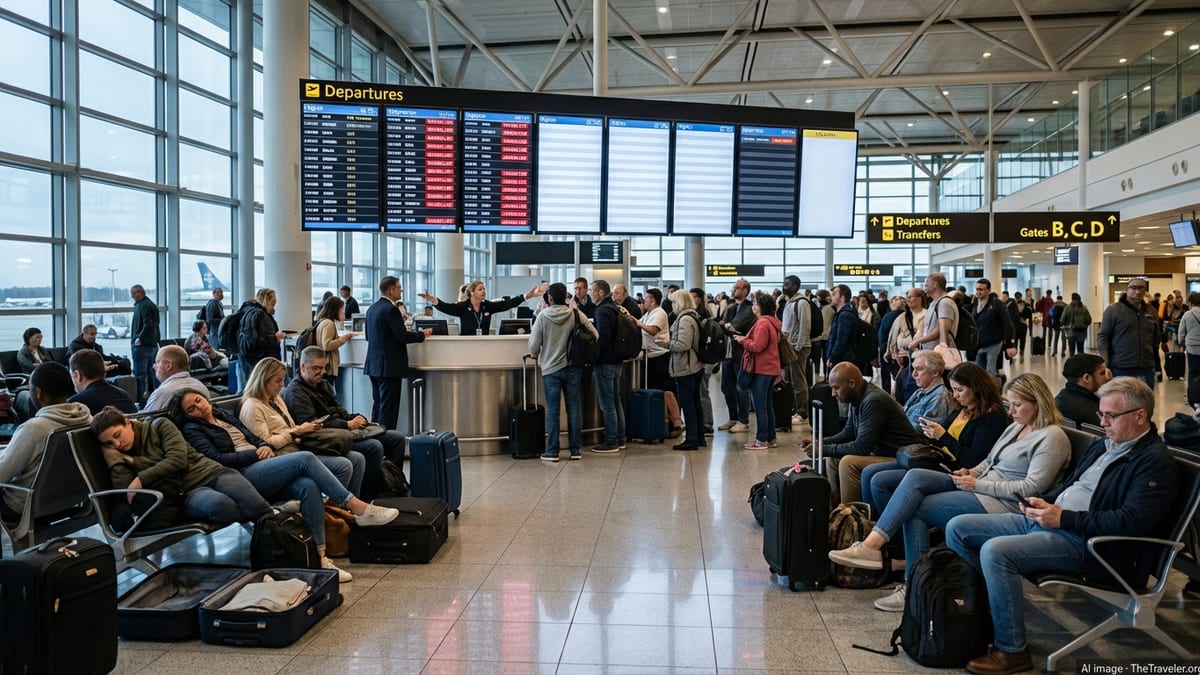
Conflict-Driven Airspace Closures Hit Core Gulf Hubs
Since late February 2026, commercial aviation across the northern Gulf has been repeatedly interrupted by military escalations and resulting airspace shutdowns. Published information on the 2026 Iran war shows that Bahrain, Iraq, Israel, Kuwait, Qatar and the UAE temporarily closed their skies after missile and drone attacks, forcing large numbers of overflying aircraft to divert or cancel.
Dubai International and Abu Dhabi International, two of the world’s busiest long haul hubs, have been among the most affected. Publicly available coverage indicates that airspace around Dubai was first closed on 28 February following strikes linked to the wider regional conflict, with only limited movements allowed for several days. Similar restrictions were imposed over Qatar, sharply reducing access to Hamad International Airport in Doha.
The knock-on effects have been felt across Saudi Arabia as well. While Saudi airspace has remained more open than that of some neighbors, advisories for regional ports and airports in April and May noted intermittent disruption, including curtailed operations at Dammam and knock-on delays at Jeddah and Riyadh as traffic was rerouted around closed corridors over Iraq, Iran and Kuwait.
Analysts note that the Gulf’s hub-and-spoke model is particularly vulnerable to sudden airspace closures. When a small number of flight information regions become unavailable, dozens of trunk routes linking Europe, Asia and Africa through Gulf hubs can quickly become economically or operationally unviable, prompting broad schedule cuts.
Emirates and Etihad Trim Networks and Operate Reduced Schedules
Among the Gulf superconnectors, Emirates has emerged as one of the hardest hit by recent constraints. Industry schedule analysis for June 2026 shows the Dubai-based carrier removing close to one in six planned flights compared with earlier filings, with capacity reductions concentrated on Europe, South Asia and parts of Africa. Several dozen routes are reported to be operating at significantly lower frequencies than originally scheduled.
Emirates’ cuts follow an earlier period in March when the airline focused on repatriation and limited essential services after widespread cancellations at the height of the initial airspace closures. Aviation data platforms and passenger rights organizations report that Emirates and other UAE carriers grounded large portions of their fleets in early March before gradually restoring a partial timetable.
Abu Dhabi-based Etihad Airways has also been forced to pare back operations, although recent filings suggest a somewhat faster recovery. Industry summaries indicate that Etihad is now operating close to its planned summer program, with new destinations added earlier in the year. Even so, the airline has acknowledged operating a reduced schedule through March and early April, concentrating on key trunk routes while sidestepping closed or restricted airspace.
Passengers transiting Emirates and Etihad hubs continue to face uneven service. Travel advisories urge travelers with upcoming bookings to monitor flight status closely and to wait for confirmed rebooking details before heading to the airport, as last-minute rerouting around restricted corridors can lead to rolling delays and day-of-departure cancellations.
Qatar Airways Confronts Prolonged Airspace Limits
Qatar Airways has endured one of the most prolonged disruptions in the region. Following the closure of Qatari airspace at the end of February, regularly published disruption trackers state that more than 500 flights were cancelled at Hamad International Airport in early March, with Qatar Airways largely suspending its normal hub operations during the initial phase of the crisis.
Subsequent advisories describe Qatar Airways as operating a “rebuilding” or “restoration” phase, with limited safe corridors defined by the Qatar Civil Aviation Authority. While the airline has been gradually expanding its schedule again, capacity data comparing spring 2026 with 2025 indicate a substantial reduction in total flights, and publicly available information shows many routes still operating at lower frequencies or with intermittent cancellations.
For travelers, the situation has translated into repeated rebookings and shifting itineraries. Online passenger forums and airline statements refer to multiple successive cancellations on certain routes and evolving rebooking policies, including tighter rules on transferring passengers to other carriers as Qatar Airways attempts to stabilize its own network.
Reports suggest that some passengers have opted to route via alternative hubs such as Istanbul or via Saudi airports when possible, particularly during periods when Qatari airspace restrictions were more extensive than those over neighboring states.
Saudia and Saudi Airports Absorb Spillover Disruptions
Saudi flag carrier Saudia has not experienced the same level of direct airspace closure as its Emirati and Qatari counterparts, but it has been drawn into the regional turmoil as traffic patterns shift. Coverage of airport operations in late March and April describes at least 85 flights cancelled across five Saudi hubs in one concentrated episode, affecting services operated by Saudia and several foreign airlines on key regional and long haul routes.
King Abdulaziz International Airport in Jeddah and King Khalid International Airport in Riyadh have been central to these disruptions. As flights that would normally overfly Iraq, Iran or Qatar sought alternative routings, Saudi hubs absorbed additional demand and operational complexity, leading to congestion, delays and occasional ground stops when neighboring airspace constraints tightened.
Operational notices for Dammam’s King Fahd International Airport in April highlight how carriers have adjusted differently. One regional advisory noted that flights were operating from Dammam for Qatar Airways, Etihad and other carriers, while Emirates temporarily halted services from the airport, illustrating contrasting risk assessments and network strategies among Gulf airlines.
Despite these challenges, Saudi authorities have generally indicated that the country’s own airspace remains open. The main difficulties for Saudia and other airlines operating in and out of the kingdom stem from reduced flexibility in surrounding flight corridors and the knock-on impact of disruptions at neighboring hubs.
Passengers Face Uncertainty as Recovery Remains Fragile
Across Saudi Arabia, the UAE and Qatar, passengers have faced a highly fluid situation marked by last-minute cancellations, lengthy delays and evolving compensation and rebooking rules. Passenger rights organizations warn that travellers should anticipate continued schedule volatility as long as regional tensions persist and airspace restrictions can be reimposed with little notice.
Guidance from consumer advocacy groups and travel management companies encourages affected passengers to confirm flight status directly with their airline before departing for the airport, keep documentation of cancellations and delays, and remain alert for alternative routings via less affected hubs, including Muscat, Jeddah or Istanbul. In some cases, travelers have been advised that they may be eligible for compensation under applicable passenger rights regulations, depending on the carrier and jurisdiction.
For the airlines themselves, the crisis underscores the risks of extreme geographic concentration. Emirates, Qatar Airways, Saudia and Etihad built global franchises on the promise of seamless connectivity across a dense crossroad of airways spanning three continents. The current disruptions highlight how quickly that model can be strained when key portions of regional airspace are temporarily taken off the map.
While partial recoveries are under way at several Gulf hubs, industry observers caution that the overall recovery remains fragile. Any renewed escalation in the conflict, or fresh missile or drone incidents near major airports, could trigger another round of airspace closures and force Emirates, Qatar Airways, Saudia and Etihad back into emergency scheduling mode just as they attempt to stabilize their networks for the peak summer travel season.