


More news on this day
The United Arab Emirates is joining Saudi Arabia, Qatar, Kuwait, Oman, and Bahrain in a new wave of regional cooperation aimed at turning the Gulf into an integrated hub for economic growth and tourism, with shared visa schemes, coordinated promotion, and large-scale investments reshaping how visitors experience the six countries.
Get the latest news straight to your inbox!
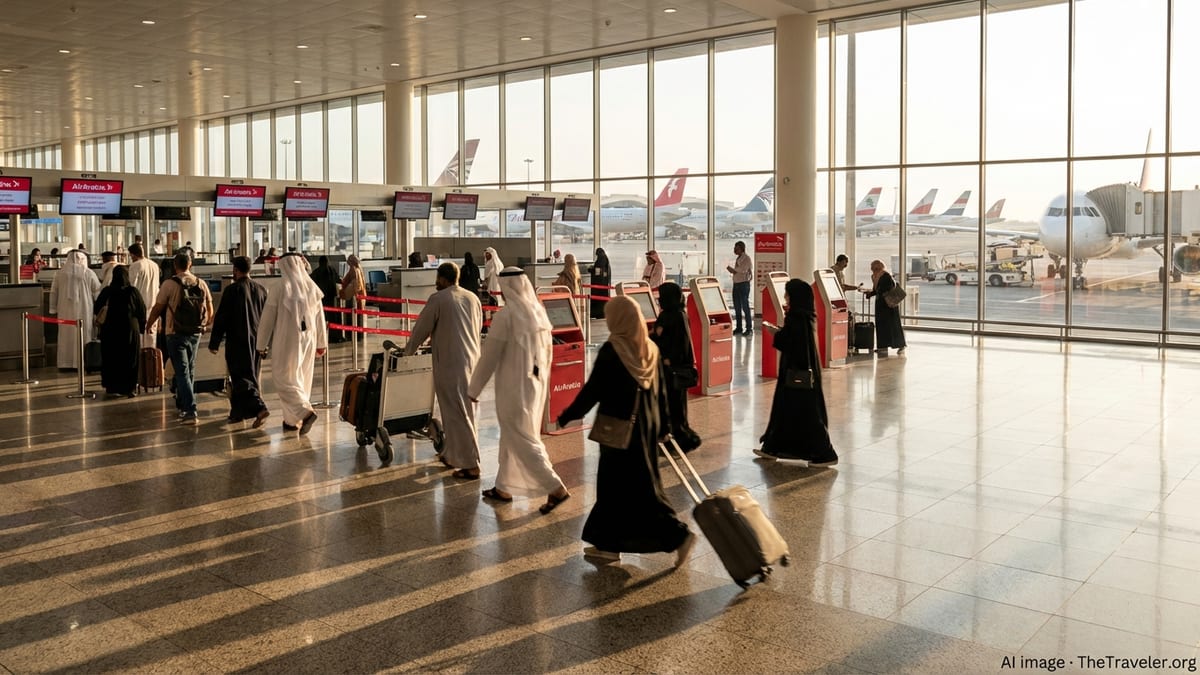
Unified Travel Systems Signal a New Phase of GCC Integration
Across the Gulf, regional cooperation in tourism is moving from vision documents to implementation. Publicly available information shows that the six Gulf Cooperation Council countries have endorsed a unified tourist visa framework intended to allow visitors to travel across the UAE, Saudi Arabia, Qatar, Kuwait, Oman, and Bahrain on a single permit. The measure is being positioned as a cornerstone of a broader shift toward treating the Gulf as one interconnected tourism market.
Reports indicate that officials expect a pilot phase of the unified visa to begin in late 2025, before a wider rollout in 2026. Travel and aviation industry analyses describe the visa as a potential game changer for the region’s competitiveness, simplifying itineraries that combine multiple Gulf destinations and reducing the administrative burden on travelers who currently need separate entry clearances for each state.
In parallel, GCC states are rolling out a new digital “one stop” travel system designed to streamline booking and border procedures and to improve data sharing across the bloc. Coverage of recent GCC discussions describes an initial pilot involving the UAE and Bahrain, with Saudi Arabia, Oman, Qatar, and Kuwait expected to be added later. The aim is to align border processes with the ambitions of Gulf airlines and airports, which are competing to capture a larger share of global passenger flows.
Analysts note that these travel systems dovetail with long term national strategies in the region, including Saudi Arabia’s Vision 2030 and the UAE’s economic diversification agenda. By lowering barriers to intra Gulf travel, the bloc is seeking to convert its geographic proximity, airport capacity, and cultural ties into a more coherent tourism ecosystem.
Economic Diversification Drives Joint Tourism Push
Economic data and policy papers highlight that Gulf governments increasingly view tourism as a core pillar of non oil growth. Research by industry groups and consultancies points to a sharp rise in tourism’s contribution to GCC gross domestic product in recent years, with the sector emerging as one of the fastest growing components of the region’s non hydrocarbon economy.
The UAE, Saudi Arabia, and Qatar in particular have set ambitious visitor targets for the coming decade, backed by investments in theme parks, cultural districts, sporting venues, and transport links. Kuwait, Oman, and Bahrain are also stepping up tourism promotion, focusing on niche segments such as heritage travel, outdoor experiences, and boutique hospitality. Regional observers argue that these complementary strengths are a natural fit for cross border itineraries enabled by a single visa regime.
Policy reports from Gulf economic forums describe tourism cooperation as part of a wider shift toward integrated value chains in aviation, logistics, retail, and entertainment. The logic is that a visitor who flies into Dubai or Doha could be encouraged to continue on to Riyadh, Muscat, Manama, or Kuwait City through joint marketing campaigns, multi destination packages, and aligned event calendars. This would spread spending more evenly across the bloc while reinforcing the Gulf’s collective brand.
There is also a strong employment dimension. Projections from tourism market analyses suggest that unified policies could support the creation of hundreds of thousands of jobs in hospitality, transport, and related services over the next decade. For governments navigating a period of subdued global growth, integrated tourism offers a relatively quick way to stimulate small and medium sized businesses and increase private sector hiring.
UAE Positions Itself as a Connector within the Gulf Tourism Network
The UAE is actively positioning itself as a central node in the emerging Gulf tourism network. Public information from the Ministry of Economy and Tourism highlights a series of engagements with Bahrain and other regional partners to develop joint promotional programs and to support GCC wide initiatives, including the unified visa and coordinated marketing at major travel trade events.
Industry coverage shows that the UAE’s existing infrastructure provides a strong platform for deeper regional integration. Dubai and Abu Dhabi airports already function as some of the world’s busiest connecting hubs, while the country’s hotel sector has expanded rapidly on the back of record visitor numbers in 2024. Travel analysts suggest that this capacity can help anchor multi stop Gulf trips, with visitors using the UAE as an entry point before dispersing to neighboring states.
Domestic strategies in the UAE also reinforce its regional role. Long term tourism plans emphasize sustainable experiences, cultural heritage, and nature based attractions in emirates such as Ras Al Khaimah and Fujairah, complementing urban draws in Dubai and Abu Dhabi. When combined with Saudi Arabia’s giga projects, Qatar’s cultural programming, Oman’s coastal and mountain tourism, Bahrain’s island resorts, and Kuwait’s emerging leisure offerings, the picture is one of a diversified but interconnected regional tourism portfolio.
Observers note that the UAE is also deeply involved in regional and international tourism bodies that encourage cooperation. Recent meetings under the umbrella of UN Tourism, for example, have placed the Middle East at the forefront of global sports and education tourism, with Gulf states collaborating on standards, training, and joint bids for major events.
Major Events and Shared Branding Elevate Gulf Visibility
Sporting and cultural events are becoming a key tool for strengthening regional tourism ties. The 2022 FIFA World Cup in Qatar, Formula 1 races in Bahrain and Abu Dhabi, international golf tournaments, and new art fairs and festivals across the region have demonstrated that coordinated programming can attract global attention and encourage visitors to explore multiple Gulf destinations in a single trip.
Recent and upcoming tournaments hosted across the six countries, including regional football and cricket competitions, further support this trend. Tournament formats that involve teams from all GCC states encourage fan travel within the bloc and create opportunities for joint hospitality packages, cross selling of attractions, and shared use of venues and training facilities.
Gulf tourism officials and industry stakeholders are increasingly promoting the idea of the “Gulf as one destination,” a concept echoed in marketing campaigns and media coverage. This shared branding approach is supported by practical measures such as aligned visa policies, common digital platforms, and collaborative advertising in source markets from Europe and Asia to Africa and the Americas.
Tourism strategists argue that such cooperation helps Gulf states differentiate themselves collectively from competing sun and leisure destinations. By offering a mix of modern cityscapes, desert and coastal landscapes, cultural heritage sites, and major events within a short flying distance of each other, the region can appeal to travelers seeking variety and depth without long internal journeys.
Opportunities and Risks as Regional Cooperation Accelerates
While the trend toward closer economic and tourism cooperation among the UAE, Saudi Arabia, Qatar, Kuwait, Oman, and Bahrain is clear, analysts also point to potential challenges. These include the need for harmonized regulations on visitor data, consumer protection, and environmental standards, as well as the risk that geopolitical tensions or wider regional instability could disrupt travel flows.
Economic commentary on the Middle East notes that periods of heightened insecurity can quickly affect airline operations, cruise itineraries, and tourist sentiment. This makes diversification and resilience central themes in Gulf tourism policy, with governments seeking to balance ambitious growth targets with contingency planning and risk management across borders.
There is also competition within cooperation. Each Gulf state continues to invest heavily in its own flagship projects, airports, and carriers, vying for investment and visitor numbers even as they coordinate policies. Industry observers suggest that transparent communication and clear division of niche roles within the wider regional tourism offer will be important to avoid unnecessary duplication and to maximize collective returns.
Despite these complexities, current trajectories indicate that the UAE and its Gulf neighbors are committed to deepening regional economic and tourism integration. The coming years are expected to test how far shared visas, digital travel systems, and joint branding can transform the Gulf from a cluster of adjacent markets into a genuinely unified destination for global travelers.