


More news on this day
Flight operations at Harry Reid International Airport in Las Vegas experienced significant disruption today, with 81 delays and 5 cancellations reported across major carriers and routes spanning the United States, Canada, the United Kingdom, the Netherlands, Switzerland and Mexico.
Get the latest news straight to your inbox!
Wide Network Impact From a Single Hub
Publicly available tracking data shows the disruption centered on Harry Reid International Airport translated quickly into knock-on effects across a broad international network. Flights operated by or in partnership with Southwest Airlines, American Airlines, KLM, British flag carriers and Air Canada Rouge were among those affected, touching destinations in North America and Europe.
Because Las Vegas functions as a key leisure and connection hub, delays at departure often cascade into missed slots and crew timing challenges on subsequent legs. As aircraft scheduled to operate services to Canadian, European and Mexican cities remained on the ground or departed late, those downstream routes also began to show increasing delay minutes.
Routes linking Las Vegas with major Canadian gateways such as Toronto and Vancouver, European hubs including London and Amsterdam, and popular Mexican destinations reported late departures or arrival disruptions. In several cases, affected flights were operating as part of codeshare or alliance arrangements, widening the number of airlines and passengers indirectly caught up in the schedule instability.
The relatively low number of outright cancellations compared with the high volume of delays indicates airlines were attempting to preserve as much of the schedule as possible, even at the cost of extended wait times and missed connections for travelers.
Mixed Performance Among Major Carriers
Operational data and commercial aviation analytics point to a mixed performance picture among the largest carriers at Harry Reid International Airport. Southwest Airlines and American Airlines, two of the airport’s highest-volume operators, accounted for a substantial share of the late departures and arrivals, reflecting their dense schedules in and out of Las Vegas.
Southwest, which relies heavily on quick aircraft turnarounds and point-to-point routing, is particularly vulnerable when congestion builds at a hub airport. Delays in boarding, baggage loading and taxi-out can quickly compound over the course of the day, resulting in later-than-planned departures on subsequent segments that may stretch into the evening peak.
American Airlines, which integrates Las Vegas flights into a wider hub-and-spoke system, faces a different set of knock-on risks. When departures from Harry Reid International Airport run late, connecting itineraries through its major hubs become harder to protect, leading to misaligned connections and additional rebooking needs for passengers bound for East Coast, European or Latin American destinations.
Internationally focused airlines were not immune. KLM services linking Las Vegas with Amsterdam, and transatlantic or transborder flights marketed or operated by British and Canadian brands, including Air Canada Rouge, experienced schedule pressure as turn times in Las Vegas lengthened and aircraft utilization plans were forced to adjust.
Destinations Across US, Canada, UK, Netherlands, Switzerland and Mexico Affected
The reach of the disruption extended far beyond Nevada. Flights tracked on major aviation data platforms showed delays cascading onto routes touching multiple US states, Canadian provinces and European countries. Services between Las Vegas and large US markets such as California, Texas and the East Coast reported pushed-back departure times, contributing to congestion at receiving airports already managing heavy holiday traffic.
Transborder flights to Canada were also affected, particularly those routed through Las Vegas as a leisure stop or connection point. Delays on departures bound for Toronto, Vancouver and other Canadian cities led to missed onward connections and longer-than-expected layovers for travelers heading to secondary domestic destinations.
Across the Atlantic, connections via major European hubs experienced schedule instability. Flights to and from the United Kingdom and the Netherlands, including those tied into London and Amsterdam banks of long-haul services, saw arrival times shift later into the day. This in turn complicated connections to other European cities, including routes into Switzerland often served through these hub airports.
Southbound operations into Mexico were similarly impacted. Popular resort destinations that depend on tightly timed charter and scheduled operations from Las Vegas reported late inbound arrivals, which can compress ground-handling windows and create additional pressure on local airport resources during peak travel periods.
Operational and Weather Factors Behind the Disruptions
Real-time airport status information indicated that a combination of heavy volume and airspace management constraints contributed to the slowdown at Harry Reid International Airport. Average delay times rose as the day progressed, suggesting that relatively minor early issues evolved into more serious congestion as flights stacked up on departure and arrival banks.
Weather conditions around Las Vegas were characterized by intense summer heat and periods of reduced visibility at times, which can require operational adjustments such as altered takeoff performance limits or changes to runway use. While conditions did not close the airport, they added complexity for flight planning and air traffic control, particularly during the busiest mid-day and afternoon windows.
Industry experience shows that even modest schedule compression at a high-traffic airport can trigger a ground delay program or informal metering of departures and arrivals, lengthening taxi and holding times. When this coincides with strong leisure demand and high load factors, the options for rerouting or reaccommodating passengers become more limited.
In these circumstances, airlines typically prioritize safety and regulatory crew limits over maintaining exact schedule times. This can mean shifting flights later into the day, swapping aircraft or crews where possible, and consolidating lightly booked services into single departures, all of which contribute to the overall count of delays and cancellations.
What Passengers Experienced and How Airlines Responded
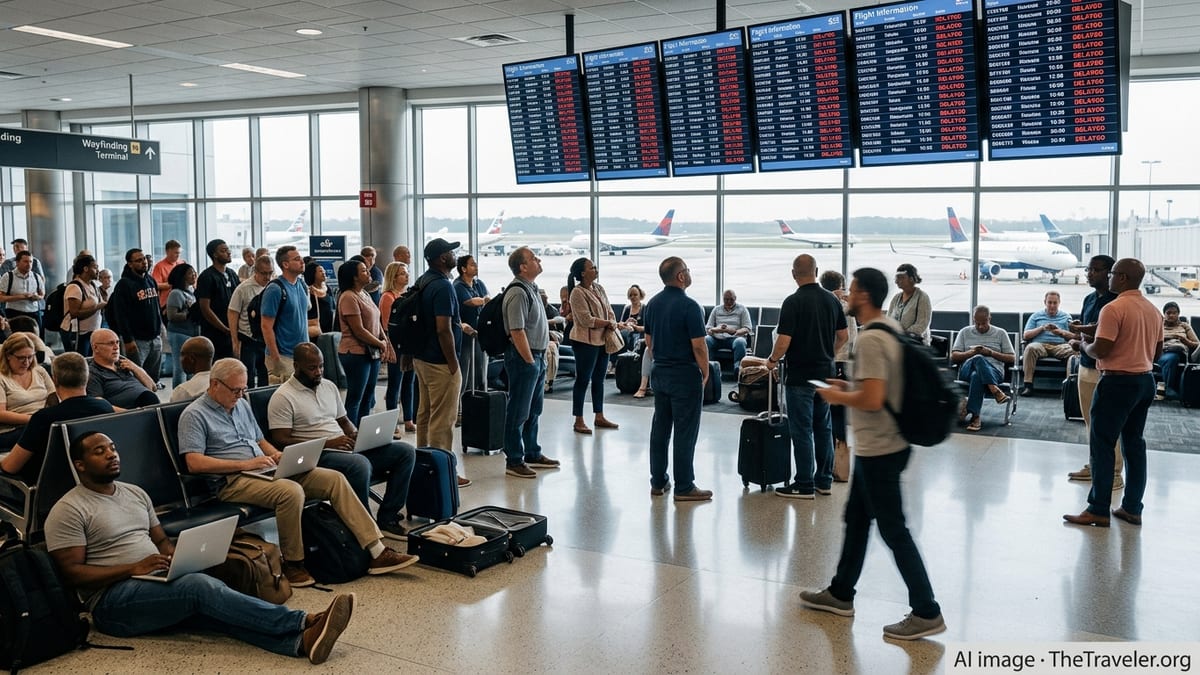
Travelers passing through Harry Reid International Airport encountered long lines at check in and security, crowded gate areas and frequent schedule updates on information displays. With delays affecting both outbound and inbound flights, many passengers reported extended time in the terminal while waiting for revised boarding times and aircraft assignments.
Airlines responded with a mix of standard disruption-management measures. These included rolling schedule updates through airline apps and airport screens, same-day rebooking options to later flights or alternative routes, and in some cases the option to move travel to different days where inventory allowed. For international itineraries, passengers were encouraged to review connecting times carefully and adjust plans if minimum transfer windows could no longer be met.
In line with common practice during irregular operations, some carriers offered waivers on change fees or fare differences for affected customers on specific dates and routes. For transatlantic and transborder journeys, passengers were reminded that eligibility for compensation or reimbursement depends on a complex mix of airline policies and jurisdictional rules, which vary between the United States, Canada, the United Kingdom and the European Union.
As operations gradually stabilized, focus shifted to repositioning aircraft and crews to restore normal schedules for subsequent days. Given Harry Reid International Airport’s role as a major gateway for both domestic and international leisure travel, the full operational impact of a day with 81 delays and 5 cancellations is likely to be felt across several days of timetables in multiple countries.