


Helsinki’s skyline is defined by two very different cathedrals that sit within a ten minute walk of each other: the white neoclassical Helsinki Cathedral and the red brick, onion domed Uspenski Cathedral. If you only have limited time in the Finnish capital, deciding which one to prioritize can shape your impression of the city. Both are iconic, both are beautiful, and both tell different parts of Helsinki’s story. This guide breaks down the experience at each landmark so you can choose the one that best fits your schedule, interests, and travel style.
Get the latest updates straight to your inbox!
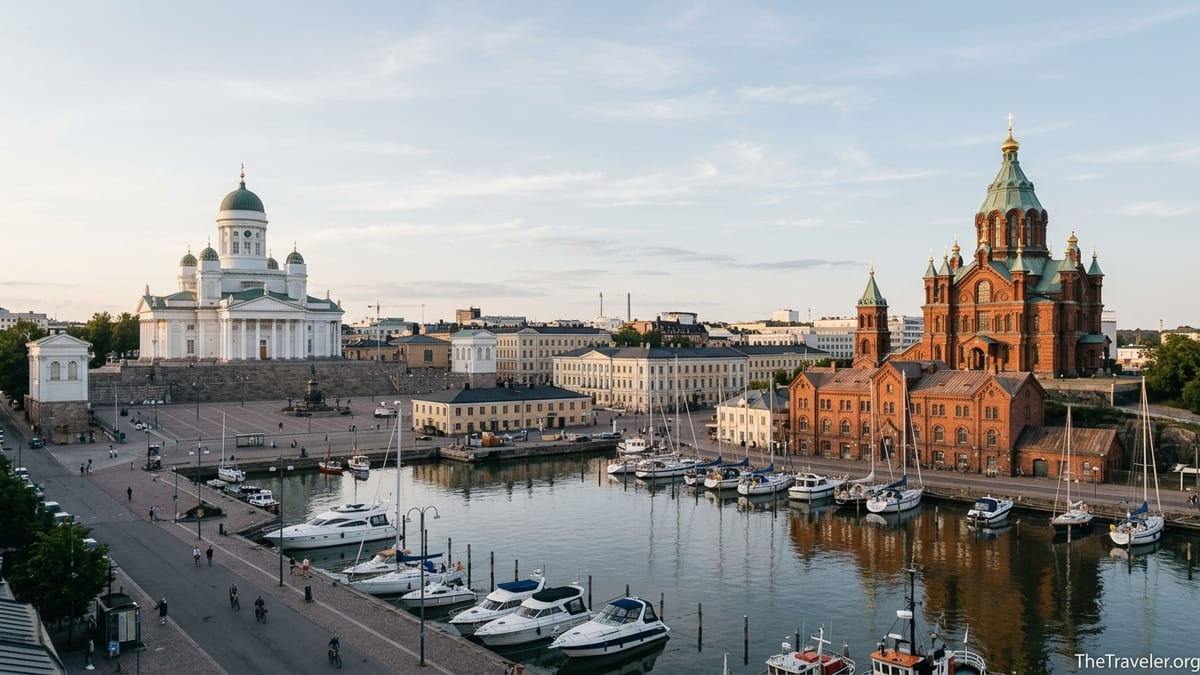
The Essentials: What Each Cathedral Offers
Helsinki Cathedral, the green domed white church dominating Senate Square, is often the image you see on postcards of the city. Completed in 1852 as a Lutheran church, it sits at the top of a broad flight of stone steps, with a sweeping view over the classical façades of the surrounding government buildings and the harbor beyond. Inside, the style is intentionally austere, with clean lines, pale walls and a restrained palette that reflects the Lutheran tradition. Visitors usually spend around 20 to 40 minutes here, including time for photos on the steps and a quick look inside.
Uspenski Cathedral, by contrast, is an Eastern Orthodox cathedral that rises from a rocky hill at the edge of the Katajanokka district. Finished in 1868, it is known for its deep red brick exterior, multiple golden cupolas and a more ornate, intimate interior filled with icons, chandeliers and gilded details. Because the church is smaller inside and usually visited in a single loop, travelers often stay 20 to 30 minutes, though photography and quiet contemplation can easily stretch a visit.
From a practical standpoint, both cathedrals are very easy to reach. They sit less than one kilometer apart in central Helsinki, and many visitors fit both into a simple walking route that starts in Senate Square and continues to the harbor and Katajanokka. If you are extremely tight on time, though, choosing just one will depend on whether you prefer minimalist Nordic classicism or richly decorated Eastern Orthodox tradition.
Location, Views and Atmosphere
If you care about panoramas, the setting may be your deciding factor. Helsinki Cathedral presides over Senate Square, one of the city’s most important historic spaces. Standing at the top of the cathedral steps, you look down over the statue of Alexander II, the pale yellow Government Palace and the University of Helsinki buildings, with tram lines cutting through the streets and, on clear days, a glimpse of the harbor cranes in the distance. In winter, the square often hosts a Christmas market with food stalls and lights that add to the atmosphere of the area even if you do not go inside the cathedral.
Uspenski Cathedral offers a different kind of view. Perched on a rocky outcrop at the edge of the harbor, it looks back over the city center and toward the ferries and cruise ships that dock nearby. Walk behind the cathedral and you will find viewpoints toward the Market Square, the SkyWheel Helsinki and the low modern skyline. In summer, when the evenings are long, the red bricks catch the warm light and the golden domes stand out against the pale northern sky, making it a favorite spot for photographers.
The atmosphere inside is also distinct. Helsinki Cathedral feels bright, calm and spacious. The interior is not heavily decorated and relies on natural light, a few statues of reformers and a large organ above the entrance for visual interest. It often hosts concerts and civic ceremonies, and can feel quite formal if you happen to step in during a rehearsal. Uspenski, in contrast, is dimmer and lit by hanging lamps and candles. The scent of incense sometimes lingers, and the icons and frescoes give a tangible sense of the Orthodox liturgical tradition. Visitors who are sensitive to ambiance often describe Uspenski as more immersive and Helsinki Cathedral as more symbolic of the city.
Cost, Opening Hours and Crowds
Costs and opening times can matter if you are trying to maximize a short stay. As of 2026, Helsinki Cathedral charges an admission fee for most visitors, with standard adult tickets around 10 euros and discounted tickets a few euros less for students and other eligible visitors. Children and certain groups, such as members of the local parish, can still enter free. The cathedral typically opens daily from morning until late afternoon or early evening, with extended hours in the summer and occasional closures for services, weddings or special events. It is wise to check the schedule on the official cathedral site before you plan a very tight itinerary or book a specific time slot if one is offered.
Uspenski Cathedral, on the other hand, usually remains free to enter. Opening hours can vary slightly by season, but a typical pattern is from late morning to the late afternoon or early evening on weekdays, with more limited hours on weekends and during Orthodox services. Many cruise passengers visit Uspenski during shore excursions, so it can become busy in late mornings and early afternoons during peak season. If you prefer a quieter experience, aim for a weekday shortly after opening time or late in the afternoon.
In terms of crowds, both cathedrals attract tour buses and independent travelers, particularly from May to September. Helsinki Cathedral’s wide steps and large square help disperse people outside, but the interior can still feel busy when multiple groups arrive at once. Uspenski’s more compact interior can seem crowded more quickly, especially when guided groups stand near the iconostasis. Travelers with limited mobility should also note that Helsinki Cathedral involves climbing a long set of exterior steps, though there are side entrances and arrangements for those who cannot manage them, while Uspenski sits on a rocky hill with a moderately steep approach path.
Architecture and Photography: What You Will Actually See
Architecturally and visually, the two cathedrals give you very different material for photography and for simply absorbing the feel of the city. Helsinki Cathedral is a textbook example of neoclassical design, with a central dome, four smaller corner domes, colonnades and a clean white exterior that stands out in any weather. In winter snow, the building can seem to merge with the pale sky, and in summer it gleams against bright blue backgrounds. Common photo angles include shooting up from the bottom of the steps to capture their scale, framing the cathedral with the statue in Senate Square, and taking side-on shots from adjacent streets to show the domes above the rooftops.
Uspenski Cathedral’s architecture reflects Russian and Byzantine influences, with sixteen gilded domes on top of red brick walls and arched windows. The gold details catch even soft Nordic sunlight, making the building especially striking in the late afternoon. Photographers often work from the small plaza in front of the church to capture the full façade, then step off to the side to include both the cathedral and nearby harbor scenes. Inside, Helsinki Cathedral offers minimal decoration and fewer details to photograph, while Uspenski’s interior is filled with icons, paintings, carved wood and hanging lamps. Be respectful of worshippers and posted rules about flash photography and movement, especially if a service is in progress.
If your focus is on iconic cityscapes and clean architectural lines, Helsinki Cathedral will likely appeal more. If you are drawn to rich textures, religious art and warm colors, Uspenski will give you more to look at. Many travelers planning social media posts or personal photo books end up using an exterior shot of Helsinki Cathedral as their “Helsinki postcard” image and an interior or side view of Uspenski as a complementary detail shot.
Cultural and Historical Context
When choosing which landmark to prioritize, it can help to consider what each cathedral represents historically. Helsinki Cathedral is the main Lutheran church of the city and part of a wider ensemble of neoclassical buildings designed when Helsinki became the capital of the Grand Duchy of Finland under Russian rule in the early nineteenth century. The building has served as a backdrop for national celebrations, university ceremonies and civic events, and for many Finns it anchors the idea of Helsinki as a planned, orderly, European capital. The cathedral also occasionally hosts concerts and special services tied to national holidays.
Uspenski Cathedral represents the history and presence of the Orthodox Church in Finland and the country’s long period of connection with the Russian Empire. Often described as the largest Orthodox church in Western Europe, it was built using bricks reportedly transported from a dismantled Russian fortress and designed by a Russian architect. For visitors, this history is visible in the use of Cyrillic inscriptions, icons in the Russian tradition and the overall silhouette of the building. Attending or quietly observing part of a liturgy, if timing allows and you are respectful, can give a sense of how Orthodox worship differs from the more reserved Lutheran approach.
For travelers interested in understanding Finland’s dual cultural influences, visiting both cathedrals creates a clear visual comparison: the white Lutheran dome over Senate Square, and the red Orthodox domes overlooking the harbor. If you do have to choose one, think about whether you are more curious about Finland’s Protestant majority culture and national ceremonies, or about its minority Orthodox heritage and ties to the east.
Time, Itineraries and Traveler Profiles
Many visitors to Helsinki arrive on Baltic cruises and have only a few hours on shore. Others visit as part of a quick city break or a layover between flights. In these situations, prioritization matters. If you have less than three hours in the city and are starting near the central railway station, one efficient route is to walk down to Senate Square, visit Helsinki Cathedral, then stroll to Market Square and, if time allows, continue across the short bridge to Uspenski’s hill. If you need to trim, skipping the interior of one cathedral and only viewing its exterior is a common compromise.
Traveler priorities also shape the decision. Architecture and design enthusiasts who enjoy neoclassical urban planning will likely get more out of Helsinki Cathedral and the surrounding square. Photographers and those drawn to colorful religious art may prefer Uspenski’s domes and icon filled interior. Families traveling with young children sometimes find that climbing the steps of Helsinki Cathedral and running around Senate Square feels like a more natural fit, while the quieter, more enclosed space of Uspenski encourages shorter, more focused visits.
Season plays a role too. In winter, streets and steps can be icy, and daylight is limited. The bright white façade of Helsinki Cathedral can look dramatic against early afternoon twilight, while Uspenski’s interior provides a warm refuge from the cold. In summer, extended daylight means you might see Helsinki Cathedral in full sun and then catch Uspenski in golden evening light, possibly during a relaxed walk back from the waterfront. When planning, always allow a little extra time for walking on cobblestones, climbing steps or waiting for pedestrian crossings, particularly if you are arriving from the ferry terminals with luggage.
So Which Should You Prioritize?
If you truly must choose only one landmark to go inside, a practical rule of thumb is this: for the classic postcard view of Helsinki and an understanding of the city’s main civic space, prioritize Helsinki Cathedral. For atmosphere, rich interior decoration and a sense of Finland’s Orthodox and Russian influenced heritage, prioritize Uspenski Cathedral. Most travelers who have an entire day in Helsinki will find it quite feasible to give themselves at least a short visit to both.
Consider your budget as well. Since Helsinki Cathedral now typically charges an admission fee for most visitors and Uspenski generally remains free, some budget conscious travelers opt to admire Helsinki Cathedral from the outside, climb the steps for the view, and then pay nothing to enjoy Uspenski’s interior in detail. Others feel that paying to go inside Helsinki Cathedral is worthwhile, especially when combined with a guided tour or a concert that uses the building’s acoustics.
In practice, your choice might come down to what else you are doing in the area. If you are planning to spend time in the cafés and shops near Senate Square and the Esplanadi park, visiting Helsinki Cathedral fits naturally into that plan. If you are exploring the Katajanokka district, checking out the harbor views or heading toward ferries, then Uspenski is the more convenient stop. Either way, you will come away with a strong sense of Helsinki’s unique mix of Nordic minimalism and Eastern ornament.
The Takeaway
Both Helsinki Cathedral and Uspenski Cathedral deserve their status as essential Helsinki landmarks, but they deliver different experiences. Helsinki Cathedral is about big scale, civic space and the clean lines of neoclassical architecture overlooking Senate Square. Uspenski Cathedral focuses more on intimate atmosphere, ornate Orthodox decoration and a hilltop vantage point over the harbor. With a bit of planning, you can easily walk between them and see both exteriors even on a short visit.
If time or energy is limited, let your own interests decide. Choose Helsinki Cathedral if you want the quintessential Helsinki skyline shot, a sense of Finnish Lutheran tradition and a structured urban backdrop. Choose Uspenski if you want to step into a richly decorated Orthodox interior, see a visual reminder of Finland’s eastern connections and enjoy views across the harbor. There is no wrong choice here: whichever cathedral you prioritize will introduce you to a different, equally authentic side of Helsinki.
FAQ
Q1. Can I visit both Helsinki Cathedral and Uspenski Cathedral in one morning?
Yes. The two cathedrals are less than a ten minute walk apart in central Helsinki, so most visitors can comfortably see both in a single morning or afternoon.
Q2. Which cathedral is better for photography?
Helsinki Cathedral is better for wide cityscape shots and clean architectural lines, while Uspenski Cathedral offers richer colors, textures and detailed interior photos.
Q3. Is there an admission fee for Helsinki Cathedral?
As of 2026, Helsinki Cathedral usually charges an admission fee for most adult visitors, with reduced prices for certain groups and free entry for children and some parish related visitors.
Q4. Is Uspenski Cathedral free to enter?
Uspenski Cathedral is generally free to enter, though donations are appreciated and special events or services may occasionally affect access.
Q5. Which cathedral should I choose if I have mobility issues?
Both sites involve some uphill walking. Helsinki Cathedral has a long flight of steps but also side access options, while Uspenski sits on a hill with a moderate incline. If mobility is a concern, plan extra time and check for current accessibility information before visiting.
Q6. Can I attend a religious service at either cathedral?
Yes. Both cathedrals hold regular worship services. Visitors are usually welcome to attend quietly, but it is important to follow posted guidelines, dress modestly and avoid intrusive photography during services.
Q7. Which cathedral is better for understanding Finnish history?
Helsinki Cathedral provides insight into Finland’s Lutheran majority and the planning of the capital around Senate Square, while Uspenski highlights the country’s Orthodox minority and historical ties to the Russian Empire. Together, they offer a more complete picture.
Q8. Are the cathedrals open year round?
Both cathedrals are generally open throughout the year, but opening hours vary by season and around religious holidays. It is sensible to confirm same week schedules before a visit, especially in winter.
Q9. How much time should I allocate to each cathedral?
Most travelers spend about 20 to 40 minutes at Helsinki Cathedral, including the steps and interior, and around 20 to 30 minutes at Uspenski Cathedral, though photography or quiet reflection can extend that.
Q10. If I am on a tight budget, which cathedral offers more value?
Budget conscious visitors often choose to view Helsinki Cathedral mainly from the outside and then spend more time inside Uspenski Cathedral, as Uspenski generally remains free and offers a richly decorated interior experience.