


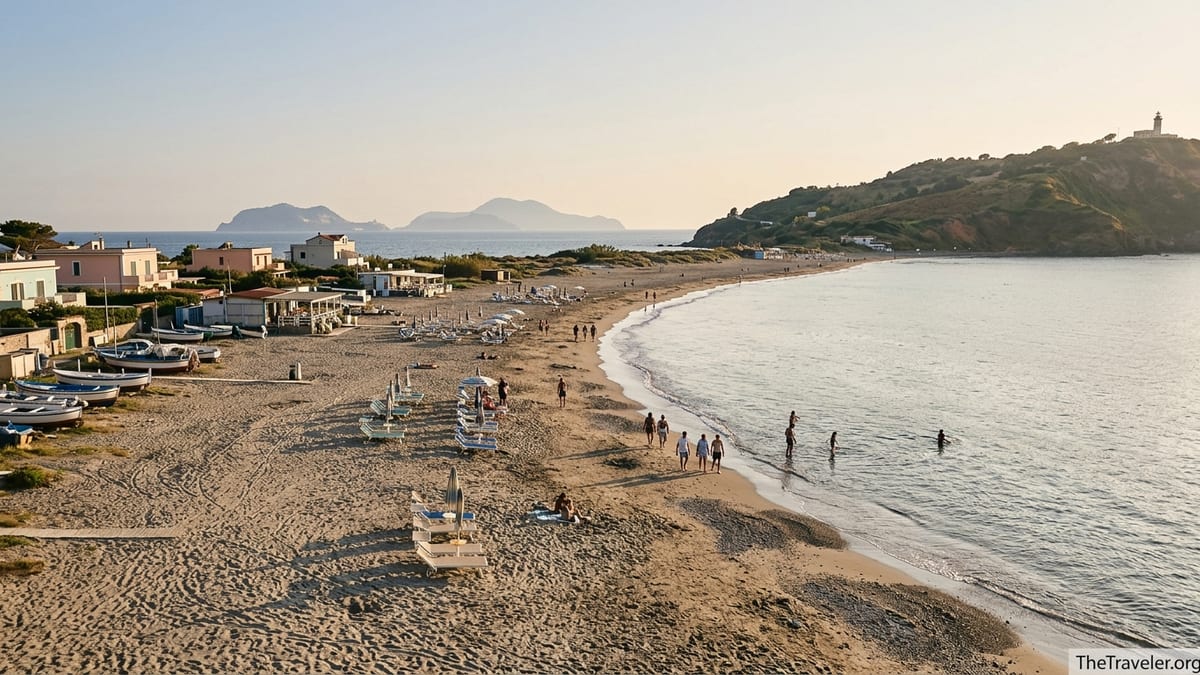
Mere kilometers from Naples, Miseno should be overrun. It has a sweeping sandy bay, views across to Capri and Ischia, and Roman ruins that once supplied water to an imperial fleet. Yet most visitors to southern Italy race past this quiet corner of the Phlegraean Fields on their way to Capri, Sorrento or Pompeii, never realizing that some of the region’s most atmospheric sites and swim spots lie hidden around Cape Miseno and the neighboring town of Bacoli. For travelers willing to walk a little farther along the sand, follow a staircase cut into tuff rock, or step behind a nondescript residential gate, Miseno reveals a different side of the Bay of Naples.
Get the latest updates straight to your inbox!
Why Miseno Stays Off Most Itineraries
Miseno is technically a frazione of Bacoli, a modest seaside town on the northwestern edge of the Bay of Naples. Trains and local buses reach it in roughly an hour from central Naples, but it does not have the instant name recognition of Amalfi or Positano. Many foreign visitors planning a first trip to Campania simply never see the name Miseno appear in guidebooks or glossy brochures, so they default to the big-ticket coastal resorts instead.
Domestic tourism patterns also help keep Miseno under the radar. In high summer Neapolitans and locals from the surrounding Campi Flegrei fill the main lidos along Spiaggia di Miseno and Miliscola, but for the rest of the year the area feels like a quiet residential seaside suburb. Weekdays in May or late September, you can walk stretches of the beach almost alone, with only fishermen and dog walkers for company, even while crowds pack ferries to Capri a few bays away.
On paper, Miseno is far from undiscovered. The headland of Capo Miseno has been marked on nautical charts since Roman times, when this natural harbor sheltered the Classis Praetoria Misenensis, the western imperial fleet. The remains of their water system still lie behind modern houses in Bacoli and under the soft dunes beside the lagoon of Lago Miseno. In practice, though, many of these places still see only a trickle of curious visitors, especially outside Italian school holidays.
That combination of easy access and relative obscurity is what makes Miseno such fertile ground for hidden gems. You do not need a car to reach them, just some patience with local buses, a willingness to ask for directions in basic Italian, and a taste for layered, lived-in places rather than manicured resort towns.
Grotta della Dragonara: A Roman Cistern Hidden in the Cliff
From the sand at the eastern end of Spiaggia di Miseno, where the lidos thin out and the beach narrows toward the headland, a low opening in the tuff cliff leads to one of the area’s most remarkable secrets: the Grotta della Dragonara. Despite its name, this is not a natural sea cave but a vast Roman cistern carved entirely into the volcanic rock of Cape Miseno. Its vaulted corridors once fed fresh and thermal water to a luxurious maritime villa above, traditionally associated with the general Lucullus and later with the emperor Tiberius.
Today, visitors enter via a modern metal walkway that provides safe access across the damp floor. Once inside, your eyes adjust to a grid of stone pillars and barrel vaults, lit from above by rectangular skylights that punch up through the rock. In the Roman period, these openings served as access points for maintenance and perhaps as wells. Now, shafts of light filter down, catching the sheen on trickles of water and the green film of algae on the lower walls. It feels like walking through a smaller, more intimate cousin of Naples’ underground aqueducts, but with one wall just meters from the beach you left behind.
The Dragonara cave remains far less known than the larger Piscina Mirabilis in the hills above Bacoli. You may find only a handful of Italian visitors when it opens on weekends or during local cultural events. Access rules can change and the site is sometimes managed by a local custodian, so ask at Bacoli’s tourist information point or your accommodation for current opening times and any small entry fee. Because there is little signage in English, a short locally arranged tour can be useful, but even a self-guided ten-minute visit rewards anyone interested in Roman engineering away from museum crowds.
Practical tip: Combine a swim at the quieter eastern side of Miseno beach with a visit to Grotta della Dragonara. Bring water shoes in case the path at the base of the cliff is wet or sandy, and carry a light jacket; even in July, the cistern stays cool and damp inside.
The Lighthouse Trail and Panoramic Capo Miseno
Most beachgoers along Spiaggia di Miseno never lift their gaze beyond the sunbeds and the blue line of the horizon. Yet behind them rises the ancient volcanic cone of Capo Miseno, its slopes cut by footpaths that lead to one of the best viewpoints in the entire Bay of Naples. At the very tip of the promontory stands the Capo Miseno lighthouse, an active beacon that marks the boundary between the Gulf of Naples and the Gulf of Pozzuoli. Reaching the upper viewpoints requires a moderate uphill walk, but the reward is a sweeping 360-degree panorama that takes in Procida and Ischia offshore, the curve of the coastline toward Posillipo, and on clear days the silhouette of Vesuvius beyond Naples.
The paths up Capo Miseno are not formally waymarked like Alpine hiking trails. Instead, they follow a patchwork of old lanes, concrete steps and dirt tracks. A common approach starts from the streets behind the beachfront, climbing past terraced houses and small gardens. As you gain height, the sounds of the lidos fade, replaced by wind in the scrub and occasional birdsong. Near the crest, scrubby Mediterranean vegetation gives way to exposed viewpoints where the sea drops steeply away on both sides of the headland.
There is no ticket office for the lighthouse and visitors are not typically allowed inside the tower itself, which continues to serve maritime traffic. The real attraction is the vantage point just below the structure. Late afternoon or golden hour offers the most evocative light, with long shadows carving the contours of the cliff and the pastel facades of Procida glowing across the water. Locals sometimes bring a picnic or a takeaway paper cone of fried seafood from Bacoli, turning the climb into an informal sunset ritual, yet foreign visitors are still rare.
Wear closed shoes rather than flip-flops and carry water, especially in warmer months. The walk up from beach level and back takes around 90 minutes at a leisurely pace with photo stops. If you want a longer outing, continue along the ridge paths above Lago Miseno before descending toward Bacoli, turning what many see as a simple beach day into a satisfying half-day hike with some of the Bay of Naples’ most underappreciated views.
Piscina Mirabilis and the Quiet Backstreets of Bacoli
On a residential street above Bacoli, squeezed between modest modern houses and low garden walls, a small ticket booth and gate lead to one of the most staggering Roman structures in southern Italy: the Piscina Mirabilis. This vast underground reservoir formed the terminal tank of the Augustan aqueduct that carried water from the Apennine springs of Serino as far as the naval base at Miseno. Inside, a cathedral-like forest of columns supports brick vaults, once holding tens of thousands of cubic meters of fresh water for warships moored below.
Unlike Pompeii or Herculaneum, the Piscina Mirabilis rarely appears on standard package tours. Entry prices are modest compared to the big archaeological parks, and visitor numbers are still low. On many weekdays, especially outside peak season, you may share the entire cistern with only a few other travelers and a site attendant. The play of light and shadow from the access openings above makes it a dream for photographers, but the air is humid and the steps down are damp, so non-slip shoes are advisable.
What makes this site feel like a hidden gem is not only its relative obscurity but also its location within an ordinary neighborhood. Step back onto Via Piscina Mirabile and you find yourself among grocery shops, parked scooters and laundry on balconies. Follow the lane downhill and you quickly reach the waterfront at Baia or the main streets of Bacoli, where bars serve espresso for around one euro and gelato costs a fraction of prices in Capri. It is easy to structure a morning around the cistern and then wander through streets where daily life continues largely unaffected by tourism.
To reach Piscina Mirabilis from Miseno without a car, local buses connect the beach area with central Bacoli in around 10 to 15 minutes, or you can walk via Lago Miseno in about 30 to 40 minutes, mostly on pavements. Check locally for current opening hours, which can vary seasonally and sometimes align with guided tours or cultural events. Starting early in the day helps you avoid any small groups and lets you experience the scale of the reservoir in near silence.
Secret Swim Spots: Schiacchetiello and the Lago Miseno Shore
While the long arcs of Spiaggia di Miseno and neighboring Miliscola attract weekend crowds to their neatly ordered rows of sunbeds, the coastline around Bacoli still hides a handful of smaller coves and natural swim spots that many visitors never hear about. One of the most evocative is Schiacchetiello, tucked beneath the slopes of Monte di Procida, just a short drive or bus ride from Miseno. Here, a small rocky inlet faces a tiny islet and a line of old fishermen’s houses, creating a sheltered pool of unusually clear water compared with some city beaches closer to Naples.
Reaching Schiacchetiello typically involves a descent on foot from the road above, via stepped lanes between houses and vineyards. There are no large lidos or changing cabins, only a simple concrete platform and rocks where locals spread towels. It is a place for confident swimmers rather than families with strollers, but the sense of having slipped into a half-hidden corner of the bay more than compensates. Because it is small, the cove can feel busy in the height of August; visit on a weekday morning in June or September for a quieter experience.
Closer to Miseno itself, Lago Miseno offers a different, more tranquil kind of waterfront. This lagoon, separated from the open sea by a narrow spit of sand, once formed an inner harbor for Roman warships. Today, its low banks host modest marinas, fishermen’s sheds and a smattering of casual eateries. While most travelers instinctively head for the ocean side, strolling along the lagoon at sunset reveals a softer face of Miseno: wooden boats rocking at their moorings, reflections of pastel buildings on the water and locals out for an evening passeggiata.
Swimming in the lagoon is less common than on the sea side, and the focus here is more on atmosphere than on beach time. Combine a walk along Lago Miseno with an aperitivo at a simple bar that faces the water, where a spritz or a glass of local Falanghina wine often comes with complimentary snacks. Prices are typically lower than in central Naples, and the clientele is overwhelmingly local, giving you a sense of the everyday seaside life that most tourists miss.
Everyday Food: Family Trattorias and Simple Beach Bars
Miseno and Bacoli do not lack for restaurants, but many of the spots that give the area its character look outwardly unremarkable: low-key trattorias on side streets, pizzerias a block back from the waterfront, and beach bars that transform into informal seafood grills at night. Because the area has a strong local customer base, menus tend to stay aligned with Campanian tastes and prices rather than with tourist expectations. House wines are commonly served in simple glass jugs, and daily specials reflect whichever fish arrived that morning at nearby harbors.
One of the simplest pleasures in Miseno is an uncomplicated lunch at a beach bar that also runs a small section of sunbeds. Expect a short menu: spaghetti alle vongole, grilled local fish such as orata or spigola, fried anchovies, and insalata di mare. Portions are usually generous, and a plate of pasta with clams can cost noticeably less than equivalent dishes on the Amalfi Coast. In the evenings, these same lidos sometimes host low-key live music or open-air TV screenings when Napoli plays, giving visitors a glimpse of local social life.
In Bacoli’s backstreets, look for old-fashioned trattorias where the decor leans more toward family photographs and football scarves than designer tiles. Here you are likely to find hearty cucina povera dishes such as pasta e fagioli, parmigiana di melanzane and slow-cooked ragù on Sundays. Many such places do not have English-language websites or online booking systems; instead, locals call ahead or simply show up early. As a visitor, you can often walk in at opening time, especially outside August, and be seated among families and groups of friends.
Because Miseno lies within the Campi Flegrei wine area, ask about local labels from vineyards on nearby volcanic slopes. White wines made from Falanghina complement seafood particularly well, while reds based on Piedirosso suit meatier dishes. Even house wines served in simple tumblers can offer good value and an agreeable sense of place. Just remember that in smaller, family-run places, payment may be cash-only, so it is wise to carry euros as well as cards.
Planning Your Visit: When to Go and How to Get Around
The character of Miseno changes substantially with the seasons. July and August bring crowds of Italian holidaymakers to the main beaches, along with higher prices for sunbed rentals and heavier traffic on the access roads. If you like a busy, social beach scene and warm water, this can be part of the appeal, but hidden spots such as Schiacchetiello and small staircases up Capo Miseno will also feel more congested. For travelers focused on exploration and atmosphere, late spring (May and early June) and early autumn (mid-September to early October) strike a better balance, with comfortable temperatures, swimming still possible on sunny days, and comparatively light crowds.
Without a car, the most straightforward approach is to combine regional trains and local buses. Many visitors take the Cumana or Linea 2 suburban trains from Naples toward the Phlegraean Fields, connecting to buses in Pozzuoli or Fusaro that continue to Bacoli, Miseno and Capo Miseno. Journey times vary depending on connections, so allow at least an hour each way and be patient with schedules that can run on relaxed local timing. Planning beach days on weekdays and avoiding peak commuting hours helps make the trip more pleasant.
Once in Miseno and Bacoli, distances are short but often involve hills. Walking from Spiaggia di Miseno to Lago Miseno might take 10 to 15 minutes, while the climb up to the Capo Miseno viewpoints can add another 30 to 40 minutes. Buses link central Bacoli with Miseno and the surrounding hamlets, but frequencies can drop in the afternoon. Taxis exist but are less ubiquitous than in central Naples, so arranging return transport in advance or confirming the time of the last bus back toward Pozzuoli is prudent, especially outside summer.
Accommodation options in and around Miseno range from small family-run hotels and guesthouses in Bacoli to simple rooms above restaurants and private apartments rented by the week. Because the area is still driven largely by domestic tourism, many properties advertise only in Italian and rely on phone bookings. If you plan to visit in August or around Italian public holidays, reserve well ahead. At other times of the year, last-minute options are usually available, and prices often compare favorably with more famous coastal towns while putting you closer to these lesser-known corners of the bay.
The Takeaway
Miseno offers a compact but remarkably layered slice of the Bay of Naples for travelers willing to look beyond the obvious. Within a small radius you can swim from a sandy beach, descend into a Roman cistern carved from volcanic rock, watch the sun set behind Procida from a lighthouse ridge, and end the day with a plate of clams and local wine for the price of a cocktail in a better-known resort town. The lack of heavy international tourism infrastructure is not a drawback so much as part of the charm.
For visitors already planning to base themselves in Naples or Pozzuoli, adding a day or two in Miseno and Bacoli turns a classic itinerary into something more personal. Hidden gems such as Grotta della Dragonara, Piscina Mirabilis, Schiacchetiello and the quiet banks of Lago Miseno may not stay secret forever, but for now they remain refreshingly unhurried. Take the slower train, follow the local bus to the end of the line, and let this understated corner of Campania reveal itself one viewpoint, stairway and plate of seafood at a time.
FAQ
Q1. How do I get from Naples to Miseno without a car?
From central Naples, most visitors take a suburban train toward the Phlegraean Fields, then connect to a local bus that continues through Bacoli to Miseno and Capo Miseno. Allow around an hour each way and check timetables locally, as frequencies and routes can change seasonally.
Q2. Is Miseno a good alternative to the Amalfi Coast for beaches?
Miseno offers long sandy beaches, clear water and views of Procida and Ischia, with generally lower prices and fewer international crowds than the Amalfi Coast. It lacks the dramatic cliffside towns but compensates with a more relaxed, local feel and easy access to Roman sites.
Q3. When is the best time of year to visit Miseno’s hidden spots?
Late spring and early autumn are ideal for exploring Grotta della Dragonara, Capo Miseno viewpoints and smaller coves like Schiacchetiello. Temperatures are comfortable, some beach services are open, and crowd levels are usually lower than in July and August.
Q4. Can I swim near Grotta della Dragonara?
Yes, the cave entrance sits near the eastern end of Spiaggia di Miseno, so you can combine a visit with a swim from the adjacent beach. The shoreline here is mostly sandy, but sections near the cliff can be rocky or wet, so water shoes are helpful.
Q5. Do I need a guide to visit Piscina Mirabilis?
A guide is not strictly necessary, as the main attraction is the visual impact of the cistern’s interior, but a guided visit can provide useful historical context. For independent travelers, information panels and basic research beforehand are usually enough for a rewarding visit.
Q6. Is the hike to Capo Miseno lighthouse difficult?
The walk involves steady uphill sections on steps and paths but is manageable for reasonably fit visitors wearing proper shoes. It is not a technical hike, though summer heat can make it feel strenuous, so carrying water and avoiding the hottest midday hours is wise.
Q7. Are there family-friendly options in Miseno?
Yes, the main beaches at Miseno and Miliscola have shallow entry, lifeguards in season and lidos that rent umbrellas, loungers and pedal boats, which suit families. Some of the more rugged coves and staircases, such as Schiacchetiello, are better suited to older children and confident walkers.
Q8. How expensive are food and drinks compared with central Naples?
Prices in Miseno and Bacoli are generally similar to or slightly lower than in central Naples, especially for seafood and house wine in local trattorias. Beach clubs may charge more for sunbeds in peak season, but everyday items like espresso, pastries and basic pizzas remain good value.
Q9. Is Miseno safe to visit in the evening?
Miseno and Bacoli are primarily residential and feel comparable in safety to other small towns in the Bay of Naples. Normal precautions apply: keep valuables secure, stay on lit streets at night and use licensed taxis or known bus stops when returning late from the beach or restaurants.
Q10. Can I visit Miseno as a day trip from Naples?
Yes, Miseno works well as a day trip, especially if you focus on the beach, a climb to Capo Miseno or a visit to one major site such as Piscina Mirabilis. Travelers with more time often find that staying one or two nights allows for a calmer pace and the chance to explore the lesser-known corners.