


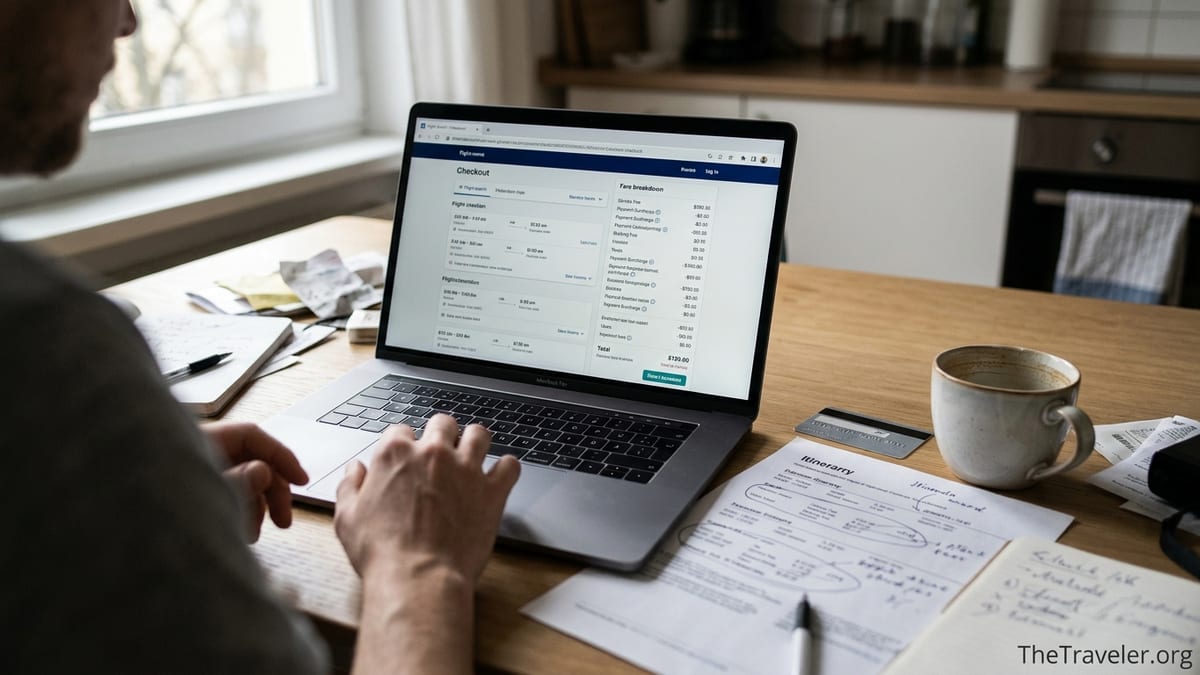
Search for flights on Webjet and the prices look sharp, especially in a world where every dollar of travel spend counts. But Webjet has a servicing and Booking Price Guarantee fee that is shown during the booking process once travel products have been selected and again on the check-out page. Understanding where these charges appear, and how to spot them early, can save you real money before you click “confirm.”
Get the latest updates straight to your inbox!
Why Webjet’s Pricing Is Under the Microscope
Webjet markets itself as a convenient one-stop shop for comparing flights, hotels and packages, and for many travelers that promise holds true. The problem begins when the fare you see at the top of the search results is not the fare you pay after Webjet’s own compulsory fees are added. In late 2024, Australia’s competition regulator launched court action alleging Webjet made misleading claims by promoting “flights from” prices that did not include its mandatory service charges. The case focused on several years in which Webjet charged a compulsory servicing fee and a “booking price guarantee” fee on every flight booking while still advertising stripped-down headline prices.
According to court documents and legal commentary, those two Webjet-specific fees typically added around the cost of a modest hotel night on top of a booking. On domestic trips and short international hops, travelers reported their total spend jumping well beyond the airline’s own fare once these extras were included. For long-haul itineraries, the extra amount was proportionally smaller but still material, especially for families booking several tickets at once.
Webjet has since stated it has improved fee disclosure and adjusted how prices are displayed. Yet the basic structure of separate Webjet charges, payment surcharges and optional extras remains. That means the risk of being blindsided at checkout still falls largely on the traveler who clicks through screens rapidly in search of a deal. To avoid sticker shock, it is essential to understand how those add-ons work today.
Hidden fees are not unique to Webjet. Airlines, hotel platforms and ticketing sites around the world use similar tactics, from resort fees to booking charges that only appear after you select a room or seat. What makes Webjet noteworthy is the combination of regulatory attention, the scale of its Australian customer base, and the way its own fees stack on top of airline charges. Learning to read a Webjet price breakdown carefully is increasingly a core travel skill.
The Webjet Servicing Fee and “Booking Price Guarantee”
The most talked-about charges in recent Webjet cases are the “Webjet servicing fee” and the “booking price guarantee” fee. These are not airline fees. They are Webjet’s own charges for using its platform and for a guarantee that, in theory, protects you if the fare changes or a glitch occurs in confirming your ticket. Legal filings suggest that between late 2018 and late 2023, these two fees together often ranged from roughly the cost of a quick airport meal to more than the cost of a checked bag on a budget carrier, depending on the route and type of flight.
In practice, travelers mainly experienced these as a line or two that appeared close to the end of the booking flow. A Webjet customer might, for example, click on an advertised “from” fare of approximately 180 Australian dollars for a Sydney to Melbourne return economy ticket. By the time they chose specific flights, added their details and reached the payment page, the summary could show the airline fare, government taxes, and then an extra Webjet fee cluster that added around 35 to 50 dollars to the total. A family of four booking to Fiji or Bali could see that extra line multiply several times, significantly increasing the final bill compared with the headline fare they saw at the search stage.
Webjet’s own terms explain that the servicing fee is meant to cover customer support, booking systems and related costs, while the booking price guarantee is positioned as protection if there is a discrepancy between the fare shown and the fare the airline will actually accept. Travelers, however, often only discover these charges at the tail end of the checkout process, when they are more psychologically committed to the trip and less inclined to start over on a rival site or direct with the airline. That timing is part of what regulators and consumer advocates have criticized.
Recent public statements from Webjet note that the company has changed how it describes and discloses these fees, especially in social media ads and email campaigns. Even so, travelers continue to report confusion about what exactly is compulsory and what is optional. The safest assumption when using Webjet is that any flight search result showing a particularly low fare may not yet include Webjet’s own fees. You should plan to scroll to the detailed cost breakdown on the during the booking process once travel products have been selected and again on the check-out page, and compare that all-in price against what the airline or another agency is offering.
Payment Surcharges and “No Fee” Workarounds
Beyond its service-related charges, Webjet adds a payment fee on most common methods, including credit and debit cards and popular digital wallets. These surcharges are expressed as a small percentage of the total booking value, but because they apply after all other fees and taxes, the dollar amount can be higher than many travelers expect. Webjet’s own payment fee table shows, for example, that paying by standard Visa or Mastercard credit card attracts close to a 1 percent fee, while some buy now, pay later products sit slightly above that. Alternative methods such as direct bank transfer or certain partner reward programs may have no extra payment fee attached.
To see how this plays out, consider a hypothetical couple booking return flights from Brisbane to Queenstown at a base fare of about 650 Australian dollars per person on Webjet. The search page might show 1,300 dollars for two seats. As they proceed, Webjet’s servicing and booking guarantee fees could add roughly 35 dollars to 60 dollars to the booking. If they then pay with a standard credit card at just under 1 percent, the payment surcharge is calculated on top of that combined amount, pushing the total to perhaps 1375 dollars instead of the 1,300 dollars they had mentally anchored to at the start.
Webjet does publish which methods attract no payment fee. For example, paying with a Webjet gift card, a supported bank transfer product or certain bank reward points can avoid the card surcharge entirely. Experienced travelers sometimes take advantage of this by purchasing a Webjet gift card through a bank or supermarket promotion, then using that card as the primary payment method at checkout. Doing so can sidestep the payment fee while also stacking a loyalty or cashback benefit from the original gift card purchase.
However, these workarounds require planning and they do not eliminate Webjet’s own servicing or booking guarantee fees. Travelers based in North America or Europe who book via a regional Webjet brand may not even have access to all fee-free payment options, and the surcharges may look different depending on local rules. The key point is that the card fee is a separate charge layered on top of other costs. Before you press pay, it is worth toggling between available methods on the Webjet payment screen to see exactly how the total changes.
Seat Selection, Bags and Other Airline Extras Sold Through Webjet
Another cluster of costs that catch Webjet customers by surprise involves airline extras purchased through the platform: seat selection, baggage and sometimes priority boarding or insurance. These are not strictly hidden in the sense of being invisible, but they can be easy to underestimate when they appear as optional add-ons in a busy interface. Because Webjet aggregates different airlines, the pricing and rules for these extras vary widely from one booking to the next.
Take baggage as an example. A traveler searching Webjet for a low-cost carrier flight from Melbourne to Perth might see a very competitive base fare that assumes hand luggage only. In the seat and bag selection step, they add one checked bag each way for around 40 dollars per segment. For a return trip, that is roughly 80 dollars of baggage charges on top of a base fare that may have been under 200 dollars. If they are booking for a family of four, those bag fees could swell to more than the initial ticket price they saw on the search results page.
Seat selection plays out similarly. Many airlines now charge to secure specific seats, particularly extra legroom or seats near the front. On Webjet, these prices are typically pulled in from the airline, but because they appear after you have already invested time in the booking, they feel like small, reasonable additions rather than major line items. Agreeing to four extra legroom seats at around 30 dollars each way on a trans-Tasman flight can quietly add hundreds of dollars to the final total, especially once Webjet’s own fees and payment surcharges are layered on top.
Travel insurance and car rental sold via Webjet can compound the effect. A customer booking flights from Sydney to Tokyo might add a third-party insurance policy offered in the flow, then accept a seemingly modest car hire deal that resets its own terms and fees closer to the end of checkout. If the same traveler had priced those add-ons directly with a standalone insurer and rental company, they might have chosen different coverage or a cheaper option. Webjet’s convenience is real, but it encourages stacking multiple products in one transaction, which can make the overall price much higher than expected.
Hotel and Package Bookings: When the “Final” Price Is Not Final
While recent regulatory attention has focused on flights, accommodation and packages booked through Webjet can carry their own surprises. The most common problem is fees that are technically charged by the hotel or resort but are not fully reflected in the initial nightly rate shown on Webjet. These can include resort or destination fees, cleaning charges for apartments, or local city taxes collected at check in. Travelers who think they have paid a complete upfront price through Webjet then find an extra bill waiting at the hotel front desk.
Imagine a traveler from Sydney searching Webjet for a four-night stay in Honolulu. The search result shows a beachfront hotel at around 280 dollars per night, with a total of roughly 1,120 dollars. The traveler confirms and pays through Webjet, and the confirmation email suggests the room is fully prepaid. On arrival in Hawaii, the front desk explains that a daily resort fee of around 45 US dollars plus tax is payable directly to the hotel, covering amenities such as pool towels, gym access and Wi-Fi. Over four nights, that adds more than 200 US dollars to the trip that was not obvious from the initial Webjet listing.
Similar scenarios play out in Europe, where city taxes in destinations such as Rome, Paris or Amsterdam are often collected in cash or on card at checkout rather than through the booking site. Webjet may note these in the fine print of a property description, but they seldom appear in the big bold total on the search page. Apartment-style stays can also carry cleaning fees that are only fully displayed late in the booking flow. A family booking a Lisbon apartment that appears to cost 150 dollars per night may discover a one-off cleaning fee of 120 dollars is added near the end, materially changing the effective nightly rate.
Webjet’s dynamic packaging, where flights and hotels are bundled, compounds the risk of confusion. In some cases, the platform’s own booking price guarantee does not apply to these package deals in the same way it applies to standalone flights, and the extra guarantee fee may not be charged. That can make it harder for travelers to understand which protections they are paying for and which they are not. As with flights, the safest approach is to scroll carefully through all cost lines on the final confirmation page, and to read the “important information” section for any mention of fees payable directly to the property.
Real-World Examples of Surprises at Checkout
Consumer forums and review sites are littered with stories from travelers who thought they had secured a good Webjet deal only to face a higher-than-expected total. One reviewer described booking domestic Australian flights advertised at just under 300 dollars in total for two passengers, then discovering a combination of Webjet fees and payment surcharges that added about 35 dollars, or roughly 12 percent, to the original amount. The traveler only noticed after receiving the bank statement and comparing it with the airline’s own website.
Another common pattern involves aggressive “from” pricing in ads that does not survive contact with reality. In one case highlighted by legal commentators, a fare promoted on social media as “from” less than 20 dollars ultimately cost nearly three times that amount once the traveler progressed through Webjet’s booking path. Webjet’s servicing and guarantee fees, combined with taxes and other unavoidable charges, transformed a bargain teaser fare into an ordinary or even expensive option compared with booking directly.
There are also instances where travelers have believed a booking was fully confirmed through Webjet, only to be told later that the underlying airline ticket was never actually issued. In such situations, people report receiving what looks like a full confirmation email and sometimes being charged, then learning days or weeks later that they do not have a valid reservation and must either accept a refund or pay more for alternative flights. While these cases are a small fraction of total bookings, they align with regulators’ concern that Webjet’s systems and disclosures have not always matched customer expectations.
These examples matter because they reveal a pattern rather than isolated glitches. The amounts involved are often big enough to affect whether a traveler can afford certain dates or destinations, but small enough that many people simply absorb the extra cost rather than lodge formal complaints. As a result, Webjet and other online travel agencies have been able to build fee-heavy models while still competing aggressively on headline prices. The best response as a traveler is to become the kind of customer who looks past the headline.
How to Spot and Avoid Webjet’s Hidden Costs
There is no way to eliminate every extra fee in travel, but you can greatly reduce the risk of Webjet bill shock by changing how you search and compare. The most important habit is to ignore the initial “from” price and instead focus on the all-in total once travel products have been selected and again on the check-out page. That means clicking through a dummy booking until you reach the final cost breakdown, including Webjet’s servicing fee, booking price guarantee, payment surcharge and any extras you genuinely need. Only then should you compare that figure with what the airline, hotel or a competitor site is charging for the same itinerary.
It also helps to experiment with payment methods on the Webjet checkout page. If you have the option to pay with a no-fee method, such as a supported bank transfer product or a Webjet gift card, test how much that lowers the total compared with a credit card. On a 2,000 dollar multi-passenger itinerary, even a 1 percent card surcharge is 20 dollars you may be able to save immediately. When combined with supermarket promotions or bank rewards on the gift card purchase itself, the difference can be enough to cover a taxi ride or a decent meal at your destination.
For flights, consider whether you really need Webjet’s booking price guarantee. In many cases, booking directly with the airline offers robust consumer protections, as well as easier changes and refunds, without an agency guarantee layered on top. You may decide that the convenience of Webjet’s comparison tools is worth a modest premium, but you should make that decision with clear eyes rather than by default. If you mainly use Webjet for research, there is nothing stopping you from running your search there and then switching to the airline or hotel website to complete the booking once you know which option you want.
Finally, slow down at every point where Webjet invites you to add insurance, car hire, seat upgrades or extra bags. Ask yourself whether each add-on is genuinely necessary and whether it might be cheaper to buy it separately. For example, an independent annual travel insurance policy might cover multiple trips at a lower effective cost than buying one-off policies through Webjet. A direct car rental booking may include clearer information about deposits and fees at pickup than a third-party bundle. The more you separate shopping from checkout, the harder it becomes for hidden fees to accumulate unnoticed.
The Takeaway
Webjet has become a familiar part of the travel landscape, especially in Australia and New Zealand, and many trips booked through the platform go smoothly. Yet recent court action and persistent customer complaints show that hidden or late-disclosed fees remain a real risk for unwary travelers. The combination of Webjet’s own servicing and booking guarantee charges, payment surcharges, airline extras and property-level fees can easily push a booking well beyond the attractive fare that drew you in.
To navigate this terrain, shift your focus from the headline price to the final total, test different payment methods, and think critically about whether you need Webjet to handle every part of your booking. In some cases, the platform’s convenience will justify the extra cost. In others, especially simple point-to-point flights or straightforward hotel stays, booking direct with airlines and properties may yield a cleaner, more transparent bill.
Ultimately, the most effective defense against hidden fees on Webjet is awareness. By understanding where and how these charges surface, you reclaim control over your travel budget. The more travelers learn to scrutinize the checkout screen rather than the first search result, the harder it becomes for any online agency to hide the true cost of getting away.
FAQ
Q1. Does Webjet still charge a separate servicing or booking fee on flights?
Yes. Webjet continues to apply its own fees on many flight bookings, separate from airline fares and taxes. The exact amount varies, depending if you are travelling domestic, Trans-Tasman or internationally, so you should always check the detailed cost breakdown on the payment page before confirming.
Q2. Are Webjet’s payment surcharges avoidable?
Sometimes. Webjet applies percentage-based surcharges to most credit and debit cards and some digital wallets, but certain payment options such as selected bank transfer products, partner reward programs or Webjet gift cards may not attract a fee. Availability depends on your country and the specific promotion.
Q3. Is the Webjet booking price guarantee fee mandatory?
On many standalone flight bookings, the booking price guarantee is bundled as part of Webjet’s compulsory charges rather than an optional extra. For some packages and promotions, it may not apply. If you want to avoid paying for it, compare the total Webjet price with booking the same flights directly with the airline.
Q4. Why is my Webjet total higher than the airline’s website for the same flight?
Differences usually come from Webjet’s own fees and payment surcharges, plus any extras like seats or bags you add through the platform. Airlines may charge separately for similar services, but when you compare, make sure you are looking at all-in prices on both sites, not just the base fares.
Q5. How can I see all Webjet fees before I pay?
The clearest way is to walk through the booking flow until the final payment screen, then expand the price breakdown. This should list the airline fare, taxes, Webjet fees, payment surcharge and any extras you have selected. Do this before entering card details, and take a screenshot if you want a record.
Q6. Are hotel and resort fees always included in Webjet’s hotel prices?
Not always. Many resort or destination fees, city taxes and some cleaning charges are payable directly to the property and may only be mentioned in the fine print of the listing or confirmation email. To avoid surprises at check in, read the “important information” section carefully and budget for any on-arrival charges.
Q7. Is it safer to book flights directly with airlines instead of Webjet?
Direct airline bookings often offer clearer fee structures, easier changes and direct access to customer support, so many frequent travelers prefer them. Webjet can still be useful for comparing options, but once you have chosen flights, it is worth checking whether booking direct offers a better all-in price and simpler conditions.
Q8. What should I do if I discover unexpected Webjet fees after booking?
First, review your confirmation email and any terms you agreed to at checkout to confirm how the fees were described. If you still believe charges were not properly disclosed, contact Webjet customer service in writing and keep a record of your correspondence. If the issue remains unresolved, you can escalate your complaint to a local consumer protection agency.
Q9. Can I avoid Webjet completely and still find good flight deals?
Yes. Many travelers use airline websites, metasearch engines and rival online travel agencies to compare fares, then book direct once they know which flight they want. No single platform has every deal, so it is worth checking multiple sources, especially for simple round-trip or point-to-point journeys.
Q10. Are Webjet’s hidden fees unique, or do other sites do the same thing?
Hidden or late-disclosed fees are common across the travel industry, from airlines and hotels to ticketing platforms. Webjet has drawn particular attention recently because of regulatory action and the structure of its own fees, but the broader lesson applies everywhere: always compare final, all-in prices, not the first number you see.