


More news on this day
A Houston Fire Department engine responding to an emergency call collided with and derailed a METRORail train near downtown Houston on Friday evening, injuring at least one person and disrupting light rail service through the Near Northside area.
Get the latest news straight to your inbox!
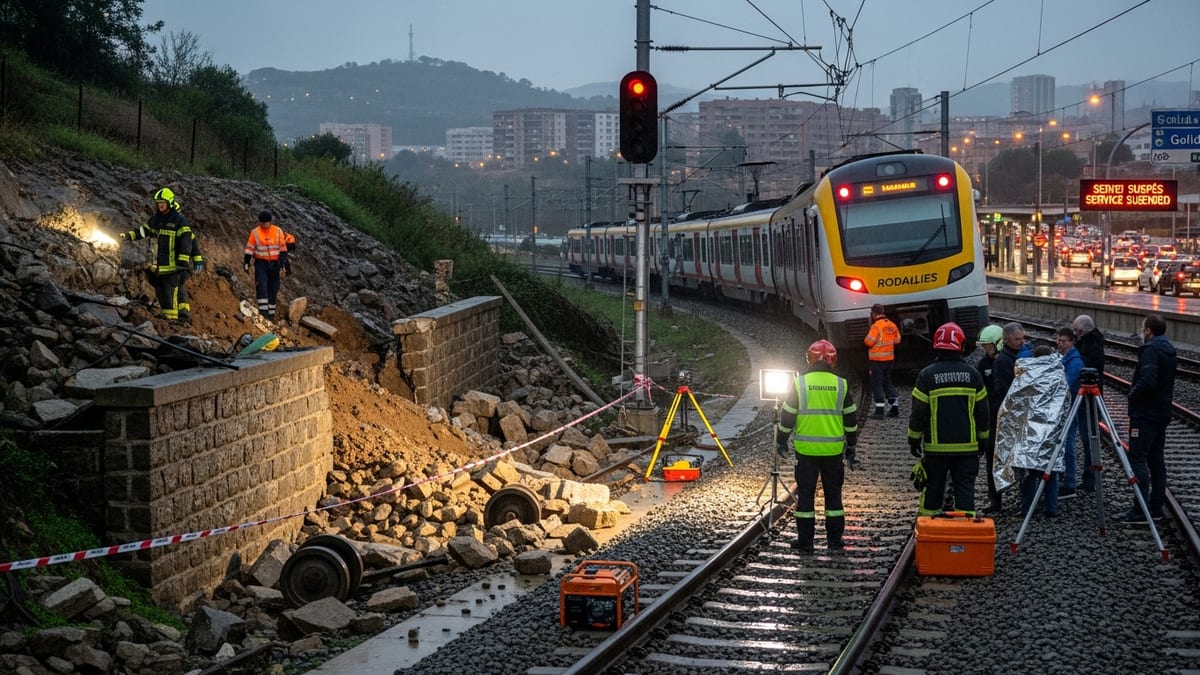
Collision Near North Main and Hogan Streets
According to published coverage, the crash occurred at about 6:45 p.m. on July 3 near the intersection of North Main and Hogan Streets, just north of the central business district. The location sits along the METRORail Red Line, which runs through downtown and into surrounding neighborhoods, carrying commuters, residents, and visitors across central Houston.
Reports indicate that the impact pushed the METRORail train off its tracks, leaving at least one rail car visibly derailed. Images and video from local outlets show the light rail train askew near the intersection, with emergency crews surrounding both the train and the Houston Fire Department vehicle involved.
Publicly available information shows that one person was transported to a hospital with injuries described as not life-threatening. Several others were assessed at the scene, but early reports did not indicate additional serious injuries. The crash, however, quickly became a major incident for the city’s transit system during the busy evening period.
The collision adds to a history of roadway and rail interactions along the at-grade Red Line, where trains often share space and signalized intersections with vehicle traffic on key corridors leading into and out of downtown.
Fire Engine Was En Route to Emergency Call
Coverage from local television outlets indicates the Houston Fire Department engine had been dispatched to an emergency when the crash happened. The vehicle reportedly had its emergency lights and sirens activated as it traveled through the Near Northside toward its destination.
Details about the exact sequence of events in the intersection remain limited. Early reports do not specify the direction of travel for the fire engine or the train, nor do they clarify the status of traffic signals or rail crossing protections at the moment of impact. Investigators are expected to examine factors such as speed, visibility, signal timing, and operator response.
Public information about the Houston Fire Department notes that its engines routinely respond to medical calls, fires, and other emergencies across the city’s dense core, including stretches where major streets intersect METRORail tracks. Those responses often require navigating congested corridors and complex intersections near downtown and surrounding neighborhoods.
The incident underscores the challenging balance between rapid emergency response and the need to safely traverse multimodal corridors where trains, buses, cars, cyclists, and pedestrians all converge.
Injuries, Disruption and Response on the Red Line
Initial reports describe only one person being taken to a hospital following the collision, with injuries classified as non-life-threatening. Others on board the train and at the scene were evaluated by medical personnel, with no additional serious injuries publicly reported as of Saturday morning.
The derailment forced immediate disruption of METRORail service in the area. Trains on the Red Line were unable to pass the damaged rail vehicles and emergency perimeter, and riders experienced delays as agencies worked to stabilize the scene and begin recovery operations. In past incidents, METRO has sometimes relied on bus shuttles or single-tracking to keep limited service moving around blocked segments, although specific interim arrangements for this derailment were not immediately detailed in available coverage.
The Red Line is the backbone of Houston’s light rail network, connecting key destinations such as downtown, the Museum District, the Texas Medical Center, and residential neighborhoods to the north and south. Any extended closure or reduced service in the corridor can quickly ripple into delays for commuters, eventgoers, and visitors who rely on frequent trains to navigate the city’s core.
Passengers near the crash site encountered emergency tape, fire trucks, police vehicles, and rail staff as they attempted to reroute or find alternate transportation home. The timing of the crash in the early evening heightened its impact on riders finishing the workday or heading into downtown for events and holiday weekend activities.
Investigation Focuses on Safety at Rail Crossings
Publicly available information indicates that Houston Police are leading the investigation into the collision, with METRO and the Houston Fire Department also expected to conduct internal reviews. Those inquiries commonly examine signal data, operator statements, onboard video, and witness accounts to reconstruct what happened in the moments before impact.
Houston’s light rail system has long prompted discussion about safety at street-level crossings where trains and vehicles intersect. Transportation reports and previous federal reviews have noted the visibility of trains, the configuration of intersections, and driver behavior as recurring themes in past collisions along the network. While METRORail trains operate at relatively modest speeds in urban corridors, their size and limited stopping distance mean that any conflict with vehicles or pedestrians can result in significant damage and injury.
The involvement of an emergency vehicle adds another layer to the safety conversation. Fire engines and ambulances often move against normal traffic patterns as they seek to reduce response times, and they may encounter rail lines multiple times en route to calls. Planners and safety specialists have previously highlighted the importance of training, clear protocols, and coordination between transit agencies and emergency services when operating around rail corridors.
As investigators work through the details of this latest crash, the findings may influence future adjustments to intersection design, signal timing, or operating guidance for both rail operators and emergency crews navigating the Near Northside and downtown areas.
Implications for Riders Ahead of a Busy Summer
The derailment comes at a moment of heightened attention on Houston’s transit system, as the city approaches a summer filled with major events and increased visitor travel. The Red Line in particular has been promoted as a key connection between downtown, sports venues, and entertainment districts, offering residents and out-of-town guests an option to avoid traffic and parking congestion.
Any extended disruption to service near downtown would place additional pressure on METRO’s bus network and on city streets already managing heavy vehicle volumes. While early indications suggest that the number of injuries in this crash remained limited, the visual impact of a derailed train and a damaged fire engine at a major intersection is likely to renew debate over how the region can improve safety along the shared corridors of its light rail system.
For local riders, the immediate concern centers on how quickly normal operations can resume and whether future trips will be affected by speed restrictions or additional safety measures near North Main and Hogan Streets. For city leaders and transit advocates, the incident will likely serve as another data point in ongoing conversations about how Houston can support both rapid emergency response and reliable rail service in its growing urban core.