


More news on this day
More than a dozen freight train cars derailed near a busy rail corridor in Bensalem, Pennsylvania, prompting temporary shelter-in-place alerts and hazmat checks before public information indicated no hazardous materials had leaked.
Get the latest news straight to your inbox!
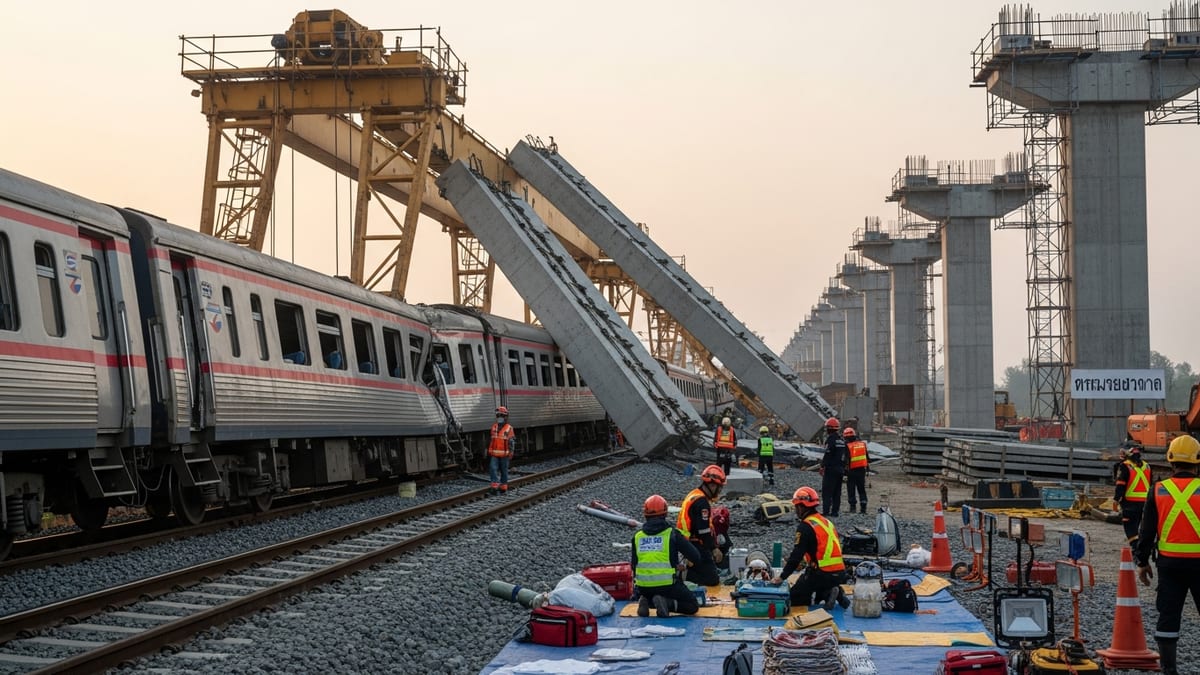
Derailment Near Residential Area Prompts Rapid Response
Publicly available information indicates that the derailment occurred on the afternoon of June 30, 2026, on tracks running between Street Road and the Neshaminy Falls rail station in Bensalem Township, Bucks County. Early reports described at least 13 freight cars leaving the tracks, some leaning or partially overturned, in an area that sits close to neighborhoods, shopping centers and major roadways frequently used by travelers heading into and out of the Philadelphia region.
Initial images and local coverage showed a tangle of railcars across multiple tracks, creating a highly visible disruption near a corridor that also carries commuter and intercity passenger services. While the derailed train itself was a freight consist, its proximity to other lines raised immediate concerns about knock-on effects for regional mobility at the start of the busy Independence Day travel period.
Rail incidents of this size can quickly reshape an otherwise routine weekday for residents and visitors. For travelers staying in nearby hotels, passing through on connecting trains, or driving the adjacent highways, the sight of emergency vehicles, helicopters and stalled rail traffic underlined how closely freight infrastructure intersects with everyday movement around the Philadelphia suburbs.
Shelter-in-Place Alerts Lifted After Hazmat Checks
Out of caution, local alerts initially urged some nearby residents and businesses to shelter in place and avoid the area around the derailment site while hazmat teams assessed the condition of the freight cars. According to published coverage, early questions centered on whether any of the railcars contained hazardous materials that might require evacuation or extended closures.
Subsequent updates from news outlets reported that inspections did not identify any hazardous material leaks from the derailed cars. Publicly available information indicates that both shelter-in-place and limited evacuation alerts were lifted later the same day, once teams on scene were satisfied that air monitoring and visual checks did not show dangerous releases.
For travelers, that outcome significantly reduced the risk of prolonged disruption. In comparable incidents where hazardous materials are involved, rail corridors, adjacent highways and even nearby hotels can remain off limits for days or weeks. In Bensalem, the confirmation that no leaks were detected kept the impacts largely confined to localized rail operations and short-lived traffic detours around the site.
Impact on Rail and Road Travel Through the Corridor
The derailment sits along a key rail artery that threads through Bucks County and into the core of the Philadelphia metropolitan area, where freight lines run parallel to commuter and long-distance passenger routes. While the affected consist was a freight movement, any incident on or near the shared rail envelope can trigger cascading schedule adjustments, temporary speed restrictions and out-of-service segments.
Regional coverage indicates that passenger rail services faced only limited disruption, with trains rerouted or delayed around the immediate crash site while crews worked to stabilize and clear the derailed cars. Travel patterns on surrounding highways, including routes commonly used by visitors driving between suburban hotels, outlet shopping areas and downtown Philadelphia, were influenced mainly by road closures near grade crossings and an increased emergency presence.
Compared with derailments that sever single-track main lines in rural areas, the dense network of tracks and alternative routings around Bensalem appears to have helped keep longer-distance journeys intact. Travelers moving along the broader Northeast corridor by rail or road were more likely to encounter localized slowdowns than wholesale cancellations linked directly to the freight mishap.
Cleanup, Repairs and Ongoing Safety Questions
Once hazmat assessments ruled out leaks, attention shifted to rerailing operations, track repairs and inspection of the underlying infrastructure. Published accounts describe heavy equipment brought in to right affected cars, remove damaged rolling stock and clear debris from the right-of-way so that full rail capacity can gradually be restored.
In the short term, travelers may continue to see work crews and equipment positioned near the derailment site, with occasional lane restrictions on nearby roads and short rail slow orders while permanent fixes are completed. For visitors staying in the area or commuting through Bucks County, these visible remnants of the incident serve as a reminder of how quickly rail operations can be interrupted, even without hazardous materials involvement.
The Bensalem derailment also feeds into broader conversations about rail safety in Pennsylvania, where a mix of freight, commuter and intercity trains share space in a dense and aging network. Publicly available data from recent years highlight a series of freight incidents across the state, many of which, like the Bensalem case, did not result in hazardous releases but still prompted significant emergency responses and temporary travel impacts.
What Travelers Should Know in the Days Ahead
For people planning trips through southeastern Pennsylvania in the coming days, the freight derailment is unlikely to cause widespread disruption, but it remains a factor to watch for those whose routes pass close to the affected corridor. Rail passengers using regional services may encounter minor schedule adjustments, platform changes or residual delays while operational patterns are normalized.
Motorists heading to and from Philadelphia’s northern suburbs, including visitors staying near Bensalem’s hotels, casinos and shopping centers, could see intermittent traffic control near rail crossings or bridge approaches as cleanup and inspection work continues. Local advisories and navigation apps are expected to provide the most up-to-date guidance on any detours.
The incident underscores the value of monitoring service alerts from rail operators and checking traffic conditions before departure, particularly during peak holiday periods when networks are already strained by heavy demand and extreme summer heat. Even when hazardous materials are not involved, a derailment of more than a dozen cars can quickly reshape the travel landscape for a community, if only for a day.